Cat Behavior Problems

Cat behavior problems often appear suddenly, but they usually develop from underlying patterns rather than isolated moments. Behaviors like biting, scratching, or avoiding contact can reflect changes in comfort, stimulation, or emotional state.

Explore common cat behavior problems to understand what may be driving them and how context, routine, and environment can influence your cat’s reactions in everyday life.

Why Cats Chase and Attack Feet

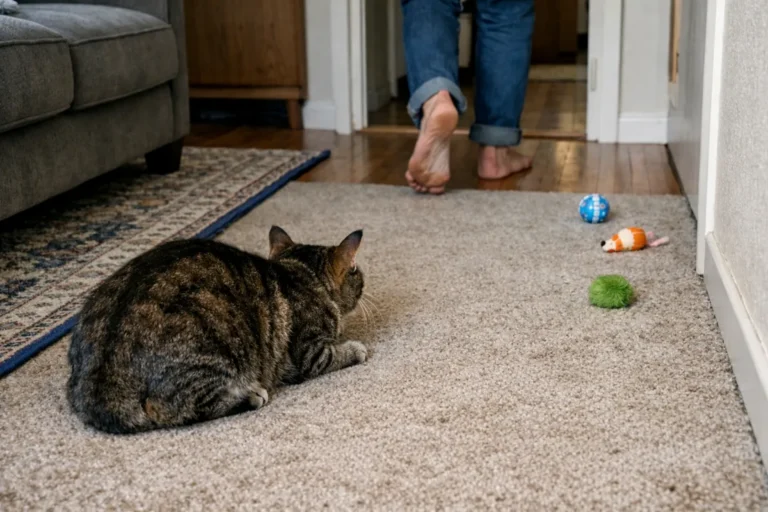
Cat stalking moving feet near a hallway

Feet move in a cat’s world in a way many other body parts do not. They slide under blankets, step around corners, wiggle near the edge of a sofa, and suddenly become the most interesting target in the room. To a cat, that moving shape…

Why Cats Hide for Long Periods

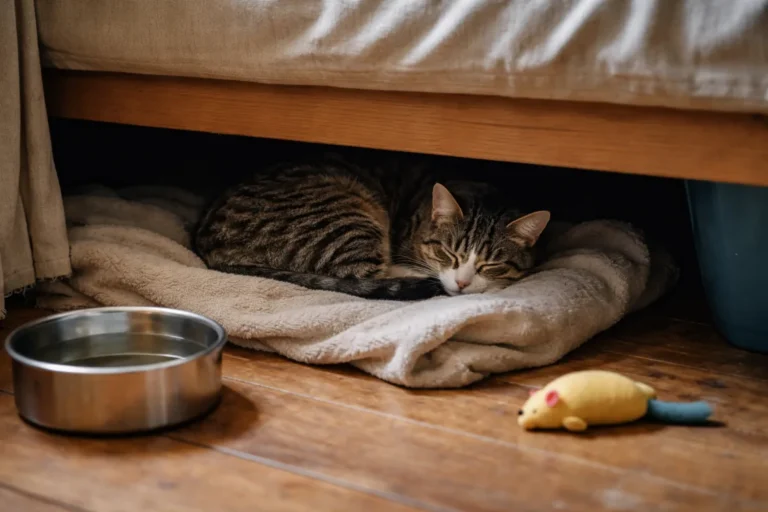
Cat resting in a quiet hiding place

Cats are experts at disappearing into quiet corners, and sometimes they do it for much longer than owners expect. A cat that slips under the bed for a few minutes is easy to understand. A cat that stays hidden for hours or even days can…

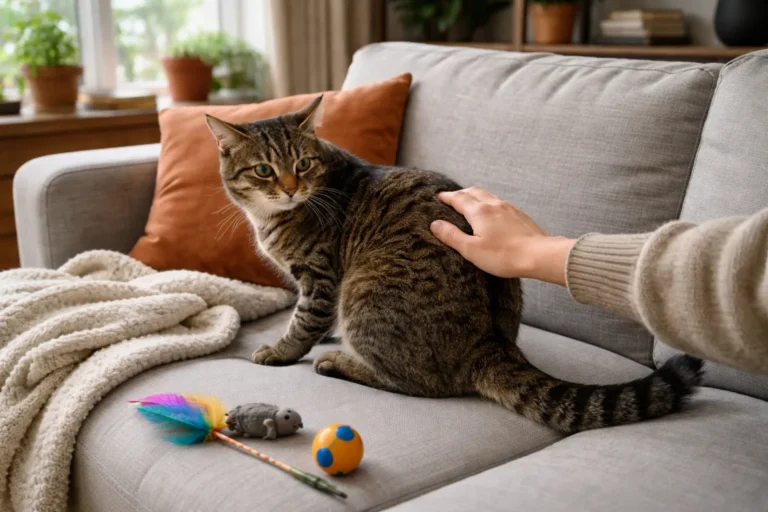
Why Cats Bite During Petting

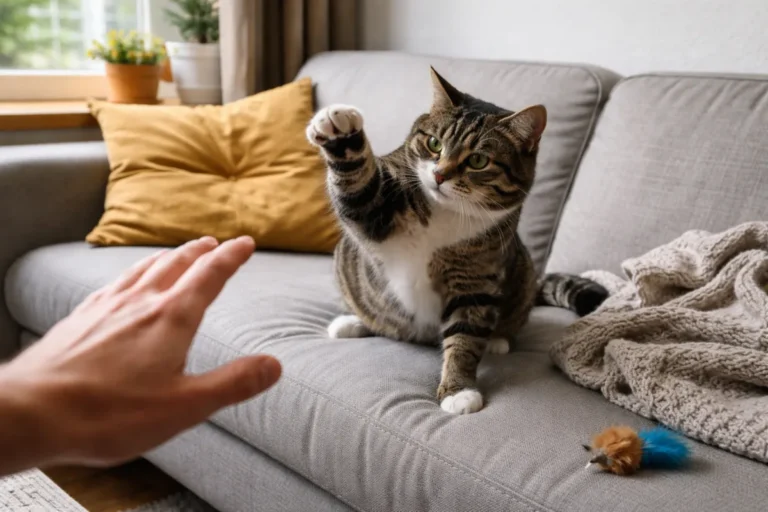
Cat biting a hand during petting

Cat bites during petting can feel confusing because the moment often starts out pleasantly. A cat leans in, purrs, rubs against a hand, and then suddenly turns and nips. That change can seem random, but it usually is not. Most cats are not trying to…

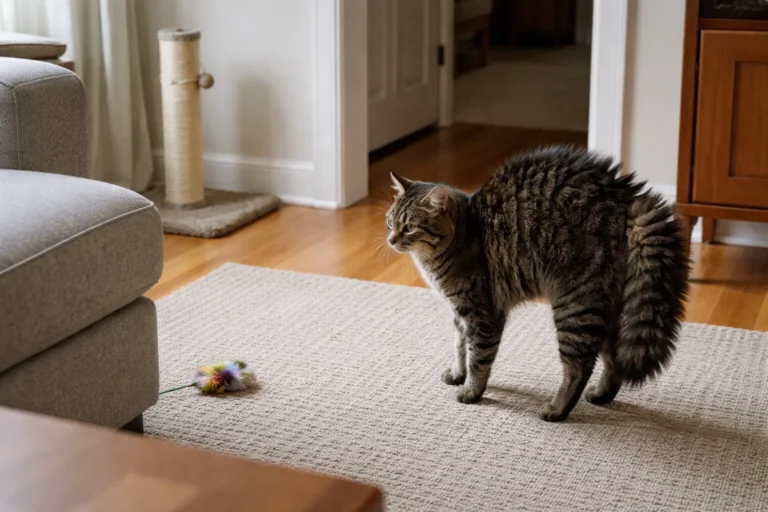
Cat Showing Defensive Behavior: Possible Reasons

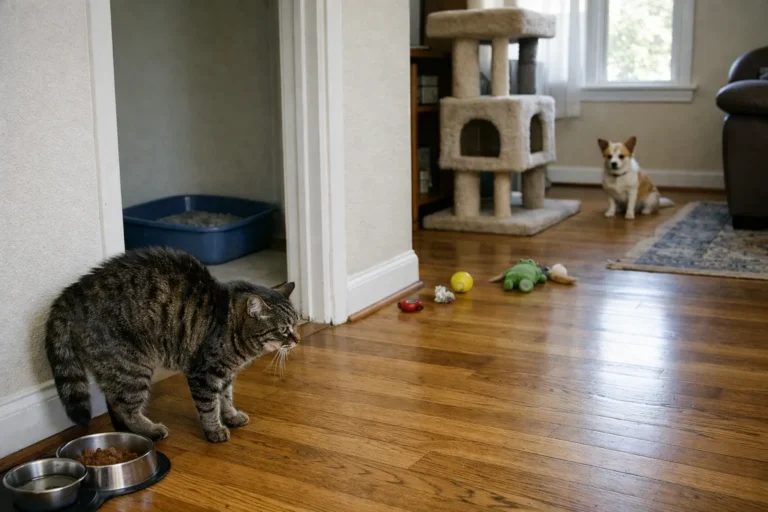
Defensive cat with arched back and alert ears

A cat that suddenly arches its back, flattens its ears, or gives a hard stare is not being “difficult” for no reason. Defensive behavior usually means the cat feels unsure, cornered, overstimulated, or protective of itself. The reaction can look dramatic, but it is often…

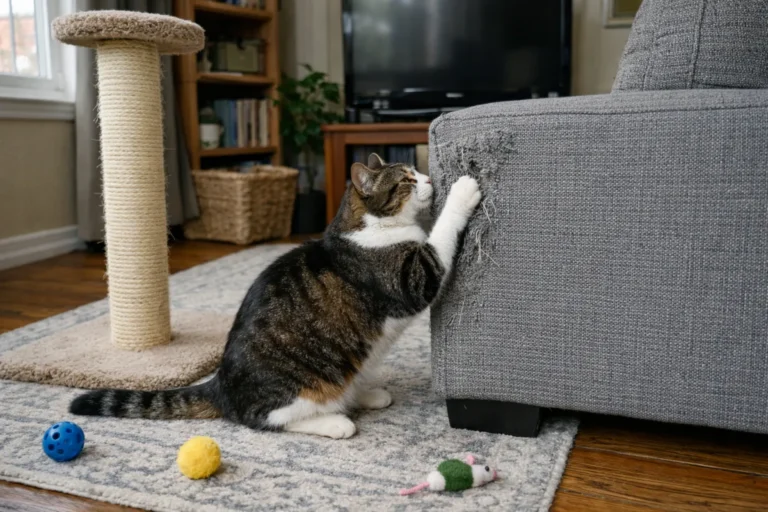
Destructive Scratching in Cats Explained

Cat scratching sofa corner

Destructive scratching can turn a quiet home into a place full of shredded corners, frayed fabric, and scuffed doorframes. One day a cat uses the scratching post with no issue, and the next it seems like the sofa has become a target. That shift can…

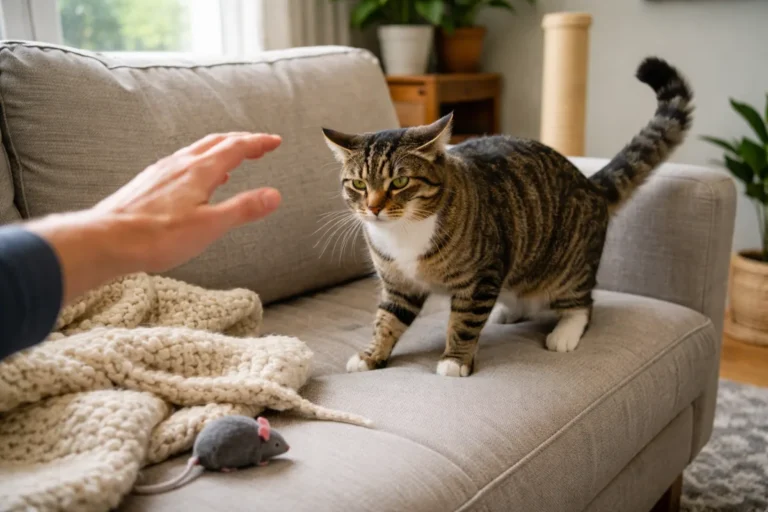
Why Cats Get Easily Overstimulated

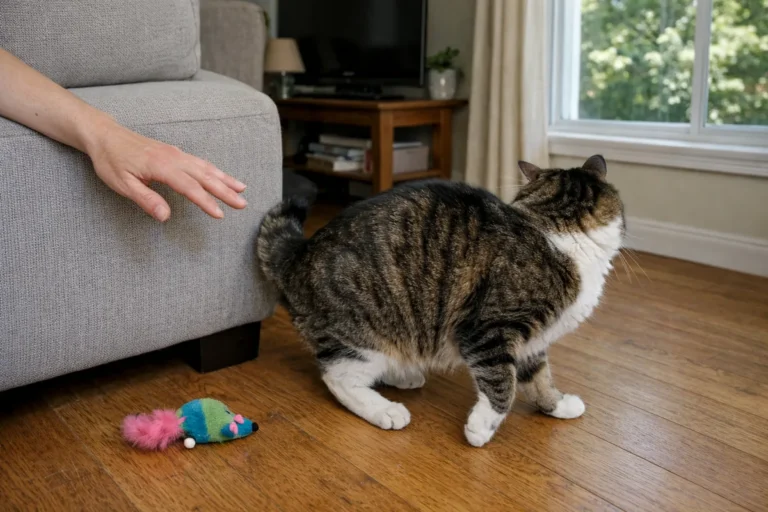
Cat turning away from a petting hand

Some cats seem affectionate one moment and impossible to read the next. They lean into petting, knead with their paws, and purr softly, then suddenly twist away, swat, or dash across the room. That quick change is often a sign of overstimulation, not bad behavior.…

Cat Reacts Strongly to Small Changes

Cat staring at a moved chair in a quiet room

A cat can notice the smallest shift in a room before a person even realizes something changed. A chair moves a few inches. A box appears by the doorway. The food bowl is filled at a slightly different time. For many cats, those tiny details…

Repetitive Behavior in Cats Explained

Cat repeating a hallway patrol

Repetitive behavior in cats can look harmless at first. A cat paces the hallway, circles the same chair, scratches one spot on the couch, or returns again and again to a window ledge. Sometimes the pattern is playful. Sometimes it feels oddly fixed, almost ritual-like.…

Why Cats Pee on Furniture

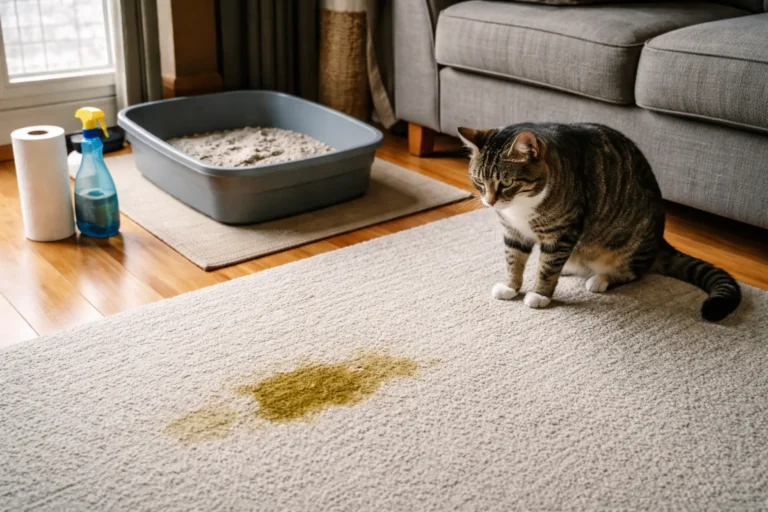
Cat near a sofa with a litter box nearby

When a cat pees on furniture, it can feel frustrating, confusing, and a little personal. A sofa, bed, or chair is part of daily life, so finding urine there often brings the same question: why this spot, and why now? The short answer is that…

Territorial Marking in Cats Explained

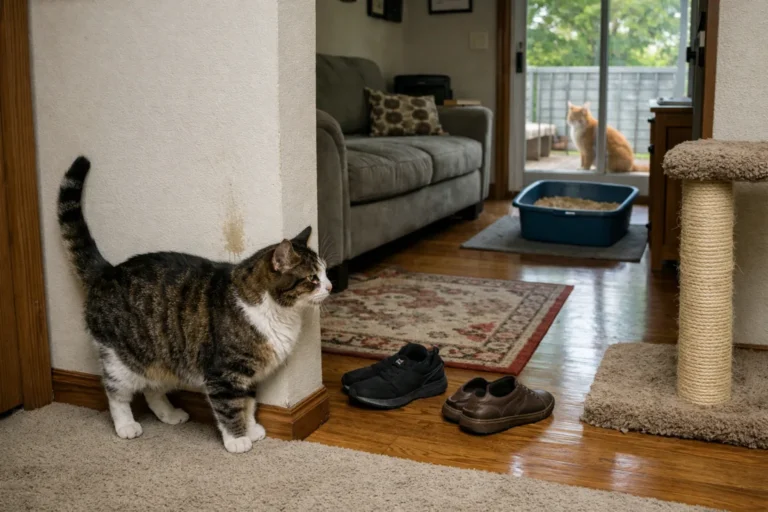
Cat marking territory near a hallway doorway

Territorial marking in cats can look confusing at first. A cat may rub its face on a wall, scratch a doorway, spray a small amount of urine, or leave scent in places that seem random to us. To the cat, though, these actions are often…

Why Cats Knock Things Off Tables

Cat pawing objects off a table

A cat steps onto a table, studies a pen, a spoon, or a small plant, and with one neat paw sends it over the edge. The motion can look deliberate, almost smug. It often happens when the room is quiet, when you are busy, or…

Cat Gets Too Rough While Playing: Why

Cat pouncing on a feather toy

A cat that suddenly starts biting too hard, kicking with both back feet, or grabbing skin during play can leave an owner confused. One moment the interaction seems fun, and the next it feels sharp, intense, or even a little personal. That change is common,…