When a cat digs around the litter box, the behavior can look simple on the surface and still mean very different things. One cat paws at the walls for a few seconds after using the box. Another scratches the floor beside it, circles twice, then leaves without covering anything. A third seems to dig before going in, as if the litter box itself needs some kind of inspection.
These little routines are easy to ignore until they become frequent, messy, or oddly intense. Then the question changes from “Why is my cat doing that?” to “Is something off?” The answer depends on timing, body language, the litter setup, and the cat’s overall habits.
Digging around the litter box is often tied to instinct. Cats naturally explore surfaces with their paws, mark areas, and respond to the texture and smell of the litter. At the same time, repeated or frantic digging can also point to discomfort, stress, or a box that does not feel right to the cat. The details matter more than the behavior alone.
What Cat Digging Around the Litter Box Looks Like in Daily Life
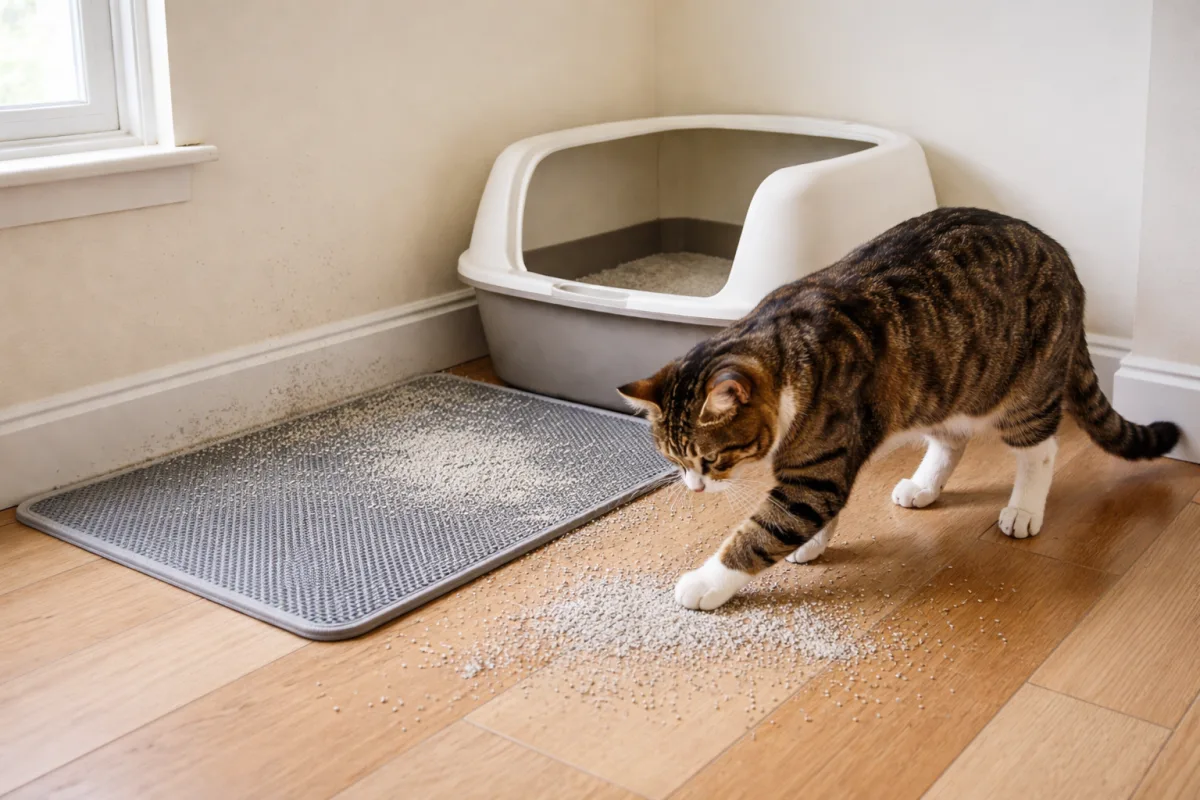
In everyday homes, this behavior usually shows up in a few recognizable ways. Some cats dig into the litter before they use the box, almost like they are preparing the spot. Others dig after urinating or defecating, sometimes covering the waste carefully and sometimes scraping at the sides of the box instead of the litter itself. A few cats dig the floor, mat, or wall near the box and seem satisfied even if no litter is moved at all.
The pattern may be brief and orderly. A cat steps in, scratches twice, uses the box, covers the waste, then exits. That can be completely normal. But when the digging becomes long, repetitive, loud, or disconnected from elimination, it starts to feel different. The cat may be responding to scent, texture, territory, or something in the environment that is affecting comfort.
Common forms of digging behavior
- Digging before entering the box
- Scratching the litter after elimination
- Scraping the side walls or liner
- Digging the floor beside the box
- Repeated digging with no urination or stool
- Circling, pausing, then digging again
Sometimes the behavior is subtle. A cat stands in the doorway and taps the litter a few times with one paw. Other times it is more obvious, with vigorous kicking and scattered litter across the room. The difference between those versions tells you a lot about what the cat is trying to do.
Not all litter-box digging is a litter-box problem. The same action can be a normal covering habit, a sign of discomfort, or a response to the box setup itself.
Why Cats Dig Around the Litter Box
One of the main reasons is instinct. In the wild, cats cover waste to reduce scent and avoid attracting attention. That covering behavior can carry over into the home, even though indoor life is much safer. Digging around the box may simply be part of the cat’s natural sequence: investigate, position, eliminate, cover, leave.
Another reason is surface preference. Cats notice texture more than many owners realize. A box filled too shallowly, too deeply, or with litter that feels dusty, sharp, sticky, or heavily perfumed can prompt extra digging. The cat may be searching for a more comfortable spot or trying to test the texture before committing to it.
Territory can play a role too. A cat may dig around the box as part of scent-related behavior, especially if the area feels exposed, shared, or unsettled. In multi-cat homes, the box location can matter as much as the box itself. Cats are sensitive to how space is arranged, and they often react to those details with physical behavior rather than obvious protests.
Internal reasons that can shape the behavior
- Instinct to bury scent
- Preference for a certain litter texture
- Uneasiness about the box location
- Marking behavior in shared spaces
- Attempting to make the area feel acceptable before use
Digging can also happen when a cat is uncertain. Cats often check and recheck surfaces when they do not feel fully settled. That can look like careful pawing, then more pawing, then a pause, then another round of digging. The cat may not be “confused” in a human sense, but the behavior can reflect hesitation or a need for reassurance.
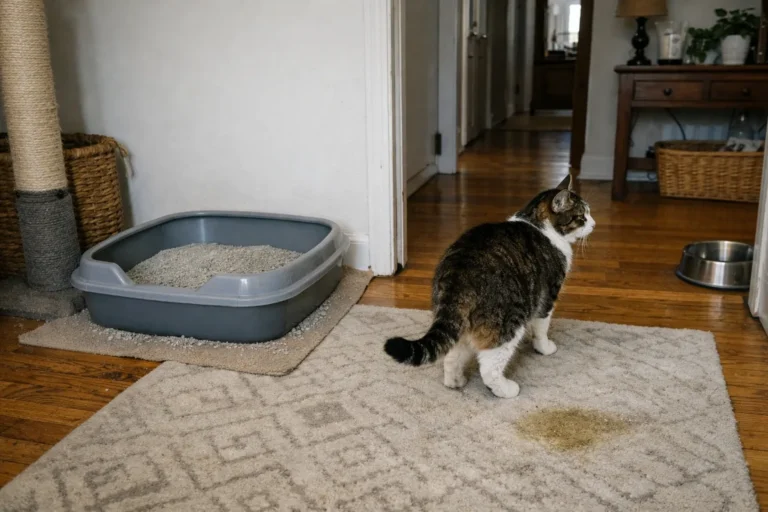
Repeated digging without using the box can point to avoidance, discomfort, or confusion about the setup. The behavior is worth watching when it becomes habitual.
How the Environment Changes the Behavior
The same cat may dig calmly in one home and intensely in another. Environment makes a big difference. A litter box placed near a loud appliance, a busy hallway, a dog’s resting area, or a corner with poor escape routes can make a cat more vigilant. That vigilance often shows up through extra digging, extra circling, or more time spent assessing the box before use.
Box design matters just as much. Some cats dislike covered boxes because smells build up and the escape route feels limited. Others dislike open boxes because they feel too exposed. The box may be large enough for a kitten but too cramped for an adult cat. A cat that has to twist, crouch awkwardly, or step on the same soiled area may start digging more than usual.
Litter depth can influence the whole routine. Too little litter may cause the cat to scratch at the hard bottom of the box. Too much litter can make the cat dig deeply and fling material out as it searches for stable footing. Either problem may turn a normal habit into a bigger, messier one.
Environmental factors to check
- Box size and entry height
- Covered versus open box preference
- Litter depth and texture
- Box location and noise level
- Cleanliness and odor buildup
- Number of boxes in the home
Cleanliness matters in a very practical way. Some cats dig more when they are trying to avoid a soiled patch. If the box is not cleaned often enough, the cat may scratch around as though searching for a fresh area. That may be the cat’s way of working around a box that feels crowded or unpleasant.
In multi-cat homes, one cat may dig more simply because another cat has recently used the box. The scent left behind can change the experience. Even if a box is technically clean, it may not feel that way to the cat using it next. That subtle difference can shape digging behavior from one day to the next.
What the Behavior May Signal About the Cat’s State
Normal digging is usually smooth, brief, and tied to a clear sequence. The cat enters, scratches, uses the box, and leaves. The body looks relatively loose. The tail may move naturally, not rigidly. There is purpose, but not tension.
When digging becomes more intense, the cat’s body can tell a different story. You may see stiff legs, repeated scratching in one place, a sudden freeze, or a quick exit. The cat may seem frustrated, restless, or unsure. If the digging happens alongside frequent litter-box visits, long squatting, vocalizing, or accidents outside the box, the behavior deserves closer attention.
Sometimes the cat is trying to manage discomfort. A cat with urinary discomfort, constipation, or general pain may act differently in and around the box. The digging may be more frantic, or the cat may avoid settling down once inside. While digging alone does not diagnose anything, a change in pattern is meaningful.
Soft signals versus stronger signals
- Soft signal: brief scratching before or after normal box use
- Soft signal: light pawing at the litter or box edge
- Strong signal: repeated digging with no elimination
- Strong signal: restlessness, vocalizing, or sudden exit
- Strong signal: new avoidance of the box area
A change in digging style is often more important than the digging itself. A familiar habit that suddenly becomes urgent, repetitive, or linked to avoidance can reflect a shift in comfort.
Stress can also shape the behavior. A cat that feels uneasy may dig longer as part of an arousal pattern, not because the box needs more work but because the cat feels unsettled. That can happen after changes in the home, new animals, construction noise, schedule disruptions, or even a box moved to a different room. Cats often respond to change through small physical rituals before they settle down.
Playful, Neutral, and Defensive Digging
Not every digging pattern carries the same meaning. Some cats treat the litter box area like a surface to investigate. They scratch near the entrance, tap at the mat, or move litter with one paw while looking around. That can be playful or simply exploratory, especially in younger cats. The behavior often appears relaxed and ends quickly.
Neutral digging is the most ordinary version. The cat enters with little hesitation, performs a short set of scratches, uses the box, and covers the waste. There is no drama in it. It is simply part of the cat’s routine, and the movement is efficient rather than emotional.
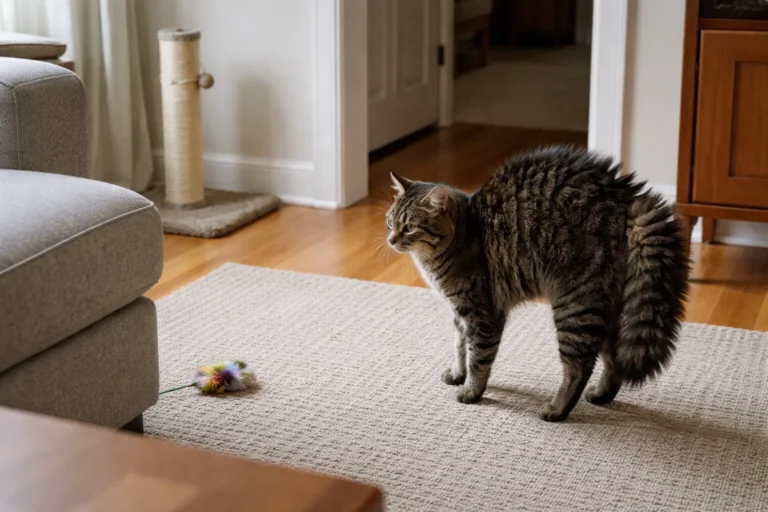
Defensive or tense digging looks more driven. The cat may scratch with force, keep shifting position, or appear alert to sounds nearby. Some cats do this when they feel vulnerable in the box area. A loud washing machine, another cat watching nearby, or a box placed in a dead-end corner can make the cat act like it needs to finish quickly and leave.
How the forms differ in practice
| Type | Typical body language | What it often means |
|---|---|---|
| Playful/exploratory | Loose body, casual pawing | Curiosity or surface play |
| Neutral | Calm, efficient movement | Normal toilet routine |
| Defensive/tense | Stiffness, quick exit, alertness | Discomfort, stress, or insecurity |
Mixed signals are common. A cat may begin with neutral digging, then suddenly switch to a defensive pattern if another pet walks by. Or it may dig playfully around the box and then use the litter normally. That shift can happen fast, which is why context is so useful. One moment of pawing does not tell the whole story.
How Owners Often Misread It
People often assume digging means the cat is being messy or stubborn. Sometimes that is not far from the truth, but cats are usually responding to something in the space. They are not trying to make cleanup harder. They are adjusting to scent, texture, privacy, or comfort in the only way available to them.
Another common misunderstanding is assuming that more digging means better covering. That is not always the case. A cat can dig a lot and still fail to cover waste well, especially if the litter is too shallow or the box is too small. The behavior may be about trying to find acceptable footing rather than perfectly burying anything.
Some owners also mistake digging for boredom alone. While some playful scratching can happen during high-energy moments, litter-box digging has stronger ties to routine and environmental comfort than to ordinary play. If it keeps happening in the same place, at the same time, or under the same conditions, the box setup usually deserves more attention than the cat’s mood in isolation.
What looks like “bad habits” is often the cat signaling that the litter area does not fully match its needs.
Daily Patterns That Make the Behavior More Noticeable
Timing can reveal a lot. A cat that digs more after the evening meal may simply be following a normal elimination pattern. A cat that digs more after household activity starts may be responding to noise or movement. A cat that only digs intensely when another pet is nearby may feel pressure around shared resources.
Routine changes can amplify the behavior. Guests staying over, a new cleaning product, a different litter brand, or a box that was scooped later than usual can all change how the cat approaches the area. Cats pay attention to these shifts even when people think the home still feels the same.
For some cats, the behavior becomes more obvious during transitions. A move to a new home, a remodel, a new baby, or a change in the number of boxes may lead to extra investigating. The digging can become part of the cat’s adjustment period. It does not always mean a long-term problem, but it does show that the cat is responding to environmental pressure.
Situations that often increase digging
- Recent move or room change
- New pets in the home
- Loud appliances or frequent foot traffic
- Box not cleaned on the usual schedule
- Switching litter types suddenly
- Competition around a shared box
When the behavior follows a clear pattern, it becomes easier to interpret. A cat that digs only after another animal uses the box may be reacting to scent. A cat that digs more when the box is freshly changed may not like the new litter texture. A cat that begins scratching the floor beside the box after a move may be looking for a safer-feeling space. Those small clues point to the source.
What Long-Term Patterns Can Tell You
Some cats always dig more than others. That can be part of their individual style. If the behavior has been consistent for months or years and the cat otherwise uses the box normally, it may simply be the cat’s preference. A cat can be neat in one way and fussy in another.
Long-term change is more important than long-term habit. If a cat that once used the box calmly now spends much longer digging, switching positions, or avoiding the box afterward, the change deserves attention. The same is true if the cat starts digging outside the box after using it. Those shifts may reflect a problem with the box itself, the environment, or the cat’s comfort level.
It helps to notice whether the behavior is stable across different situations or only appears under certain conditions. A stable habit often points to preference. A pattern that rises and falls with household changes often points to context. A sudden, intense change can suggest discomfort that needs closer observation.
Consistency matters. A cat’s long-standing digging habit usually differs from a new pattern that appears with urgency, avoidance, or obvious tension.
In the end, litter-box digging is one of those cat behaviors that can be ordinary, meaningful, or both at once. The paws moving through the litter may be following instinct, but the way, timing, and setting of the behavior tell the real story. When the box feels right, the routine often stays simple. When it does not, the digging tends to become louder, longer, or harder to ignore.