When a cat starts avoiding the litter box, the change can feel sudden and frustrating. One day everything seems normal, and the next day you are finding urine on a rug, behind a sofa, or beside the box instead of inside it. The behavior often looks like a simple refusal, but it usually has a reason behind it.
Cats do not usually stop using their litter box just to be difficult. Their habits are closely tied to comfort, safety, cleanliness, and routine. When something feels off, they may react by changing where they eliminate, how often they go, or how they behave around the box itself.
Understanding litter box avoidance means looking at the whole picture. The location of the box, the type of litter, the cat’s health, stress levels, and changes in the home can all matter. A cat may be trying to communicate discomfort in a way that is easy to miss at first.
What Litter Box Avoidance Looks Like in Daily Life
Litter box avoidance does not always mean a cat never enters the box. In some homes, the cat may use it sometimes and avoid it other times. In other cases, the cat may stand in the box, sniff the litter, then walk away and go somewhere else.
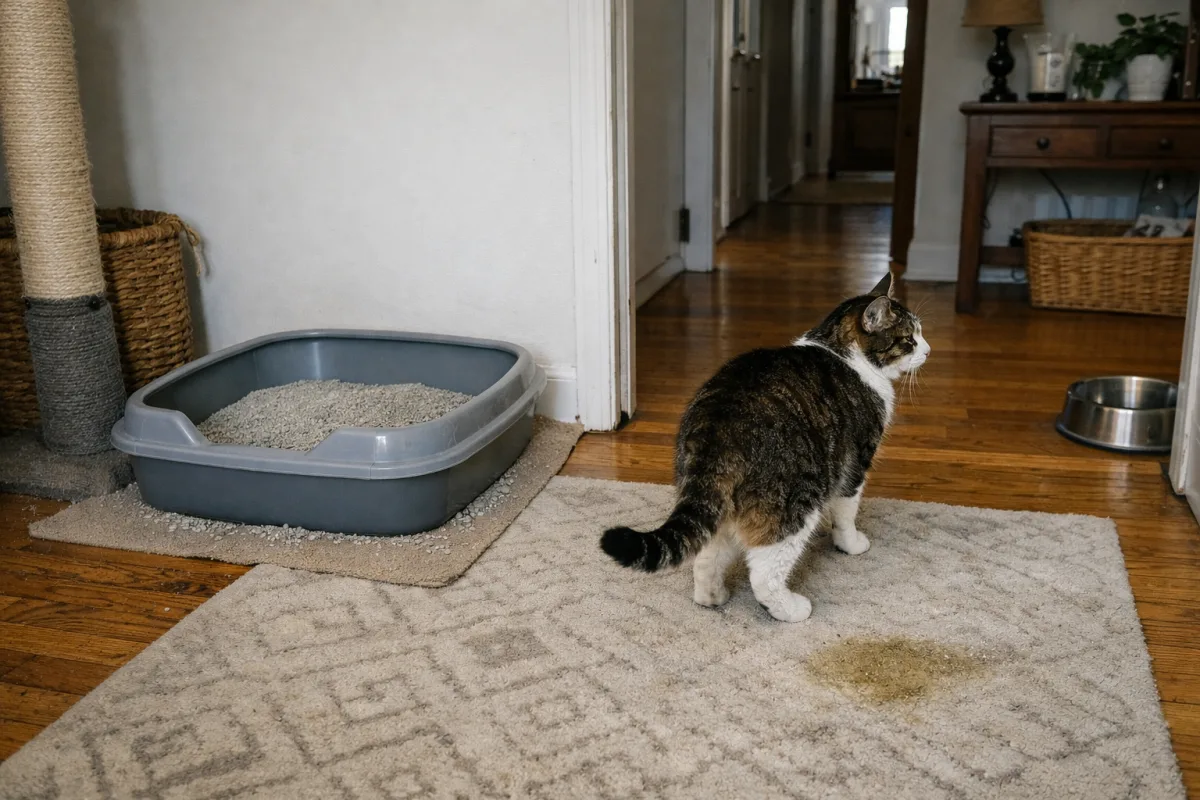
Some cats choose surfaces that feel similar to litter, such as bath mats, laundry piles, rugs, or soft bedding. Others urinate right next to the box, which can make the problem seem more puzzling. A few cats begin with perfect litter box habits and then shift suddenly after a change in the house.
Common signs include:
- Urinating or defecating outside the box
- Going near the box but not inside it
- Scratching around the box without eliminating
- Leaving small amounts of urine in several places
- Using one box but avoiding another
Sometimes the cat’s behavior changes before the mess does. A cat may hover, seem tense, or leave quickly after entering the box. These details can matter because they often show discomfort before the pattern becomes obvious.
Why Cats Avoid the Litter Box
There is rarely one simple explanation. Litter box avoidance often comes from a mix of physical and environmental factors. A cat may be uncomfortable, unsure, startled, or unhappy with the setup.
Medical discomfort
Health problems are one of the most important things to consider. Pain or urgency can make using the box unpleasant, and the cat may begin to connect the litter box with discomfort. Urinary tract issues, constipation, arthritis, kidney disease, and other conditions can all affect bathroom habits.
Older cats are especially vulnerable because climbing into a high-sided box can hurt stiff joints. Cats with bladder discomfort may also associate the box with frequent painful trips, which makes them more likely to look for a different place.
When a cat changes litter box habits suddenly, medical causes should be considered early. A behavioral explanation is not enough if pain or illness may be involved.
Box design and cleanliness
Many cats care a great deal about box condition. A box that is too small, too deep, too enclosed, or too dirty may be rejected. Cats are careful animals, and they often avoid spaces that feel crowded or contaminated.
A strong detergent smell, scented litter, or a box placed near a noisy appliance can also matter. What seems minor to a person may feel overwhelming to a cat with a sensitive nose and a strong preference for quiet privacy.
Litter preference
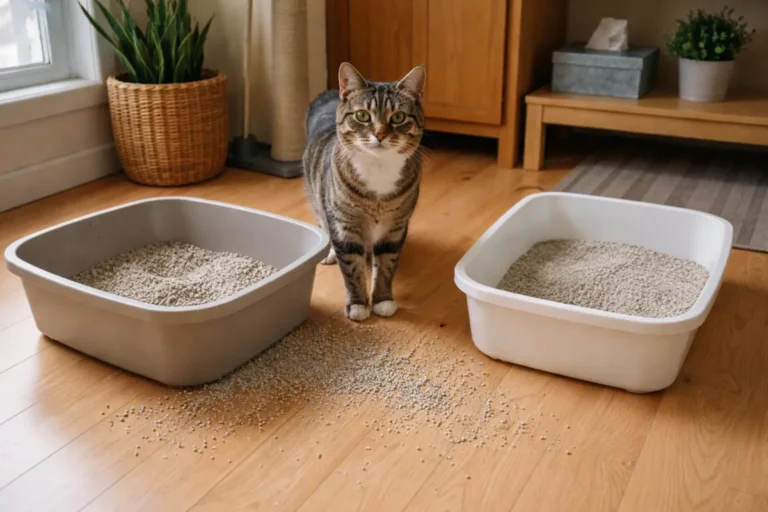
The texture of the litter can be a real factor. Some cats like fine, soft litter and dislike large pellets or hard crystals. Others tolerate many types but avoid anything perfumed or dusty.
Switching litter brands too quickly can be enough to disrupt a habit. Cats do not always adjust on the same timeline as their owners expect, and a small change can create a big reaction.
Stress and territory
Cats often react to changes in their environment by shifting elimination habits. New pets, new people, moving furniture, construction noise, and changes in routine can create stress. Even a cat that seems calm may feel unsettled when familiar cues disappear.
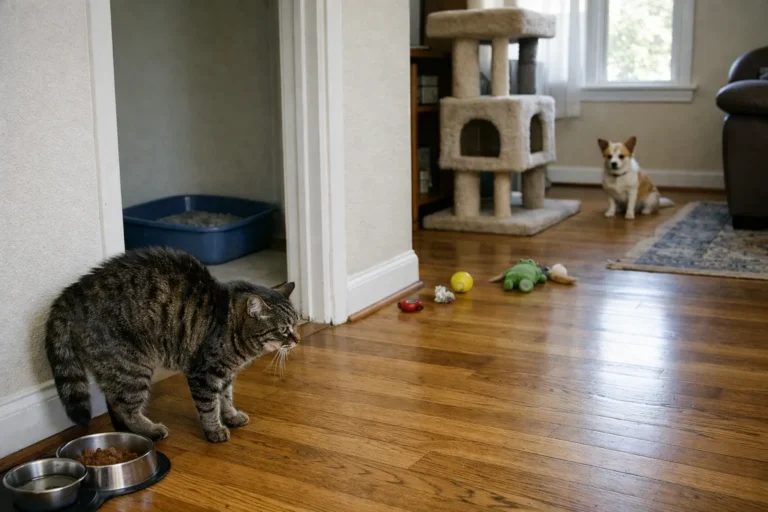
Territorial tension matters too. In multi-cat homes, one cat may block another from the box or make the area feel unsafe. The cat avoiding the box may not be “misbehaving”; it may be trying to avoid a place that now feels crowded or unpredictable.
How the Home Environment Shapes the Behavior
The litter box setup in a home can either support good habits or make them harder to maintain. Cats notice where the box is placed, how easy it is to reach, and what is happening around it. A box in a quiet area is often better than one next to a loud washer, a furnace, or a busy hallway.
Accessibility matters, especially for kittens, senior cats, and cats with mobility issues. A box with high sides may be difficult to enter. A basement box may be avoided if the stairs are steep, dark, or used less often.
Multiple cats add another layer. Even if each cat technically has access to a box, the shared space may still feel uncomfortable. One cat may guard the area, ambush others nearby, or simply make the box feel less safe through repeated presence.
Routine changes that can trigger avoidance
- Moving the litter box to a new room
- Changing litter type or box style
- Cleaning the box with a strong-smelling product
- Adding a lid, flap, or cover
- Relocating furniture near the box
- Introducing a new cat or dog
Even positive changes can create confusion. A cleaner house, a rearranged room, or a new household schedule can interrupt a cat’s sense of predictability. For many cats, predictability is not a luxury; it is part of what keeps daily life comfortable.
What the Behavior May Signal About the Cat’s State
Litter box avoidance can reveal more than a bathroom problem. It may point to physical pain, emotional tension, or confusion about a changed environment. The exact meaning depends on the cat’s age, personality, health, and habits before the change.
A cat that suddenly stops using the box may be dealing with a medical issue first and foremost. A cat that only avoids one of several boxes may be expressing preference or concern about that specific setup. A cat that seems restless, hides more, or becomes harder to approach may be showing broader stress rather than a single litter-related issue.
Body language that can appear alongside avoidance
- Repeated trips to the box with little result
- Tail held low or body held tense
- Sniffing the box and leaving
- Watching the surroundings before entering
- Hiding more than usual
- Cleaning the genital area more often
Timing can be revealing too. If the behavior happens after a move, a household change, or the arrival of another animal, the environment deserves close attention. If it appears with vocalizing, straining, blood in urine, or a sudden drop in appetite, health concerns become much more urgent.
Pattern matters. A single accident can happen for many reasons, but repeated avoidance usually means the cat is uncomfortable with something in its world.
How Owners Often Read It vs What It May Actually Mean
It is easy to interpret litter box avoidance as stubbornness. That reaction is common because the behavior is inconvenient and often unpleasant to clean up. But cats usually do not connect the issue to house rules in the same way humans do.
What looks like defiance may actually be a cat choosing the least uncomfortable option available. If the box hurts, smells wrong, feels exposed, or is guarded by another cat, the cat may decide another place is safer. The choice is practical from the cat’s point of view.
Another common misunderstanding is assuming the cat “knows better” and is choosing to be spiteful. Cats generally do not eliminate outside the box to send a message. They are responding to discomfort, habit disruption, or a problem they cannot solve in any other way.
Situations that are often misread
- A cat peeing right beside the box may still be trying to use the box area, not rejecting it completely
- A cat that uses the box for urine but not stool may be reacting to pain, constipation, or box aversion
- A cat that avoids one room’s box may be objecting to noise, traffic, or another pet nearby
- A kitten that misses the box may simply need a lower-sided, easier-to-find setup
These details help narrow down the cause. They also show why a single cleanup session rarely tells the whole story. The location, timing, and type of accident often say more than the mess itself.
Different Patterns in Kittens, Adults, and Older Cats
Kittens often have the simplest explanation: they are still learning. They may forget to go in time, miss the edge, or get distracted before reaching the box. A kitten’s accidents can still signal that the box is too far away, too high to enter, or too hard to recognize.
Adult cats are usually more consistent, so a new avoidance pattern deserves closer attention. If an adult cat changes suddenly, the cause is often environmental or medical rather than a lack of training. Many adult cats are highly attached to routine and react quickly when something changes.
Senior cats bring another set of concerns. Arthritis, vision decline, and urinary issues can make the litter box harder to use. A cat that once jumped into a tall box without hesitation may begin avoiding it simply because it hurts to step over the edge.
Age-related clues worth noticing
- Kittens may need more frequent access and easier box entry
- Adults often show stronger pattern changes after stress or a household shift
- Seniors may avoid the box because of pain, weakness, or reduced mobility
Watching how the behavior changes over time can help reveal what is driving it. A cat that improves when a box is moved, lowered, or cleaned differently is giving useful information. A cat that does not improve may need a deeper look at health or household stress.
How to Read the Behavior Without Overreacting or Ignoring It
Litter box avoidance deserves attention, but not every accident means the same thing. The most useful response is careful observation. Small details often point toward the right explanation.
Start with the basics: how many boxes are available, where they are placed, how often they are cleaned, and whether anything changed recently. Then look at the cat’s physical behavior. Is the cat straining, visiting more often, or showing discomfort? Is the cat hiding, eating less, or acting tense around other animals?
If the pattern seems tied to a recent change, environmental pressure may be the main issue. If the behavior is sudden or paired with physical signs, medical care should move to the front of the list. Both can be true at once, which is why the full context matters.
A useful question is not “Why is the cat doing this?” but “What changed around the time this started?”
Long-Term Patterns and Stability
Some cats return to the litter box once the cause is addressed. Others develop a strong aversion to a certain box, room, or litter type and need a slower reset. Once a cat links the box with discomfort or stress, the memory can linger.
That does not mean the pattern is permanent. Cats can relearn safer habits when the environment becomes more comfortable and consistent. A change in box placement, litter type, household routine, or medical treatment may restore confidence over time.
Long-term stability usually depends on whether the cat feels that elimination is predictable again. If the box stays clean, accessible, quiet, and easy to use, many cats settle back into normal behavior. If the underlying issue remains, the avoidance pattern often comes and goes.
What tends to make habits more stable
- Consistent box location
- Low-traffic placement
- Regular cleaning
- Enough boxes for the number of cats in the home
- Box size and entry height that match the cat’s needs
- Minimal competition from other pets
Stability is not only about habit. It is about whether the cat can move through the day without feeling surprised, blocked, or uncomfortable when it is time to eliminate.
Putting the Behavior in Context
Litter box avoidance becomes easier to understand when it is seen as a response, not a random mistake. The cat is reacting to something in the body, the environment, or both. That reaction can be brief, repeated, mild, or intense.
In one home, the trigger may be a box that is too dirty. In another, it may be joint pain, a loud appliance, a nervous new cat, or a litter texture the cat never liked. The surface behavior can look the same, but the cause can be completely different.
When the cat’s routine, comfort, and health are examined together, the pattern usually becomes clearer. The litter box is a small space, but for a cat it carries a lot of meaning. It is private, sensory, and closely tied to safety.
A cat that avoids it is often giving a practical signal that something needs to change. The signal may be subtle at first. Then it becomes impossible to ignore.