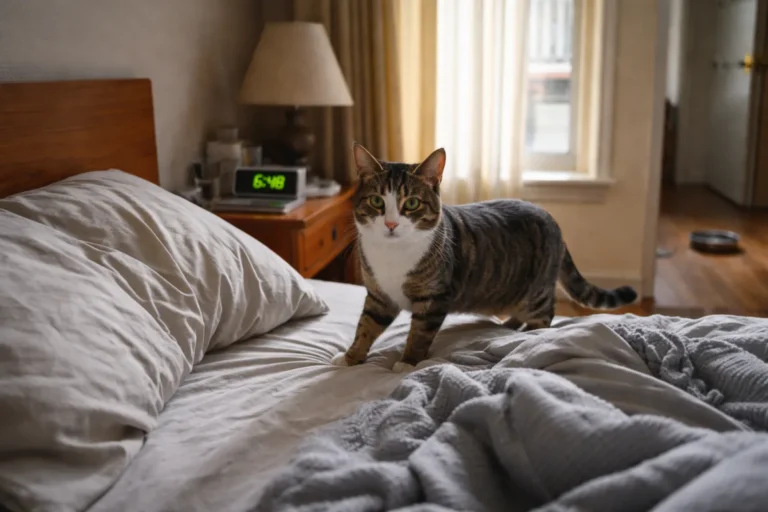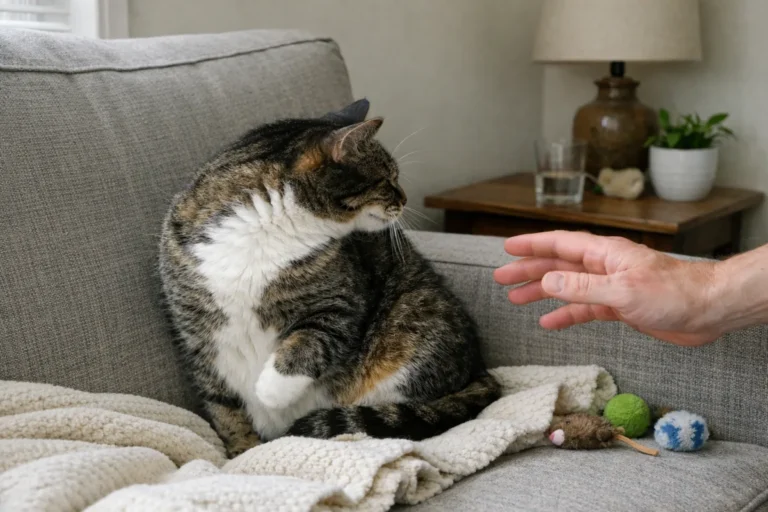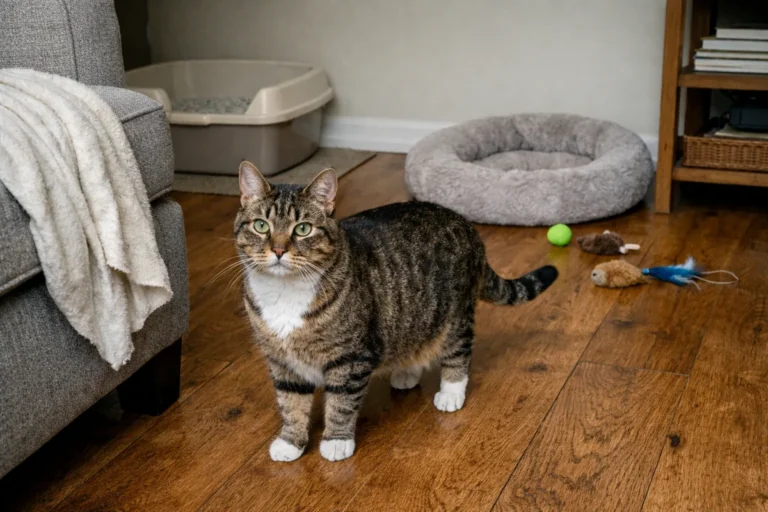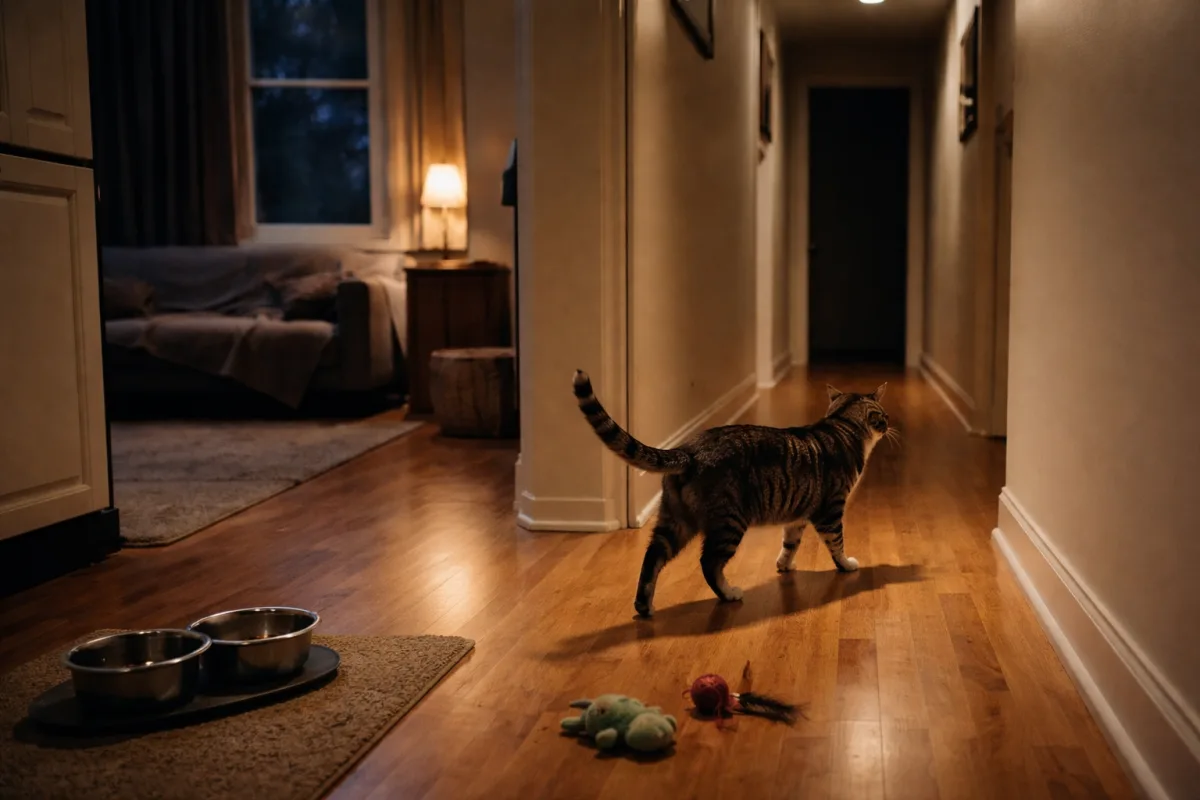
Nighttime restlessness in cats often starts with something small: a burst of running across the hallway, a few loud meows near the bedroom door, or a cat that seems calm all evening and then suddenly becomes active when the house goes quiet. For many owners, it feels puzzling because the behavior shows up when the family is trying to sleep. Yet for a cat, the shift from daytime routine to nighttime silence can change everything.
Some cats pace. Some paw at doors. Others chirp, jump on furniture, or insist on being fed at the same hour every night. The behavior can look playful, demanding, anxious, or simply energetic, depending on the cat and the situation. What happens after sunset is often tied to instinct, habits, environment, and sometimes a physical need that is easy to miss during the day.
Not every restless cat is trying to be difficult. In many cases, the behavior has a clear reason. Once the pattern is understood, the late-night activity becomes easier to interpret and manage without turning the home into a battleground at bedtime.
Why Cats Become Restless at Night in Everyday Life
In ordinary home settings, nighttime restlessness usually appears when a cat’s natural rhythm does not match the household schedule. Cats are not truly nocturnal in the same way as some wild animals, but they are often most active during dawn and dusk. If a cat spends much of the day sleeping while the humans are away or busy, there may be a surge of energy left over by night.
That leftover energy can show up in familiar ways:
- running through the house after lights go out
- vocalizing near doors or bedrooms
- seeking attention when everyone is trying to settle down
- knocking objects off tables or shelves
- staring into corners or moving from room to room without resting
Sometimes the behavior is brief. A cat might have a 20-minute burst of activity and then curl up near the foot of the bed. Other times, it can continue for hours. The difference usually depends on what is driving the restlessness in the first place.
The Natural Rhythm Behind the Behavior
Many cats are crepuscular, which means they tend to be most active around dawn and dusk. This pattern comes from their hunting ancestry. In the wild, these times offered good chances to catch prey while avoiding the heat of the day and some larger predators. Even though household cats no longer need to hunt for survival, that internal rhythm often remains.
That does not mean every cat will act the same way. Some adapt well to human routines, especially when their days include enough movement, interaction, and predictable meals. Others keep a stronger link to their instinctive schedule. A cat that seems restless at night may simply be following a built-in pattern that has not been fully replaced by the home’s routine.
Nighttime activity is often less about “bad behavior” and more about a cat’s body clock, daily energy use, and unmet needs during the day.
How Daily Boredom Turns Into Nighttime Energy
One of the most common reasons cats become restless after dark is simple under-stimulation. A cat that sleeps most of the day may still have plenty of energy when the household becomes quiet. If there was little climbing, chasing, exploring, or interactive play earlier, the cat may look for a way to use that energy later.
This is especially noticeable in indoor cats. They may have fewer natural outlets for movement and problem-solving. A living room can feel interesting for a while, but once the same toys, furniture, and windows become familiar, the cat may start inventing new activities. At night, those activities can become much more obvious because nothing else is competing for attention.
Restlessness from boredom often has a certain quality. The cat may not look distressed. Instead, the behavior feels busy, curious, and slightly determined. The cat might bounce from room to room, bat at curtains, or ask for interaction in a repeated cycle. This can be more about pent-up energy than emotional upset.
When Hunger, Habits, or Feeding Times Are Part of the Problem
Food can strongly shape a cat’s nighttime behavior. If a cat expects a meal at a certain hour and does not get it, the restlessness may show up as pacing, vocalizing, or persistent attention-seeking. Cats are quick to learn patterns. If a midnight snack happened once or twice, they may begin treating that time as a normal feeding window.
Some cats also become restless when the gap between dinner and breakfast is too long for their individual needs. The issue is not always true hunger in a medical sense. Sometimes it is anticipation. The cat has learned that movement, meowing, or waking a person can produce food. Once that link is established, the behavior can become very reliable.
Common feeding-related triggers
- late or inconsistent meal times
- free feeding changes that reduce predictability
- treats given near bedtime
- overnight hunger in young or very active cats
- reinforced begging after a person responds to meowing
In some households, shifting meal timing or adding an evening play session before food can reduce the late-night rush. The cat may settle more easily when the day ends with a clear pattern: hunt, eat, groom, sleep. That sequence closely matches a cat’s natural cycle.
Restlessness and the Need for Attention
Not all nighttime activity is rooted in physical energy. Some cats become restless because they want connection. A cat may spend the day near a person but still seek more interaction when the house is quiet and the owner is lying down. At night, the cat can finally get undivided attention, even if that attention is negative.
A cat that meows outside the bedroom or taps a person’s face may be saying, in its own way, that it wants company. The behavior can become stronger if it has worked before. If a cat learned that pawing at the blanket leads to petting, or that loud meows lead to a conversation, the cat may repeat the pattern.
This kind of restlessness is often most noticeable in social cats or cats that dislike being alone for long periods. It may also appear after changes in the home, such as a new work schedule, reduced playtime, or a shift in where the cat sleeps. The behavior may not be about the night itself. It may be about the cat noticing that the human is finally still.
Stress, Uncertainty, and Changes in the Home
When a cat becomes restless at night, the explanation is not always simple excitement. Stress can produce the same outward signs. Cats are sensitive to changes in routine, noise, scent, and household activity. A move, a new pet, visitors staying over, construction outside, or even rearranged furniture can affect how settled a cat feels after dark.
Stress-related restlessness often looks different from playful energy. The cat may seem watchful, easily startled, or unwilling to settle in one spot. Some cats hide during the day and become active only when the household quiets down. Others move around with a tense body, dilated pupils, or a tail that flicks sharply instead of relaxed swishing.
If a cat seems restless and also looks tense, avoids usual resting places, or changes eating and litter habits, the behavior may be tied to stress rather than simple nighttime energy.
In those cases, the night may feel safer because the home is still. The cat can hear more, sense more, and choose where to move without interruption. What looks like random roaming can actually be careful monitoring of a changing environment.
Physical Discomfort Can Also Show Up at Night
Sometimes restlessness is a cat’s way of coping with discomfort. Pain, itching, digestive issues, urinary discomfort, or mobility problems may become more noticeable when the cat is trying to lie still. During the day, movement and distractions can mask the issue. At night, the cat has fewer distractions and may have a harder time settling.
An older cat that gets up repeatedly, shifts sleeping spots often, or vocalizes more than usual at night may be dealing with a physical change. The same is true for a cat that suddenly becomes active at night when it used to sleep soundly. A shift in pattern matters. Cats do not usually change habits without a reason.
Owners sometimes assume the cat is simply getting older, more stubborn, or more demanding. But a new pattern, especially one paired with changes in appetite, litter box use, grooming, or mobility, deserves closer attention. Nighttime restlessness can be one of the first signs that something is off.
How Restlessness Shows Up in Different Forms
Not all restless cats act the same way. The details matter, because the style of the behavior often points to the underlying cause.
| Type of behavior | What it may look like | Possible meaning |
|---|---|---|
| Playful restlessness | running, pouncing, toy chasing, quick bursts of energy | pent-up energy, normal activity cycle |
| Attention-seeking restlessness | meowing, pawing, following people, jumping on the bed | wants interaction, food, or routine response |
| Stress-related restlessness | pacing, hiding, hypervigilance, tense posture | feels unsettled or uncertain |
| Discomfort-related restlessness | frequent position changes, inability to settle, vocalizing | possible pain or physical irritation |
The same cat can move between these forms depending on the day. A playful cat may seem restless after a nap, while a stressed cat may become active only when the home is quiet and everything feels exposed. Looking at the whole pattern helps more than focusing on one noisy night.
Why Kittens and Young Cats Are Often the Most Active
Age matters. Kittens and young cats are often more restless at night because they have higher energy levels, less established routines, and a strong urge to explore. Their bodies are growing. Their curiosity is huge. They can sleep hard for a while and then suddenly switch into a burst of movement with very little warning.
Young cats also learn quickly from the people around them. If nighttime play becomes a habit, the kitten may begin treating bedtime as another chance to explore, chase, and interact. In many homes, this stage is temporary, but it can be intense while it lasts.
Adult cats can be active too, yet their restlessness often becomes more tied to routine, boredom, or a specific change in the environment. Senior cats are different again. When an older cat starts acting restless at night, it is often worth paying attention to whether the behavior seems linked to confusion, discomfort, or a change in daily comfort.
What the Home Environment Does to the Pattern
The shape of the household can either calm nighttime behavior or make it stronger. A quiet, predictable home may help a cat relax sooner, while a busy home with unpredictable noise can leave the cat uncertain and alert. Indoor cats often react strongly to what happens in the space they share every day.
Several environmental details can influence restlessness:
- where the cat sleeps during the day
- how much climbing or movement space is available
- whether windows offer daytime stimulation
- how consistent the evening routine is
- how often the cat is accidentally rewarded for waking people
Even small changes can matter. If the cat used to sleep in a warm, quiet corner and now that spot is blocked or noisy, nighttime behavior may shift. If a household becomes more active in the evening, the cat may stay alert longer. The cat’s response is often practical rather than mysterious. It reacts to what the home makes available.
How Owners Often Misread the Behavior
Owners frequently assume that a restless cat is being stubborn or manipulative. Sometimes the cat is asking for something very specific, but the meaning is not always obvious. A cat that races down the hallway may be trying to release energy. A cat that cries at the bedroom door may be lonely, hungry, anxious, or in discomfort.
Because the behavior happens at a frustrating time, it is easy to focus on the inconvenience instead of the message. Yet the cat’s timing is usually tied to its own internal rhythm. It is not choosing the middle of the night to create drama. That is simply when its needs, habits, or instincts become strongest relative to the household schedule.
When the same restless pattern repeats, the key question is not “How do I stop this?” but “What is this cat trying to do at this hour?”
That shift in thinking helps make sense of the behavior without overreacting to it. A cat that wants play needs a different response than a cat that seems uncomfortable or frightened.
What Helps Calm a Restless Cat at Night
Support depends on the cause, but several practical changes often help. Increasing active play earlier in the evening can reduce leftover energy. Feeding after a play session may also encourage a more natural settle-down pattern. Keeping bedtime and morning routines steady can make the cat feel more secure about what happens next.
For attention-seeking cats, consistency matters. If waking a person leads to food, affection, or play, the behavior is likely to continue. If the response becomes calmer and more predictable, the habit may slowly lose its power. That does not mean ignoring a cat’s needs. It means separating genuine needs from learned nighttime demands.
If the restlessness seems tied to stress, reducing household changes and adding safe resting areas may help. If it appears linked to discomfort, the cat should be observed closely for other signs that point to a medical issue. The pattern itself is a clue, but the surrounding details usually tell the fuller story.
What the Behavior Means Over Time
Some cats are simply more active at night than others, and that tendency can stay fairly stable across years. Other cats change as their routines, health, or home environment changes. A cat that was once quiet at night may become restless after a move, a new family schedule, or a shift in sleep habits. Another cat may grow calmer once it gets more interaction during the day.
Because of that, nighttime restlessness should be read as a moving pattern, not a fixed label. One loud week may mean little on its own. A month of increasing pacing, meowing, or inability to settle is more meaningful. The behavior makes more sense when viewed alongside age, routine, and the cat’s overall condition.
For many cats, night restlessness is the result of ordinary feline biology meeting an indoor life. The cat is awake when the world is quiet, energized when the house is still, and responsive to patterns that humans may not notice right away. Once those patterns are visible, the behavior stops looking random and starts looking like information.