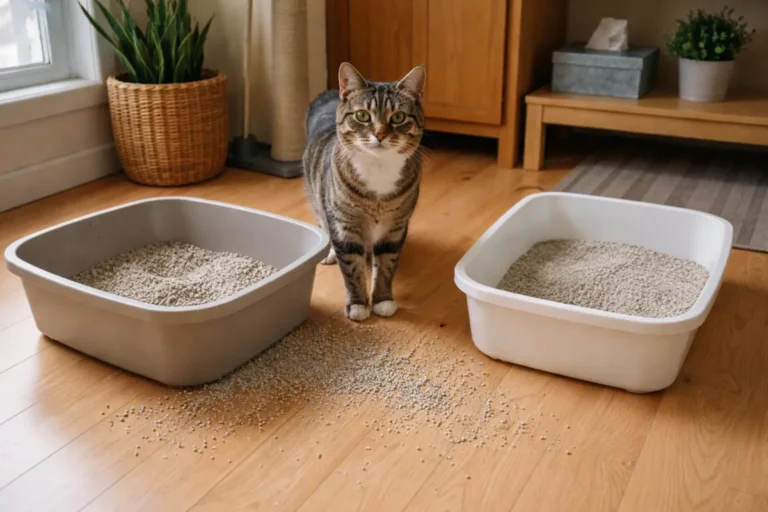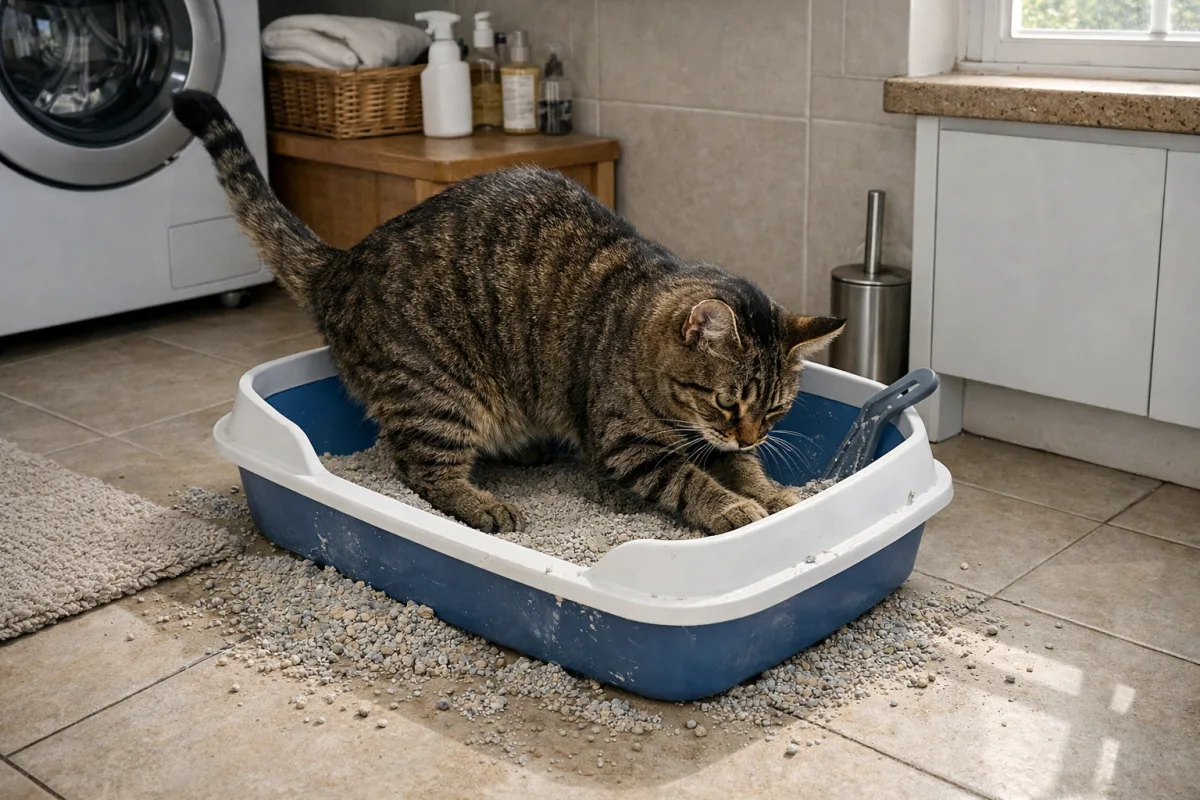
Some cats walk out of the litter box with calm, tidy steps. Others act as if the box has personally offended them. They dig, rake, kick, and scratch for a long time, sometimes before they use the box and sometimes long after they are done. The behavior can look dramatic, especially when litter ends up outside the box, against the wall, or scattered across the floor.
Excessive scratching is not always a problem by itself. Cats are natural diggers, and the litter box invites that instinct. Still, when the scratching feels endless, intense, or noticeably different from your cat’s usual routine, it is worth paying attention. The behavior can reflect habit, preference, discomfort, excitement, or stress, and the context matters more than the scratching alone.
Owners often notice the pattern first in daily life. A cat may enter the box, turn several times, scratch the liner or the sides, kick litter with force, then leave and come back for another round. Some cats do this quietly. Others seem determined to remodel the whole box. The details can offer useful clues.
What Excessive Litter Box Scratching Looks Like
Normal litter box scratching usually has a purpose. A cat digs to make a spot, uses the box, and covers waste afterward. Excessive scratching goes beyond that rhythm. It may look repetitive, prolonged, or overly forceful, even when the cat is already finished.
The difference is often in the pattern. A cat may scratch the same spot over and over, move litter in large waves, or keep pawing at the sides of the box after covering. Some cats scratch before entering, as if testing the surface. Others scratch after leaving, around the entrance or nearby floor, which can look like they are trying to hide something even though they are outside the box.
Common signs that it is more than ordinary digging
- Scratching lasts much longer than the actual use of the box
- The cat repeatedly returns to the same box in one visit
- Litter is thrown far outside the box
- The cat scratches the walls, liner, or box edges instead of only the litter
- The behavior appears every time or almost every time
- The cat seems restless, tense, or hesitant while doing it
Some cats are simply enthusiastic diggers, but the level of intensity matters. A quick, purposeful scratch is different from repeated, almost ritual-like pawing. If the behavior is new or has become more forceful, that shift may be more important than the scratching itself.
Natural Instincts Behind the Behavior
Scratching in and around the litter box starts with instinct. Cats are wired to dig into soft ground, create a place to eliminate, and cover their scent afterward. In the wild, this behavior helps with cleanliness and safety. It reduces the chance that larger animals or competing cats will notice them easily.
That old instinct still lives in modern house cats. Even a very pampered indoor cat may act as if the litter box is a patch of dirt outdoors. Digging before use can feel like preparation. Covering afterward can feel like a necessary finish. Some cats take that job very seriously.
When the scratching becomes excessive, the instinct may be running strong, but it does not always mean the cat is confused. Some cats are just thorough. They may prefer to bury waste deeply, smooth the surface several times, and check their work from different angles before they leave.
Heavy scratching is often a mix of instinct and preference. It can be normal when the cat is comfortable, but it can also become a sign that the box or the cat’s state is not quite right.
How Personality Shapes the Behavior
Cats are not all the same around the litter box. One cat may take two quick paw swipes and walk away. Another may behave like every visit requires a full ceremony. Personality plays a real role here.
Some cats are meticulous. They dislike odor, dislike uneven litter, and seem to want the surface arranged just right. Others are nervous and keep working the litter longer than necessary, almost as if they are unsure whether the spot is safe enough. A confident cat may scratch loudly and move on. A cautious cat may scratch, pause, sniff, scratch again, and continue until the entire area seems acceptable.
Breed, age, and early litter experiences can influence habits too, but daily personality often matters more. A cat who likes control may show it through excessive digging. A cat who is sensitive to change may do the same when the environment feels unfamiliar. The same behavior can look similar while the underlying reason is different.
When the Litter Box Itself Is the Problem
One of the most common reasons for intense scratching is simple discomfort with the box. Cats are picky about texture, size, shape, and cleanliness. If the litter feels wrong under the paws, if the box is too small, or if it has too much odor, the cat may keep scratching in an effort to find a better spot.
Some cats scratch more when the litter is too shallow. They may dig for a while trying to reach a surface that feels right. Others react to overly scented litter by pawing repeatedly, as if trying to move away from the smell. A box with high sides may also lead to awkward scratching because the cat cannot move naturally inside it.
Box and litter factors that can drive over-scratching
- Box is too small for the cat to turn comfortably
- Litter depth is too shallow or too deep
- Litter texture is unpleasant or sharp on the paws
- Strong fragrance bothers the cat
- Box is not cleaned often enough
- Cat feels trapped by a covered or poorly placed box
Some cats also scratch excessively after the box has been recently changed. A new type of litter may feel foreign. A different box shape may not support the same digging motion. Even a box moved to a noisier part of the house can change how long the cat works at the surface.
If a cat suddenly starts scratching far more than usual, the first thing to check is the litter box setup itself. A cat may be reacting to the environment rather than the waste.
Stress, Uncertainty, and Overworking the Box
Cats often show stress in indirect ways, and litter box behavior is one of the clearest places it can appear. A stressed cat may scratch more, pause more often, or seem unable to settle. The behavior can look like fussiness, but it may really be an expression of tension.
Changes in the home are common triggers. A new pet, a new baby, visitors, moving furniture, construction noise, or a different schedule can all make a cat more alert. The litter box can become the place where that uncertainty comes out. The cat digs longer, covers more intensely, or scratches in a repetitive way that seems hard to stop.
Some cats also over-scratch when they are trying to manage scent in a shared home. They may feel the need to cover more thoroughly if another cat is present. In multi-cat homes, the litter box can become part bathroom, part message board. Scratching then carries a social dimension, not just a hygiene one.
Stress-related patterns may include
- Scratching that increases after a household change
- Body language that looks tense or alert
- Frequent visits with little actual elimination
- Starting and stopping several times during one visit
- Using the box at odd hours or rushing away afterward
Stress does not always mean a major crisis. Sometimes it is a low-level unease that builds over time. A cat may still eat, play, and nap normally while showing one odd habit in the box. That single habit can be the first visible clue that something in the environment feels off.
Medical Discomfort Can Change the Pattern
Not every excessive scratch is behavioral. Sometimes a cat is reacting to physical discomfort. If using the litter box feels unpleasant, painful, or incomplete, the cat may spend extra time scratching before, during, or after the attempt.
Urinary issues, constipation, bladder irritation, and pain in the joints or paws can all alter litter box habits. A cat who feels pressure but little relief may keep digging and repositioning. A cat with sore paws may scratch awkwardly or with unusual intensity because each step feels uncomfortable. Even minor irritation can change the way the cat moves inside the box.
In these cases, the scratching may be paired with other clues. The cat may visit more often, strain, vocalize, lick the genital area, or avoid the box entirely and then return repeatedly. Some cats leave the box looking unsettled, then come back a few minutes later for another attempt.
When excessive scratching comes with straining, frequent trips, accidents outside the box, or signs of pain, it deserves prompt veterinary attention.
Different Meanings in Different Situations
The same motion can mean different things depending on timing. Scratching before elimination often reflects preparation. Scratching after elimination is more likely about covering, scent control, or frustration with the result. Scratching without actually using the box can point toward uncertainty, discomfort, or a habit that has become automatic.
Time of day matters too. A cat that scratches heavily once in the evening may simply be following a routine. A cat that does it suddenly and repeatedly throughout the day may be responding to stress, a box issue, or a physical concern. The surrounding behavior gives the scratching context.
How the timing can change the meaning
| Situation | Possible meaning |
|---|---|
| Before elimination | Preparing the spot, testing the litter, or showing uncertainty |
| After elimination | Covering waste, scent control, or dissatisfaction with the box |
| Repeated scratching with no elimination | Stress, discomfort, or litter box avoidance |
| Scratching around the box after leaving | Strong burying instinct or frustration with smell and cleanliness |
Owners sometimes focus on the mess and miss the pattern. Yet the pattern is often the best clue. A cat who scratches fiercely only when the box has been freshly cleaned may be expressing a preference for a very specific litter texture or scent. A cat who scratches harder when another pet is nearby may be responding to social pressure.
How Age and Life Stage Affect the Behavior
Kittens often scratch more simply because they are learning. They may dig with enthusiasm, overshoot the box, or keep pawing because the habit itself is new and interesting. Their movements can be clumsy, repetitive, and messy. In many kittens, the behavior softens as they mature and become more efficient.
Adult cats usually show a more stable pattern. By that point, the scratching style often reflects preference and personality. If an adult cat suddenly becomes more intense in the box, that change stands out more clearly than it would in a young cat still experimenting with everything.
Older cats may scratch differently because of stiffness or discomfort. They may dig less efficiently, take longer to position themselves, or overwork the surface because they are compensating for a body that no longer moves quite as easily. A senior cat may also become more particular about litter texture and box access.
What Owners Often Misread
Excessive scratching is easy to interpret as stubbornness. It can look like a cat is being dramatic, picky, or deliberately making a mess. Sometimes the cat is picky, but the habit usually has a real reason behind it.
Another common mistake is assuming that more scratching always means better cleaning. A cat may scratch endlessly because the box feels wrong, not because it is trying to be neat. More effort does not always equal more comfort. In fact, the opposite can be true.
It is also easy to miss the role of environment. People may focus on the cat’s behavior and overlook the box size, location, litter type, or cleaning schedule. Cats tend to respond quietly to those details, and the scratching becomes the visible result.
A cat that scratches excessively is often communicating through habit, not through noise. The box setup, recent changes, and body language all matter.
How the Home Environment Reinforces the Habit
Once a cat develops a strong litter box routine, the home can reinforce it. A cat that scratches vigorously may learn that this is simply what happens in that box. If the behavior gets attention, the pattern can become even more noticeable. Not because the cat is acting out, but because the habit is now part of the routine.
Noise, foot traffic, and box location can all influence how long the cat stays in the litter box. A box placed near appliances or in a hallway may make a cat feel less settled. A quieter, more private spot may reduce the need for all that extra pawing. The cat does not need to understand the reason. It only needs to feel the difference.
Multi-cat homes create another layer. If one cat is guarding access, or if a shared box feels crowded, a cat may rush or overwork the surface. The scratching may be less about the litter and more about the social atmosphere around it.
When the Behavior Is Probably Normal
Excessive scratching is not always a sign of trouble. Some cats are simply enthusiastic and thorough. If the cat eats well, acts normally, uses the box regularly, and shows no signs of pain or distress, the scratching may just be part of that cat’s style.
Normal version of the behavior often has a few traits. It happens in a predictable way, the cat settles quickly afterward, and the rest of the cat’s routine looks stable. The litter box may be messy, but the cat itself seems relaxed. That difference matters.
Some cats always use the box as if they are trying to bury a secret. Their feet move fast, the litter flies, and the whole process takes longer than expected. If the pattern has always been there and nothing else has changed, it may simply be one of that cat’s quirks.
When It Is Worth Paying Closer Attention
It becomes more important to investigate when the scratching changes. A cat that has always been neat but suddenly starts spending a long time in the box deserves a closer look. A cat that scratches and then strains, cries, or leaves without eliminating also needs attention. The shift in behavior can matter more than the amount of litter on the floor.
Owners should also pay attention if the behavior is paired with avoiding the box, peeing outside the box, diarrhea, vomiting, appetite changes, or grooming changes. The scratching may be only one piece of a bigger pattern. Cats often hide discomfort until the signs become hard to ignore.
Even without obvious illness, repeated over-scratching can lead to practical issues. Litter tracking increases, the box may feel less inviting, and the cat may begin to associate the area with tension. That can start a loop where the box becomes more annoying, and the scratching grows even more intense.
Reading the Behavior in Real Life
In day-to-day life, the best approach is to watch the whole picture. Notice when the scratching happens, what changed in the home, what kind of litter is being used, and how the cat behaves before and after the box visit. A single bad day means less than a pattern across several days.
Some cats need a larger box. Some need a quieter location. Some need a finer litter or a more frequent cleaning routine. Others need a medical check because the litter box has become uncomfortable for reasons that are not visible. The behavior itself is the clue, but the answer usually lives in the details around it.
Excessive scratching can be a strong instinct, a personal habit, or a reaction to something that feels off. The motion may look similar either way, but the surrounding context tells the real story. When the box, the cat, and the household all line up comfortably, the scratching usually becomes less frantic and more purposeful.