A cat can be purring one second and gone the next. One moment there is a head bump, a slow blink, or a relaxed stretch across the couch. Then, without warning, the cat slips away mid-interaction as if something invisible suddenly changed.
That quick exit can feel confusing, especially when the interaction seemed pleasant. Many owners assume the cat got bored, became moody, or rejected the attention. Sometimes that is partly true, but often the reason is more layered than it looks.
Cats leave interactions for many reasons that have little to do with dislike. Their bodies, instincts, and daily surroundings all shape how long they stay engaged. A cat may simply have reached its comfort limit, noticed a sound, or decided the moment was over.
Understanding why this happens makes the behavior easier to read. It also helps separate normal cat communication from signs that a cat is uneasy, overstimulated, or trying to create space.
What Sudden Departure Looks Like in Everyday Life
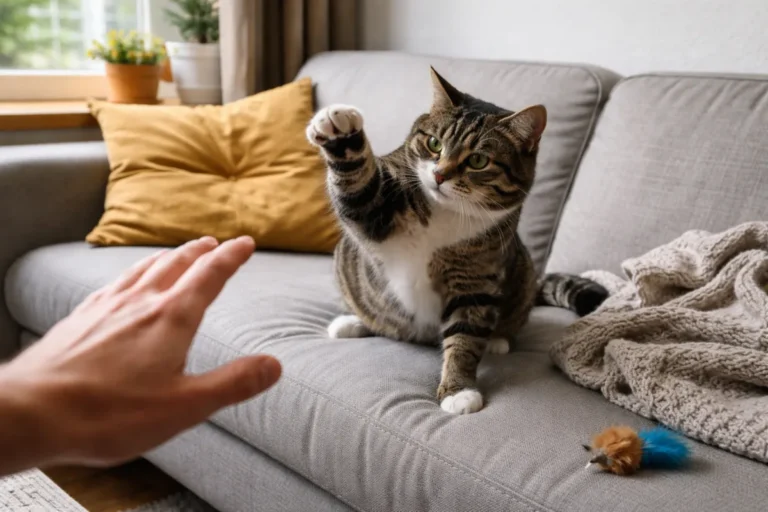
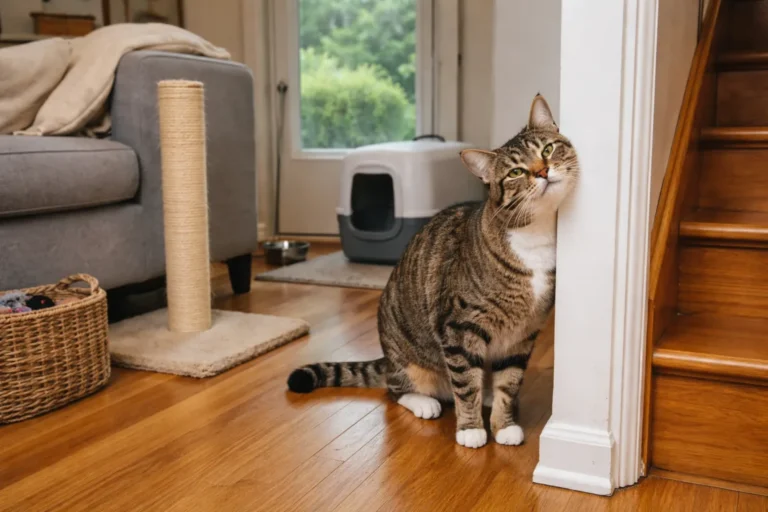
In the home, this behavior often appears in very ordinary situations. A cat may be sitting beside you, enjoying being petted, and then get up and leave after only a few strokes. Another cat may rub against your leg, accept a brief touch, then walk away before you can continue the interaction.
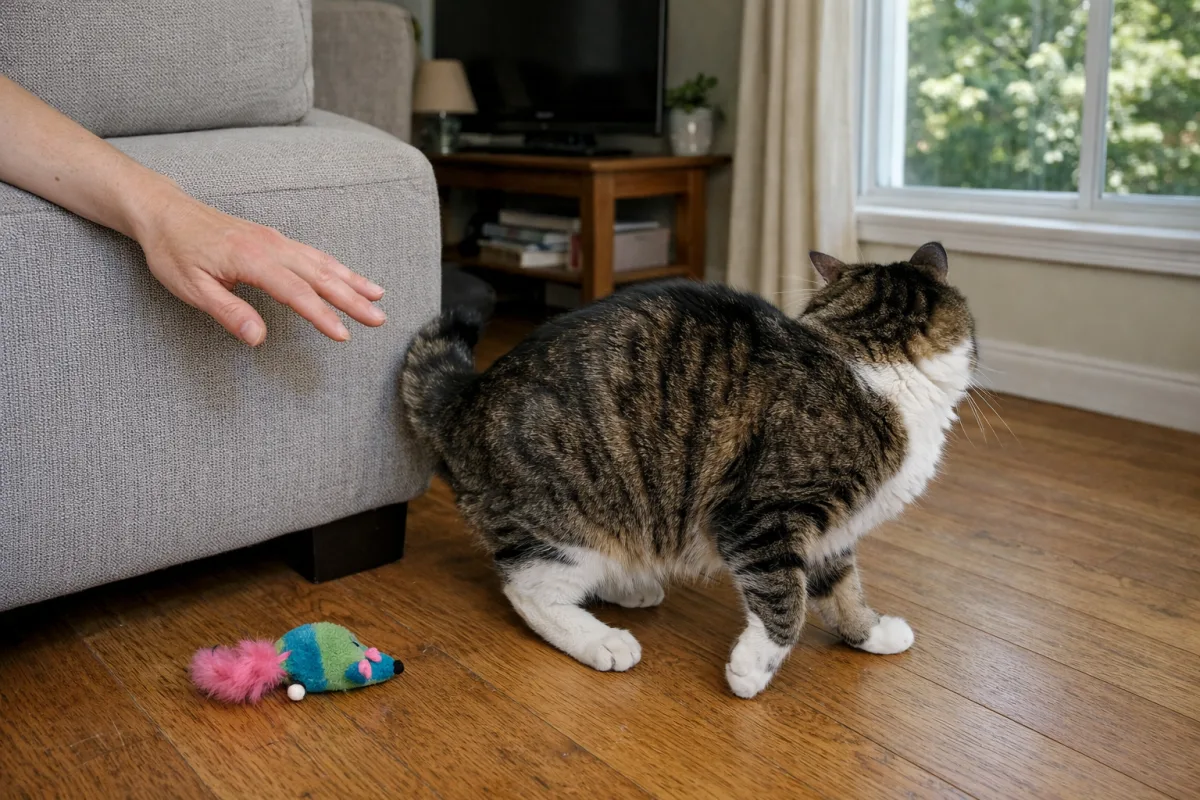
Sometimes the break is subtle. The cat pauses, stares at a doorway, flicks an ear, and then moves off. Other times it is immediate and definite: the cat springs from your lap, avoids your hand, and heads for another room.
These departures may happen during petting, play, grooming, cuddling, feeding, or simple conversation-like interactions. The common thread is timing. The cat seems engaged, then abruptly chooses distance.
Examples pet owners recognize quickly
- A cat jumps into your lap for affection, then leaves after a minute.
- A cat approaches for petting, but walks away after you scratch the same spot for too long.
- A playful cat chases a toy for a few rounds, then suddenly disappears under the bed.
- A cat is resting near you, hears a noise, and ends the interaction without warning.
When a cat leaves mid-interaction, the departure itself is a message. It usually means the cat has reached a limit, changed focus, or needs more control over the moment.
Why Cats Show This Behavior in General
Cats are selective social animals. They often enjoy closeness, but on their own terms. Unlike dogs, they are less likely to keep engaging simply because a human wants to continue. They are built to monitor their surroundings, conserve energy, and react quickly to changes.
That makes sudden departure a very normal part of cat behavior. A cat does not always need a long buildup to decide it is done. It may have enjoyed the interaction and still feel ready to leave.
This can be hard for people to understand because humans often read affection as something continuous. For cats, affection is frequently brief, periodic, and shaped by the moment. A short connection can be satisfying all by itself.
Some cats are naturally more social than others, but even very affectionate cats have thresholds. When those thresholds are crossed, they often end the interaction cleanly and quickly rather than signaling gradually.
Possible Internal Reasons Behind the Behavior
Several internal factors can push a cat to walk away unexpectedly. These are not always obvious from the outside, which is why the behavior can seem random. In reality, cats are often responding to a mix of sensation, emotion, and memory.
1. The cat has reached a comfort limit
Many cats like contact for only a short stretch. They may enjoy being touched, spoken to, or held near you, but not for long. Once the interaction reaches their personal limit, leaving becomes the simplest option.
That limit can vary by mood, time of day, and even the body part involved. A cat may welcome chin scratches but dislike belly contact. It may tolerate petting while relaxed and then end the session when it becomes too repetitive.
2. Sensory overload builds up quietly
Cats can become overstimulated before the signs look dramatic. A few repeated strokes, a louder voice, a hand moving too quickly, or even a pleasant interaction that lasts too long can push the cat past its comfort point.
Overstimulation does not always look like aggression. Often it looks like a sudden escape. The cat simply leaves before the feeling grows stronger.
3. The cat’s attention shifts
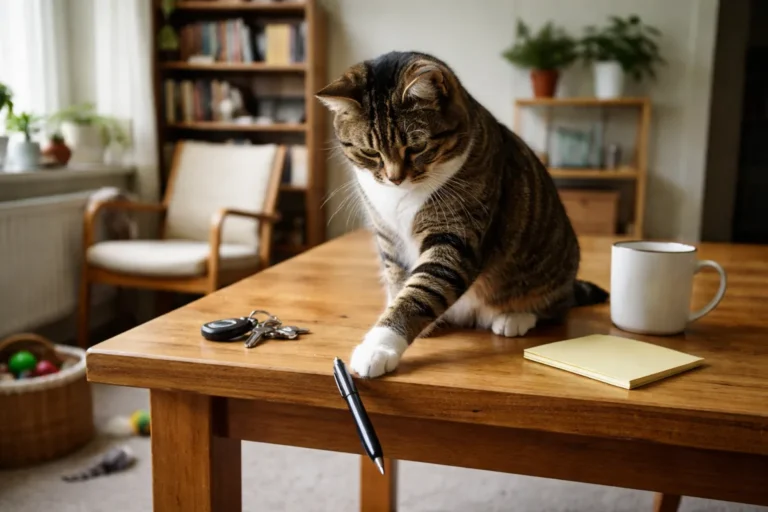
Cats are highly alert to the environment. A small sound in the hallway, a bird outside the window, a scent drifting in from another room, or the movement of another pet can interrupt the interaction.
What looks like a rejection may actually be a change in priority. The cat did not necessarily lose interest in you. It noticed something else and chose to investigate or monitor it.
4. The interaction itself was pleasant but brief
Some cats are not built for extended closeness. They may be affectionate in quick bursts. They come close, get what they need, and leave. That pattern can be very normal, especially in cats that are confident but independent.
In those cases, walking away is not a sign that the cat is unhappy. It may simply mean the cat has finished the interaction on a comfortable note.
How Body Language Helps Explain the Exit
A cat rarely leaves without giving some form of cue. The cue may be easy to miss, especially if the person is focused on the petting or play session. Looking at the moments just before the departure can make the behavior much clearer.
Common pre-exit signals
- Ears turning sideways or flattening slightly
- Tail tip twitching more sharply
- Skin rippling along the back
- Head turning away from the hand
- Stopping purring or slowing movement
- Standing up before leaving
- Brief freezing or staring at the environment
These signals do not always mean the cat is upset. Sometimes they simply show that the cat is preparing to disengage. The exit can be calm, not confrontational.
Still, a sudden pull-away can mean the cat has gone from relaxed to mildly irritated. When the leaving is paired with tail swishing, ear flattening, or quick grooming after contact, the cat may be trying to reset itself after too much stimulation.
Body language matters more than the exit alone. A cat that walks away with a loose body and neutral tail is communicating something very different from a cat that leaves with a tense frame and twitching tail.
How Context and Environment Influence It
The same cat may stay engaged in one setting and leave quickly in another. Context matters a great deal. A quiet room with familiar smells, soft routines, and predictable movement can support longer interaction. A busy or noisy environment can shorten it.
Household activity often shapes how cats behave mid-interaction. A vacuum running, children moving through the room, another pet approaching, or even a delivery truck outside may make the cat break off contact. This is not inconsistency. It is environmental awareness.
Time of day matters too. Some cats are more receptive when they have recently rested and are less tolerant when they are hungry, sleepy, or mentally active. A cat that left your lap after five minutes in the morning may stay close longer in the evening, or the reverse.
Temperature and physical comfort also influence the behavior. A cat may leave because the surface is too warm, the lap is awkward, or the petting position is physically tiring. Cats are quick to adjust when comfort changes.
What the Behavior May Signal About the Cat’s State
Sudden departure can point to different states depending on the overall pattern. The meaning is not the same in every situation. A calm walk-away and a tense escape are both departures, but they do not carry the same message.
When it may signal contentment
If the cat was relaxed, slow-moving, and loose-bodied before leaving, the behavior may simply mean the interaction was complete. The cat got what it wanted: brief contact, reassurance, or companionship.
Many well-adjusted cats do exactly this. They connect, then leave without drama. The relationship is stable enough that they do not feel the need to stay attached all the time.
When it may signal overstimulation
If the cat had a lot of petting, repetitive touch, or escalating movement before leaving, overstimulation may be the reason. This is especially likely if the cat suddenly stiffened, stopped leaning in, or moved away more quickly than usual.
In these cases, the cat may still like affection. It just wants less of it, or a different kind of contact.
When it may signal unease
If a cat regularly bolts away during interaction, hides afterward, or reacts strongly to gentle touch, there may be discomfort involved. That discomfort can be emotional, physical, or both.
Discomfort is more likely when the cat also shows signs such as dilated pupils, flattened ears, crouching, defensive grooming, or avoidance of certain body areas. Pain can especially show up as sudden withdrawal from being touched in one location.
Repeated mid-interaction escapes are worth noticing when they follow the same pattern. Consistency can reveal whether the cat is asking for less touch, more space, or a veterinary check.
How Owners Often Interpret It vs What It May Actually Mean
People often take a cat’s sudden exit personally. It can feel as though the cat was being affectionate, then changed its mind. But the cat may not be making a social judgment in the human sense.
What feels like “rejection” is often a boundary. The cat may be saying that the current kind of contact is enough, that the environment changed, or that it needs a pause. That message is not the same as dislike.
Another common misunderstanding is assuming the cat is unpredictable. In many cases, the pattern is actually quite readable. The cat may leave after the same type of touch, in the same room, or after the same amount of time. Once the pattern is seen, it stops looking random.
Frequent misreads
- “My cat was happy, so it must have suddenly become annoyed.”
- “Leaving means the cat does not enjoy affection.”
- “If the cat approached first, it should want the interaction to continue.”
- “A quick exit always means fear.”
None of these are always true. Cats often initiate contact and still prefer very short sessions. They can enjoy the beginning of an interaction and still want to leave before it becomes too much.
How Different Types of Interaction Trigger the Behavior
Not all interactions are equal in a cat’s mind. A cat may tolerate one kind of contact while rejecting another. The behavior often makes more sense when the specific interaction is examined closely.
Petting
Petting is one of the most common triggers. Even cats that love attention may only enjoy a few strokes before they are done. Repeating the same motion, especially over the back or sides, can wear out the cat’s patience quickly.
Some cats prefer brief facial contact, chin scratches, or being touched only after they initiate it. If the petting continues past that point, they may leave without warning.
Play
A cat can also run away in the middle of play. This does not always mean the game was bad. It may mean the cat needs a break, the toy became too intense, or the cat heard something more important.
Kittens and young cats may do this even more often because their attention can shift rapidly. They often move between burst activity and sudden withdrawal.
Picking up or holding
Some cats tolerate being held only briefly. They may enter your lap willingly and then leave as soon as the position feels restrictive. The issue is not always the human. It may be the sensation of being physically constrained.
These cats often prefer side-by-side contact over full restraint. They may stay near you on the couch but not remain in your arms.
How the Behavior Connects to Typical Cat Traits
Sudden departure fits many classic cat traits. Independence plays a role, but so does sensitivity. Cats notice subtle changes and often act on them right away. That responsiveness helps them stay safe and comfortable.
Observation is another part of the picture. Cats spend a lot of time watching before deciding. When they leave mid-interaction, it may be the result of many small observations rather than one dramatic trigger.
This behavior also reflects how cats manage social energy. They do not usually maintain closeness in the same constant way people do. Instead, they move in and out of contact as needed. The result can look abrupt, but it is often a normal expression of feline control.
When the Behavior Becomes More Noticeable
Some cats do this occasionally. Others do it often. The frequency usually rises when something in the environment or routine changes, even if the change is small.
A cat may leave more quickly during busy household periods, after a move, when sleep is disrupted, or when a new animal is introduced. Stress does not always look dramatic. Sometimes it only shows up as shorter tolerance for interaction.
The behavior can also become more noticeable if the cat has a physical issue. Arthritic cats, for example, may leave because certain postures hurt. Cats with skin sensitivity may tolerate touch for a moment and then retreat. Even dental discomfort can affect how long a cat wants to remain engaged if the interaction involves face contact.
Age can matter too. Older cats may have less patience for prolonged petting or may be more sensitive to handling. Younger cats may leave because they are more easily distracted or because their energy comes in bursts.
What Consistent Patterns Can Tell You Over Time
One-off departures rarely mean much on their own. Patterns are more revealing. If a cat regularly leaves after touch on a particular area, it may be signaling that the area is uncomfortable. If it leaves only when the house is loud, environment is probably the main factor.
Tracking the timing can help. Does the cat leave after five strokes, after being picked up, after a few minutes of play, or after hearing certain sounds? Repeated timing often tells a clearer story than the event itself.
Consistency can also show what the cat prefers. Some cats want brief contact and long observation. Others want interaction only after approaching first. Once those preferences are respected, the behavior often becomes less abrupt because the cat no longer needs to escape as often.
| Pattern | Likely meaning |
|---|---|
| Leaves after a few pets | Limited tolerance or mild overstimulation |
| Leaves when the room gets noisy | Environmental sensitivity |
| Leaves after being held | Dislike of restraint or awkward positioning |
| Leaves only during certain times of day | Routine, energy, or hunger-related variation |
| Leaves and hides repeatedly | Possible stress, discomfort, or fear |
Why the Exit Can Be So Fast
Cats are built for quick transitions. In the wild, speed matters. Staying too long in one state can be risky. That background still shapes domestic behavior, even in a safe home.
A fast exit lets the cat preserve control. It can leave before a touch becomes annoying, before a noise becomes alarming, or before a social moment becomes physically tiring. The speed is often part of the message. The cat is acting early rather than waiting until it is deeply bothered.
That makes the behavior easier to understand once it is viewed through a cat’s priorities. The cat is not trying to create confusion. It is trying to manage comfort, attention, and safety in real time.
A Calm Way to Read the Moment
When a cat runs away mid-interaction, the best interpretation depends on the whole picture: body language, timing, setting, and pattern. A quick exit may mean the cat is satisfied. It may mean the cat is overstimulated. It may mean something in the room suddenly mattered more.
The behavior becomes clearer when it is treated as communication rather than mystery. The cat is setting a boundary, shifting focus, or reacting to something in its environment. Often that boundary is small and ordinary.
Once those signals are noticed, the sudden departure stops feeling random. It starts to look like one more way a cat keeps control over its day, its space, and the amount of closeness it wants at any given moment.