When a cat starts acting aggressive toward other pets, the change can be quick and confusing. One day the household feels settled, and the next there is hissing in the hallway, a swat near the food bowl, or a tense stare across the room. The behavior may look sudden, but it usually develops from a mix of instinct, stress, space, and social tension.
Some cats are naturally guarded around other animals. Others become reactive only in certain moments, such as when they are startled, crowded, or trying to protect a resting spot. The key is not to assume every aggressive display means a cat is mean or badly behaved. In many homes, it is a sign that the cat feels uncertain and is trying to control distance in the only way it knows how.
Aggression toward other pets can show up in many forms. It may be loud and obvious, like chasing, growling, or blocking access to a room. It can also be subtle, with stiff posture, a fixed stare, or a slow tail twitch that appears before the conflict starts. These early signs matter because they often tell you more than the actual swat or chase.
What Cat Aggression Toward Other Pets Looks Like in Daily Life
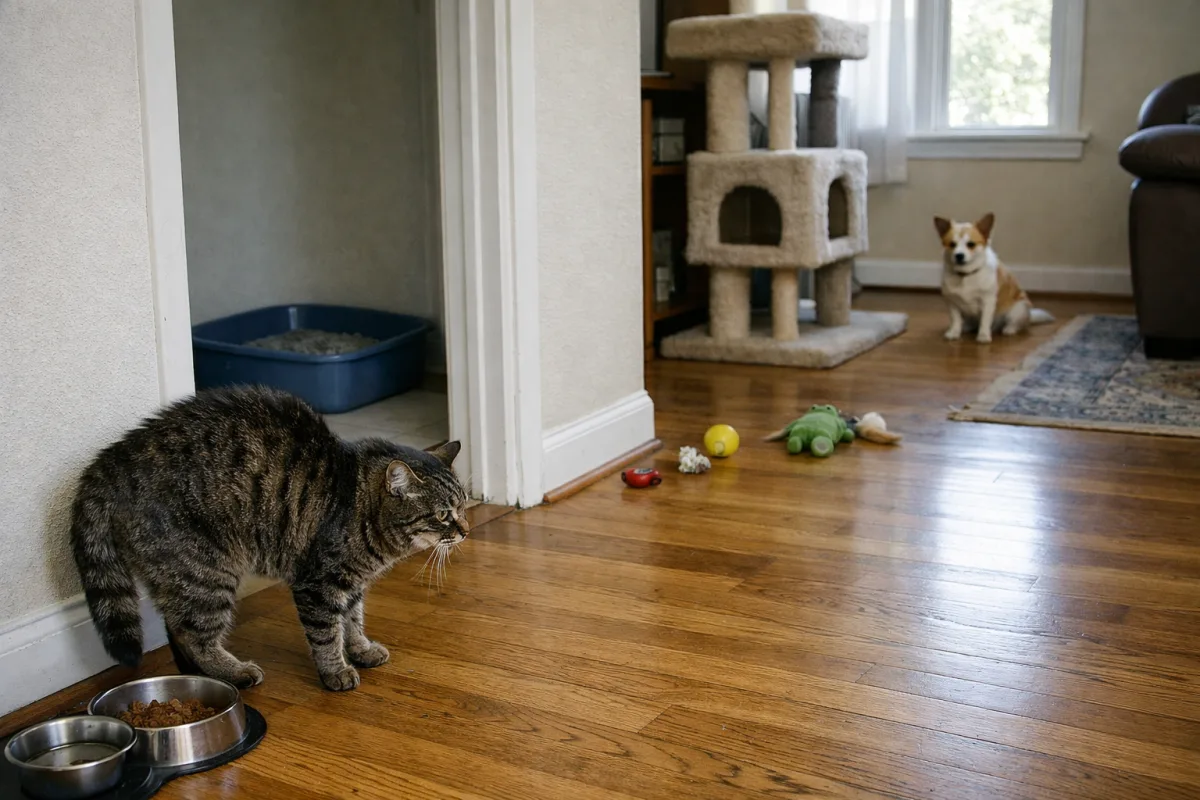
In everyday settings, this behavior usually appears during shared routines. A cat may hiss when another pet walks past its sleeping spot. It may lunge if a dog comes too close to a window perch or a second cat approaches the litter box. Some cats only react during feeding time, while others stay on edge in several parts of the home.
The behavior often follows a pattern. A cat notices another pet, tenses, and then chooses one of several responses: stare, freeze, retreat, vocalize, swat, or chase. These reactions are not random. They are often the cat’s attempt to create space, protect resources, or stop an interaction before it grows more stressful.
Common signs include:
- Hissing or growling when another pet enters the area
- Swatting without making full contact
- Chasing after another pet moves away
- Blocking doorways, stairs, or access to food
- Stiff body posture with ears turned back
- Tail lashing or puffing up during close contact
- Sudden reactions during play that turn serious quickly
Some cats act aggressive only when they feel cornered. Others are more proactive and seem to challenge the other pet before anything actually happens. That difference matters, because a defensive cat and an over-aroused cat may need different forms of support.
Why Cats Show Aggression Toward Other Pets
At the core, aggression between household pets is often about uncertainty. Cats are territorial by nature, and “territory” does not just mean a house. It includes favorite sleeping spots, hallway routes, windows, litter boxes, and even the area near a person’s lap. When another pet enters those spaces too quickly, a cat may react as if it needs to defend them.
Fear is another common reason. A cat that has been startled by a dog’s size, a puppy’s energy, or another cat’s bold behavior may keep expecting trouble. Once that expectation builds, even a neutral approach can trigger a sharp response. The cat may not be trying to start a fight; it may simply be trying to keep control over distance.
Frustration also plays a role. Cats that want attention, access, or escape routes can become tense when the home feels too crowded or too unpredictable. If a cat cannot move freely, or if another pet constantly interrupts its routines, the pressure can build little by little. Eventually, the cat may react more strongly than the situation seems to deserve.
Aggression is often a distance-setting behavior. In many cases, the cat is saying, “I need space,” not “I want a confrontation.”
Medical discomfort can also make a cat less tolerant of other pets. A cat with pain, urinary issues, arthritis, or dental problems may be quicker to hiss, swat, or snap because being approached feels unpleasant. When aggression appears suddenly, especially in a cat that was previously calm, health should always be part of the picture.
How Context Changes the Behavior
The same cat may seem relaxed in one setting and hostile in another. That difference is often tied to context. A cat may tolerate a dog passing through the kitchen but react strongly when the dog approaches its litter area. Another cat may ignore a housemate most of the day and then become territorial at night when the home gets quieter and movement feels more noticeable.
Timing matters too. Many conflicts happen during transitions: meal prep, returning home, cleaning the litter box, opening doors, or shifting pets from one area to another. These are moments when routines feel disrupted. If a cat already feels watchful, those changes can make it more reactive.
The environment itself can either soften or sharpen the behavior. A home with limited vertical space, too few resting places, or only one easy path through a room can increase tension. Cats do better when they can choose distance on their own. Without that option, they may resort to vocal warnings or physical conflict.
Common environmental triggers
- Shared food bowls or feeding stations placed too close together
- Single litter boxes in high-traffic spaces
- Narrow hallways with no escape route
- Overlapping resting spots
- Sudden introductions without gradual adjustment
- Constant activity from dogs or multiple pets
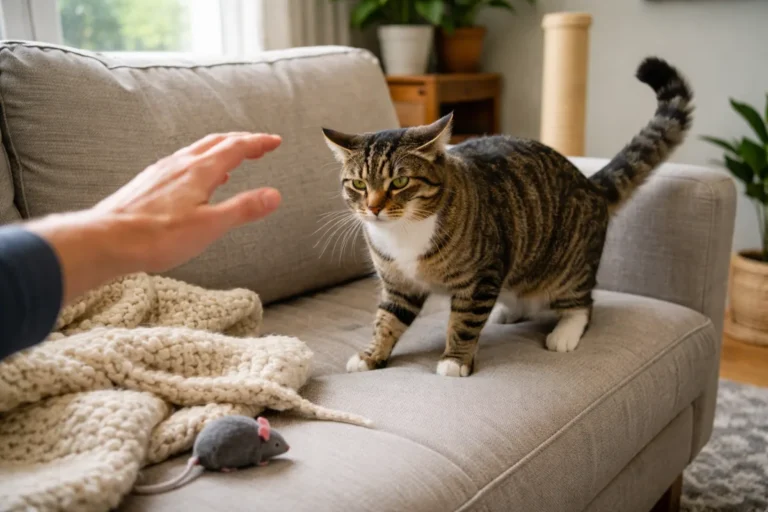
Even scent can matter. Cats rely heavily on smell, and another pet’s odor on a bed, blanket, or human hand can affect how they respond. A cat may react to a smell long before the animal appears.
What the Body Language Usually Says
Before a cat becomes openly aggressive, there are often smaller signals. These can be easy to miss if the conflict escalates quickly. A cat may pause, lower its body, turn an ear outward, or begin staring without blinking. That quiet tension often shows up before hissing or swatting begins.
Body language becomes more important because many cats do not go from calm to aggressive in a single step. There is usually a build-up. Watching for those early signs can help explain why a cat lashes out at one pet but not another, or why the same interaction is fine in the morning and tense at night.
Subtle signals to watch for
- Sudden stillness
- Hard staring
- Ears angled back or to the side
- Tail moving slowly with increasing tension
- Whiskers pushed forward or pulled tight
- Back arching slightly
- Low crouching before a retreat or swipe
Not every tense signal leads to a fight. Sometimes a cat only needs the other pet to step back. But if the signals are ignored repeatedly, the cat may feel it has no choice except to escalate. That is one reason repeated small conflicts can become a habit in a multi-pet home.
How Owners Often Misread the Behavior
People sometimes assume an aggressive cat is jealous, dominant, or simply unfriendly. Those labels can be misleading. Cats are not usually trying to rank every other animal in the house. More often, they are reacting to pressure, fear, discomfort, or a lack of control over their surroundings.
Another common mistake is reading every chase or pounce as play. Some cats play roughly, but true play usually has loose movements, pauses, and a more balanced exchange. When one pet keeps retreating, hiding, or freezing, the interaction is probably not fun for both animals. The difference between rough play and stress can be subtle, but the emotional tone is usually different.
Owners also sometimes miss the early warning signs because the loud part gets all the attention. A hiss may seem like the problem, when in reality it was the final message after several smaller warnings. If those earlier cues are noticed, it becomes easier to understand what the cat was trying to avoid.
What looks like “bad behavior” is often a communication problem. The cat is speaking in the language it knows best: posture, timing, distance, and noise.
Different Forms of Aggression Between Pets
Not all aggression looks the same. Some cats are cautious and defensive. They avoid contact until another pet gets too close, then they issue a warning and retreat. Others are more active and may pursue the other pet to keep control of an area or end an interaction quickly.
There is also a difference between one-time tension and a repeated pattern. A single hiss during a surprise encounter may mean little by itself. A cat that repeatedly stalks, intercepts, or attacks another pet in the same places may be showing a deeper problem with territory, stress, or compatibility.
| Behavior | What it may suggest | Typical context |
|---|---|---|
| Hissing from a distance | Need for space, warning signal | Unexpected approach, crowded area |
| Chasing after another pet leaves | Territorial or frustration response | Hallways, doorways, shared rooms |
| Swatting without follow-through | Boundary setting | Passing too close, sitting nearby |
| Staring and freezing | High tension before escalation | Before meals, near resting spots |
| Repeated ambush behavior | Ongoing conflict or overstimulation | Common routes, narrow spaces |
Mixed signals are common too. A cat may rub against another pet one minute and hiss the next. That does not necessarily mean the cat is unpredictable. It may mean the cat can tolerate brief contact but not prolonged closeness, or that certain movements cross a line for it.
How Daily Routines Influence the Behavior
Routine has a major effect on how cats relate to other pets. Cats notice patterns. They remember when the dog is active, when the other cat tends to rush the food area, and when the house is quiet enough for them to relax. If the routine keeps changing, the cat may become more watchful and less willing to share space.
Feeding time is a common pressure point. Cats often become more protective when food is involved, especially if meals are served at the same time in the same location. If one pet finishes early and starts moving toward another pet’s bowl, tension can rise fast. The same is true for treats, special diets, and high-value chews.
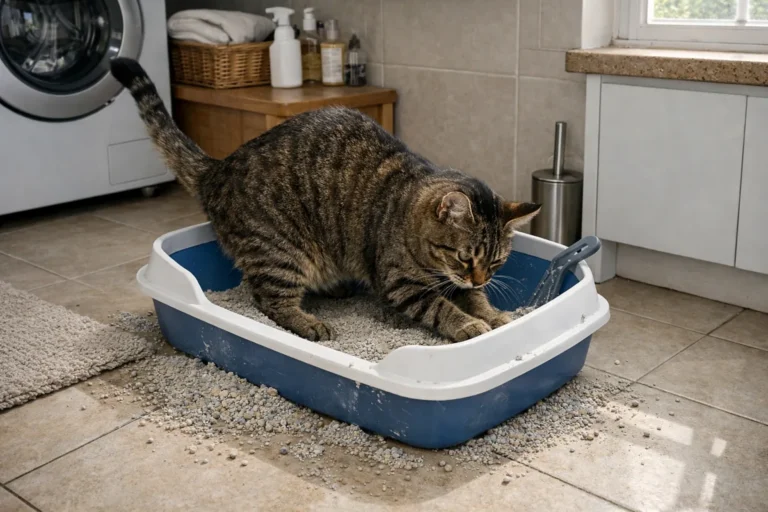
Litter box access can create another layer of stress. A cat that feels blocked or rushed near the box may act aggressively toward the other pet nearby. This is not usually about the box alone. It is about feeling exposed while trying to perform a private and vulnerable activity.
Routine moments that often trigger conflict
- Morning feeding rush
- Late-night hallway traffic
- Cleaning or rearranging furniture
- Opening the door to let pets in or out
- Settling pets in after visitors leave
- Bringing new scents home from outside
Stable routines do not solve everything, but they can reduce surprises. Many cats become calmer when they can predict when and where they will encounter the other pet. Predictability lowers tension, and lower tension usually means fewer aggressive reactions.
Long-Term Patterns and Stability
Some cats only show aggression during specific life stages or after a change in the home. A move, a new pet, a new baby, a renovation, or even a change in schedule can shift the balance. In those cases, the behavior may improve once the cat feels secure again.
Other cats are more consistent. They may always prefer distance, tolerate only limited interaction, or react strongly to certain species or personalities. This does not mean the cat cannot live with other pets. It means the home may need to be arranged around the cat’s limits instead of expecting full social comfort.
Long-term observation helps reveal whether the behavior is stable or situation-based. If aggression happens only in one room, only at one time of day, or only around one particular pet, the trigger is often specific. If it appears across many situations, the cat may be dealing with a broader stress pattern.
Consistency is important to notice. A cat that reacts the same way in the same moments is usually telling you something about the environment, not just the other pet.
What Helps Make Multi-Pet Homes Less Tense
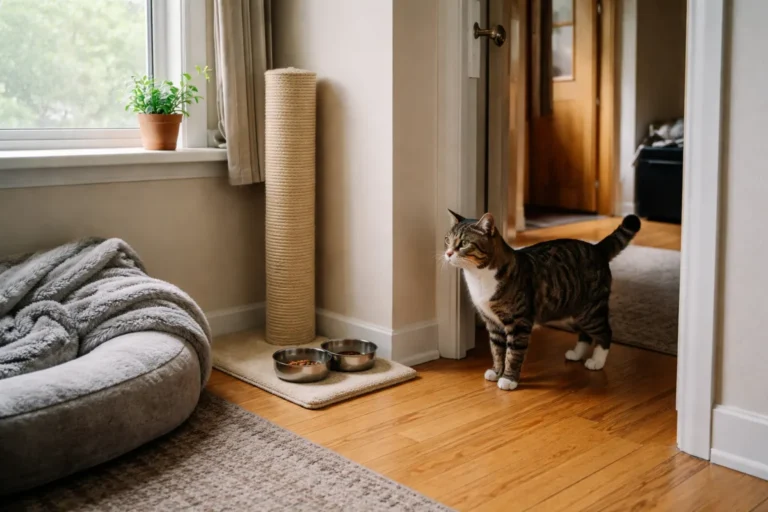
The most practical changes usually involve giving each pet more room to move, eat, rest, and escape. Separate feeding areas can reduce competition. More litter boxes placed in different locations can lower pressure. Vertical spaces like shelves, cat trees, and window spots also help because they give a cat a way to stay close without being trapped.
It can help to think in terms of choice. A cat that can leave a room, climb to a higher place, or pass another pet without being cornered is less likely to use aggression as a last resort. This is especially true for cats that are sensitive or easily overstimulated.
Slow introductions matter when a new pet is involved. Rushed contact often creates memories of fear or conflict that are hard to unwind later. Even in long-established households, separating pets briefly during tense periods can lower the overall temperature and help reset the relationship.
Practical adjustments that often reduce tension
- Place food bowls far apart
- Offer multiple resting spots in different rooms
- Keep litter boxes easy to reach and away from busy paths
- Add shelves, perches, or cat trees for vertical escape routes
- Use gates or doors to manage close contact when needed
- Watch for the exact moments when stress tends to rise
Small changes often matter more than dramatic ones. A better layout can reduce encounters that feel forced. Once a cat has more control over distance, the aggression may fade because the pressure behind it is gone.
When the Behavior Signals More Than a Simple Dispute
There are times when aggression toward other pets points to a deeper issue. Sudden changes, frequent attacks, or behavior paired with hiding, appetite changes, weight loss, or litter box problems deserve close attention. Pain, illness, sensory decline, and anxiety can all affect how a cat responds to other animals.
Age can also change the picture. Kittens may be rough because they are still learning boundaries, while older cats may become less tolerant because movement feels harder or more threatening. A cat that once ignored a dog may start hissing if arthritis makes surprise contact painful. That shift can look behavioral, but it may begin with discomfort.
Repeated aggression can also become a habit. After enough tense encounters, one pet may begin to expect trouble from the other. At that point, the reaction happens earlier and faster. The original cause may be small, but the history behind the reaction has grown larger.
If aggression appears suddenly or becomes more intense over time, it is worth looking at both the relationship between the pets and the cat’s physical comfort.
Ending on the Home’s Real Rhythm
Cat aggression toward other pets often reflects the rhythm of the home. Some cats need clearer boundaries. Some need more distance. Others need a quieter schedule or more ways to escape pressure before it turns into a confrontation. The behavior usually makes more sense when you watch the setting as closely as the cat itself.
What looks like a personality problem may actually be a reaction to space, timing, scent, or repeated stress. Once those pieces are easier to see, the behavior is less mysterious. The cat is not changing at random. It is responding to something in the environment, one moment at a time.