When a cat starts urinating outside the litter box, it can be frustrating, confusing, and sometimes a little alarming. The behavior may show up as a puddle on the bed, a wet spot on the couch, or repeated accidents near the laundry basket. In some homes, it happens once and never again. In others, it becomes a pattern that seems to appear without warning.
Inappropriate urination is not the same as simple misbehavior. Cats usually do not stop using the litter box out of spite. More often, the behavior points to discomfort, stress, territorial concerns, or a change in their routine. Sometimes the cause is physical, sometimes emotional, and sometimes the clues are mixed.
Because the reasons can vary so much, it helps to look at the behavior from a few angles. The location, frequency, posture, and timing can all matter. A cat that sprays a small amount on a vertical surface is communicating differently from one that squats and empties its bladder on a soft blanket. The details can tell a very different story.
Urination outside the box often becomes more noticeable during changes at home. A new pet, a different litter, a noisy renovation, a shift in schedule, or even a move to a new apartment can affect a cat’s habits. Other times, no obvious trigger appears, and that is when the issue can feel especially confusing.
What Inappropriate Urination Looks Like in Everyday Life
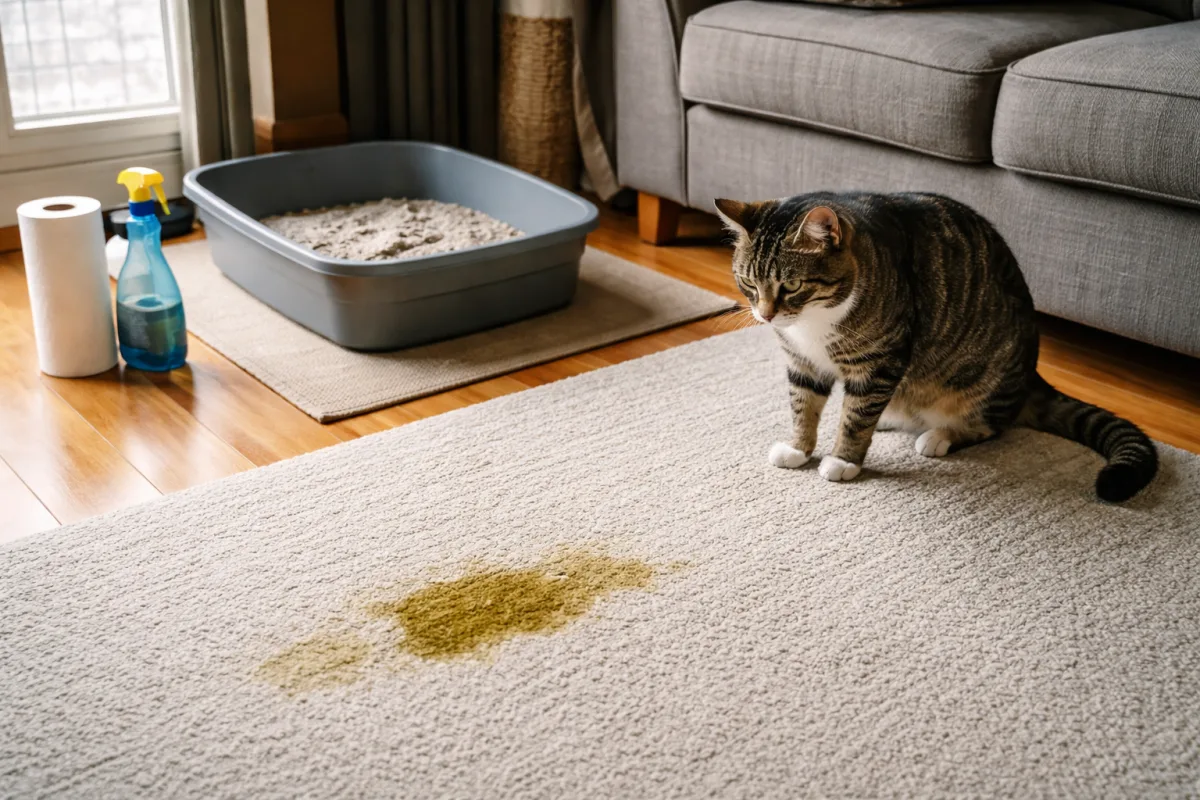
Not every accident looks the same. Some cats choose one or two specific spots and return to them. Others leave small marks in several places. A few urinate on soft textures such as beds, bath mats, clothes, or rugs, while others seem drawn to doorways, corners, or areas with strong household smells.
The behavior may appear sudden, but there is often a pattern hiding underneath it. A cat that urinates just after being startled may be reacting to stress. A cat that goes outside the box only when the litter box is dirty may be objecting to the setup. A cat that urinates frequently in small amounts may be dealing with a medical issue that needs attention.
One important detail is whether the cat is actually urinating or spraying. Spraying usually involves a standing posture, a twitching tail, and a small amount of urine placed on a vertical surface. In contrast, normal urination outside the box usually involves squatting and a larger puddle. These are not interchangeable behaviors, and they do not always mean the same thing.
Any sudden change in urination habits deserves attention. If a cat is straining, producing little urine, visiting the litter box often, or acting painful, veterinary care should not wait.
Physical Causes Behind the Behavior
Many cases of inappropriate urination begin with the body, not the environment. Cats are very good at hiding discomfort, so a medical problem may show up as a litter box issue before anything else becomes obvious. Even a cat that seems otherwise normal can be struggling with pain or irritation.
Urinary Tract Infections and Inflammation
Inflammation in the urinary tract can make urination uncomfortable. A cat may associate the litter box with pain and begin avoiding it. The cat may also attempt to urinate more often, produce only small amounts, or lick the genital area more than usual.
In many cats, especially younger adults, a condition called feline idiopathic cystitis can cause similar signs. This is not a simple “messy behavior” issue. It involves bladder inflammation that can flare under stress or without a clear trigger. The signs often come and go, which can make the problem seem random.
Bladder Stones or Crystals
Crystals and stones can irritate the bladder and urethra. Some cats strain, vocalize, or repeatedly enter and exit the litter box without much success. Others urinate in odd places because they feel an urgent need to go and do not make it to the box in time.
Male cats can face a serious risk if a blockage develops. A partial or complete obstruction is an emergency. If a cat cannot pass urine, produces only tiny drops, or appears distressed while trying, immediate veterinary help is needed.
Kidney Disease and Other Internal Problems
Increased urination can also happen when the body is producing more urine than usual. Kidney disease, diabetes, and some hormonal disorders may lead to larger volumes of urine and more frequent accidents. The cat may still be trying to use the litter box, but the urgency or volume becomes too much to manage well.
Older cats are especially likely to develop medical conditions that affect toileting habits. When a senior cat suddenly changes where or how often it urinates, the cause should not be assumed to be behavioral.
Pain Outside the Urinary Tract
Urination problems are not always caused by the bladder itself. Arthritis, hip pain, back pain, or other mobility issues can make it hard for a cat to climb into a box with tall sides or to hold a low squat position. If the cat avoids certain boxes but still uses softer or easier spots, physical discomfort may be part of the reason.
Older cats often need litter boxes with low entry points and easy access. A cat that seems “suddenly lazy” may actually be trying to avoid pain.
Behavioral and Emotional Reasons
When the body looks healthy, the next place to look is the cat’s emotional state and surroundings. Cats rely heavily on routine, scent, and territory. A shift in any one of those can change litter box habits faster than many owners expect.
Stress and Environmental Change
Stress is one of the most common non-medical reasons for urination outside the box. Cats can react to new pets, visitors, construction noise, schedule changes, or conflict with another cat in the home. Even a subtle change, like moving the litter box to a busier area, may matter.
Unlike dogs, cats often hide their distress. A cat may still eat, sleep, and seek attention while quietly changing toileting behavior. The accident may be the first noticeable sign that something feels off.
Territorial Marking
Some cats urinate as a way to communicate territory. This is more common when cats feel uncertain about shared spaces or detect outside cats near windows and doors. Marking may increase after household changes that affect the social order, such as a new pet, a roommate moving in, or a cat returning from a boarding stay.
Marking is not a spiteful act. It is a scent-based message. The cat is trying to feel secure by redistributing its smell in a place that feels important.
Litter Box Aversion
Sometimes the issue is the box itself. A cat may dislike the litter texture, box shape, location, scent, or cleanliness. A covered box may trap odor and feel unsafe. A box placed next to a washer, furnace, or loud hallway may be avoided simply because the environment feels unpredictable.
Multi-cat homes create even more complexity. A timid cat may avoid a box if another cat ambushes it nearby. A dominant cat may guard a box or make another cat feel unwelcome. In these cases, the urination problem may reflect tension rather than a lack of litter box training.
Changes in Routine
Cats notice when feeding times shift, when people leave for longer periods, or when household rhythms change. A cat that seems stable one month may become unreliable the next if the daily pattern changes. Some cats depend on predictability more than owners realize.
Routine-related urination changes can be subtle at first. A cat may miss the box once or twice after a schedule change, then continue if the situation remains stressful. Once a habit forms, it can be harder to interrupt.
Common Situations That Trigger the Behavior
Some situations appear again and again in households with inappropriate urination. Recognizing the setting can help narrow down the cause.
| Situation | What it may suggest |
|---|---|
| Urinating on beds or laundry | Stress, scent preference, comfort-seeking, or litter box aversion |
| Frequent small urinations | Bladder irritation, inflammation, or urinary discomfort |
| Spraying near doors or windows | Territorial marking or reaction to outside cats |
| Accidents after household changes | Stress from routine disruption or social change |
| Using the box less often in older age | Pain, mobility issues, or age-related medical conditions |
A cat that picks soft objects often wants a surface that feels familiar and safe. A cat that targets boundaries or entry points may be responding to territorial pressure. A cat that suddenly avoids the box entirely may be telling you that the box no longer feels acceptable.
How the Litter Box Setup Contributes
Even a healthy cat can develop accidents if the litter box setup is not meeting its needs. Cats are particular about cleanliness, size, privacy, and location. What seems minor to a person can be a major reason for avoidance to a cat.
Cleanliness
Cats prefer a clean litter box. If waste is left too long, the smell can become unpleasant quickly. Some cats will tolerate a dirty box for a while and then start eliminating elsewhere. Others are much less flexible and may switch almost immediately.
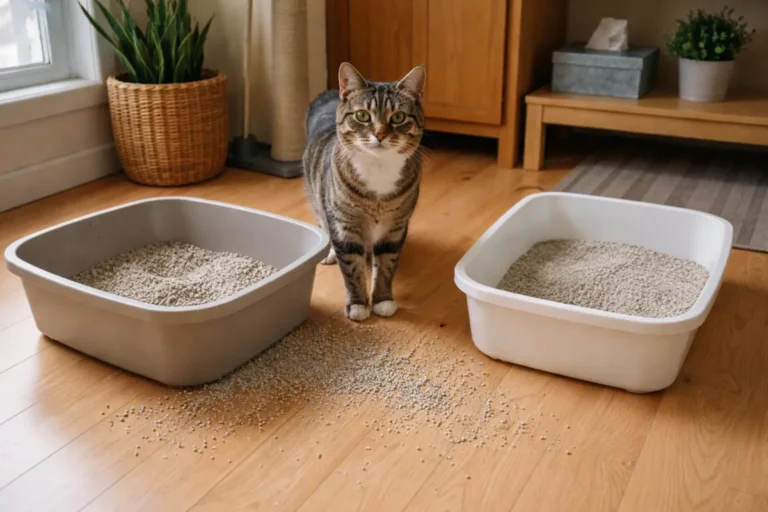
Multiple cats usually need multiple boxes. A common rule is one box per cat plus one extra, placed in different locations if possible. That is not about luxury. It is about reducing competition and giving each cat options.
Box Type and Size
Some cats dislike hooded boxes because they trap odor or make them feel cornered. Others prefer privacy. Large cats may need a bigger box than the standard store-bought size. Kittens and seniors often do better with low sides and easy access.
If a cat has begun urinating nearby instead of inside the box, the box may simply be too inconvenient. A better entry point can solve a problem that looked behavioral at first glance.
Litter Preference
Texture matters. Fragrance matters too. Some cats reject scented litter, while others dislike a sudden brand switch. A rough substrate can bother sensitive paws, and a very deep layer can feel unstable underfoot. Small changes in litter feel can create big differences in use.
When changing litter, it is usually better to transition gradually. A sudden swap may trigger avoidance even if the new product seems harmless to people.
What the Behavior May Signal About the Cat’s State
Inappropriate urination often carries more than one message. A cat may be uncomfortable, anxious, territorial, or physically unwell at the same time. The visible accident is only the final step.
Pay attention to the surrounding signs. A cat that urinates outside the box and also hides, grooms excessively, eats less, or becomes less social may be under stress. A cat that strains, cries, or changes posture repeatedly may be in pain. A cat that marks windows, doors, or furniture after outdoor cats appear may be responding to pressure in its territory.
The same behavior can have very different meanings. A clean puddle on the floor, a few drops on a wall, and repeated box visits are not the same problem.
How Owners Often Misread It
Many people assume a cat is being stubborn, angry, or vindictive. That interpretation is understandable, but it usually misses the real issue. Cats do not use urination outside the box as punishment. They use it because something in their world or body feels wrong, inconvenient, or unsafe.
Another common mistake is focusing only on the accident and not on the pattern. If the cat always urinates near one door, after guests visit, or when the litter box is not scooped, those details matter. A single incident can be random. Repeated incidents usually are not.
It is also easy to dismiss small changes as normal aging or a one-time mistake. When the behavior repeats, the delay in responding can allow the pattern to settle in. Cats remember locations, textures, and associations. Once a place becomes a preferred target, the habit can become sticky.
Long-Term Patterns and Why They Persist
Some cats stop inappropriate urination once the trigger is removed. Others keep doing it even after the original problem has passed. That happens because the cat may have formed a new habit around the location or because the underlying issue was never fully solved.
Stress-related urination can linger if the home environment remains unpredictable. Medical causes can return in flare-ups. Territorial marking can continue if outside cats keep visiting the yard or windows. A cat may seem improved for a while and then relapse when a familiar stressor returns.
Consistency matters. The longer the cat uses a spot, the stronger the association may become. That is why early attention is useful. It is easier to interrupt a pattern before it becomes part of the cat’s routine.
What Makes the Issue More Noticeable
Some homes reveal the problem faster than others. In a quiet, structured home, even one accident stands out. In a home with multiple pets, rugs, soft furniture, and changing schedules, the issue may be harder to track. The cat may also become more obvious during seasonal changes, travel periods, or houseguests.
Indoor cats often show the behavior more clearly because the litter box is the main toileting option. Outdoor cats may still have accidents, but they have more places to eliminate. Indoor cats rely on the box being acceptable every time, and that expectation can break down quickly when something changes.
Natural Instincts Behind the Behavior
At a basic level, urine is communication, territory, and body function all at once. Cats use scent to understand their surroundings and to feel secure in them. A cat that urinates outside the box may be responding to that instinct in a way that seems inconvenient to people but makes sense to the cat.
This is one reason the behavior should be viewed in context. Independence does not mean a cat is detached. Sensitivity does not mean a cat is fragile. Observation does not mean a cat is plotting. These are normal feline traits, and urination patterns can reflect how those traits interact with the environment.
A cat that feels safe, unchallenged, and physically comfortable is more likely to use the litter box consistently. When that balance changes, urination habits may change too.
When the Cause Is Not Obvious
Sometimes the reason remains unclear at first. The cat’s urine looks normal, the box is clean, and the home seems stable. In those cases, the pattern itself becomes important evidence. Where does the cat go? How often? Is it the same time of day? Does it happen after a certain sound, visitor, or interaction?
Tracking details can reveal connections that are easy to miss in the moment. A simple log of accidents, box use, and household changes may show a relationship between behavior and context. That information can be useful when speaking with a veterinarian, especially if medical testing is needed.
Even without an immediate answer, the behavior still deserves a careful response. Cats rarely change their bathroom habits for no reason. The reason may be subtle, but it is usually there.
Closing Perspective
Inappropriate urination in cats is often the result of discomfort, stress, territory concerns, or a litter box setup that no longer works well. The behavior can look similar on the surface while coming from very different causes underneath. That is why the details matter so much.
A cat that urinates outside the box is giving information, not creating trouble for the sake of it. The message may point to pain, anxiety, crowding, aging, or a simple preference problem. Once the pattern is read in context, the behavior becomes much easier to understand.
What looks like a bathroom problem is often a clue about the cat’s overall state. The clearest answers usually come from looking at the body, the home, and the routine together.