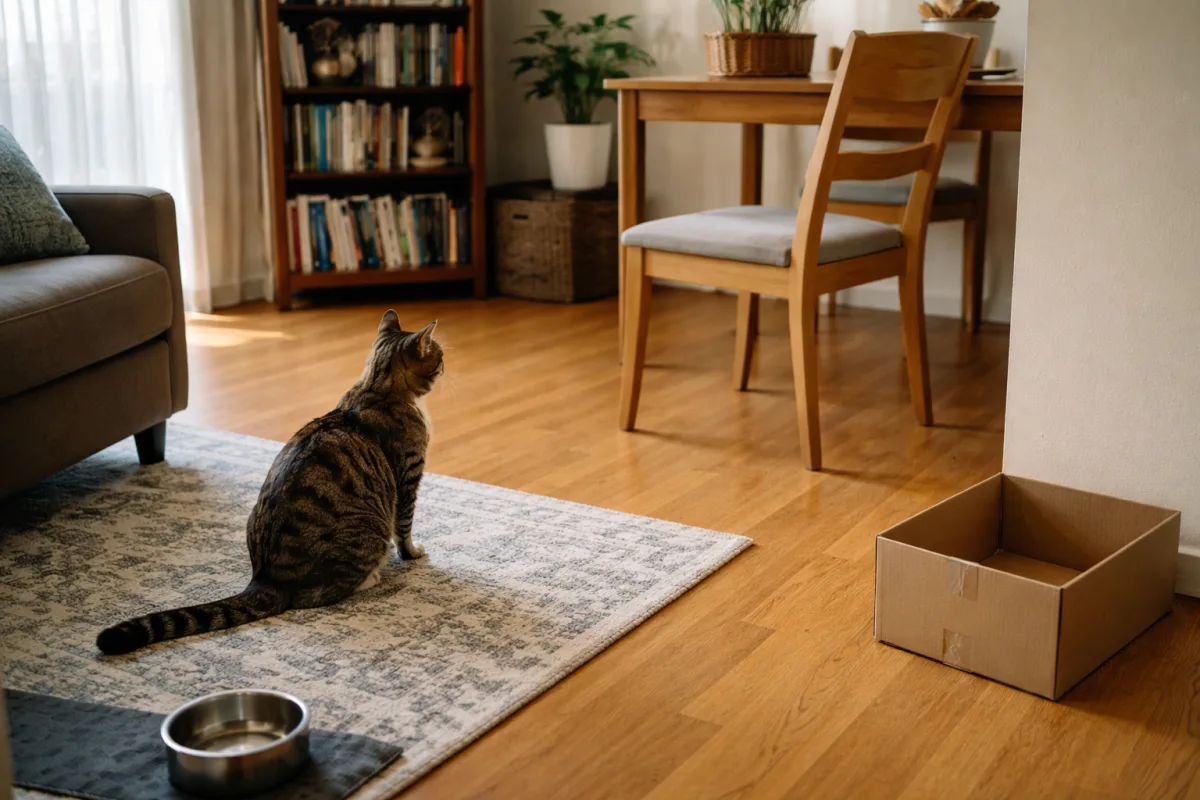
A cat can notice the smallest shift in a room before a person even realizes something changed. A chair moves a few inches. A box appears by the doorway. The food bowl is filled at a slightly different time. For many cats, those tiny details are not tiny at all.
Some cats react with a quick stare, a cautious step back, or a sudden burst of energy. Others become restless, vocal, or unusually clingy. The reaction may look dramatic when the change seems minor to a human, but for a cat, a familiar pattern has been interrupted.
That sensitivity is not random. Cats build their sense of safety through routine, scent, sound, placement, and predictability. When one of those pieces shifts, even slightly, the cat may respond strongly because the environment no longer feels exactly mapped out.
What Strong Reactions to Small Changes Look Like
In everyday life, this behavior can show up in very ordinary moments. A cat may refuse to use a litter box after it has been moved to a different corner. Another may avoid a favorite sleeping spot because a blanket was replaced with a new one. Some cats treat a new lamp, a shifted rug, or a fresh cleaning scent as if the whole room has changed.
These reactions are often easy to miss at first because they can look like simple moodiness. A cat that was calm yesterday may seem irritated today. A cat that usually greets people at the door may hide when the vacuum is stored in a different place. A pet that eats comfortably from one bowl may suddenly hesitate if the bowl is swapped for a new shape or material.
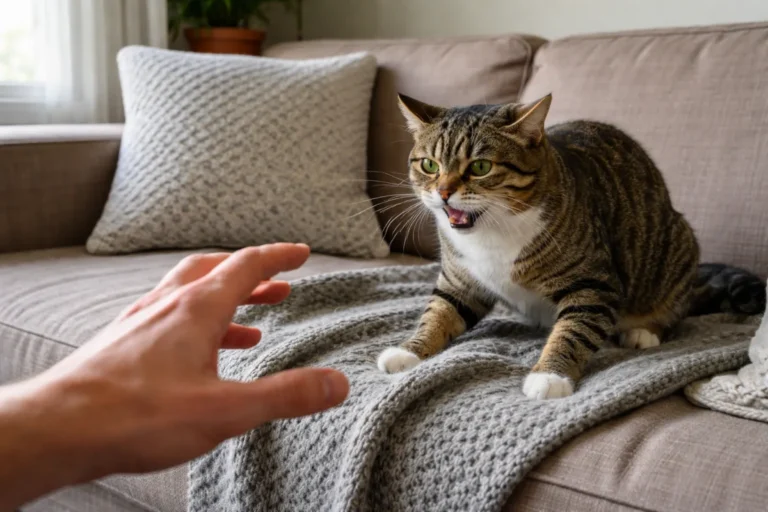
Strong reactions do not always mean the cat is frightened. Sometimes the response is closer to intense curiosity mixed with caution. The cat may approach, sniff, circle, leave, and return again. In other cases, the reaction is sharper and more obvious: tail flicking, flattened ears, pacing, or meowing at the changed object.
Common everyday triggers
- Furniture moved even a short distance
- New scents from cleaning products, candles, or laundry detergent
- Food, water, or litter items placed in a different location
- Visitors bringing unfamiliar sounds and smells
- Changes in household schedule, such as late meals or different bedtime routines
- New objects left in familiar spaces, like luggage or shopping bags
Some cats care most about the physical layout of the home. Others are deeply affected by smell. A room that seems unchanged to a person may feel very different to a cat if one strong odor has replaced another.
When a cat reacts strongly to a small change, the reaction is often about disrupted predictability, not stubbornness.
Why Cats Notice Small Changes So Strongly
Cats depend on close observation. They scan rooms, track routines, and memorize subtle patterns. This habit is partly instinct and partly learned behavior. In the wild, noticing small differences can help a cat avoid danger, protect resources, and understand whether a space is safe.
That same alertness carries into the home. A domestic cat may be relaxed and affectionate, yet still highly responsive to anything that breaks the expected pattern. The change does not need to be major. A moved water bowl, a different pillow, or a new sound from an appliance can be enough to trigger a noticeable reaction.
Another reason is that cats use repeated experience to confirm safety. A familiar object in the familiar place becomes part of the cat’s internal map. When the map changes, the cat needs time to update it. Until that happens, the cat may behave as if the environment is uncertain.
Possible internal reasons behind the behavior
- Heightened awareness of surroundings
- Need for predictability and routine
- Natural caution toward unfamiliar details
- Strong reliance on scent and spatial memory
- Temporary stress from uncertainty
Some cats are simply more sensitive than others. Personality matters. Past experiences matter too. A cat that has moved homes often, lived in a busy shelter, or had unpredictable routines early in life may react more intensely to changes than a cat raised in a quiet and stable environment.
Age can play a role as well. Kittens often show quick curiosity, but their reactions can be shorter and more playful. Adult cats may be more settled in their preferences. Older cats sometimes react strongly because they rely more on established patterns and may find change harder to process.
How the Reaction Appears in Daily Routines
The same cat may handle one change well and another badly. A new toy might be accepted immediately, while a shifted feeding station causes days of hesitation. The difference often depends on what the change affects. Items tied to safety, food, sleep, litter, and territory tend to matter more than decorative objects.
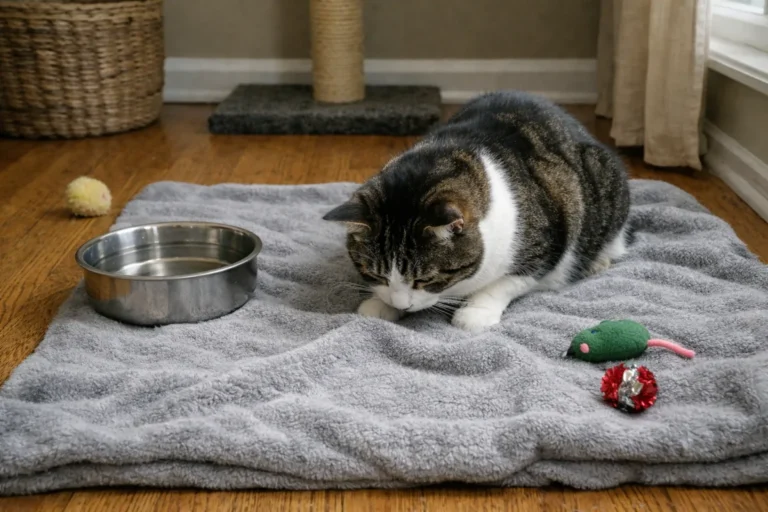
Owners often notice the strongest reactions around routine care. If meals are served at a slightly different hour, some cats begin pacing before food appears. If the litter box is cleaned with a new odor, the cat may inspect it from a distance. If a bed is moved to a different wall, the cat may stare at it for a while before deciding whether it still belongs.
These behaviors can be subtle or very obvious. A cat may not hide at all, yet still become more vocal and less settled. Another may become quiet, moving carefully around the room and checking corners more often. The intensity can vary from one day to the next.
Examples of strong reactions in familiar settings
- Refusing to eat until the bowl is returned to the original spot
- Sniffing a new household item for a long time before approaching
- Leaving a room after noticing rearranged furniture
- Scratching near a changed area as if testing the space
- Following the owner more closely after a routine shift
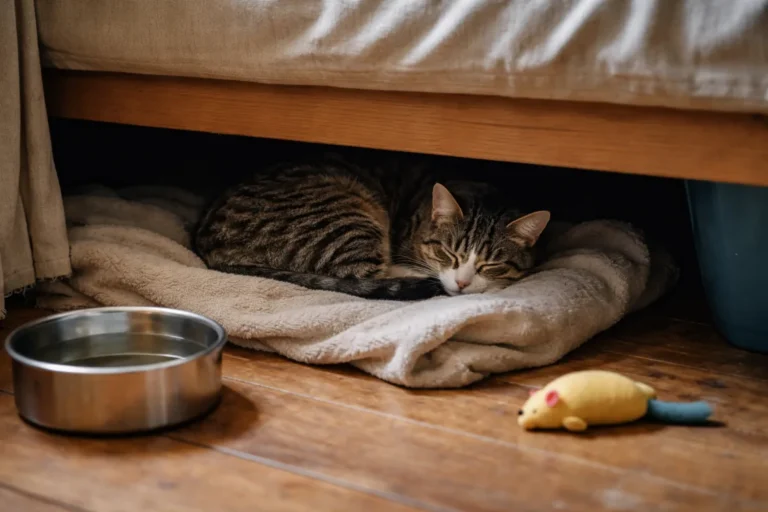
- Sleeping in a different place after a household scent changes
Not every reaction signals distress. Some cats simply need extra time to inspect and accept the adjustment. Others are trying to regain control over their environment in the only way they can, by checking, retreating, and rechecking until the space feels familiar again.
A strong response to a minor change is often a cat’s way of asking for time, not a sign that something is wrong with the cat’s character.
What the Behavior May Signal About the Cat’s State
A strong reaction can mean different things depending on the rest of the cat’s behavior. If the cat is otherwise eating, using the litter box, resting, and interacting normally, the response may just reflect sensitivity to routine disruption. If the cat is also hiding, refusing food, or becoming unusually aggressive, the change may have pushed the cat into a more stressed state.
Timing matters. A cat that reacts immediately to a change and then settles after a few minutes is showing a different pattern from a cat that remains unsettled for hours or days. The first may be cautious. The second may be telling you that the change feels significant enough to upset the cat’s sense of security.
Body language gives important clues. A tense posture, twitching tail, dilated pupils, or ears angled sideways can mean the cat is unsure. Relaxed sniffing, slow blinking, and a gradual return to normal behavior suggest the cat is processing the change without too much distress.
Signals often seen alongside sensitivity to change
- Repeated sniffing of the altered area
- Pausing before entering a room
- Increased vocalizing
- Clinging to a person or avoiding contact entirely
- Marking behavior near the changed object or area
- Restlessness at times when the cat is usually calm
It is useful to look at the whole picture. A cat that is reactive only when the couch is moved may be expressing a normal preference for familiarity. A cat that suddenly reacts strongly to many small changes may be experiencing a broader need for stability.
How Context and Environment Shape the Response
The same change can feel harmless in one home and overwhelming in another. A quiet home with predictable routines usually makes it easier for a cat to adapt. A busy household with children, frequent guests, and shifting schedules can make even small changes feel layered and harder to process.
Indoor cats often notice rearranged spaces more than people expect, because the home is their main territory. Outdoor-access cats may show different patterns. They encounter more variety overall, so some changes may seem less dramatic. Still, the spaces they return to most often, like feeding spots or resting areas, can remain highly important.
Environmental complexity matters too. A room full of new items, active sounds, and unfamiliar smells can be harder for a cat to sort through than a simple, quiet space. If several changes happen at once, the cat may react more strongly than it would to a single change made on its own.
Context that can intensify the behavior
- Recent move or home renovation
- New pet in the house
- Inconsistent feeding or play times
- Frequent noise from visitors, construction, or appliances
- Strong cleaning scents or air fresheners
- Lack of quiet hiding or resting places
Small changes also feel bigger when the cat already has something else to manage. A cat recovering from illness, adjusting to a new family member, or living through seasonal stress may be less flexible than usual. Even a familiar shift can land differently when overall stability is low.
The more predictable the surrounding environment, the less likely a tiny change is to feel like a threat.
Why Owners Often Misread the Reaction
People sometimes interpret this behavior as drama, pickiness, or defiance. That reading misses how cats organize their world. A cat does not see a moved chair the way a person does. It notices access, scent trails, escape paths, and the feel of the room as a whole.
Because of that, a reaction that seems exaggerated may actually be sensible from the cat’s point of view. A water bowl placed next to a noisy appliance may be harder to trust. A sleeping shelf that now sits under a draft may no longer feel safe. The cat is responding to the practical details it uses to judge comfort.
Owners also sometimes assume a cat should “get used to it” immediately. Some cats do adapt quickly, but others need repetition and time. Repeated exposure in a calm setting often helps more than forcing the cat closer to the change. Quiet observation usually tells you more than pushing for a fast response.
What the owner sees vs what the cat may experience
| What changed | Owner’s view | Cat’s possible view |
|---|---|---|
| Rug moved | Minor cleanup | Altered path, scent, and territory marker |
| Feeding dish replaced | Same function, new bowl | Different texture, smell, and routine cue |
| Furniture shifted | Room looks refreshed | Navigation map no longer matches memory |
| New cleaning product | Room is cleaner | Strong unfamiliar odor changes the space |
Once that gap is clear, the reaction makes more sense. The cat is not comparing aesthetics. It is comparing safety signals.
How Cats Show Playful, Neutral, and Defensive Reactions
Not every strong reaction is the same. Some cats approach a small change with playful energy, batting at a new item or investigating it with quick, bouncy movement. Others stay neutral, showing interest without tension. And some respond defensively, treating the change as something to avoid until they have had time to inspect it carefully.
Playful response
A playful cat may pounce on a new box, rub against a moved chair, or weave around a changed object. The energy is active, but the body stays loose. The cat looks curious rather than guarded.
Neutral response
A neutral reaction usually means the cat notices the change but does not feel strongly about it. The cat may sniff once, glance around, and continue with normal behavior. This is common when the change is small and the cat feels secure in the rest of the environment.
Defensive response
A defensive reaction is marked by distance, stiff posture, and a slower approach. The cat may hiss, hide, or avoid the area. This can happen when the change touches something important, such as feeding, litter, or a preferred resting place.
Mixed signals are common. A cat may act defensive at first and playful later. It may begin with alarm, then settle into curiosity after the new item becomes more familiar. That shift from hesitation to interest is often a healthy sign that the cat is updating its understanding of the space.
What Helps a Cat Adjust Without Rushing the Process
When a cat reacts strongly to a small change, the best response is usually calm consistency. Keep the rest of the routine steady if possible. Serve meals on time. Avoid making several more changes at once. Let the cat watch, sniff, and decide when to engage.
If a moved object is important to the cat, returning it to the original place may be the simplest fix. If the change cannot be reversed, making it more gradual can help. For example, moving a feeding bowl a small distance at a time is often easier than placing it in a new spot all at once.
Some cats benefit from extra predictability during transitions. A regular play session, a familiar blanket, or a quiet room can help restore a sense of control. The goal is not to force acceptance. It is to make the updated environment feel understandable again.
Practical ways to lower stress around small changes
- Change one thing at a time
- Keep feeding, play, and sleep routines consistent
- Preserve familiar scents when possible
- Offer safe hiding and resting spaces
- Let the cat investigate at its own pace
- Watch for changes in eating, grooming, and litter habits
If the reaction becomes intense or lasts longer than expected, the broader context matters. A single sensitive response is different from a pattern of ongoing unease. The second pattern often reflects a cat that needs more stability overall, not just a single adjustment to one item in the room.
Gradual change works better for many cats than sudden rearrangement, especially when the cat already relies on a predictable routine.
Long-Term Patterns and What They Suggest
Some cats always react strongly to small changes. Their habits stay fairly stable over time. They may prefer the same sleeping place, the same feeding setup, and the same household rhythm for years. Other cats become more flexible with repeated, low-pressure exposure to change.
Long-term patterns can reveal a lot. A cat that improves after each minor adjustment is likely learning that change does not automatically mean danger. A cat that becomes more reactive over time may be dealing with stress, age-related sensitivity, or a household environment that has become too unpredictable.
Observation over time matters more than any single moment. One bad reaction does not define the cat. But repeated strong reactions to modest changes can show that the cat’s need for routine is central to how it feels secure at home.
In many homes, that means respecting the cat’s preferences becomes part of daily life. The water bowl stays where it works. The favorite bed remains in its corner. The litter area is kept as consistent as possible. Small choices like these can make the whole home feel easier for the cat to navigate.
The behavior may never disappear completely. That is not a problem by itself. For many cats, reacting strongly to small changes is simply part of how they experience the world: alert, careful, and deeply tuned to the details that shape comfort.