A cat that bites without warning can leave a person confused, annoyed, or even a little hurt. One moment the cat is resting beside you, and the next it reaches out with teeth as if nothing in the room makes sense. That sudden shift is often the part people remember most.
In many cases, biting “for no reason” is not random at all. Cats usually have a reason, but it is often quiet, subtle, or easy for people to miss. A change in touch, posture, mood, timing, or environment can be enough to trigger a quick bite.
Understanding the behavior starts with looking at the whole moment, not only the bite itself. The cat’s body language, daily routine, and level of comfort all matter. What looks like an unprovoked nip may actually be a message that arrived too late for a person to read clearly.
What Cat Biting Can Look Like in Everyday Life
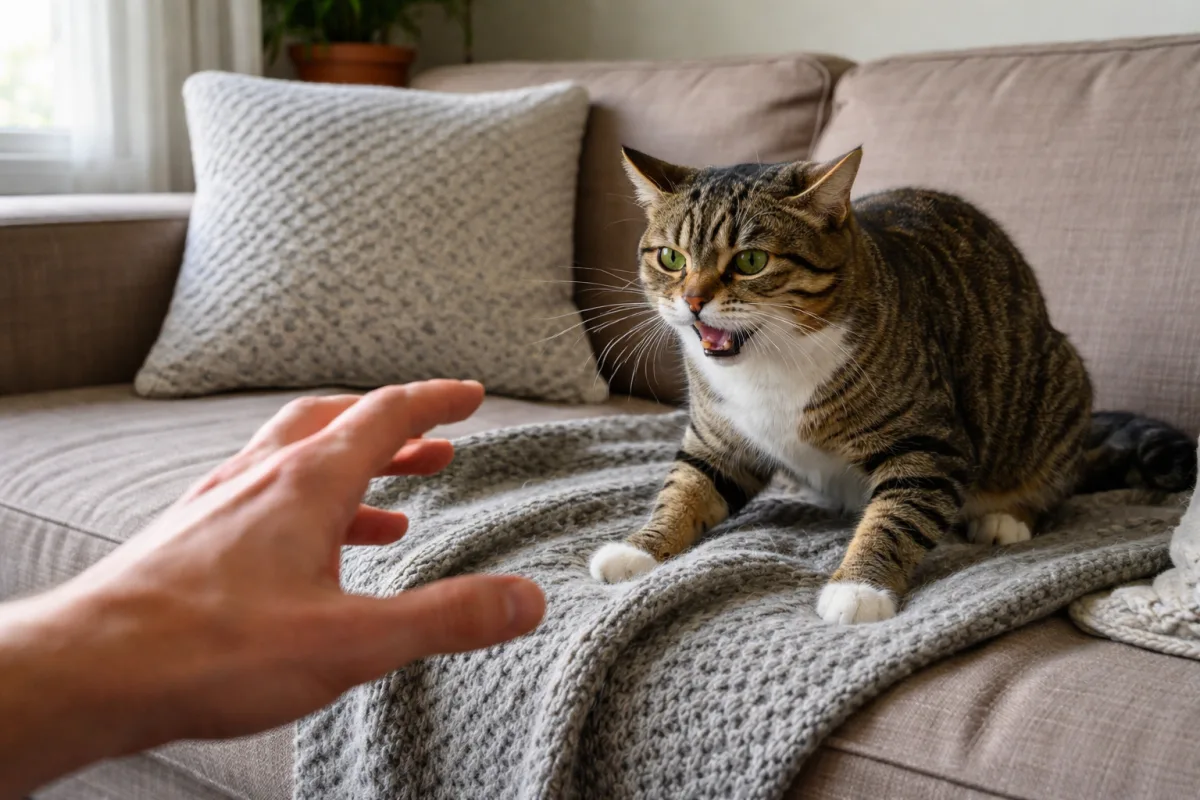
Cat biting shows up in different ways. Some cats give a light nibble while being petted, then pull away. Others suddenly clamp down after a few seconds of play, or bite a hand that reaches toward their belly, paws, or tail. A few cats bite when they are startled, cornered, or handled in a way they do not like.
These moments often feel unpredictable because the cat may appear calm right before it happens. A cat can purr, sit close, or rub against a person and still decide the interaction is too much. The shift is fast, but the buildup may have been happening for a while.
Common situations include:
- Being petted for longer than the cat wants
- Touching a sensitive area such as the stomach, base of the tail, or hind legs
- Interrupting sleep or quiet time
- Using hands as toys during play
- Approaching a cat that is already tense or overstimulated
- Trying to move or hold a cat that wants space
Some biting is mild and seems almost like a warning. Other biting is sharper and more defensive. The difference matters, because it often points to a different cause.
Why Cats Bite When It Seems Unprovoked
Most cat biting has roots in instinct, communication, or discomfort. Cats do not usually bite just to be difficult. They often bite because they are trying to increase distance, end an interaction, or respond to a feeling that became too intense.
One common reason is overstimulation. A cat may enjoy petting at first, then reach a point where repeated touch starts to feel irritating rather than pleasant. The body can remain in place while the mood changes underneath. When the threshold is crossed, a bite can happen quickly.
Another reason is misread play. Cats are natural hunters, and many use teeth during play if they were never taught that human skin is not part of the game. What looks like a sudden attack may be a playful pounce that escalated too far.
Some bites come from anxiety or insecurity. A cat that feels trapped, unsure, or threatened may bite without much warning. This is more likely when the cat has no clear escape route, hears loud sounds, or is handled in a way that makes it feel controlled.
When a cat bites “out of nowhere,” it is often reacting to a threshold that was reached quietly, not to a random impulse.
Pain can also play a role. A cat may bite if a sore area is touched, if movement hurts, or if it has an underlying medical issue that makes it less tolerant than usual. If the biting behavior changes suddenly, pain should stay on the list of possibilities.
Subtle Signals That Often Come Before the Bite
Cats frequently give small signals before they bite. People miss them because they are subtle and brief. A cat may not hiss or growl first. Instead, the warning may be as small as a tail twitch, a skin ripple, a stiffening body, or a sudden stillness.
Watching for the following signs can help reveal what the cat is feeling:
- Flattened or rotating ears
- Tail flicking or thumping
- Skin twitching along the back
- Pupils becoming larger
- Body tensing or freezing
- Head turning toward the hand
- Pausing purring or rubbing
- Trying to move away before biting
One of the most overlooked signals is a cat becoming very still. People often assume stillness means calm. In some cats, it means the opposite. The cat may be mentally checking out of the interaction and preparing to respond.
The timing of the bite matters too. Biting that happens right after petting often points to overstimulation. Biting during grooming or being picked up may point more toward discomfort or lack of consent. Biting during intense movement or chasing is usually tied to play or excitement.
How Petting Can Turn Into Biting
Petting-related biting is one of the most common forms people describe as “no apparent reason.” A cat may lean in, purr, or nudge for more contact, which makes the eventual bite feel surprising. But the cat may only have wanted a few strokes, not continued handling.
Cats often differ in where and how they like to be touched. Some enjoy chin scratches and brief head rubs. Others dislike being touched near the base of the tail, on the belly, or along the back for long periods. Even a favorite type of touch can become too much after a few seconds.
A useful clue is whether the cat leaves on its own before biting. If it walks away, the cat is probably trying to end the interaction politely. If the person follows, reaches again, or keeps petting, the bite may be the cat’s stronger message.
Some cats also bite as a way to control the pace of affection. They may be social and affectionate, but only on their own terms. That does not make the behavior random. It reflects a clear preference for limited, predictable touch.
Play Biting Versus Defensive Biting
Not all bites mean the same thing. A playful bite usually appears during active movement, pouncing, chasing, or wrestling with toys. It may be paired with loose body language, quick repositioning, and repeated engagement. A defensive bite tends to be sharper, more direct, and often comes with tension.
These differences are easy to miss because both can happen fast. Still, they help explain the cat’s state of mind.
| Type of bite | Common signs | Likely meaning |
|---|---|---|
| Playful | Loose body, chasing, toy-focused, repeated engagement | Excitement, hunting play, redirected energy |
| Overstimulated | Tail flicking, sudden stillness, skin twitching, bites after petting | Touch has become too intense or irritating |
| Defensive | Tense body, ears back, retreating, warning sounds, quick bite | Fear, discomfort, need for space |
| Pain-related | Sudden sensitivity, flinching, unusual irritability, change from normal behavior | Possible physical discomfort or medical issue |
Play biting tends to grow from energy. Defensive biting tends to grow from pressure. That contrast helps explain why a cat may bite during a fun interaction with toys, but also bite if someone tries to restrain or touch it when it is not in the mood.
How a Cat’s Mood Changes the Meaning of the Bite
A cat’s mood can shift in seconds, and the same bite may mean different things depending on the moment. A cat that bites after a calm cuddle session is likely communicating a boundary. A cat that bites during a burst of chasing may be expressing excitement. A cat that bites when picked up may be saying the handling feels unsafe or unpleasant.
Context matters even more than the bite itself. Where the cat was sitting, what happened just before the bite, and how the cat moved afterward all help explain the behavior. A cat hiding under a bed and biting a reaching hand is telling a very different story from a cat that nips during a toy chase.
Daily routine also shapes the cat’s tolerance. A tired cat may be less patient. A hungry cat may be more touchy. A cat that has had too much noise, too many visitors, or too much handling may react more quickly than usual.
A bite is often the last step in a chain of signals, not the first one.
Indoor Life, Outdoor Access, and Biting Patterns
The cat’s lifestyle can influence how often biting happens and what it looks like. Indoor cats may bite more during bursts of pent-up energy if their day lacks enough movement, climbing, or hunting-style play. They can also become more touch-sensitive if they are overstimulated by a busy home.
Outdoor-access cats may show different patterns. Some have more outlets for physical energy and may bite less during play, but they can still bite when cornered or handled unexpectedly. Cats that move between indoor and outdoor spaces sometimes become sensitive when their environment changes too quickly.
Home atmosphere matters just as much as access. In a quiet home, a cat may tolerate a certain amount of contact and routine. In a noisy, active home, the same cat might reach its limit faster. Children, guests, other pets, and frequent movement can all affect how much interaction feels safe.
Even a small change in routine can affect biting. New furniture, travel, a new pet, different feeding times, or a change in the owner’s schedule can make a cat less settled. When a cat’s world feels less predictable, teeth can become part of how it communicates distress or uncertainty.
What Cats May Be Trying to Communicate
It helps to think of biting as communication, not just behavior to stop. Cats often use bites to create distance, end contact, or redirect attention. They are less likely to explain themselves in obvious ways than dogs, so the message can look abrupt to people.
Some common meanings include:
- “I’m done being touched.”
- “That area hurts or feels wrong.”
- “I want to play, but not like this.”
- “Back up.”
- “I feel trapped.”
- “This is too much right now.”
Once the bite is understood as communication, the response changes. Instead of focusing only on the teeth, it becomes easier to notice the situation that led there. That is usually where the useful information is hiding.
When Biting Becomes More Noticeable Over Time
Some cats bite only in rare, specific situations. Others become more frequent biters when their needs are not being met or when their environment changes. The pattern matters more than one isolated incident.
If biting becomes more common, it can point to a repeated trigger. A cat that always bites after five minutes of petting may be telling you that five minutes is the limit. A cat that bites when waking up may dislike being startled from sleep. A cat that bites after rough play may need different play outlets.
Changes in frequency can also signal health problems. A cat that was once easygoing but now bites more often may be in pain, feeling unwell, or reacting to stress. Sudden irritability is worth paying attention to, especially if it comes with hiding, reduced appetite, or changes in grooming.
Long-term patterns often make the behavior easier to understand. A cat that has always been hands-off may never want close handling. A cat that used to be cuddly but now bites may need a closer look at what changed in its body or environment.
How Owners Often Misread the Behavior
People commonly assume the cat was being affectionate one second and aggressive the next. Sometimes that is how it looks. But often the cat was already signaling discomfort in a quiet way. The misunderstanding usually comes from missed timing, not from the cat acting without cause.
Another common mistake is treating all bites as the same. A play bite, a panic bite, and a petting-induced bite should not be handled in exactly the same way. They may look similar on the skin, but they come from very different places.
Some owners also assume a cat is being spiteful or trying to punish them. That reading rarely helps. Cats are more likely to be responding to immediate discomfort, stress, or excitement than acting out of revenge.
Reading the pattern can be more useful than reacting to the bite itself. Ask what happened right before it, where the cat was, how long the interaction lasted, and whether the cat had an easy way to leave. Those details usually tell a clearer story than the bite alone.
What Makes Some Cats More Prone to Biting
Some cats are simply more sensitive than others. Their tolerance for touch, noise, change, or handling may be lower. That can come from temperament, early experience, past stress, or medical discomfort.
Kittens that were not taught gentle play may grow into cats that bite hands during excitement. Cats with limited social experience may bite when they feel unsure about contact. Cats with prior trauma may react strongly to being approached too quickly or touched in predictable trigger zones.
Breed is not the main factor for most households. Individual history usually matters more. One cat may allow long grooming sessions and still dislike being picked up. Another may be perfectly calm on a lap but bite during play if hands get involved.
The key is consistency. If a cat bites in the same kinds of situations again and again, the behavior is likely tied to a stable preference or sensitivity. That makes the pattern easier to respect, even if it never becomes completely predictable.
What the Behavior May Signal About the Cat’s State
Cat biting without an obvious reason often signals one of four things: the cat is overstimulated, uncomfortable, afraid, or highly excited. Those states can overlap, which is why the behavior sometimes looks mixed.
A cat may purr and bite at the same time. It may rub against a leg and then nip the ankle. It may invite contact and then reject it a moment later. These mixed signals are confusing to people, but they are common in cats because their tolerance can shift very quickly.
What matters is not whether the cat “seems fine.” What matters is whether the cat is still comfortable. Cats can look friendly while already nearing their limit. That is especially true with touch, restraint, and energetic play.
Reading the Environment Around the Bite
The room itself can shape the cat’s response. Loud television, sudden movement, unfamiliar visitors, competing pets, and crowded spaces can all make a cat less relaxed. Even a cat that usually seems easygoing may bite more in a setting that feels busy or unpredictable.
Environmental triggers are often overlooked because they do not look dramatic. A cat might bite after someone enters the room carrying bags, after a vacuum is used, or after another pet gets too close. These are not random events from the cat’s perspective. They can change the cat’s level of comfort immediately.
Lighting, scent, and routine also play a role. A cat may be more tense in a place that smells unfamiliar or after a schedule change. When the environment becomes less stable, the cat may use biting to regain control over the interaction.
A Calm Way to Interpret the Pattern
Cat biting that seems to happen for no apparent reason usually has an explanation, even if it is not obvious at first. The reason may be physical, emotional, or environmental. It may also be a mix of several small factors that add up too quickly for people to notice in the moment.
Looking at timing, body language, touch, and setting gives the behavior more meaning. A cat that bites is often speaking at the point where other signals were missed. Once those quieter signals are recognized, the behavior becomes easier to understand in everyday life.
That understanding often starts with noticing what the cat was already saying before the teeth came out. The clues are there: a twitching tail, a stiff body, a sudden pause, a desire to move away, or a play session that went one step too far. The bite is usually only the loudest part of the story.