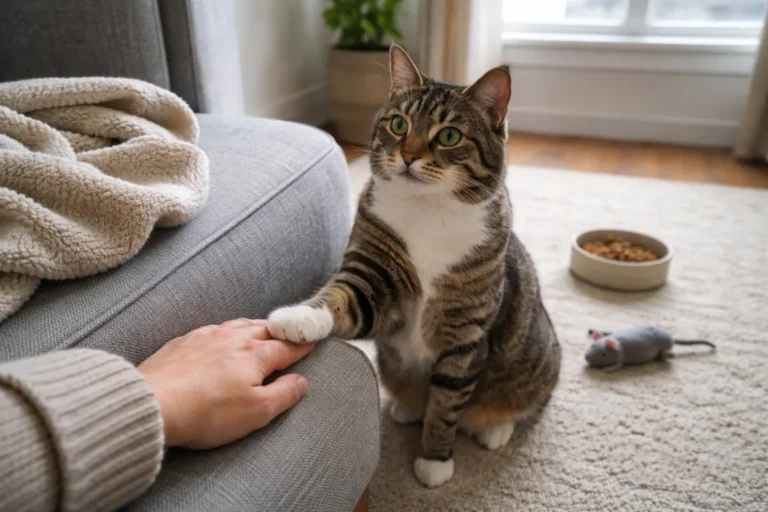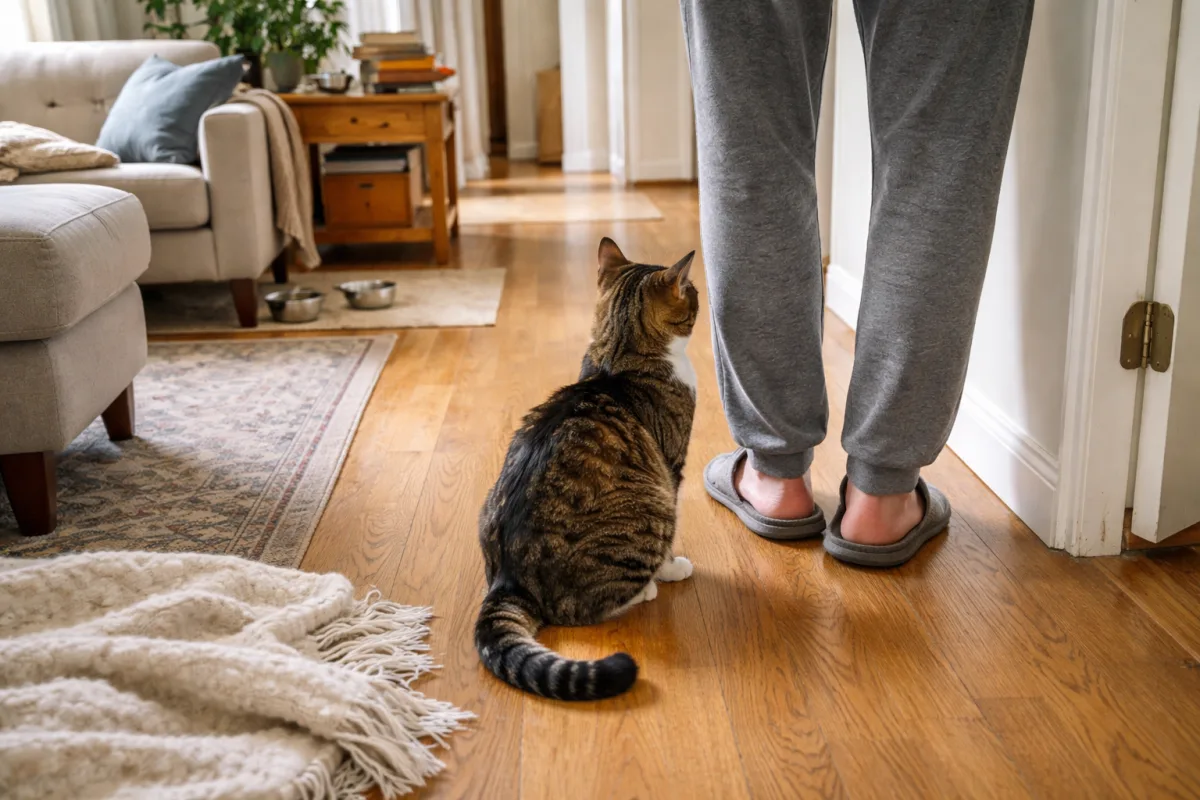
When a cat stays close to you all the time, it can feel comforting, flattering, and a little puzzling. One moment the cat is curled beside your legs, the next it is following you from room to room, waiting outside the bathroom door, or settling on the couch as soon as you sit down. For many owners, that constant closeness becomes part of daily life.
This behavior is not always about neediness in the human sense. Cats are selective about where they spend their time, and when they choose to remain near one person, there is usually a reason. Sometimes it is affection. Sometimes it is habit. Sometimes it reflects the cat’s personality, environment, or emotional state.
Understanding why your cat sticks close can help you read the behavior more accurately. In some homes, it is a simple sign of trust. In others, it may point to boredom, insecurity, strong routine dependence, or a desire for warmth and security. The details matter, and small changes in body language or timing can tell you a lot.
What This Behavior Looks Like in Everyday Life
Cats that stay close do not all behave the same way. Some quietly keep themselves within a few feet of you, moving from room to room without asking for much attention. Others are more obvious and will try to sit on your lap, block your path, or appear the moment you stop moving.
In practical terms, this closeness may show up in a few common ways:
- Following you from room to room, even when you are only doing ordinary tasks
- Waiting near doors, especially bathroom or bedroom doors
- Settling nearby instead of choosing a separate resting spot
- Rubbing against your legs or brushing past you often
- Watching you closely from across the room
- Jumping up to be near you when you sit or lie down
Some cats do this only at certain times of day. Others seem to orbit their favorite person almost constantly. A cat may act independent in the morning, then become attached and shadow you in the evening. That shift is often tied to routine, energy level, or what is happening in the home.
Closeness does not always mean the cat wants constant interaction. In many cases, the cat simply wants to stay near you without being handled, picked up, or engaged every minute.
Possible Internal Reasons Behind the Behavior
1. Attachment and trust
One of the simplest explanations is that your cat feels safe with you. Cats are careful animals. They do not choose proximity lightly. If your cat stays near you regularly, that often means you have become part of its secure environment.
This can be especially clear in cats that enjoy resting in the same room as their owner. They may not demand attention every time, but they seem more relaxed when you are around. That kind of closeness often reflects comfort more than dependence.
2. Warmth, comfort, and predictable routine
Cats are sensitive to patterns. If you have predictable habits, your cat may learn that your presence means food, quiet time, soft blankets, or a stable routine. Staying close can become a sensible choice from the cat’s point of view.
Many cats also seek out body heat. A warm lap, a chair you use often, or even your side of the bed can be more appealing than a separate sleeping spot. What looks like emotional attachment may partly be a search for physical comfort.
3. Curiosity and social interest
Some cats are naturally observant. They like to know what their person is doing. A cat that follows you may simply be interested in your movements and daily activity. Opening cabinets, moving through rooms, or changing tasks can all be worth watching.
This is especially common in cats that are alert, intelligent, and easily engaged by household life. They are not necessarily asking for anything. They are participating in their own quiet way.
4. Habit formed over time
Once a cat learns that staying near you leads to pleasant experiences, the behavior can strengthen. Maybe you talk to the cat often, offer treats at certain times, or give gentle attention when it comes close. Over time, closeness can become a regular pattern.
Habit matters more than many owners realize. Cats remember what feels good, and they repeat behaviors that fit their environment. If being near you has consistently felt safe and rewarding, your cat may choose that position almost automatically.
How Context and Environment Influence It
Not all close-following means the same thing. The home environment often shapes how often the behavior appears and how intense it becomes. A quiet cat in a calm home may stay nearby because it is peaceful to do so. A cat in a busy home may follow one particular person because that person feels steadier or less overwhelming.
Indoor cats often show this behavior more clearly because their entire social world is concentrated inside the home. If they do not have many other outlets for stimulation, a favorite person can become the most interesting part of their day. Outdoor access, multiple pets, and the amount of activity in the house can all change the pattern.
Routine also plays a major role. Cats notice when you wake up, when you cook, when you sit down, and when you prepare for bed. If your schedule is consistent, your cat may time its closeness around your most predictable moments. That can make the behavior feel almost synchronized.
Life changes can intensify this too. A move, a new pet, visitors, noise, or a shift in work schedule can make a cat cling more closely for a while. Some cats respond to change by becoming more attached. Others become more cautious and stay near the person they trust most.
When a cat suddenly starts staying much closer than usual, context matters. A change in routine, stress in the home, or a physical issue can all influence the behavior.
What the Behavior May Signal About the Cat’s State
Relaxed closeness
When a cat is calm, its closeness often looks easy and unforced. The body is loose, the tail is neutral, and the cat can settle nearby without constant movement. It may follow you, then relax once you stop. This version of the behavior usually points to comfort, confidence, or simple social preference.
You might notice the cat choosing nearby spaces that do not interrupt your activity. It may sleep at your feet, lie in the doorway, or keep you in view from a windowsill. These are common signs of a cat that enjoys proximity but still feels secure enough to rest.
Attention-seeking closeness
Sometimes the cat is not just nearby; it is clearly trying to get a response. It may meow, weave between your legs, paw at you, or place itself directly in the middle of whatever you are doing. This version can mean the cat wants play, food, petting, or reassurance.
The difference is usually in intensity. Calm closeness feels quiet and steady. Attention-seeking closeness is more active and harder to ignore. Both can be normal, but they serve different needs.
Anxious or uncertain closeness
Not every clingy cat is simply affectionate. A cat that stays extremely close because it seems nervous may also show other signs: a low posture, wide eyes, tense muscles, hidden ears, or reluctance to settle fully. It may follow you because your presence helps it cope with discomfort elsewhere.
This is where observation becomes important. If the cat appears uneasy in addition to staying close, it may be reacting to a stressor. That could be a change in the home, conflict with another pet, unfamiliar visitors, loud sounds, or something less obvious.
How Owners Often Interpret It vs What It May Actually Mean
Many people assume that a cat staying close all the time must mean deep love. Sometimes that is true. Cats can be strongly bonded to a person and prefer their company above all others. But the meaning is not always that simple.
A cat may stay near you because you are warm, because your routine is predictable, because the house feels safer near you, or because you are the source of food and attention. Affection can be part of the picture without being the only part. Cats are practical animals as much as social ones.
Owners sometimes also misread constant presence as a sign that the cat is “spoiled” or overly dependent. In reality, many cats simply choose closeness because it fits their temperament. A social cat may want to be where the action is, not because it cannot cope alone, but because it prefers interaction and visibility.
On the other hand, some people overlook the possibility of stress. If a cat that was once independent suddenly becomes glued to one person, that change deserves attention. New clinginess can be a quiet signal that the cat is looking for stability or feels less secure than usual.
If the behavior changes quickly, or if closeness comes with hiding, appetite changes, restlessness, or vocal changes, the pattern may mean more than ordinary affection.
Differences Between Playful, Neutral, and Stress-Related Closeness
| Type of closeness | Common signs | What it may mean |
|---|---|---|
| Playful | Follows you, darts ahead, engages when you move, invites interaction | Interest, energy, social engagement |
| Neutral | Stays nearby, sleeps in the same room, does not demand attention | Comfort, routine, preference for your company |
| Stress-related | Shadowing, restlessness, tension, vocalizing, difficulty settling | Insecurity, change, discomfort, need for reassurance |
This distinction can be subtle. A cat may switch between categories depending on the hour, the room, or what is happening around it. For example, a cat can be playful after dinner but more clingy and quiet during thunderstorms or houseguests.
How Daily Life Shapes the Pattern
Daily routines are powerful for cats. Feeding times, work hours, bedtime habits, and even where you sit after dinner can influence how close your cat stays. Many cats are excellent students of routine. They learn who is available, when attention usually happens, and which parts of the day feel most predictable.
A cat that stays close during mornings may be expecting breakfast or hoping to be included in your first movements of the day. A cat that shadows you at night may be responding to a quieter house or to your own routine of settling down. The timing can reveal a lot.
Household activity matters too. A busy home may push a cat toward one trusted person because that person represents calm. A very quiet home may have the opposite effect, making the cat more comfortable following and staying near simply because there is little else competing for attention.
Even your own behavior can reinforce closeness. If you frequently talk to your cat, pick it up when it approaches, or reward it with petting when it is nearby, the cat learns that staying close has value. That does not mean you caused the behavior in a negative sense. It just means social patterns develop through repeated experience.
When Closeness Becomes More Noticeable
Some cats are consistently close. Others become noticeably attached during specific situations. After illness, during cold weather, when the home is unusually quiet, or when you are under stress, a cat may spend more time near you than usual.
Seasonal changes can matter as well. In colder months, warmth-seeking behavior often increases. In warmer weather, some cats remain social but choose different spots, staying nearby without pressing against you as often. The need for closeness may stay the same while the form changes.
Illness or discomfort can also make a cat seek more contact. If a cat is not feeling well, it may want to stay close because your presence feels stabilizing. That is one reason sudden changes in attachment should be watched carefully, especially if the cat also seems less active, less hungry, or less interested in normal routines.
Long-Term Patterns and Stability
Some cats are simply close cats. That personality trait can remain steady for years. They like proximity, they enjoy routine, and they often choose the same person again and again. In those cats, the behavior is not a phase. It is part of how they move through the world.
Other cats change with age. Kittens may follow constantly because they are still learning the layout of the home and looking for security. Adult cats may become more selective, choosing closeness at certain times and independence at others. Senior cats may become more attached again as they seek comfort, warmth, and predictability.
What remains important over time is consistency of the pattern. A cat that has always liked to stay near you is different from one that suddenly becomes inseparable. The first is often personality. The second may reflect a shift in environment, health, or emotional state.
Long-term observation is useful because cats often communicate through patterns rather than single events. The meaning becomes clearer when you notice what has changed and what has stayed the same.
Reading the Small Signals
To understand why your cat stays close, the small signals matter as much as the larger behavior. Look at posture, tail movement, vocalization, timing, and how easily the cat relaxes after approaching you.
Signs of comfortable closeness
- Soft body and loose muscles
- Slow blinking or calm eyes
- Choosing to lie nearby without tension
- Leaving and returning without distress
Signs that closeness may be driven by stress or uncertainty
- Restlessness or repeated pacing
- Hunched posture or tucked tail
- Frequent vocalizing with little settling
- Clinging that increases after a change in the home
These differences are not always dramatic. A cat can appear affectionate and uncertain at the same time. That is normal. Cats often mix social behavior with caution, especially when they are sensitive to noise, new people, or changes in routine.
How the Home Environment Shapes the Meaning
In a home with multiple animals, a cat may stay close to one person as a way of avoiding tension. In a quieter home, closeness may simply reflect comfort and preference. In a more active home, the same behavior may be the cat’s way of finding one stable point in the middle of constant movement.
Furniture placement, resting spots, and the amount of open space also matter. A cat may stay close because your favorite chair, bed, or desk happens to be in the most secure area of the house. What appears emotional can sometimes be practical in a very cat-like way.
That practical side does not make the behavior less meaningful. It just shows that cats balance feeling and function all the time. They choose what is useful, and for many cats, being near their person is both useful and pleasant.
When a cat chooses you repeatedly, it is responding to a combination of familiarity, trust, routine, and personal preference. The balance shifts from cat to cat, and even day to day. That is why the same behavior can mean slightly different things in different homes.
A cat that stays close to you all the time is usually telling you something simple, even if the message has layers. It may be saying that you are safe, that your routine is worth following, or that your presence makes the world feel easier to navigate. Sometimes it is just asking to be near without asking for much else. And sometimes it is asking for help in the only way it knows how.