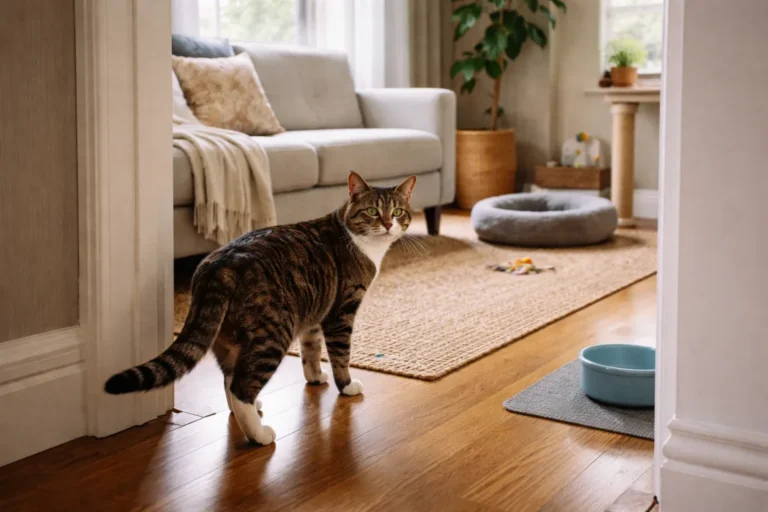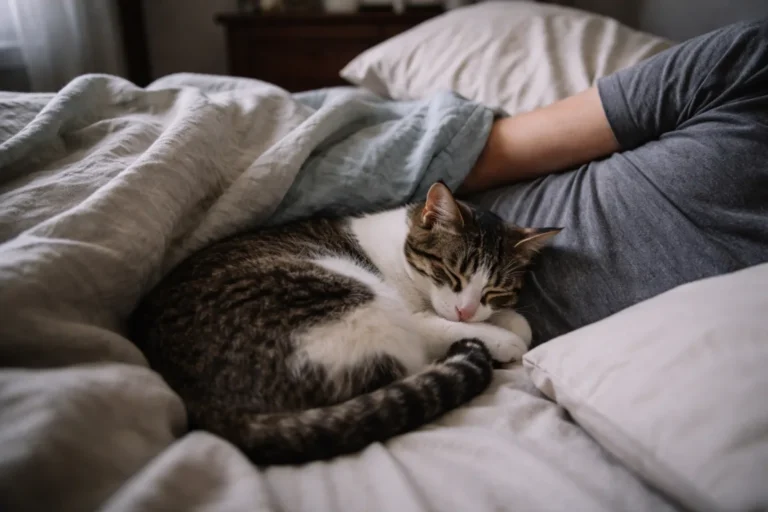
A cat that settles near its owner is doing more than choosing a comfortable spot. That position often reflects habit, trust, curiosity, and a careful reading of the room. Some cats hover beside a chair, some stretch along a sofa arm, and others quietly park themselves at your feet as if they have a schedule only they understand.
This behavior can seem simple on the surface, yet it usually carries several layers of meaning. Cats are observant animals. They pay close attention to movement, timing, scent, noise, and routine. Sitting near a person lets them stay connected without giving up the sense of control they value.
In daily life, the behavior can look affectionate, practical, or protective depending on the cat and the situation. A cat may choose the same place every evening, follow one person from room to room, or appear only when the house gets quiet. Each version can point to a different reason, and the context matters more than the location itself.
Why Cats Choose to Be Near Their Owners
Cats are often described as independent, but independence does not mean they prefer isolation. Many cats like to be close enough to monitor what is happening while still keeping a comfortable distance. Sitting near an owner gives them access to warmth, scent, sound, and social reassurance without forcing interaction.
One of the most common reasons is comfort. A familiar person can make the home feel predictable. Cats are creatures of pattern, and a trusted owner often becomes part of that pattern. When the day feels normal, the cat may simply settle nearby because the spot feels right.
Another reason is security. A cat that sits beside or near a human can watch the environment from a place that feels safe. This is especially common in homes with noise, visitors, other pets, or active household routines. The owner becomes a stable point in a busy space.
For many cats, sitting near an owner is not a request for constant attention. It is a way to stay connected while keeping a sense of safety and control.
What This Behavior Looks Like in Everyday Life
The behavior can take many forms. Some cats sit directly beside their owner on the couch and keep one paw in contact. Others choose the floor nearby, especially if they want closeness without being touched. Some cats move with the owner from room to room and then pause a few feet away, as if they are checking in.
These patterns often appear during predictable moments. A cat may settle near you when you work at a desk, when you read in the evening, or when you return home from being out. Many cats also choose to stay close when the house becomes quiet, because that is when your presence is easiest to notice.
There is also a difference between casual proximity and active seeking. A cat lying near your feet with loose posture is usually showing calm comfort. A cat that repeatedly circles, glances at you, and resettles nearby may be asking for attention, food, or reassurance. The shape of the behavior changes with the cat’s mood.
Common everyday examples
- Sleeping beside a chair while the owner works
- Sitting at the end of a sofa during evening routines
- Following a person into the kitchen and staying nearby
- Waiting near the bathroom or bedroom door
- Choosing the same spot close to a favorite person every day
Possible Internal Reasons Behind the Behavior
Internal reasons are often more important than the external appearance of the behavior. A cat may sit near an owner because the relationship feels safe, because the cat wants to keep track of food or routine, or because closeness simply reduces uncertainty. In a cat’s mind, proximity can be useful even when it is not dramatic.
Attachment plays a role, but it is usually quieter than people expect. Many cats form a preference for one person because that person feeds them, handles them gently, or respects their space. Over time, the cat learns that being near that person tends to lead to pleasant, predictable outcomes. The choice becomes both emotional and practical.
Some cats are also more sensitive to environmental changes. A move, new furniture, different work hours, or a change in household activity can all make a cat seek a familiar anchor. Sitting near an owner is one way to regain balance. It is not always about affection alone. Sometimes it is about recalibrating after a change.
What the cat may be feeling
- Comfort in a familiar presence
- Curiosity about what the owner is doing
- A need to monitor the environment from a safe place
- Interest in food, routine, or a likely event
- Reassurance during noise, visitors, or household movement
How Context Changes the Meaning
The same behavior can mean different things depending on when it happens. A cat sitting near you before mealtime may be anticipating food. A cat choosing the same place during a thunderstorm may be looking for emotional steadiness. A cat that stays close after a vet visit may be recovering from stress and wanting a calm presence.
Time of day matters too. Evening closeness often reflects the cat’s association between your downtime and its own rest period. Morning proximity may be part of a routine built around feeding, grooming, or waiting for the day to begin. In a quiet home, a cat may stay near an owner simply because there is not much else to track.
Household activity also changes the picture. In an active home, a cat may sit nearby but remain slightly alert, ears moving and eyes following motion. In a calmer space, the same cat may fully relax and stretch out without hesitation. The surrounding environment shapes how much of the behavior is about comfort versus observation.
What Body Language Can Tell You
Body language gives important clues. A relaxed cat often has soft eyes, loose muscles, and a tail resting comfortably. The cat may sit or lie down near you with little concern for what you are doing. This usually suggests trust and ease.
A more alert cat may keep the body ready to move. Ears may swivel toward sounds, and the tail may twitch lightly. That does not automatically mean stress. It may simply mean the cat wants to stay close while still tracking everything around it. Cats often blend relaxation with vigilance.
Some cats use proximity as a way to ask for interaction. They may lean in, blink slowly, touch you with a paw, or reposition themselves so you will notice them. Others prefer passive company. They sit near enough to share the space, but not close enough to invite handling.
Distance matters, but posture matters more. A cat can be only a few feet away and still be completely relaxed, or it can sit in your lap and remain tense if the environment feels wrong.
Signs that often appear with calm closeness
- Slow blinking
- Loose tail position
- Soft, even breathing
- Frequent but gentle repositioning
- Choosing to nap soon after settling nearby
How Cats Use Proximity in a Home Environment
Modern homes shape this behavior in interesting ways. Indoor cats spend much of their time around people, so they have more chances to form daily habits tied to human movement. A cat may learn that the kitchen means food, the couch means evening relaxation, and the desk means quiet company. Proximity becomes part of the household rhythm.
Furniture placement can influence where the cat sits. Some cats prefer a nearby chair because it gives them height. Others choose the floor beside a desk because they want closeness without being in the way. A window seat close to a favorite person can combine observation with companionship, which many cats enjoy.
Multiple pets can also shape the pattern. In a home with other cats or dogs, sitting near an owner may offer both companionship and a break from social pressure. The cat may be choosing the human as the most predictable and least demanding presence in the room.
When Sitting Nearby Becomes More Noticeable
Some cats become especially attached to proximity during changes in the household. A guest staying overnight, a new pet, a different work schedule, or even a rearranged room can make the cat more likely to stay close. Familiar people become useful reference points when the rest of the environment shifts.
This behavior may also stand out during illness or recovery. A cat that does not feel well often seeks the safest, most familiar place available. Sitting near an owner can reduce effort and keep the cat within reach of food, warmth, and observation. That said, illness-related clinginess usually comes with other signs, such as lower energy, appetite changes, or unusual hiding.
Age can matter as well. Younger cats may weave in and out of closeness because they are curious and energetic. Older cats often become more selective, choosing specific places near the person they trust most. The pattern can become steadier over time, but it can also shift with health and environment.
What Owners Often Assume, and What May Actually Be True
It is easy to assume that a cat sitting nearby always means affection. Sometimes that is true. Other times, the cat is waiting for the next meal, watching the room for movement, or settling in because the chosen spot has the best combination of comfort and access.
Owners also sometimes mistake closeness for dependency. In reality, many cats are comfortable being alone but still prefer to spend certain parts of the day in a person’s orbit. That is different from panic or insecurity. A cat that can rest calmly near you and still leave when it wants usually feels quite secure.
Another common misunderstanding is that a cat wants nonstop petting because it chose to sit close. Some cats do. Many do not. They want company, not constant handling. Respecting that difference often keeps the behavior stable and pleasant.
| Behavior | Possible meaning |
|---|---|
| Sits near owner with relaxed posture | Comfort, trust, routine |
| Follows owner from room to room | Curiosity, attachment, anticipation |
| Sits nearby with alert ears | Monitoring environment |
| Stays close after stress or change | Seeking reassurance |
| Approaches only at certain times | Linked to routine, food, or predictable events |
How to Read the Behavior More Accurately
Reading this behavior well means looking at the full pattern, not just the location. Ask when the cat sits near you, how long it stays, and what the body looks like while it is there. A cat that quietly rests beside you every night is showing something different from a cat that appears only after a loud sound or before dinner.
It also helps to notice whether the cat has choices. A cat that can leave, move around, and return on its own is usually engaging in a healthy form of proximity. The behavior becomes more meaningful when it is voluntary and consistent. Forced closeness does not say the same thing.
Small details often reveal more than dramatic gestures. A cat that chooses your side of the sofa instead of the opposite chair is making a subtle social decision. A cat that sleeps near your feet rather than in another room may simply be saying that your presence fits well into its sense of order.
Questions worth noticing
- Does the cat sit nearby at the same time each day?
- Is the cat relaxed or alert while staying close?
- Does the behavior increase during stress, noise, or change?
- Does the cat seek contact or just shared space?
- Does the cat leave easily when it wants to?
A Quiet Form of Connection
When a cat sits near its owner, it is often choosing a middle ground between solitude and interaction. That middle ground suits cats well. It lets them observe, rest, monitor, and connect without giving up independence. The behavior can look simple, but it is usually built from habit, trust, and a careful reading of the moment.
Over time, the pattern often becomes part of the relationship itself. The cat learns which spaces feel safe, which routines are stable, and which person offers the most reliable company. Sitting nearby is one of the clearest ways cats fold those lessons into daily life.
That is why the behavior can feel so ordinary and yet so specific. A cat does not need to climb into a lap or demand attention to show preference. Sometimes the most meaningful choice is the quiet one: a familiar body settling close, staying for a while, and leaving only when it is ready.