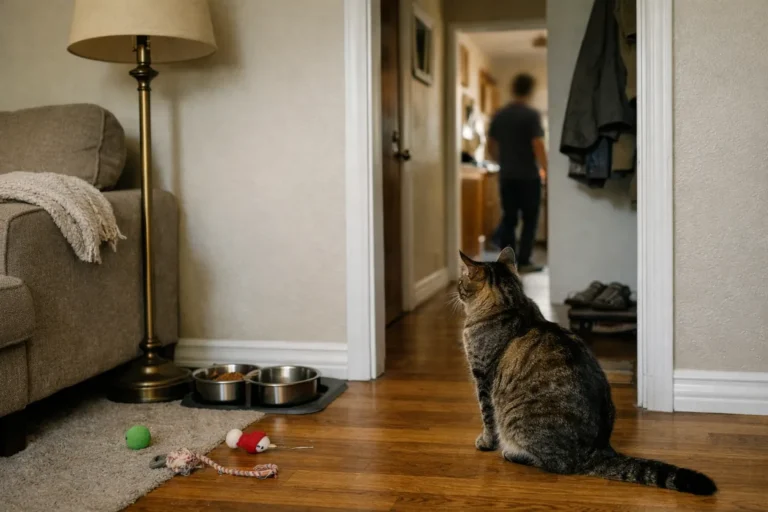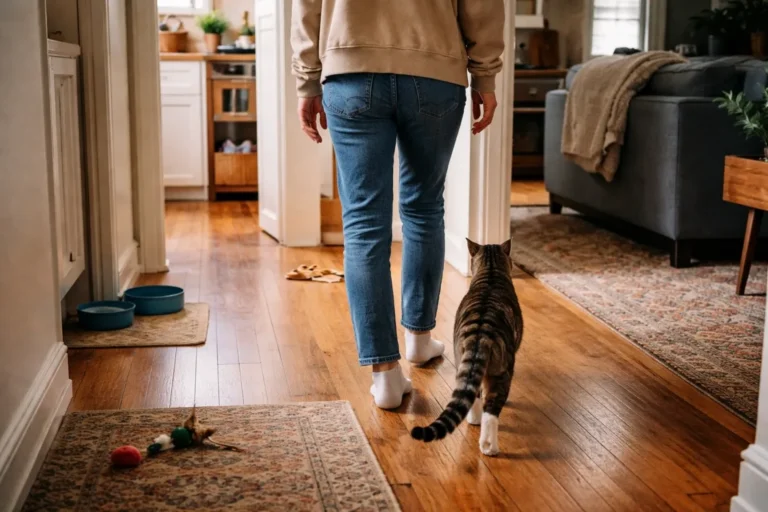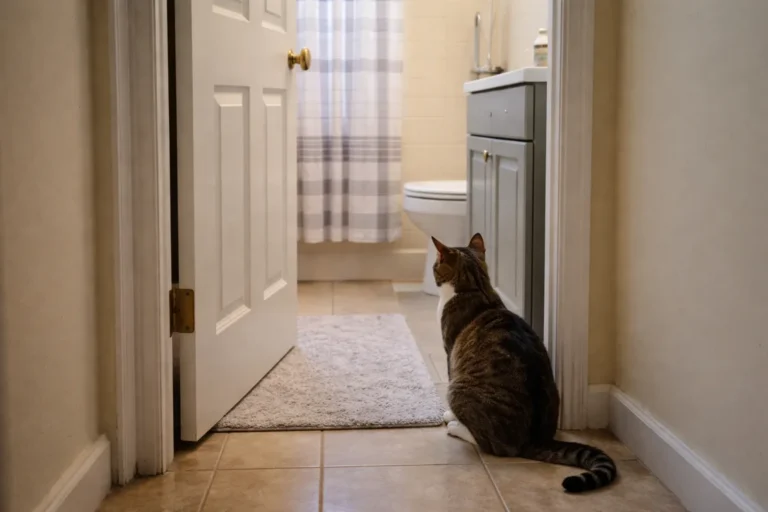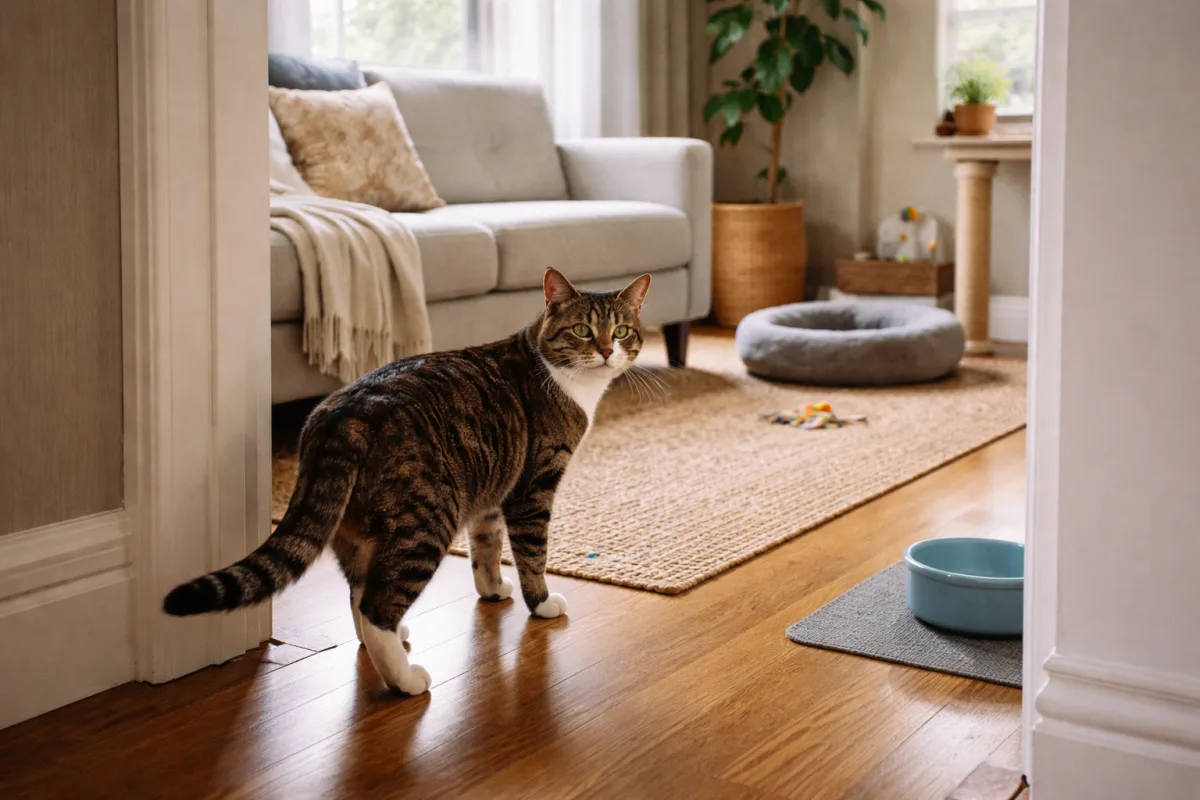
A cat walks toward a person, pauses near the feet, sniffs the air, and then turns away without a sound. It can look confusing, even a little personal. In daily life, though, this small routine is usually part of normal cat communication rather than a rejection.
Cats do not move through the world in straight lines of intention the way people often expect. They gather information first. A few steps closer can mean curiosity, a quick reassessment, or a change in comfort level. Walking away after approaching often says more about timing, mood, and context than about liking or disliking someone.
The pattern shows up in many settings. A cat may come up to greet you in the kitchen and leave when the room gets noisy. Another may approach a visitor, look at them, and slip away after catching a smell or hearing a sudden movement. The behavior is common, subtle, and worth reading in full instead of as a single action.
What the behavior looks like in everyday situations
When cats approach and then walk away, the behavior can look simple on the surface but vary a lot in detail. Some cats come in with their tail held upright, circle once, and then leave as if their job is done. Others approach slowly, stop at a safe distance, and retreat after a brief stare or sniff.
These small differences matter. A cat that comes close and leaves calmly may be satisfied after checking the scene. A cat that approaches and backs off abruptly may have felt unsure, interrupted, or overstimulated. The same outward action can carry different meanings depending on speed, posture, and what happened just before and after.
Common real-life moments
- A cat comes to greet you at the door, then walks away once you set down bags or keys.
- A cat approaches a guest, sniffs shoes or clothing, and then leaves the room.
- A cat climbs onto the couch next to someone, stays for a moment, then moves to another spot.
- A cat walks toward food or attention, pauses, and then seems to lose interest.
- A cat approaches another pet, observes body language, and chooses not to continue.
These moments are often short, but they tell a lot about how a cat is reading the environment. Cats are constantly collecting information. A brief approach can be enough to satisfy that need.
Possible internal reasons behind the behavior
Cats rarely act on one simple motive. More often, several internal factors overlap. Curiosity, caution, comfort, hunger, social interest, and arousal can all influence whether a cat keeps moving closer or decides to leave.
One common reason is information gathering. A cat may approach to confirm who or what is present, then walk away once the answer feels complete. This is especially true in homes where the cat already knows the people and routine. The approach itself is part of the cat’s way of checking in.
Another reason is uncertainty. Cats can be interested in something and still not fully comfortable with it. They may move in, then decide the situation feels a little too active, loud, or unpredictable. Walking away gives them control over distance, which is often what they want most.
Approaching and then leaving does not automatically mean a cat is upset. In many cases, it simply means the cat gathered enough information and chose a different level of engagement.
Curiosity without commitment
Cats often want to observe before they participate. That can create a stop-and-go pattern that looks hesitant but is actually thoughtful. A cat may come near your lap, watch your hands, and then step away because the moment no longer feels worth joining.
This is normal in a species that balances social interest with a strong need for personal control. Cats tend to prefer interactions that are brief, predictable, and easy to exit. An approach followed by departure can be a very cat-like way of staying involved without becoming trapped in the interaction.
Sensitivity to overstimulation
Some cats approach because they want contact, then leave because the setting becomes too intense. This can happen when petting starts too quickly, a voice becomes louder, or the surrounding movement gets busy. What looked like an invitation may turn into a short visit once the cat has had enough input.
Overstimulation is easy to miss because the cat may not show dramatic warning signs. A small shift in ears, a tail flick, or a change in body tension may be the only clues before the cat steps away. Leaving is often the cat’s cleanest way to manage the situation before it grows uncomfortable.
How context and environment influence it
The same cat may behave differently in a quiet bedroom, a crowded living room, or a home full of new smells and sounds. Environment shapes how safe a cat feels and how long the cat wants to stay engaged. A cat that approaches and then leaves in one room may linger in another that feels calmer.
Routine matters too. Cats tend to be more confident when the day follows familiar patterns. If someone comes home late, moves furniture, or introduces a new object, the cat may approach to inspect and then step away once the change is clear. The leave part of the behavior often reflects a practical decision, not a social one.
Household activity and timing
Cats are more likely to approach and leave when the timing is off. A cat may come near when someone is busy cooking, but walk away when the clatter of dishes grows louder. Another may approach for attention in the morning and lose interest once the family starts getting ready to leave.
Timing also affects food-related behavior. A cat might head toward the bowl, sniff, and walk away if the food is stale, if a stronger scent is nearby, or if something about the feeding area feels crowded. These decisions are fast, practical, and tied to the cat’s immediate sense of the environment.
Indoor and outdoor differences
Indoor cats often show this behavior around people and household routines because those are the main sources of stimulation. Outdoor cats, or cats with outdoor access, may do it while checking territory, approaching a sound, or deciding whether another animal is near. The basic pattern is similar, but the reasons can differ.
In both settings, the cat is managing distance. Approach signals interest. Departure signals a decision to shift attention elsewhere, keep safe, or preserve energy. That balance is central to cat behavior.
What body language says during the approach-and-leave pattern
Body language helps separate friendly curiosity from discomfort or caution. A cat’s posture often changes before the cat actually walks away. Watching the whole sequence gives a more accurate read than focusing only on the final exit.
Soft, loose movement usually suggests the cat is relaxed. A tense approach, on the other hand, often looks slower and more guarded. If the cat leaves with a puffed tail, flattened ears, or a sudden sprint, the cause is likely different from a cat that simply drifts away after a calm sniff.
Signals that often accompany a calm approach
- Tail held up or gently curved
- Loose shoulders and smooth steps
- Brief sniffing of people, objects, or furniture
- Normal ear position, not pinned back
- Slow blinking or a neutral gaze
Signals that may suggest discomfort or caution
- Body held low or stiff
- Quick retreat after a sudden sound or movement
- Tail twitching or lashing
- Eyes wide and focused on the source of concern
- Ears angled sideways or flattened
Sometimes the signs are mixed. A cat may approach with interest, then pause and leave after hearing a noise from another room. In that case, the departure is likely about the environment, not the person or object the cat first approached.
One of the most useful habits is to watch what changes right before the cat leaves. A sound, movement, smell, or touch often explains the shift better than the departure itself.
How owners often interpret it vs what it may actually mean
People often assume that a cat approaching means the cat wants affection, and leaving means the cat has changed its mind. Sometimes that is true. Often, though, the cat was never making a promise about a longer interaction. The approach may have been a quick check-in, not an invitation for more.
Another common misunderstanding is taking the behavior personally. A cat may walk toward one person and leave, then approach again later. That pattern can look indecisive, but it usually reflects the cat’s own pacing. Cats often want closeness in small doses and on their own terms.
It is also easy to mistake a cat’s curiosity for emotional inconsistency. In reality, the cat may be steady while the situation is changing. What feels like mixed messages from the human side may be a consistent response to subtle differences in sound, smell, movement, or pressure.
When the interpretation changes with context
If the cat approaches and leaves during a stressful event, the meaning is different than if it happens during a calm evening. A vacuum running in the hall, strangers at the door, a dog nearby, or a new cat in the house can all shift the cat’s comfort level. The cat is not being mysterious; it is adjusting to the moment.
The same is true during affection. A cat may come close because it wants attention, then leave after a short pet or head rub. That can be a complete interaction for that cat. Not every approach is meant to lead somewhere longer.
How social interest and independence work together
Cats are often described as independent, but independence does not mean they avoid connection. It means they prefer to regulate connection. Approaching and then walking away is one of the clearest signs of that balance.
Many cats enjoy being near people without wanting sustained contact. They may choose to stay in the same room, circle around a chair, or come close enough to confirm what is happening. Then they leave to rest, watch from a distance, or simply reset.
This pattern can be especially noticeable in homes where the cat has several comfortable resting places. A cat may approach to be included, then return to a windowsill or bed. The behavior still reflects social awareness. The cat is just deciding how much participation feels right.
Why cats often leave after a brief connection
- They have gathered the information they wanted.
- The interaction has reached their comfort limit.
- Something in the environment pulled their attention away.
- They prefer short, repeatable contact instead of long sessions.
- They are managing energy and choosing where to rest.
This does not make the behavior cold or confusing. It makes it efficient. Cats often conserve both attention and energy by keeping interactions short and selective.
When the behavior becomes more noticeable
The pattern often becomes more obvious during changes in routine. A new household member, altered feeding times, a move, rearranged furniture, or increased noise can all make a cat more likely to approach and then leave. The cat is checking in more often because the environment needs to be re-read.
It can also stand out during transitions in the cat’s own energy level. Kittens may rush in and out of interactions almost constantly. Adult cats often become more measured, while older cats may approach more slowly and leave sooner if they are tired or uncomfortable. The shape of the behavior changes across life, but the underlying habit of checking and choosing remains.
Patterns by life stage
| Life stage | Common pattern | What it often reflects |
|---|---|---|
| Kitten | Fast approach, quick retreat, repeated cycles | Play, exploration, short attention span |
| Adult | Measured approach, brief contact, calm departure | Social checking, comfort management, routine |
| Senior cat | Slow approach, shorter stay, easier withdrawal | Energy conservation, sensitivity, physical comfort |
Age does not determine the meaning by itself, but it changes the likely reasons. A kitten leaving after approaching may be resetting for play. An older cat may be managing fatigue or joint discomfort. The same motion can have a different background.
When it may be worth paying closer attention
Most of the time, this behavior is ordinary. Still, repeated sudden departures, especially when paired with hiding, reduced appetite, or aversion to touch, deserve attention. A cat that used to approach comfortably and now consistently walks away may be communicating discomfort.
Changes in behavior that arrive with other signs can point to stress or medical issues. If the cat seems jumpy, less social than usual, or unwilling to stay near people or food, the pattern is no longer just a preference. It is part of a larger shift.
If the approach-and-leave habit changes suddenly, especially alongside appetite loss, vocal changes, hiding, or sensitivity to touch, the bigger pattern matters more than the single behavior.
Even then, the first step is observation rather than assumption. Note when it happens, what was nearby, and what the cat did before walking away. That context often reveals whether the trigger is social, environmental, or physical.
Reading the behavior in everyday home life
Understanding this pattern becomes easier when it is viewed as a conversation with distance. The cat is not required to stay once it has approached. In many cases, the approach itself is the message. It says, “I noticed this,” or “I want to check this,” or “I am willing to come close, but only for a moment.”
That makes the walk-away part just as important. It can mean the cat has finished checking the area, wants more space, or has chosen a different focus. Some cats do this repeatedly throughout the day, especially in homes where they feel safe enough to come and go without pressure.
A cat that approaches and then leaves is often acting with precision. It is choosing distance in real time. Seen that way, the behavior is less about uncertainty and more about careful control.
The pattern can also remind owners that cats often prefer low-pressure relationships. They may return often, but in small segments. They may initiate contact, break it off, and circle back later. That rhythm is normal for many cats and fits the way they manage social life, rest, and attention.
When the environment is calm and the cat is healthy, this behavior usually blends into ordinary living. A quick approach to the kitchen, a short visit beside the couch, a sniff at the door, then a quiet departure to another room. The cat keeps moving through its own terms, one small decision at a time.