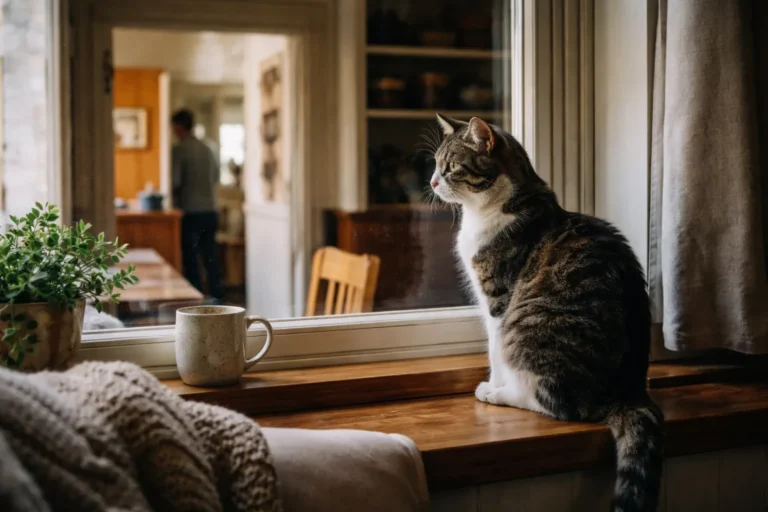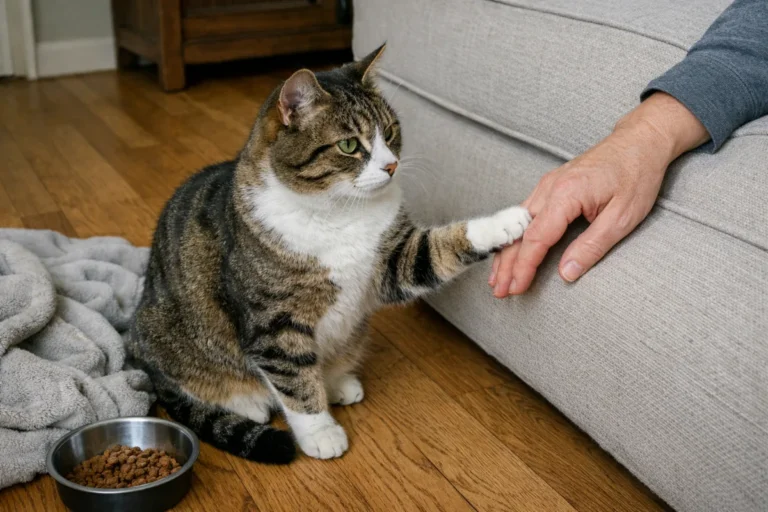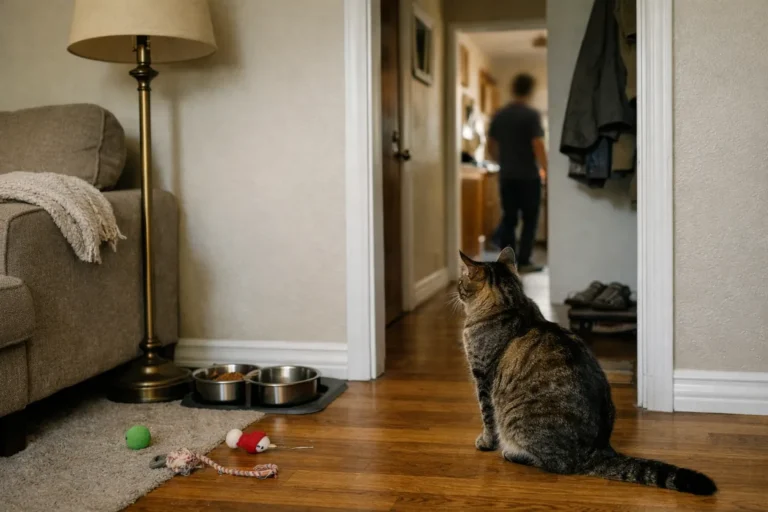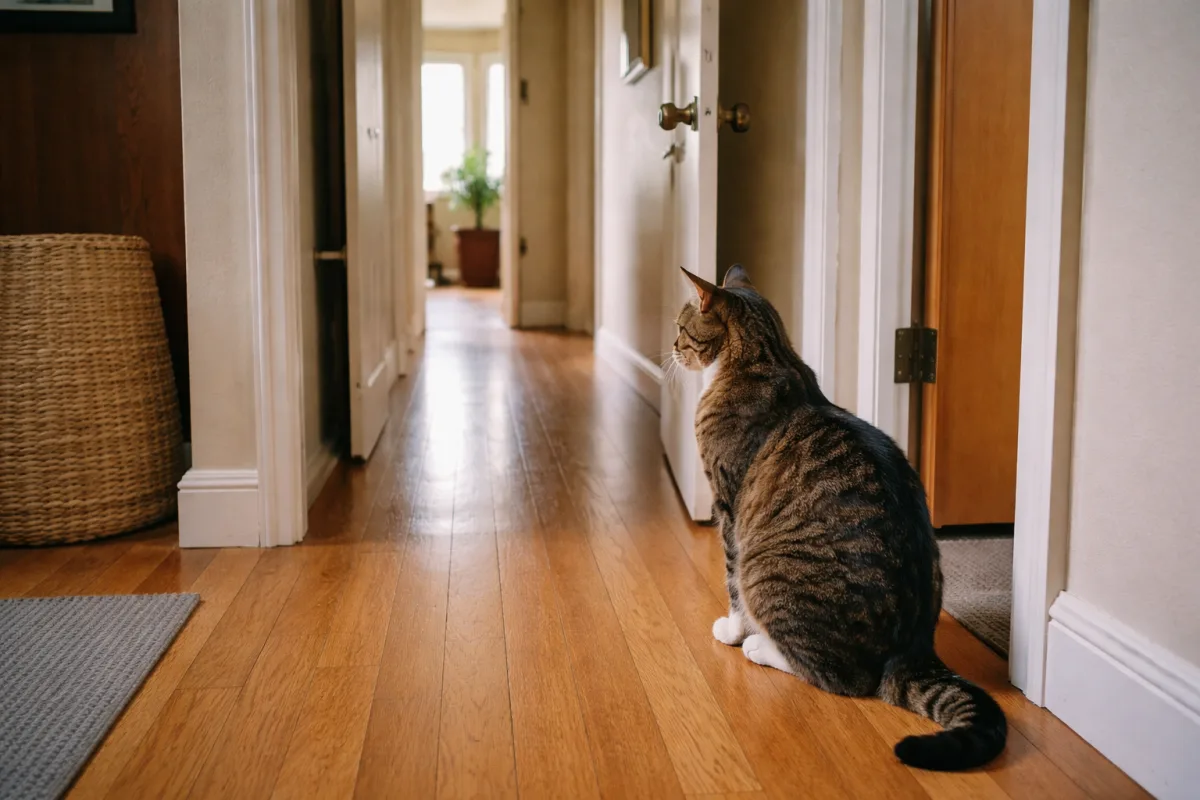
When a cat meows as soon as you step out of the room, it can feel oddly specific. The sound may be soft and brief, or it may carry enough insistence to make you pause halfway down the hall. Some cats do it only once in a while. Others make it part of their daily routine, as if your absence needs immediate commentary.
This behavior is usually less about noise and more about communication. A cat may be expressing curiosity, frustration, concern, habit, or a simple request for attention. The meaning often depends on what happens before and after the meow, how the cat carries its body, and whether the behavior appears only in certain rooms or at certain times of day.
In many homes, the moment a person leaves a room becomes a small social event for the cat. The cat notices the change, reacts to it, and sometimes tries to reverse it. That reaction can be subtle or obvious, relaxed or tense. Understanding it starts with watching the whole picture, not just the sound.
What the behavior often looks like in everyday life
A cat meowing when you leave the room does not always sound the same. One cat may give a single quiet meow and settle back down. Another may follow the doorway with repeated calls, as if checking whether you will return. Some cats start meowing only after you close a door, and others begin before you even fully leave.
The behavior often shows up in ordinary moments that seem harmless to people. You get up from the couch, walk into the kitchen, and hear a meow behind you. You step into the bathroom, and the cat sits outside the door making short vocal sounds. You leave the bedroom at night, and the cat complains until you return or move farther away.
There can be a pattern to it. Many cats are more vocal when they expect attention, food, or routine interaction. Others do it when the household becomes quieter and they suddenly notice they are alone in a different part of the home. A cat that usually seems calm may still meow if a favored person disappears from sight too quickly.
Common everyday patterns
- Meowing right after a person walks through a doorway
- Calling from the other side of a closed door
- Following a person and vocalizing when the person stops moving
- Meowing after a familiar routine is interrupted
- Making repeated sounds until the person returns
Possible reasons behind the meowing
One common reason is simple social checking. Cats notice when a preferred person leaves their field of view, and some respond by calling. This can be a way of keeping contact rather than expressing distress. In a home environment, meowing often replaces the kinds of distance signals cats would use with other cats.
Another possibility is that the cat wants something specific. The timing matters. If the cat meows whenever you leave the room before meals, near treat time, or near play sessions, the sound may be tied to expectation. Some cats learn that your movement predicts something useful, so they vocalize to speed things up.
For some cats, the sound is more emotional. They may dislike sudden separation from a person they are attached to, even for a few seconds. That does not always mean true separation anxiety, but it can mean the cat feels unsettled when the social arrangement changes without warning.
It is also possible that the cat is simply reacting to being ignored. Cats are observant. If leaving the room means the social interaction stopped, the meow may be a way of asking for the interaction to continue on the cat’s terms. In homes where the cat has learned that vocalizing brings people back, the behavior can become very reliable.
When a cat meows after you leave the room, the sound often means “notice me,” “come back,” or “something changed.” The exact reason depends on timing, body language, and routine.
Internal triggers that can influence the behavior
- Curiosity about where you are going
- Desire for attention or interaction
- Expectation of food, play, or routine
- Uncertainty about sudden separation
- Habit reinforced by previous responses
How the home environment changes the pattern
The same cat may behave very differently in different parts of the house. In a quiet apartment, a room change can feel significant because the cat quickly notices silence and absence. In a busier home, the cat may be distracted by other sounds, people, or animals and meow less often. The environment shapes how sharply the cat feels your departure.
Doorways matter more than many owners realize. A closed door can turn a mild vocal habit into a stronger one. Cats often dislike blocked access, especially when the door separates them from a person they want to monitor. Even if the cat was relaxed a minute earlier, the simple act of closing a door can make the situation feel more important.
Routine is another major factor. Cats are creatures of pattern, and they notice when the pattern breaks. If you usually stay in one room at a certain hour and suddenly move away, the cat may react because the expected sequence changed. The same meow may sound emotional, but it may really be a response to disruption.
Household activity levels also matter. In a home where people move constantly, a cat may learn that one room is just temporary. In a calmer home, the departure of one person may stand out more. Older cats and highly attached cats often pay closer attention to these shifts.
Environmental factors that can increase the meowing
- Closed doors and blocked access
- Quiet homes with few distractions
- Strict routines that make changes obvious
- High attachment to one person
- Limited play or stimulation during the day
What the meow may signal about the cat’s state
Not every meow has the same tone behind it. A brief, light vocalization usually looks different from a drawn-out call or repeated loud meowing. The first may be a casual check-in. The second may suggest frustration or stronger attachment to the person leaving.
Body language helps reveal the state of mind. A cat that meows while keeping a loose body, neutral ears, and an unhurried tail is often simply engaged or curious. A cat that stands rigid, watches the door, or follows with intense focus may be more unsettled. A cat that paces, vocalizes repeatedly, or seems unable to settle deserves closer attention.
Sometimes the meow reflects excitement rather than worry. Some cats have learned that a person moving from one room to another often leads to petting, feeding, or play. They may call out because movement itself has become a cue. In that case, the cat is not necessarily upset; it is anticipating something.
In other situations, the sound may point to boredom. A cat with little to do may react strongly to the departure of the main source of stimulation. The room becomes quiet, the person disappears, and the cat answers with a meow because there is nothing else to occupy the moment.
A calm meow with relaxed posture usually means social contact or curiosity. Repeated loud meowing, pacing, or door-focused behavior can point to stronger need, frustration, or stress.
Body language clues to watch
- Tail position and movement
- Ear direction and tension
- Whether the cat follows or stays put
- Vocal tone and repetition
- Ability to relax after you leave
How owners often interpret it, and what it may actually mean
It is easy to assume every meow means “my cat is upset.” Sometimes that is true, but not always. Cats use vocal sounds in a range of everyday ways, and the same meow can mean different things in different moments. A cat who calls at the door may be asking for access, asking for attention, or simply objecting to a change in the social scene.
Owners sometimes also assume a cat is being dramatic or manipulative. That framing misses the point. The cat is responding to a situation that matters to it. If the cat has learned that vocalizing works, the behavior will persist because it has a clear result. If the cat feels uncertain when separated, the meow is part of how it handles that feeling.
Another common misunderstanding is to treat the behavior as always “bad” or “clingy.” Many cats are just highly social in their own way. They may prefer to keep track of their person from room to room and communicate whenever the arrangement changes. That does not automatically point to a problem.
Still, the context matters. A cat that only meows once when you leave a room is very different from a cat that cannot settle, calls continuously, and seems distressed each time separation happens. The second pattern may deserve more careful observation, especially if it appears suddenly or becomes more intense over time.
Different forms of the behavior
Some cats give what feels like a conversational meow. It is short, even-tempered, and often followed by watching or slow movement. This version is common in cats that are comfortable but socially engaged. They are not protesting heavily; they are checking in.
Other cats use a sharper or louder voice. The sound may come faster, with little pause between calls. That style often appears when the cat wants something immediately or dislikes being cut off from a person. If the cat scratches the door, circles the space, or keeps meowing after the person has gone, the intensity is higher.
There is also a playful version. A cat may meow when the owner leaves because the departure seems to signal the beginning of a game or chase. In multi-cat homes, this can happen when one cat disappears and the other responds as if inviting more interaction. The sound may be part of social play rather than complaint.
Mixed signals are common. A cat may look relaxed but still meow repeatedly. Another may seem a little tense yet stop vocalizing quickly once the person returns. That is why the full moment matters. Cats do not always express one clean emotion at a time.
Ways the same behavior can differ
| Type of meow | Likely tone | Common context |
|---|---|---|
| Single soft meow | Neutral or curious | Brief room separation |
| Repeated calling | Demanding or unsettled | Closed door, strong attachment, boredom |
| Short meow then pause | Checking in | Watching a person move away |
| Loud, persistent vocalizing | Frustration or stress | Blocked access, routine change, high need for contact |
How life stage and personality shape the response
Kittens often meow more freely because they are still learning how to manage space, attention, and separation. A small kitten may call when a person steps away simply because the movement is unfamiliar or because the kitten wants reassurance. Their behavior can be loud without being deeply serious.
Adult cats often become more patterned. They may learn which departures matter and which do not. A mature cat that meows whenever a certain person leaves may have built a strong association between that person and comfort, food, or play. The cat is not guessing; it is reacting to learned experience.
Senior cats can become more vocal as well, sometimes because they rely more on familiar routines. If a cat starts meowing more than usual when people leave the room later in life, it may reflect changing comfort, hearing, vision, or general sensitivity to disruption. A new pattern in an older cat is worth noticing.
Personality also plays a big role. Some cats are naturally chatty. They meow at doors, people, and empty hallways with equal confidence. Others are quiet most of the time and vocalize only when something specific is happening. The same behavior can mean very different things depending on the cat’s usual style.
When the behavior becomes more noticeable
There are times when the meowing tends to intensify. Many owners notice it during schedule changes, after moving homes, when a family member is away, or when the cat’s daily enrichment is lower than usual. Even a small change in routine can make a cat more vocal if the cat depends heavily on predictability.
Seasons can also affect the pattern. In colder months, indoor life may become quieter and more confined, which can make room-to-room separation feel bigger. During very busy periods in the home, the cat may vocalize less because more is happening. The behavior is often responsive, not random.
If the cat meows more when you leave the room but settles once you return, the behavior may be tied to contact rather than general distress. If it keeps building over time, or if the cat seems unable to relax anywhere else in the house, the pattern may have become stronger through habit or emotional reliance.
What changes the meaning most is not the meow itself, but the pattern around it: timing, repetition, body language, and whether the cat can calm down after the departure.
What helps clarify the meaning
Watching the sequence is often more useful than reacting to the sound alone. Notice whether the cat meows before you fully leave, after the door closes, or only when you stop moving. Notice whether it happens around meals, at night, or when the cat is otherwise under-stimulated. Patterns are often clearer than one-off moments.
It also helps to consider what usually happens next. If you return quickly every time the cat meows, the cat may learn that vocalizing brings you back. If the cat gets a response only sometimes, the behavior can become even more persistent because the reward is unpredictable. That is not a moral issue; it is simply how many animals learn.
On the other hand, if the cat meows but then goes to a resting spot, grooms, eats, or watches quietly, the behavior may be mild and manageable. A cat that remains restless, follows compulsively, or seems panicked when a door shuts is showing a very different level of concern.
Questions that help identify the cause
- Does the cat only meow when a specific person leaves?
- Does it happen near food, play, or bedtime?
- Is the cat calm after a few seconds or still unsettled?
- Has the routine changed recently?
- Does the cat also meow at doors, windows, or closed spaces?
A calm way to read the signal
A cat meowing when you leave the room is often a small social message, not a mystery. It may be asking for connection, reacting to a routine change, or expressing mild frustration about a closed door. In many homes, it is part of the normal back-and-forth that comes with living closely with cats.
The best clues are usually already in the room: the cat’s posture, the timing of the sound, the state of the household, and how the behavior changes from one day to the next. A quiet cat may only speak up when something feels different. A more vocal cat may be telling you that your movement is worth following. Either way, the meow is rarely meaningless.
What matters most is the pattern the cat builds around that moment. Once that pattern is clear, the behavior is easier to understand without overreacting to it or dismissing it too quickly.