Many cat owners notice the same quiet pattern: a cat slips into the room, pauses, looks around, and seems to check where everyone is. Sometimes it happens in the hallway. Sometimes it happens when you are cooking, reading, or working at your desk. The cat may not ask for attention in an obvious way, yet it still wants to know where you are and what you are doing.
This behavior can feel personal, and in a way, it is. Cats are often seen as independent animals, but that independence usually exists alongside strong awareness. They notice movement, routine, sound, and location. When a cat checks on its owner, it is often combining curiosity, comfort-seeking, habit, and careful observation.
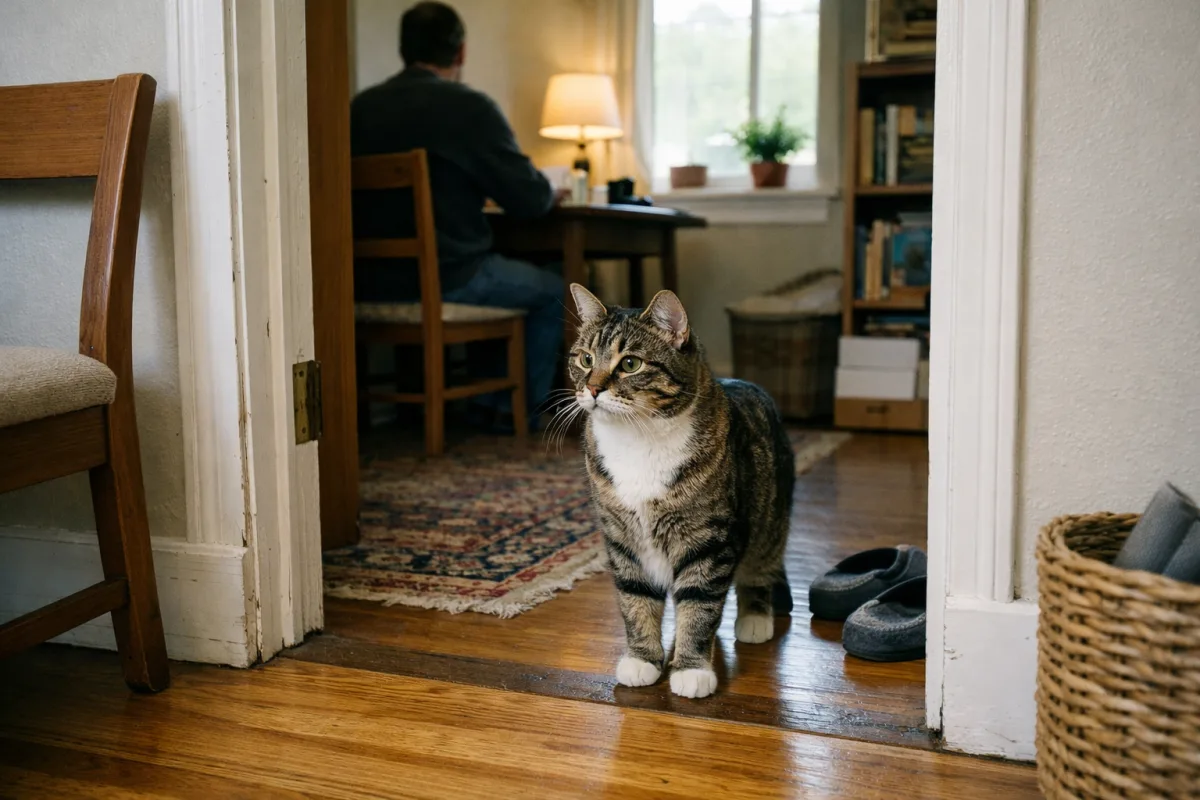
The behavior is usually subtle. A cat may sit in the doorway for a moment, quietly watch you from across the room, or follow you from one space to another without asking for anything else. In many homes, this becomes part of the daily rhythm. It is easy to miss the meaning if you are busy, but the pattern often says a lot about how a cat experiences its environment and the people in it.
Why Cats Check on Their Owners
Cats do not usually check on owners for one single reason. The behavior can come from several motivations at once, and those motivations may shift depending on the cat, the home, and the moment of day. A cat that seems to be “keeping tabs” on you may be reacting to comfort, habit, social attachment, or simple information gathering.
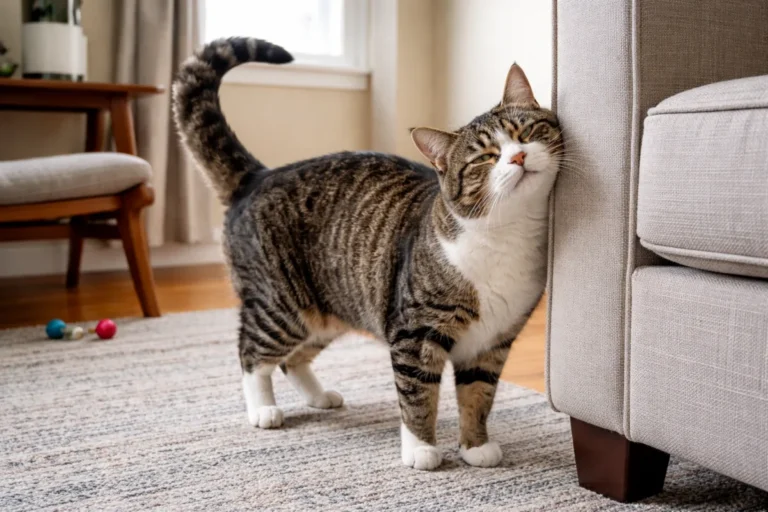
Unlike dogs, cats often express connection in quieter ways. They do not always rush over or demand direct interaction. Instead, they may prefer to observe first and move closer later. Checking on an owner fits that pattern very well. It lets the cat maintain distance while still staying connected to the person it trusts most.
In homes with regular routines, this behavior can become especially noticeable. Cats learn when meals happen, when the house gets quiet, when people move between rooms, and when something in the environment changes. If you have ever stood up to go into another room and found your cat appearing seconds later, that may be a sign that the cat is following the rhythm of your movement more than seeking a specific task.
When a cat checks on its owner, it is often gathering information first and asking for interaction second.
What the Behavior Looks Like in Everyday Situations
Checking behavior does not always look like direct following. Sometimes it is as small as a cat peeking around a corner, staring from a windowsill, or choosing a nearby chair instead of another part of the house. Other times it becomes more active, with the cat moving from room to room to stay within sight or sound range.
Many owners notice it most during ordinary routines. A cat may appear when the coffee starts brewing, walk in when a laptop opens, or settle nearby after hearing a phone call begin. The cat is not necessarily demanding anything. It may simply want to know what is happening and whether it should be involved, excluded, or ready for the next change.
Common everyday examples include:
- Watching you from the doorway while you work
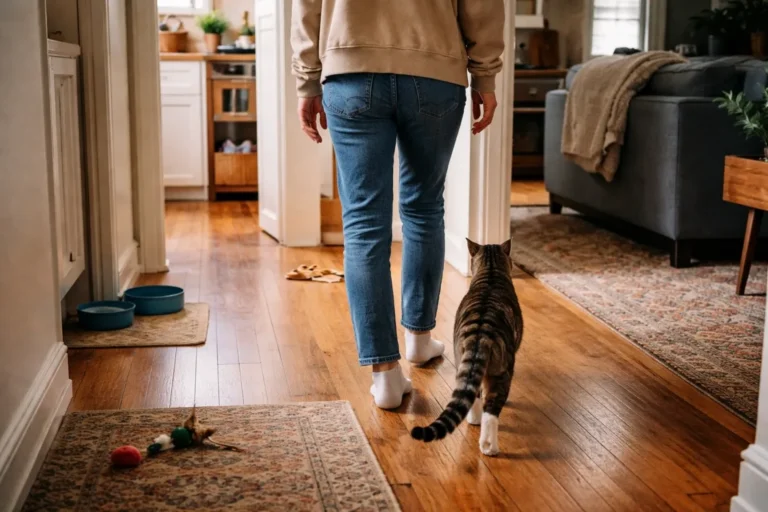
- Following you from the bedroom to the kitchen
- Appearing when you close a door behind you
- Sleeping in a nearby room but returning often to check your location
- Looking at you after hearing a new sound or seeing movement outside
These moments can seem small, but they often show how closely a cat tracks the household. A cat may not want constant attention. It may just want to stay informed.
Possible Internal Reasons Behind the Behavior
Comfort and security
For many cats, checking on an owner is tied to feeling safe. People are part of the cat’s familiar landscape, and familiar things help reduce uncertainty. If the cat is relaxed but still keeps track of your location, that can mean you are part of its sense of stability.
This is especially common in cats that have formed a strong bond with one person. The cat may not seek physical closeness all the time, but it still wants to confirm that the person is nearby and accessible. That distance-with-connection pattern is very cat-like.
Curiosity and monitoring
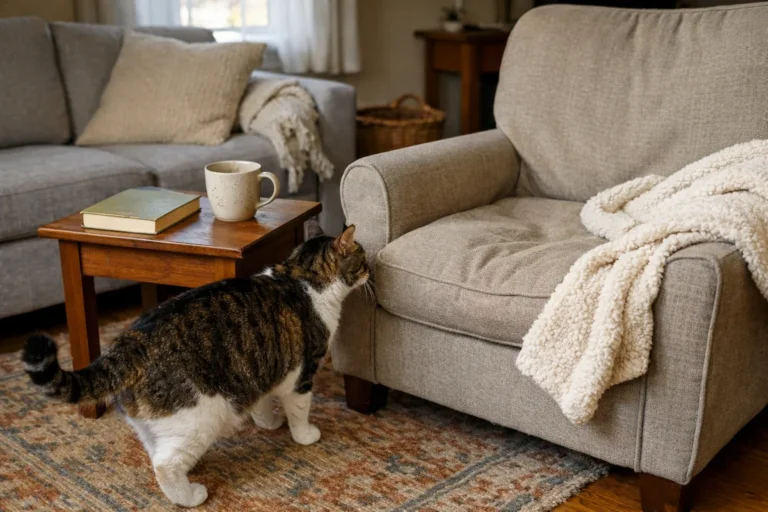
Cats are natural observers. They pay attention to small changes in posture, sound, and movement. If you stand up, open a cabinet, move to a different room, or speak with a different tone, your cat may want to inspect the situation. The cat is not always seeking affection. Sometimes it is simply monitoring the environment.
That monitoring can be even stronger in homes where the cat has access to multiple rooms and multiple points of view. A cat may take a quick look, decide nothing important is happening, and return to resting. Still, the checking itself is part of how the cat stays oriented.
Attachment without clinginess
Some cats check on owners because they are attached but not needy. This is an important distinction. A cat can be bonded and still prefer to initiate contact on its own terms. In that case, checking behavior often reflects social interest rather than dependence.
The cat may choose to be near you during quiet activities, then move away once it has confirmed your presence. That pattern can repeat many times a day. It is a kind of contact that does not require touch or constant attention.
Routine and expectation
If your cat has learned that your movements predict food, play, or a change in the house, checking on you becomes practical. Cats are very good at connecting patterns. The sound of a drawer, the click of a keyboard, or the way you move toward the kitchen may all mean something specific to them.
Over time, this can turn into a habit. The cat checks because checking has been rewarded in small ways, even if that reward is only information. Knowing what comes next matters to a cat more than many people realize.
How Cats Show This Behavior in Different Ways
Not all checking looks the same. Some cats are quiet and deliberate. Others are bold, talkative, or almost glued to a person’s path. The difference usually reflects temperament, confidence, and the cat’s current state rather than a completely different meaning.
Calm checking
A calm cat may simply appear in the same room, settle at a distance, and watch. The body stays loose. The ears are neutral. The tail rests naturally. This version of checking often points to comfort and familiarity. The cat wants awareness, not action.
Playful checking
A playful cat may bounce in and out of rooms, stop to stare, then dart away and return. It might check on you as part of a larger game, especially if it expects interaction. The behavior can look casual, but it often reflects energy and interest in shared activity.
Persistent checking
Some cats show a stronger pattern. They may follow closely, sit directly outside closed doors, or return again and again after brief separations. This can still be normal, especially in cats that are highly social or very attached to their routine. The key is whether the behavior is paired with comfort or with distress.
Defensive or tense checking
There are also moments when checking can carry tension. A cat may keep coming back to look at you during a stressful event, such as guests in the home, loud construction, or changes in schedule. The cat may be trying to gauge safety. In those cases, the checking is less about affection alone and more about reassurance.
A cat’s body language matters as much as the behavior itself. The same “checking” pattern can mean calm interest, playful curiosity, or unease depending on the rest of the cat’s signals.
What the Behavior May Signal About the Cat’s State
Owners often assume a cat is checking on them because it wants food or attention. Sometimes that is true. But the behavior can also reveal the cat’s emotional state in quieter ways. It may be looking for reassurance, checking whether the home feels normal, or making sure nothing has changed in a way that affects its own comfort.
If the cat checks on you and then relaxes nearby, that often suggests the behavior has a soothing purpose. If it checks repeatedly but cannot settle, that may point to restlessness or uncertainty. The difference is subtle, but it matters.
Signs that the checking is relaxed often include:
- Loose body posture
- Slow blinking
- Tail held neutrally or softly curved
- Easy return to sleeping, grooming, or resting
- No vocal tension or pacing
Signs that the checking may be linked to stress can include:
- Repeated pacing between rooms
- Hesitant approach and retreat
- Wide eyes or alert ears that stay fixed
- Hiding immediately after checking
- Difficulty settling after following you
Context is everything. A cat that checks on you during a thunderstorm is probably doing something different from a cat that checks on you before breakfast. The behavior itself may look similar, but the emotional reason behind it can be very different.
How Context and Environment Influence the Behavior
The home environment shapes how often a cat checks on its owner. Cats in quiet homes may track their people more closely because there are fewer competing activities. In busy homes, a cat may still check on everyone, but the behavior may be spread across different people, sounds, and routines.
Indoor cats often show this behavior more clearly because their social world is concentrated inside the home. The owner becomes a central part of the cat’s daily map. Outdoor access can change that a little. A cat with access to the outside may divide attention between the home and the wider environment, though many still keep a strong eye on their people when they return inside.
Daily routine also matters. Cats like predictability, and predictable people are easier to track. If your schedule changes suddenly, your cat may check on you more often. It may be trying to understand what the new pattern means. That can happen after travel, a move, a new work schedule, or even simple changes like waking up later than usual.
Household noise can influence checking as well. A cat may appear more often when unfamiliar sounds happen because it wants to verify that the source is harmless. A cat may also follow a person more closely when the home feels crowded or unpredictable. The owner becomes a stable point in a shifting environment.
How Owners Often Interpret It vs. What It May Actually Mean
It is easy to interpret checking behavior as pure affection, and sometimes it is. But the cat’s meaning may be broader. A cat that appears in every room is not always saying, “I need constant attention.” It may be saying, “I want to know where you are,” or, “I feel better when I can track you.”
Some owners assume a cat that keeps checking in is insecure. That can be true in some cases, especially if the behavior comes with stress signals. But many cats that do this are simply attentive and socially tuned in. They are not worried; they are observant.
It is also possible for a cat to check on an owner and then ignore direct interaction. That does not mean the behavior was meaningless. Cats often separate monitoring from engagement. First they assess. Then they decide whether to stay close, rest nearby, or move away.
Another common misunderstanding is that a cat is being clingy when it follows from room to room. In some cases, the cat is just responding to movement. People are active, noisy, and central to the house. Cats notice that. They often prefer to remain aware of where the action is happening.
When the Behavior Becomes More Noticeable
Cats often check on their owners more at certain times of day. Morning routines are common because meals, movement, and sound changes happen early. Evening can also bring more checking, especially when the house becomes quieter and the cat notices that people are settling down.
The behavior may become stronger during transitions. A cat might check more often when you are packing a bag, preparing to leave, coming home after an absence, or shifting from one room to another repeatedly. These moments stand out because they break the usual pattern.
Some cats are especially attentive during illness or low-energy days. They may sit nearby more often, watch more closely, or follow less for play and more for awareness. In homes where a cat is strongly bonded to one person, these changes can become very visible.
Long-Term Patterns and Stability
For many cats, checking on an owner becomes a stable part of their personality and routine. A kitten that likes to keep tabs on people often grows into an adult cat with similar habits, though the exact form may change. The behavior may become calmer, more selective, or more tied to certain times and locations.
Long-term patterns can tell you a lot. A cat that checks on you consistently over months or years is likely expressing a dependable relationship with both you and the household environment. If the pattern changes suddenly, that is worth noticing. A sudden increase may reflect stress, a new environment, or a change in health. A sudden decrease may mean the cat is distracted, uncomfortable, or simply adapting to a new routine.
That does not mean every change is a problem. Cats shift their behavior as their confidence, age, and environment shift. Still, the overall pattern matters more than one isolated moment. A cat that checks in regularly but remains relaxed is usually showing a stable and healthy form of social awareness.
Subtle Signals That Often Accompany Checking
Because the behavior is quiet, the details around it matter. Cats rarely communicate in just one way. They pair location checking with body language, timing, and movement patterns that help explain what they are doing.
Head position and eye contact
A cat that checks on an owner may look directly at the person for a moment, then glance away. That brief assessment can be more meaningful than a prolonged stare. Short, repeated eye contact often suggests curiosity or comfort, while fixed staring may mean the cat is trying to figure something out.
Distance
How close the cat chooses to be is a major clue. Some cats check from several feet away. Others remain within touching distance. A cat that maintains moderate distance but keeps returning to view is often balancing independence with connection.
Timing
When the checking happens can tell you what it means. A cat that appears after a loud noise may be seeking reassurance. A cat that checks every time you walk toward the kitchen may have learned a routine. A cat that appears when the household becomes quiet may simply be re-centering itself.
Return behavior
What the cat does after checking is often the best clue of all. If it settles, grooms, or naps nearby, the behavior probably served a calming purpose. If it keeps moving, vocalizing, or revisiting the same spot, there may be an unresolved reason behind the check-in.
How This Fits Typical Cat Traits
Checking on owners lines up well with classic cat behavior. Cats are independent, but independence does not mean indifference. They are sensitive to change, highly observant, and selective about where they place their attention. That combination creates the kind of quiet monitoring many owners notice.
It also reflects the way cats build relationships. They often form bonds through repeated, low-pressure contact. A cat that checks on you every day may be maintaining that bond in its own language. It is present without being demanding, interested without being invasive, and aware without making a scene.
In a modern home, that can look like a cat choosing the same chair, the same doorway, or the same route from room to room. The behavior can be small and easy to overlook, but it is part of how a cat organizes its social world.
Calm Conclusion
When a cat checks on its owner, it is usually doing more than wandering by chance. It is taking stock of the environment, tracking a familiar person, and deciding how close it wants to stay. That decision can be shaped by comfort, routine, curiosity, attachment, or stress.
The meaning is rarely hidden in one dramatic moment. It is in the repeat visits, the doorway pauses, the quiet glances, and the way the cat keeps a person within reach of sight or sound. In everyday life, that small habit often says the cat has made its owner part of its internal map.
And once you notice it, the pattern becomes hard to miss. The cat is not always asking for something. Sometimes it is simply checking that the world, and you, are still where they should be.