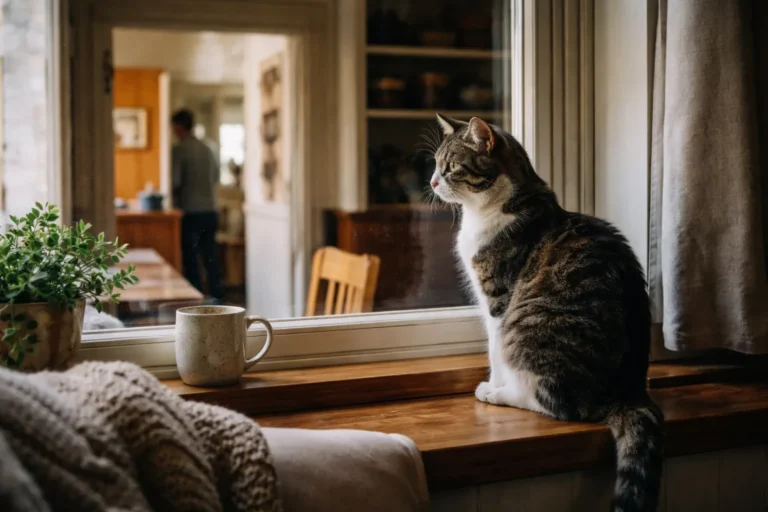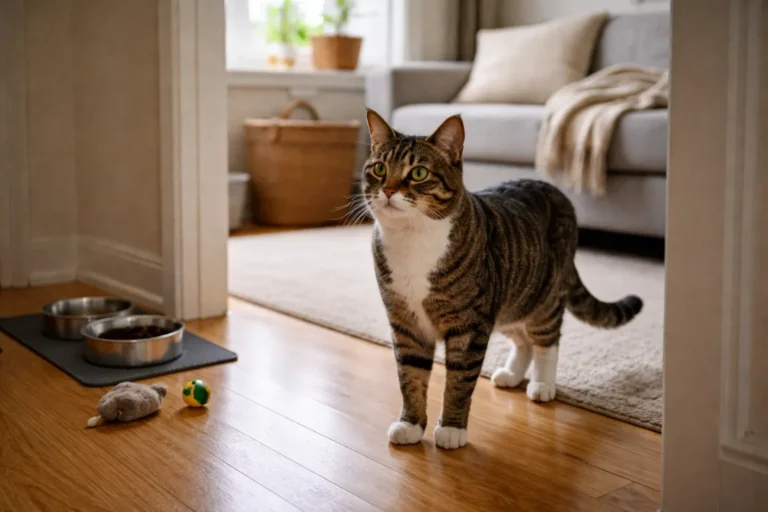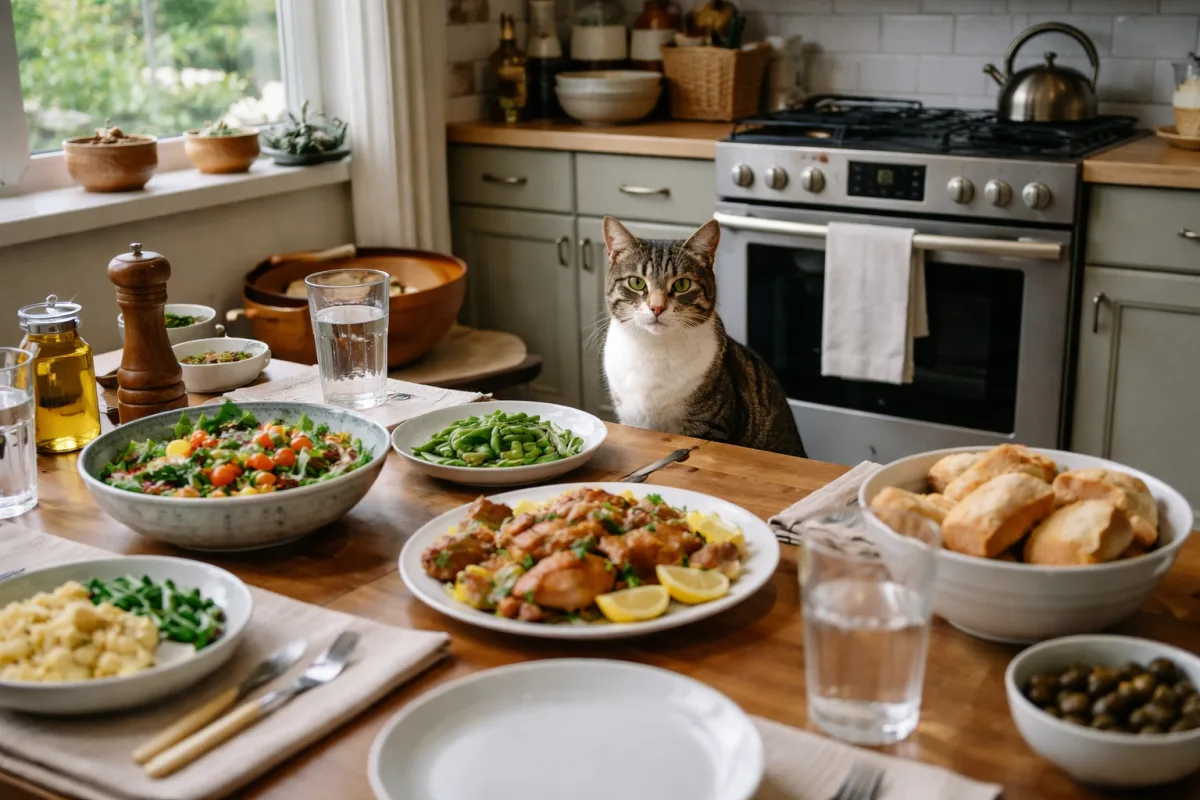
A cat that stays nearby during meals is doing more than simply wandering into the kitchen. That small habit can mean curiosity, routine, attachment, or a quiet request for something. Sometimes the cat is relaxed and content. Other times the same behavior comes with signs that point to hunger, anticipation, or a strong interest in what happens at the table.
Many cats learn that mealtime is one of the most predictable moments in the home. People sit down, food appears, voices change, and the environment becomes active in a very specific way. For a cat, that is worth watching. Staying close lets the cat observe the routine, check for scraps, and remain part of the household rhythm without fully joining the meal.
The meaning is rarely one-size-fits-all. A cat standing quietly by the chair is not sending the same message as a cat weaving between legs, meowing, or staring at every bite. The details matter. Body language, timing, and consistency often reveal whether the cat is simply interested in company or is communicating something more practical.
What this behavior looks like in everyday life
In many homes, this habit appears in small, ordinary ways. A cat may sit on the floor near the dining table and watch from a few feet away. Another may settle beside the kitchen doorway and stay there until the plates are cleared. Some cats choose the same spot every day, which makes the behavior feel part of their personal routine.
Other cats become more involved. They may walk around the table, jump onto a nearby chair, or follow the person carrying food from room to room. A cat that remains nearby without touching the food often seems calm and observant. A cat that stays close while also vocalizing or pacing may be expressing stronger interest, or even frustration if the meal is taking too long.
These habits can show up at breakfast, dinner, or any time the household starts preparing food. The timing matters because cats are quick to learn patterns. If a person always feeds the cat after dinner, the cat may begin waiting near the table long before the dish is served.
Possible internal reasons behind the behavior
One common reason is simple anticipation. Cats are excellent at connecting events, and mealtime is one of the clearest events in a home. If the cat knows food often appears when people gather, staying nearby becomes a smart way to avoid missing out.
Hunger can play a role too. A cat that is slightly underfed, on a schedule that does not match its appetite, or simply very food-motivated may linger near meals with strong interest. That does not automatically mean something is wrong. Some cats are just more focused on food than others.
There can also be an emotional element. Many cats like to be near their people during regular household activities. Mealtime has a social quality, even when the cat does not eat with the humans. Sitting nearby may be the cat’s way of participating in a shared routine.
When a cat stays close during meals, the behavior often means one of three things: interest in food, interest in routine, or interest in companionship. The surrounding signals usually show which one is strongest.
In some cases, the behavior is tied to learned reinforcement. If the cat has ever been rewarded with scraps, attention, or a dropped bite while hovering near the table, it may return to that spot again and again. Cats remember what works.
How body language changes the meaning
The same location can mean very different things depending on posture. A cat that sits with loose muscles, slow blinking, and a relaxed tail is probably calm. It may simply enjoy being near the action. The cat is present, but not demanding.
A cat that stands upright, stares directly at the food, and keeps its tail high or twitching is usually more activated. That posture often suggests strong interest. If the ears are forward and the cat seems ready to spring toward the table, the behavior may be more about food than company.
Vocal signals also matter. A quiet cat that stays nearby may be expressing gentle curiosity. A cat that meows repeatedly, chirps, or scratches near the chair is usually asking for attention or food in a more direct way. The emotional tone is different even if the location is the same.
- Relaxed nearby presence: soft posture, calm breathing, little or no vocalizing
- Food-focused waiting: fixed stare, pacing, tail movement, alert ears
- Attention-seeking behavior: rubbing, meowing, placing paws on furniture, following movement
- Stress-related hovering: tense body, restless motion, frequent checking, difficulty settling
It helps to watch the whole scene rather than one gesture. A cat can stand near the dining area for many reasons, and the body language usually tells the deeper story.
Common everyday situations and what they may suggest
1. The cat sits nearby but does not beg
This is often the most straightforward version. The cat may simply like being in the same space while people eat. Some cats treat mealtime as family time and quietly keep watch from the edge of the room. That behavior often reflects comfort and familiarity.
In homes with predictable routines, this pattern may be especially noticeable. The cat has learned when dinner happens, where people sit, and what usually follows. Being nearby lets the cat remain connected without becoming intrusive.
2. The cat appears only when food is served
When a cat seems to materialize at the exact moment plates hit the table, the behavior is usually tied to strong pattern recognition. The cat is tracking the household schedule with impressive accuracy. This can be harmless, especially if the cat stays calm.
If the cat vanishes after the meal, the motivation may be mostly food-related. The social aspect is secondary. The cat has identified the most rewarding part of the routine and shows up for it.
3. The cat waits near the table for long periods
Long waiting can suggest either deep habit or a stronger need. Some cats like to supervise everything, especially in homes where the kitchen is the center of daily activity. Other cats are waiting because they expect a shared bite, a dropped morsel, or a chance to be noticed.
If the waiting is paired with restlessness, it may be worth looking at feeding times and food amount. A cat that seems unsettled around meals may need a more consistent schedule or a larger portion, depending on age, health, and veterinary advice.
4. The cat follows one specific person
Some cats stay near meals because they have bonded with the person eating. They may not care as much about the table itself as they do about being near a favorite human. This often shows up in homes where one person feeds the cat, talks to the cat often, or shares quiet routines.
That kind of closeness can look subtle. The cat may settle beside a chair, remain just outside the person’s reach, or wait by the kitchen door after the meal ends. The behavior may be less about food than about proximity.
How home environment influences the behavior
The setting can shape how often the behavior appears. In a quiet home, a cat may feel safe enough to stay close and observe every meal from a fixed spot. In a busier home, the cat may move in and out of the area depending on noise, traffic, or the number of people eating.
Indoor cats often show this habit more clearly because the dining area becomes one of the main social hubs in their world. Outdoor cats or cats with more environmental variety may be less tied to human meals, though many still enjoy keeping watch. The behavior is flexible, not universal.
Feeding routines also matter. Cats fed at regular times often learn to anticipate meals and show up nearby before the food is ready. Cats with less predictable feeding schedules may still stay close, but the behavior can look more casual or less intense.
Routine strengthens the habit. The more consistent the meal schedule, the more likely a cat is to appear nearby at the same time each day.
Household noise can change the cat’s comfort level as well. Some cats stay close because the kitchen feels active and interesting. Others prefer to watch from a safe distance if the room is crowded, loud, or full of sudden movement.
What the behavior may signal about the cat’s state
A calm cat near meals often feels secure. It knows what is happening and does not need to hide. That can be a healthy sign of confidence, especially if the cat settles easily afterward and does not appear tense.
A very persistent cat may be signaling a stronger physical need. Hunger is one possibility, but so is simple expectation built through habit. If the cat has learned that hovering leads to food, the behavior may become more intense over time. That does not always mean the cat is truly hungry in a medical sense.
If the cat seems unusually focused on food, it may be worth noticing whether the behavior changed recently. A sudden increase in begging, vocalizing, or restlessness can sometimes point to a shift in appetite, stress, or overall comfort. Patterns matter more than isolated moments.
Some cats stay nearby because they feel uncertain when people are eating. In these cases, the cat may want to watch the room closely rather than join it. The behavior can look similar from a distance, but the emotional tone is different. A relaxed observer and a tense watcher do not need the same response.
How owners often interpret it vs. what it may actually mean
It is easy to assume a cat staying nearby means the cat is begging. Sometimes that is true. But not every cat who sits close to the table wants a bite. Many are simply participating in the household routine in their own quiet way.
Owners may also read the behavior as affection only. Affection can be part of it, but the cat may just be interested in the timing, the movement, and the predictability of the moment. Cats often combine social interest and practical interest in the same behavior.
Another common assumption is that the cat is being stubborn or needy. In reality, the cat may have learned a clear pattern and is acting on it. From the cat’s perspective, staying nearby is sensible. It keeps options open.
- Staying nearby can mean curiosity, not demand.
- It can mean expectation, not hunger alone.
- It can mean attachment, not dependence.
- It can also mean the cat is simply comfortable in the room.
The context around the behavior is what gives it meaning. A cat that calmly watches from across the room is not sending the same message as a cat that repeatedly inserts itself into the meal.
How feeding habits shape the pattern over time
Once a cat learns that mealtime is important, the habit can become very stable. Cats are creatures of repetition. If the schedule stays consistent, the cat may continue showing up near meals for years with little change.
Changes in diet, feeding location, or household routine can alter the behavior quickly. Moving the cat’s food bowl to a new room, feeding at different times, or stopping the practice of sharing human food may reduce the cat’s interest in the table. On the other hand, allowing the cat to remain nearby during meals may keep the routine strong.
The pattern can also shift with age. Kittens often stay close because they are curious and active. Adult cats may do it with more confidence and consistency. Older cats may become more dependent on routine and more likely to watch meals closely if their day has become calmer and more predictable.
That long-term stability is one reason this behavior stands out. A cat that stays nearby during meals is often revealing what it has learned about the home, the people in it, and the place food occupies in daily life.
When the behavior is gentle and when it feels intense
There is a wide range between peaceful company and persistent pressure. A gentle version of the behavior feels easy. The cat remains nearby, but the meal continues without interruption. The cat may leave when it loses interest.
An intense version is harder to ignore. The cat may paw at legs, jump up repeatedly, or meow in a way that suggests impatience. It may circle the table and refuse to settle. In that case, the behavior is less about quiet presence and more about a direct request.
That difference can be useful. A cat’s closeness during meals is not automatically a problem. It becomes more important when the behavior is disruptive, stressful, or new. A sudden change usually deserves attention because it may reflect something beyond simple habit.
A cat that stays nearby during meals is often communicating through proximity first, and through intensity second. The stronger the restlessness, the more likely the cat is asking for something specific.
Natural instincts behind the habit
Food and social observation are both deeply rooted in cat behavior. Even well-fed domestic cats retain a strong interest in areas where activity and resources cluster. A dining area fits that pattern. It is a place where people gather, smells change, and something rewarding may appear.
Cats also like to monitor their environment. Staying nearby allows them to observe what is happening without exposing themselves too much. From the cat’s point of view, that can be a useful balance: close enough to stay involved, far enough to remain in control.
This mix of independence and curiosity explains why the behavior is so common. A cat does not need to fully join the meal to benefit from being near it. Sometimes proximity alone is enough.
In a home setting, that instinct blends with learned behavior. The result is a cat that appears at the table not just because of instinct, but because the environment has taught it that meals are meaningful events.
Natural ending to the pattern of observation
When a cat stays nearby during meals, the real meaning lives in the details. The cat may be waiting for food, watching the room, enjoying the routine, or keeping close to a favorite person. Often it is a combination of all four.
The most useful clue is not the fact that the cat is present, but how it is present. Quiet and relaxed points in one direction. Persistent, vocal, or tense behavior points in another. Over time, the pattern becomes easier to read.
That small daily habit says a great deal about how the cat experiences the household. Mealtime is not just about eating. For many cats, it is one more place where routine, comfort, and attention meet in the same room.