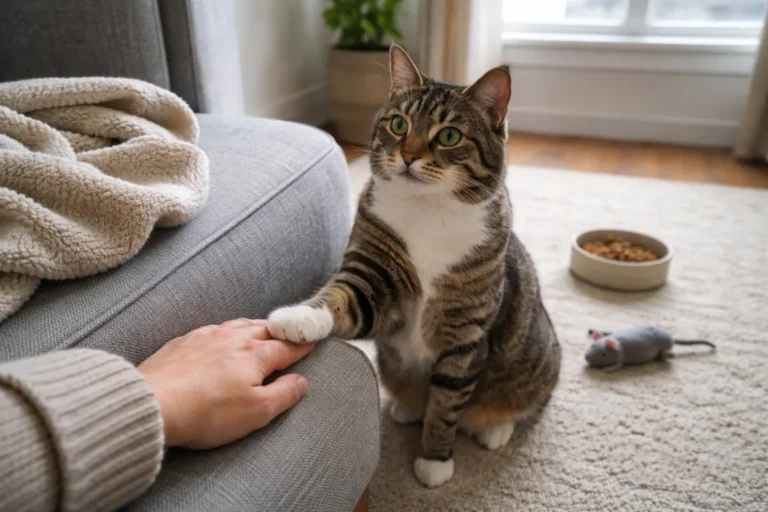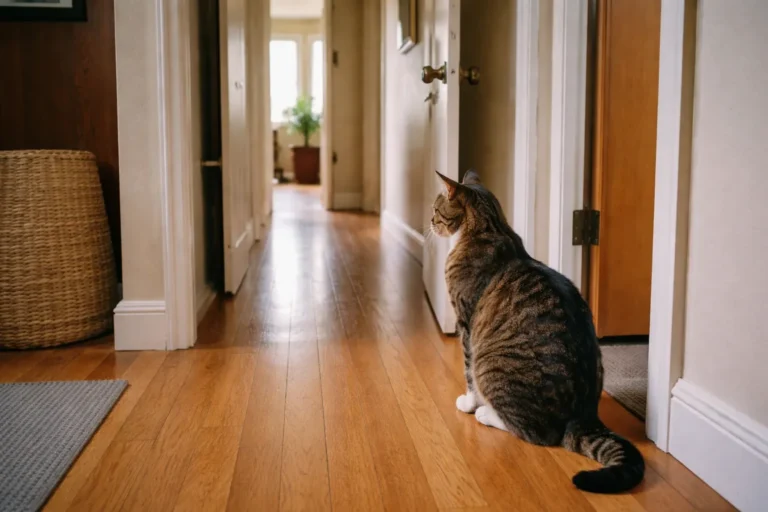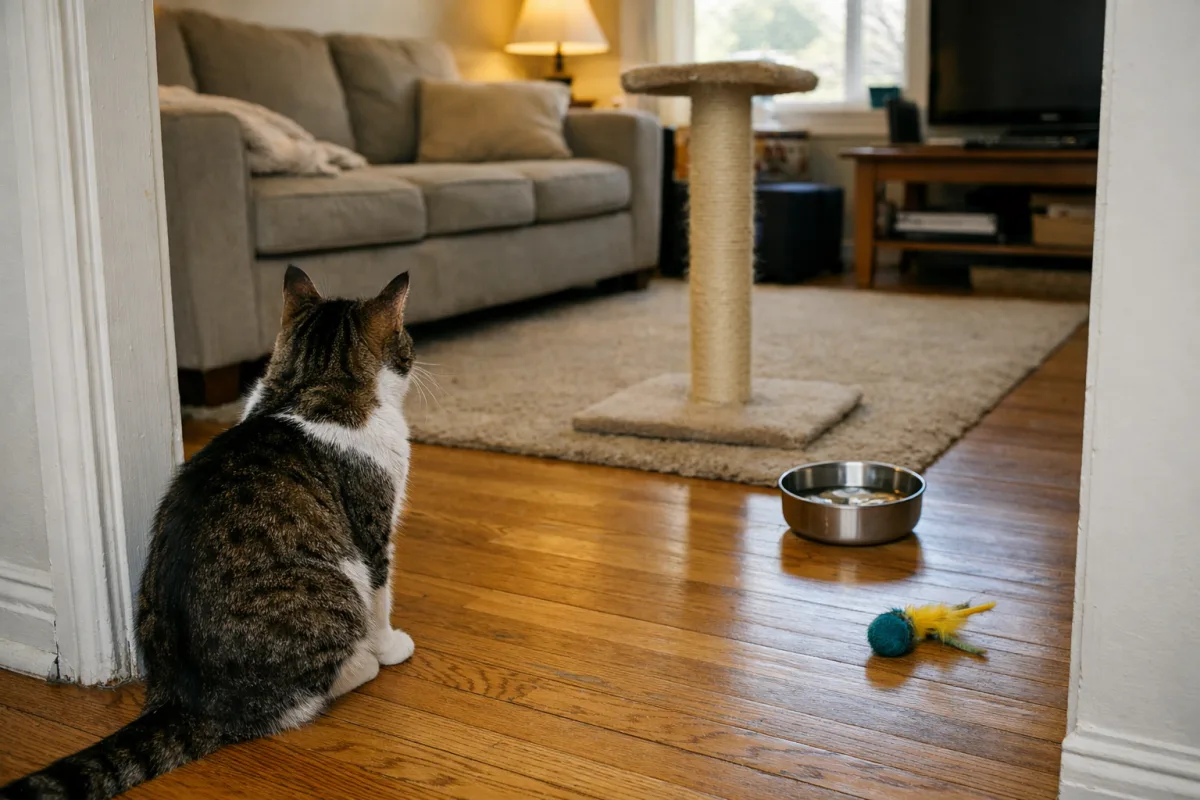
Some cats walk into a room like they own it. Others pause at the doorway, watch for a while, and only decide to join after they have taken inventory of everything happening around them. That choice is not random. A cat’s decision to interact is shaped by comfort, mood, past experiences, timing, and the situation in front of them.
What looks like simple friendliness or distance often has more going on behind it. A cat may want attention, but only on their terms. They may come close, then leave. They may accept petting in one moment and avoid it in the next. These shifts are normal, and they reveal how a cat processes the world.
Understanding when a cat chooses to interact helps make sense of a lot of daily behavior. It explains why a cat may greet you at the door after a quiet day, but disappear when guests arrive. It also helps distinguish between a cat that is relaxed and one that is guarded, overstimulated, or uncertain. The choice to engage is often a small signal with a lot behind it.
Why Cats Decide When to Interact
Cats are not constantly social in the same way dogs often are. They tend to evaluate before they act. That pause is part of what makes them seem selective. They are gathering information first: Is this safe? Is this person calm? Is this moment worth it?
This behavior comes from both instinct and experience. In the wild, caution matters. A cat that reacts too quickly can miss danger or waste energy. In a home, that same instinct may show up as a cat deciding whether to approach a sound, a visitor, another pet, or even their favorite person.
A cat’s choice to interact is also influenced by how much control they feel they have. Cats usually prefer to initiate contact or at least believe they have a clear way to end it. If they can leave when they want, they are often more willing to come close in the first place.
When a cat chooses interaction, it is often less about “being friendly” in a human sense and more about feeling safe enough, curious enough, or comfortable enough to invest attention.
What This Looks Like in Everyday Life
The clearest signs appear in ordinary moments. A cat may follow you from room to room but not ask for direct contact. They may sit nearby while you work, then leave the second you reach for them. They may rub against your leg after dinner but avoid eye contact when the vacuum starts.
These choices can seem inconsistent, but they usually fit a pattern. Cats often interact in brief, intentional ways. They may want to be near you without being handled. They may accept attention when the house is calm and withdraw when activity increases. Their behavior often changes with noise, movement, scent, and routine.
Common examples of selective interaction
- Coming to sit beside you, but not on your lap
- Accepting petting only for a short period
- Meowing for attention, then walking away after it is offered
- Greeting familiar people but hiding from strangers
- Playing actively in one room, then acting reserved in another
- Seeking contact after meals, naps, or quiet periods
These moments are often easy to misread. A cat that walks away after two seconds is not necessarily rejecting you. They may simply be setting the terms of the interaction. Many cats prefer very specific kinds of contact, and those preferences can be narrow.
Possible Internal Reasons Behind the Behavior
A cat’s internal state plays a major role in whether they choose to engage. Mood matters. Energy level matters. So does how secure they feel in the environment. A cat that is sleepy, mildly stressed, or mentally occupied may choose not to interact, even with a person they trust.
Curiosity is another factor. Cats often interact when something catches their interest. This may be a new sound, a moving toy, a person entering the room, or even a change in your routine. Interaction is sometimes less about affection and more about investigation.
Comfort is usually the biggest piece. A cat that feels physically at ease is more likely to approach, purr, knead, or accept touch. A cat that feels unsure may still stay close, but from a distance that allows control. That middle ground is very common.
What the behavior may signal
- Relaxation: the cat approaches with loose body language and slow movements
- Curiosity: the cat watches closely, sniffs, then decides whether to stay
- Need for control: the cat interacts briefly, then moves away
- Stress or uncertainty: the cat hesitates, hides, or limits contact sharply
- Selective affection: the cat interacts only in preferred settings or with specific people
These signals are not fixed labels. A cat can move between them depending on the day. A cat that is friendly in the morning may be uninterested in the evening. That does not mean the relationship has changed. It usually means the context has.
How Body Language Shapes the Choice
Interaction is rarely just about whether a cat comes over. The body around that choice tells the bigger story. A relaxed cat often moves smoothly, with a soft tail, steady breathing, and ears in a neutral position. A tense cat may freeze, keep the tail tight, or stay low to the ground.
Even a cat that appears affectionate can be communicating limits. Some cats rub against a leg and then stop if a hand moves too quickly. Others lean into a chin scratch but flinch when touched near the back or belly. These subtle reactions help them decide whether to continue.
Timing matters too. A cat that seeks contact after eating or waking from a nap is often acting from comfort. A cat that suddenly wants attention during a loud event may be trying to seek reassurance, or they may simply be looking for a quieter place to settle. The reason is not always obvious at first glance.
Soft signals and stronger signals
| Signal | Possible meaning |
|---|---|
| Slow blink | Relaxation or trust |
| Gentle rubbing | Social greeting or scent marking |
| Walking away after brief contact | Enough interaction for now |
| Tail flicking | Growing irritation or overstimulation |
| Flattened ears or crouching | Discomfort, stress, or caution |
| Approaching then stopping | Uncertainty or careful evaluation |
These signs become more useful when read together. One signal alone can be misleading. A cat may purr while also showing signs of tension. Another may seem aloof but be quietly comfortable nearby. The full picture is usually more informative than the single gesture people notice first.
How Context and Environment Influence the Decision
Environment changes how a cat chooses to interact. A quiet home often invites more confident behavior. A busy home can make the same cat more cautious or selective. Some cats thrive in activity and follow the action. Others prefer spaces where they can observe from the edges.
New furniture, unfamiliar scents, visitors, construction noise, or changes in household routine can all affect social choices. A cat may act distant simply because their environment feels temporarily unstable. Once the house settles, their behavior may return to normal.
Indoor and outdoor cats also show different patterns. An indoor cat may be more routine-driven and sensitive to changes in the home. An outdoor-access cat may be more accustomed to making quick decisions and may enter interaction on a tighter schedule. Neither pattern is better. They just reflect different lives.
A cat’s willingness to interact is often highest when their surroundings are predictable, their escape routes are clear, and the pace around them feels manageable.
Environmental factors that often matter
- Noise level and sudden movement
- Number of people in the room
- Presence of unfamiliar animals
- Smells from cleaning products, guests, or other pets
- Availability of hiding spots or high perches
- Consistency of feeding and play routines
When a cat has stable surroundings, their choice to interact may become easier to read. When the environment changes, they may become more reserved, even if they still feel bonded. That shift is often practical, not personal.
What Owners Often Misread
People often assume a cat is being aloof when they are actually being careful. A cat that does not want to be picked up may still enjoy company. A cat that avoids strangers may not be antisocial; they may just need more time. And a cat that asks for attention repeatedly may not want endless petting. They may want a brief, familiar exchange and nothing more.
Another common misunderstanding is assuming that a cat’s choice is always about affection. Sometimes it is, but not always. Cats interact for many reasons: comfort, curiosity, routine, scent checking, play, reassurance, and simple habit. Their version of social engagement is often more selective and more situational than people expect.
It also helps to avoid reading every withdrawal as a problem. Cats need pauses. They may step back after a cuddle because they are done. They may leave a lap because the room became too warm. They may stop purring and move to the windowsill because that is where they want to be next. Many of these choices are about preference, not rejection.
How Social History Can Shape the Pattern
Early life experiences influence how a cat decides to interact later. A kitten exposed to gentle handling, predictable routines, and calm human contact often grows into a cat that approaches social situations more easily. A cat with limited early contact may be slower to engage, more cautious, or more dependent on familiar routines before they feel settled.
Adult cats can also change over time. A rescue cat may begin by hiding and later become more interactive once they learn the household rhythm. A cat that was once bold may become more selective after a stressful move, a medical issue, or a change in the home. Social behavior is not always permanent. It is often responsive.
That flexibility is important to notice. A cat may not choose to interact the same way in every stage of life. Age, confidence, health, and household dynamics all shape the pattern. What seems like a personality trait may actually be a habit built from repeated experiences.
When the Behavior Becomes More Noticeable
Selective interaction stands out most when something in the routine changes. A cat may become more reserved after a trip, a new pet, a different feeding schedule, or visitors staying overnight. They may also become more social during periods of calm, especially if the house has become predictably quiet.
Some cats are clearly more interactive at certain times of day. Early morning and evening are common windows, especially if those hours line up with feeding, play, or family routines. Other cats prefer late-night quiet or midday stillness. Their choices often reflect when the environment feels easiest to manage.
Medical discomfort can also affect the pattern. A cat in pain may still want to be near people but avoid direct handling. A cat with dental discomfort, joint soreness, stomach upset, or skin irritation may decide against interaction more often. If a cat’s preferences change suddenly and stay changed, that deserves attention.
Signs the pattern is worth watching closely
- A sudden drop in interaction from a normally social cat
- Repeated hiding in situations that were once comfortable
- Flinching or moving away when touched in the same area
- Hesitation around food, water, or litter box areas
- New aggression paired with avoidance
- Longer periods of withdrawn behavior without a clear reason
A slow change over time is easier to interpret than a sudden one. Still, both matter. A cat’s decision to interact can reflect what is happening emotionally, physically, and socially all at once.
What Consistency Can Tell You
Patterns are often more revealing than single events. A cat that always interacts before breakfast may be following routine and expectation. A cat that only accepts petting beside a window may be linking comfort to a particular place. A cat that prefers one person’s lap but not another’s may be responding to scent, handling style, or voice.
Consistency also helps separate personality from situation. If a cat repeatedly chooses to approach under the same conditions, those conditions are probably important to them. If the behavior shifts every time the environment changes, the cat is likely reacting to context rather than making a broad statement about relationships.
That is why observations over time matter. Cats are selective, but they are not random. Their patterns can be quiet and subtle, yet still very clear once you start noticing when, where, and how they prefer to interact.
In many cats, the decision to interact is a careful balance between comfort, interest, and control. The most reliable clues are the ones that repeat in similar situations.
Conclusion
A cat choosing when to interact is doing something meaningful, even when the action seems small. They are reading the room, weighing their comfort, and deciding how much social effort feels right at that moment. Sometimes the answer is yes, but only briefly. Sometimes it is no. Often it is something in between.
Once those choices are viewed through the lens of routine, body language, and context, they become easier to understand. A cat that approaches and leaves is not being contradictory for no reason. They are communicating with restraint, and the message is usually consistent if you know where to look.
That pattern can make daily life with a cat feel quieter, but also more precise. The connection is built in small decisions: a pause at the door, a slow walk across the room, a head press, a careful retreat. Those moments reveal how a cat prefers to meet the world, one choice at a time.