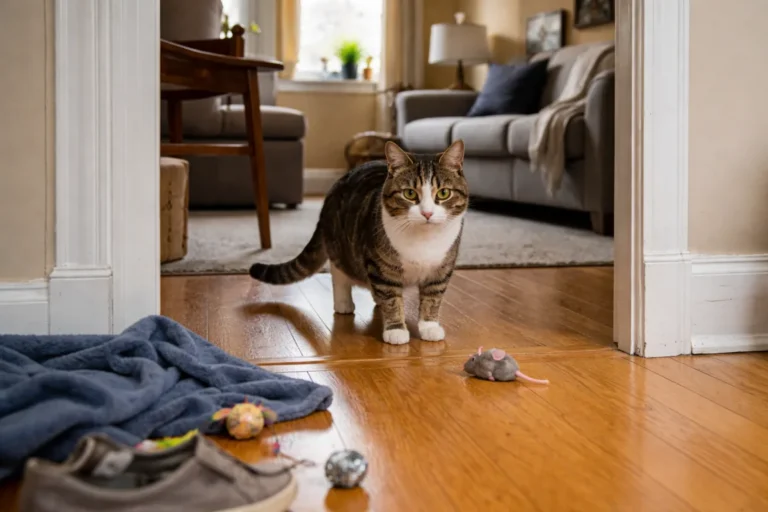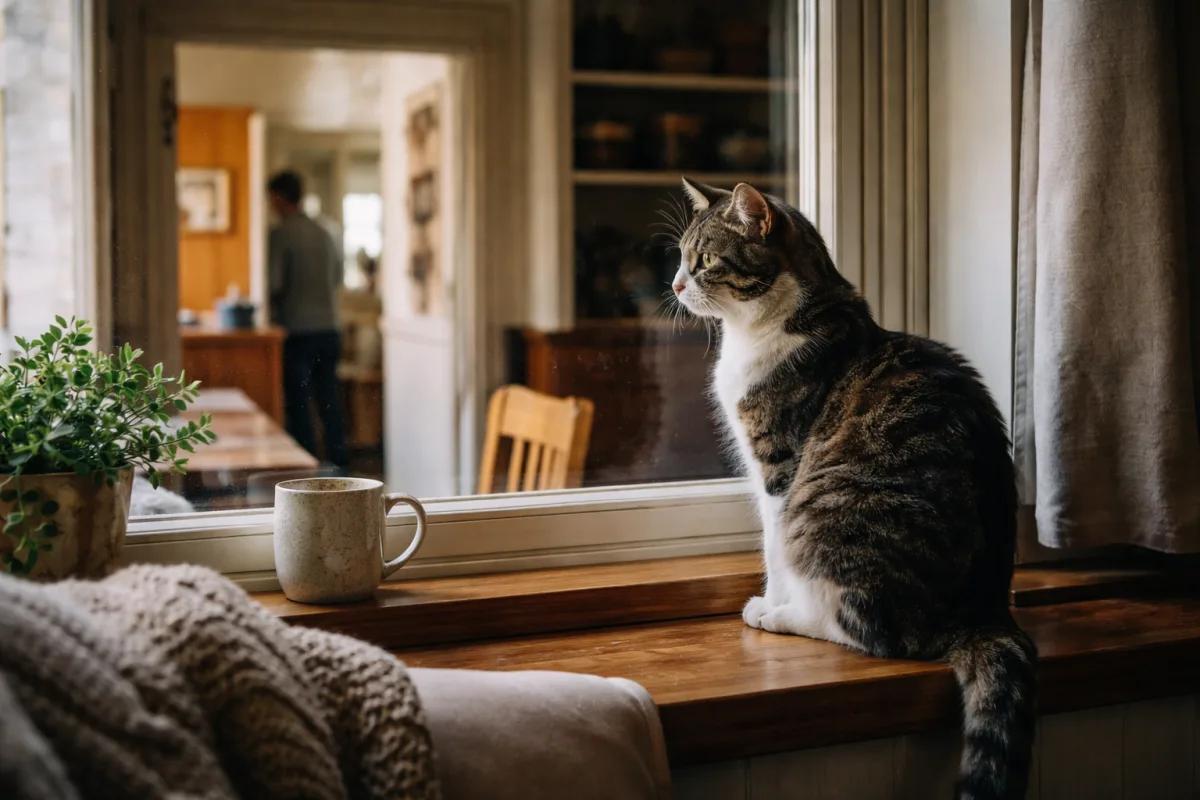
A cat that sits still and watches you without moving can feel a little unsettling at first. You glance over, and there they are again, fixed in place with steady eyes, as if they are studying your every step.
In many homes, this behavior is completely normal. Cats are built to observe, and stillness is one of the main ways they gather information. A cat can look motionless while actually paying close attention to your hands, voice, routine, and mood.
That quiet stare does not always mean the same thing. Sometimes it is simple curiosity. Sometimes it is anticipation. And sometimes it is a sign that your cat is alert to something in the environment that you have not noticed yet.
What the Still Watch Means in Everyday Life
One of the most common reasons a cat watches without moving is that they are tracking what you might do next. Cats are highly observant animals. They notice patterns quickly, especially when those patterns involve food, play, opening doors, or bedtime routines.
A cat may sit in the hallway and stare while you make coffee, fold laundry, or work at a desk. They may not be asking for anything obvious. Instead, they are checking the situation and waiting for a familiar cue. Their stillness helps them stay ready.
At home, this can show up in small ways:
- A cat watching from the kitchen while you prepare meals
- A cat staring from the couch when you pick up a jacket or bag
- A cat seated in a doorway, following your movement with only their eyes
- A cat observing quietly before deciding whether to join you
These moments are often less about mystery and more about information gathering. Cats like to know what is happening before they act. Moving too quickly is not always their style.
Why Cats Use Stillness as a Strategy
Stillness is natural for cats. In the wild, it helped their ancestors avoid being seen and conserve energy. A cat that stays quiet and unmoving can look calm, but they are often processing a lot at once.
This behavior also reflects a cat’s instinct to wait for the right moment. Cats do not usually waste energy when they do not need to. If they are watching you without moving, they may be choosing patience over action. That can happen whether they are relaxed, alert, or mildly interested.
A motionless stare does not automatically mean a cat is upset. In many cases, it simply means they are highly attentive and deciding what comes next.
Some cats are naturally more visual and watchful than others. A quiet cat may spend long stretches observing the room before deciding to jump down, approach, or ask for attention. Another cat may be more active and only pause to stare when something unusual catches their attention.
Common Situations Where This Behavior Appears
The same stare can mean different things depending on the moment. A cat watching you from across the room during normal daily routine is usually not sending the same message as a cat staring after a sudden noise.
During feeding time
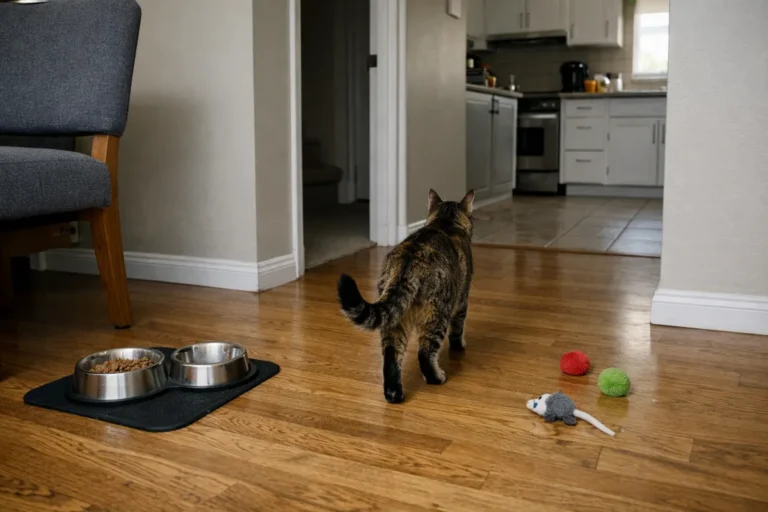
Many cats become very still when they expect food. They may sit near the kitchen, keep their eyes on you, and barely move until the bowl appears. In this case, the stillness is focused and practical. Your cat is waiting, and they know attention can speed things up.
When you are on your phone or computer
Some cats watch people most intently when they are absorbed in a screen. To a cat, your stillness may be interesting. You are present, but less responsive. That can prompt them to sit and study you, as if they are deciding whether to interrupt or simply remain nearby.
When something changes in the home
A new sound, scent, visitor, or piece of furniture can make a cat freeze and observe. They may remain still while assessing whether the change is safe. In this situation, watching is part of caution, not distance.
When they want interaction but are unsure how to start
Some cats stare because they want engagement but are waiting for you to make the first move. They may not approach immediately. They watch, pause, and test the moment. This is especially common in cats that are affectionate but a little reserved.
What the Behavior May Signal About the Cat’s State
A cat that observes you without moving may be calm, curious, alert, or slightly tense. The body language around the stare matters far more than the stare alone.
Relaxed observation
If your cat’s body looks loose, their whiskers are neutral, and their tail is still or gently wrapped around them, the stare is usually peaceful. They may simply be resting while keeping track of you.
Interest and anticipation
If the cat is sitting upright, ears forward, and eyes focused on your hands or face, they are probably expecting something. This often happens around mealtimes, playtime, or routine events they have learned to predict.
Quiet caution
If the cat is very still, with a tight body, flattened ears, or a low tail, the watching may reflect unease. They are not necessarily afraid, but they are paying attention because something feels uncertain.
Play readiness
Some cats stare before pouncing on a toy, your feet, or a moving object. In that case, the stillness is a pause before action. They are storing energy and timing their next move.
Body language gives the best clue. Eyes alone can be misleading, but ears, tail, posture, and breathing usually tell a fuller story.
How Environment Shapes the Behavior
Context changes everything. A cat in a quiet apartment may watch you more often simply because there is less else to do. In a busy home, a cat may observe from a distance because they prefer to monitor the room before joining the activity.
Indoor cats often build strong habits around human routines. They learn where you sit, when you wake up, and what sounds signal movement. If your cat appears and stares at the same time each day, they may be responding to a schedule they have memorized.
Noise also matters. A cat may become motionless in a loud or unfamiliar environment because watching feels safer than approaching. New guests, vacuum cleaners, open windows, and sudden sounds can all trigger a pause-and-watch response.
Even the placement of furniture can change how this behavior looks. A cat with a favorite perch in the living room may use that spot as a lookout point. From there, they can watch the whole household without being directly involved.
How Owners Commonly Misread the Stare
People often assume that a fixed stare means one clear thing, but cats are more subtle than that. The same behavior can be affectionate, investigative, or slightly wary depending on the moment.
One common mistake is assuming a cat is being “creepy” or mysterious when they are really just following a pattern. Cats watch because watching is useful. It helps them understand their surroundings and the humans in them.
Another misunderstanding is reading every still stare as a demand for food. Food is often part of the picture, but not always. A cat might be watching because you are interesting, because they are bored, or because they are tracking a change in your routine.
It is also easy to miss when the stare is part of a larger stress pattern. If the cat watches without moving and also avoids touch, hides more than usual, or seems jumpy, the behavior may deserve closer attention. In that case, the stillness is not just observation. It may be a sign that the cat feels unsure.
Subtle Signals That Change the Meaning
To understand the stare, look at the small details around it. Cats rarely communicate in one isolated signal. Their message is usually spread across posture, timing, and movement, or lack of movement.
Eyes
Soft blinking often suggests comfort or trust. A fixed, unblinking stare can mean focus. Wide eyes may reflect alertness, while half-lidded eyes often suggest calm.
Ears
Forward ears usually show interest. Rotating ears can mean the cat is listening to more than one thing. Ears turned sideways or back may point to discomfort or caution.
Tail
A quiet tail can go with relaxed observation. A slowly twitching tail can signal concentration or mild irritation. A tucked or low tail may indicate the cat is uneasy.
Body posture
A loose body usually means the stare is harmless. A stiff body, crouched position, or weight shifted backward suggests the cat is more guarded. If the cat seems frozen, they may be assessing risk rather than simply watching.
When the Behavior Is Playful
Some cats watch you as part of a game. They wait. They measure distance. Then they leap, dart, or bat at a toy or your moving hand. In this case, the stillness is part of the fun.
Playful watching often has a light quality to it. The cat may approach and retreat, keep their ears up, and seem fully engaged without showing tension. You might notice quick bursts of movement after a long pause.
These cats often use the stare to build suspense. They are not frozen out of uncertainty. They are choosing the moment that feels most rewarding.
When the Behavior Is Defensive or Guarded
A cat can also watch without moving when they do not feel ready to engage. This is different from playful stillness. The posture tends to look tighter, the movements slower, and the whole body more controlled.
If the cat is facing a door, a new person, another pet, or a noisy appliance, the stare may be part of a defensive assessment. They want more information before deciding whether to leave, hide, or stay put.
In these moments, forcing interaction usually does not help. A cat that is watching from a distance may need space to decide that the environment is safe again. Pushing too quickly can make the behavior more intense.
If the stare comes with hiding, flattened ears, sudden startles, or refusal to eat, it is worth looking at what changed in the home environment.
How the Meaning Changes Over Time
The same cat may watch you differently across different stages of life. Kittens often stare as they learn the world. They are collecting information constantly. Their stillness may last only a few seconds before they spring into action.
Adult cats usually become more selective. They may watch less randomly and more purposefully. A mature cat often knows your routines well and uses observation to confirm what is about to happen.
Older cats can also become more watchful. Sometimes that is because they are calmer and prefer to observe before moving. In other cases, age-related changes in hearing, vision, or comfort may make them more cautious and slow to react.
The important part is consistency. If your cat has always been a quiet watcher, the behavior is likely part of their personality. If the staring suddenly appears with other changes in behavior, the reason may be new and worth noticing.
What Your Cat May Be Learning From You
A cat watching you without moving is often doing more than resting their eyes. They are learning. Your habits, tone, and timing create a map that cats follow closely.
They notice when you come home, when you prepare food, when you change rooms, and when you become inactive. Over time, these patterns help them predict what comes next. A cat that watches carefully is often a cat that has learned to trust routine.
That is one reason this behavior shows up so often around favorite people. The cat is not only interested in the person. They are interested in the sequence that person brings into the home. You may be the center of their schedule in a way that is easy to miss.
Reading the Moment Without Overreacting
Not every stare needs intervention. Sometimes the right response is to notice, then continue with your day. A relaxed cat that watches quietly may simply want proximity without direct engagement.
At other times, a little check-in helps. If the cat’s body looks tense, if the room has changed, or if the stare is new and prolonged, it can be useful to look for the source of discomfort. A closed door, unfamiliar sound, or another pet nearby may explain the behavior.
If the cat seems curious, offering a slow blink, gentle voice, or soft invitation to come closer may be enough. If they choose not to move, that answer is useful too. Cats often prefer to decide on their own timing.
A Quiet Watch Can Mean Many Things
A cat that observes you without moving is often doing exactly what cats do best: taking in the room, measuring the moment, and deciding whether to stay still or act. The behavior can reflect curiosity, habit, affection, anticipation, caution, or a mix of all five.
What matters most is the rest of the picture. The eyes, ears, tail, and posture give the stare its meaning. So does the setting. A cat in a calm home near mealtime is very different from a cat frozen by a new sound or a tense change in the environment.
When you pay attention to those details, the stare stops feeling random. It becomes part of your cat’s language, one that is quiet but very precise.