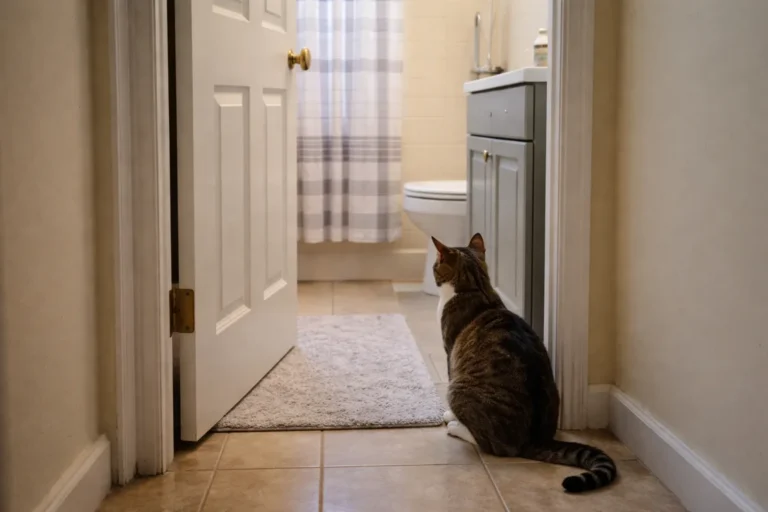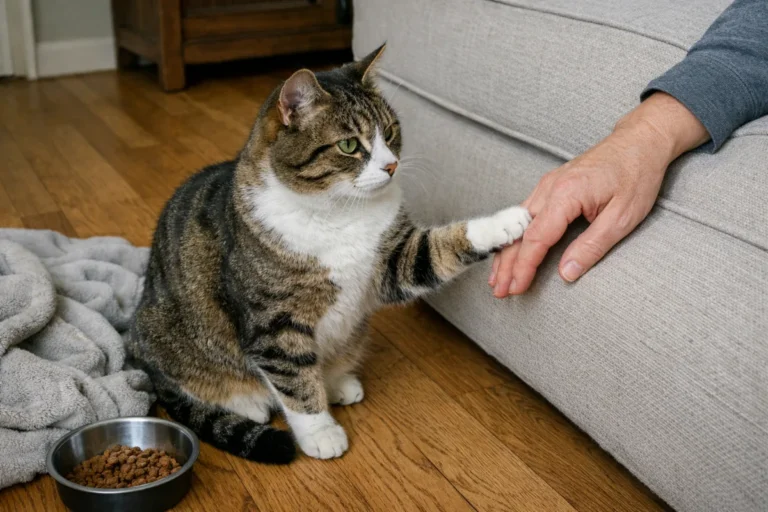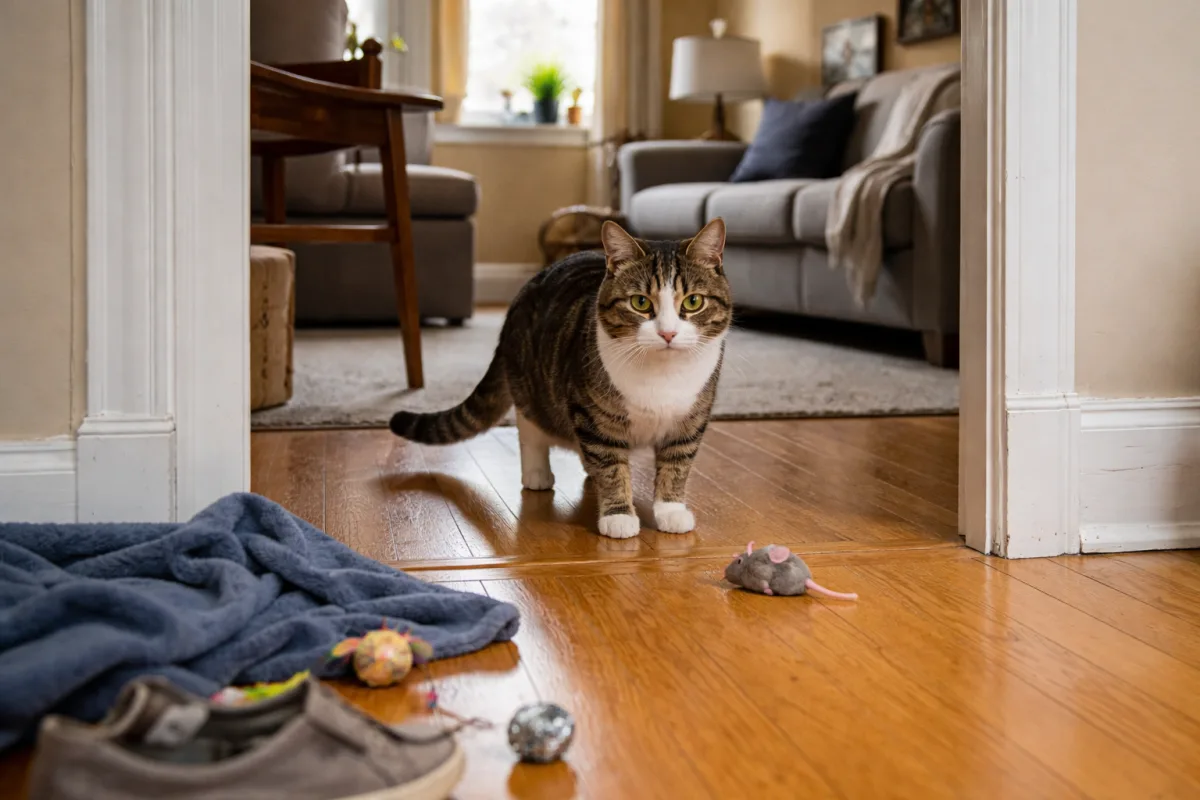
A cat dropping a toy, a dead mouse, a leaf, or even a random sock at your feet can feel confusing at first. The moment is often oddly ceremonial. Your cat places the item down, looks at you, and waits as if the exchange means something important.
That habit is usually called bringing “gifts,” but the meaning is rarely as simple as generosity. Cats do not think like people, and they are not trying to say thank you in a human way. The behavior comes from instinct, habit, social learning, and the specific relationship between the cat and the home it lives in.
Some cats do it often. Others only occasionally. The gift may be prey, a toy, or a stolen household object, and each version can point to a slightly different motive. The behavior can look sweet, annoying, surprising, or unsettling, depending on what lands at your feet.
What matters most is not the item itself, but the pattern around it. When does it happen? What happens right before and after? Is the cat relaxed, excited, or tense? Those details usually tell you more than the object does.
What “gifts” look like in everyday life
The most familiar version is a cat carrying a toy from one room to another and leaving it in a visible place. A ball in the hallway. A stuffed mouse near the bed. A feather wand dropped by the water bowl. These are easy to notice because they happen in homes, where the cat’s movement is visible and the objects are easy to identify.
Another common form involves prey or outdoor finds. Outdoor cats may bring birds, mice, lizards, or insects to doors, patios, or even into the house. Indoor cats, meanwhile, often substitute with toys, socks, hair ties, bottle caps, or pieces of paper. The object can be dead, intact, broken, or oddly chosen. What matters is that the cat has decided to transport it and present it somewhere meaningful.
Some cats do not actually “present” the object in the social sense. They leave it in a favorite spot, such as a bed, a feeding area, or the owner’s shoes. That still fits the behavior. The cat has selected an item, moved it, and placed it with purpose.
Common gift-like behaviors include carrying, dropping, hiding, or placing objects in areas connected to the cat’s routine or to the owner’s attention.
Why cats bring gifts in general
The oldest explanation begins with hunting instinct. Cats are natural predators, and many retain strong prey-drive behavior even when they are well fed. Carrying something and moving it from one place to another is part of that instinct. In the wild, a cat may catch prey and transport it to a safer spot to eat or guard it.
That instinct does not disappear in a house. A toy mouse may stand in for real prey. A stolen sock may act like an object the cat has “captured.” The action itself can be rewarding, not just the object. In other words, the cat may enjoy the sequence: find, chase, grab, carry, and deposit.
There is also a social angle. Some cats appear to bring items to people as part of learned interaction. If a cat once dropped a toy at your feet and got attention, the cat may repeat the behavior because it produced a response. Attention can strengthen the habit quickly, even when the attention is not especially positive.
For some cats, the behavior may also reflect a kind of sharing or teaching pattern. A mother cat may bring prey to kittens. A cat that feels socially bonded with a person may direct that same style of behavior toward the human household. The meaning is not identical to a human gift, but the gesture can still be tied to connection.
How the behavior shows up with different objects
Prey and outdoor catches
When a cat brings home a mouse or bird, the behavior is usually most strongly tied to hunting drive. The cat may be proud, focused, or simply acting on a deeply rooted routine. Outdoor cats do not always eat their catch right away. Some carry it, drop it, recapture it, or place it somewhere enclosed.
This version can be especially noticeable because the object is alive or once was alive. The cat may seem calm, but the human reaction is often intense. That contrast makes the behavior feel more mysterious than it is.
Toys and indoor substitutes
Indoor cats frequently choose toys because they are available, light enough to carry, and easy to treat as prey. Small plush items, balls, springs, and crinkly objects work well. Some cats develop a strong preference for one specific item and return to it repeatedly.
These toy gifts often happen at predictable times. Evening is common, especially if the cat has more energy after naps. A toy may be carried into the bedroom, dropped near the owner, and then chased again after a pause.
Household objects
Socks, hair ties, plastic lids, or pieces of paper can also become gifts. These objects are often not chosen because they are special in a human sense. They may simply be easy to grab, satisfying to carry, or already associated with the cat’s attention.
Sometimes the cat is not offering the object at all. The cat may just be relocating something that smells familiar, feels fun to transport, or has become part of a private game. To the human, it looks deliberate. To the cat, it may be play plus possession.
Internal reasons behind the behavior
One reason cats bring gifts is instinctive prey handling. Catching is only part of the process. Carrying prey or a toy is also part of the natural sequence. Even a house cat that never hunts outside may retain the urge to grip, transport, and deposit objects.
Another reason is play behavior. Cats often treat hunting, carrying, and presenting as extensions of play. If a cat enjoys stalking a toy, the “gift” may be the final step in a longer playful routine. The cat is not finished when the toy is captured. It may want to move it, hide it, or show it off.
Some cats also use objects as a way to regulate energy and emotion. A cat that is bored may become more focused on object movement. A cat that feels excited may carry items around as part of a heightened state. A cat that is mildly stressed may also engage in repetitive carrying if the object offers comfort or control.
Gift-bringing is often a mix of instinct and learned habit. The same behavior can be playful, hunting-based, social, or emotionally soothing depending on the cat and the situation.
There is another possibility that people overlook: the cat may be seeking a reaction. Cats learn fast when behavior changes the environment. If dropping a toy near a person leads to praise, laughter, conversation, or a game, the cat may repeat it because it works.
How context and environment influence it
A cat’s living conditions affect how often the behavior appears. Outdoor cats have more chances to catch real prey and bring it home. Indoor cats usually have fewer options, so they redirect that energy into toys and household items. In both cases, the environment shapes the object, the frequency, and the intensity of the behavior.
Household routine matters too. A cat in a quiet home may develop small, repeated rituals around specific times of day. A cat in a busier home may bring gifts when the house is still, especially if the cat wants attention or play. Feeding schedules, nap patterns, and owner availability can all influence when the behavior becomes visible.
Enrichment can also change the pattern. Cats with plenty of movement, climbing space, and play opportunities may still bring gifts, but sometimes the behavior is less frantic or less repetitive. A cat with limited outlets may carry objects more often, partly because the behavior fills a gap.
Some homes unintentionally reward the habit. If the cat brings a toy and the owner immediately throws it, the cat may learn that delivery starts a game. If the cat carries a sock and everyone reacts strongly, the moment becomes memorable. Cats do not need a complicated reward system to repeat something that consistently changes what happens next.
What the behavior may signal about the cat’s state
Gift-bringing does not always carry the same emotional meaning. A calm cat that gently delivers a toy and then settles nearby may simply be engaging in routine social play. The cat is relaxed, organized, and comfortable moving between activity and rest.
An intense cat may show a different pattern. The carrying can be fast, repeated, or accompanied by vocalizing. The cat may seem driven or slightly overaroused. In these cases, the object can be part of a bigger burst of energy rather than a quiet offering.
A cat that hides the object after carrying it may be expressing possession more than presentation. That is especially common with prized toys. The cat may move the item to a safer location, then return later to check on it. This is not necessarily secretive behavior; it can be a normal expression of control over a valued object.
Sometimes the timing says the most. A cat that brings a toy after the owner comes home may be responding to social excitement. A cat that drops objects near the bedroom at night may be seeking engagement. A cat that repeatedly brings the same item after meals may be working through leftover energy rather than asking for food.
How owners often interpret it vs. what it may actually mean
People often read gifts as affection, and sometimes affection is part of it. A cat that trusts a person enough to carry an object into shared space is already showing some level of social comfort. The behavior can feel personal because it happens in a relationship, not in isolation.
Still, the meaning is usually more practical than symbolic. The cat may be following instinct, seeking a response, or treating the item as a valuable catch. A gift can be a sign of trust without being a moral gesture. That distinction helps keep expectations realistic.
Owners also sometimes assume the cat is trying to “feed” them. In rare cases, the connection may resemble a teaching or sharing behavior, especially with prey. But most indoor gift-bringing does not need that explanation. A toy dropped on the rug is more likely an expression of habit, play, and attention-seeking than an attempt at literal support.
The same action can mean different things in different homes. A cat’s “gift” may be a hunting display, a play invitation, a possession ritual, or a learned way to get attention.
Body language and small signals that add meaning
The cat’s posture often reveals whether the gift is part of play, possession, or tension. A loose body, normal tail movement, and easy breathing usually suggest comfort. The cat may carry the item with confidence and place it down without hesitation.
A crouched body, fixed eyes, or quick re-gripping of the object can suggest stronger prey drive. The cat may be in a hunting mindset and less interested in social interaction. In that case, the “gift” is more about the object than the person receiving it.
Vocalizing can also matter. Some cats meow while carrying objects, especially when moving toward a person. Others are silent. A loud cat may be asking for engagement, while a quiet cat may be focused on the task itself. The sound is worth noting, but it should be read alongside the rest of the cat’s behavior.
The drop itself matters too. A deliberate placement in front of a person looks different from a forgotten toy left on a stair. One suggests interaction. The other may just reflect where the cat paused or stored the item.
When the habit becomes more noticeable
The behavior often stands out during periods of change. A cat may bring more objects when the household routine shifts, when outdoor access changes, or when a favorite toy becomes newly available. Cats are observant, and they quickly notice differences in daily rhythm.
It can also become more visible in younger adult cats with high energy. These cats often have enough drive to hunt, chase, carry, and repeat. Senior cats may still do it, but less often or with smaller, easier-to-carry items. Age changes the intensity, yet the habit can persist for a long time.
Another common trigger is under-stimulation. A cat that lacks enough variety in play or exploration may create its own object games. In that setting, bringing gifts is less about odd behavior and more about a cat inventing a task that fits its instincts.
What to do with the gifts
The best response depends on the object and the cat’s mood. If the item is safe and the cat appears relaxed, a calm acknowledgment is often enough. A brief verbal response, gentle praise, or a short play session may fit the moment. If the cat clearly expects more interaction, using the object for play can reinforce a healthy outlet.
If the object is unsafe, such as string, plastic, or something small enough to swallow, it should be removed carefully. The goal is not to punish the cat or create conflict around the behavior. It is simply to keep the cat safe while avoiding a dramatic reaction that may intensify the habit.
If the cat repeatedly brings prey indoors, practical steps matter more than interpretation. Keeping doors closed when possible, using bells only with veterinary guidance, and providing strong indoor enrichment can reduce hunting opportunities. For indoor cats, rotating toys and scheduling play around active times can redirect the same instincts in a safer way.
Long-term patterns and stability
Many cats keep the behavior for years, but the form can change. A kitten may carry soft toys everywhere. An adult may narrow the habit to a few prized objects. An older cat may become more selective, bringing only one preferred item or shifting to quieter forms of carrying and hiding.
The pattern is often stable in the sense that the underlying drive remains, but flexible in the way it appears. A cat that once brought mice may later bring toy mice. A cat that once stole socks may eventually settle on paper balls. The instinct stays, while the outlet changes with age and circumstance.
What remains consistent is the cat’s personal logic. The item matters because the cat has decided it matters. That decision is shaped by routine, scent, texture, hunting drive, and learned outcomes. A single cat may move through several versions of the same behavior over time.
Reading the behavior in context
Gift-bringing is easiest to understand when the whole scene is considered. The object matters, but the setting matters more. A cat that carries a toy during active play is doing something different from a cat that drops a dead mouse at the door after a night outside.
Look at the cat’s energy level, the time of day, the type of object, and what happens next. If the cat returns to the toy, the behavior may be playful. If the cat guards the item, possession may be the main theme. If the cat brings it directly to a person and waits, social interaction is likely part of the equation.
That mix of instinct and relationship is what makes the behavior so common in cats. It is not random, and it is not purely symbolic either. It sits in the middle, where hunting habits, household life, and learned responses all overlap.
A cat that brings gifts is often doing exactly what cats do: moving through the world with curiosity, purpose, and a strong sense of what belongs in its own orbit. The object may be small, odd, or inconvenient. The behavior behind it usually has deeper roots than the object itself.