A cat yawn can look simple at first glance, almost ordinary. One moment your cat is stretched out on the sofa, and the next there is a wide, slow yawn that seems to say very little at all. In daily life, though, this small motion can fit into many different moments: waking up, settling down, pausing before play, or simply moving through the house with a relaxed mind.
Because cats do not explain themselves in words, people often read too much or too little into a yawn. Sometimes it is only part of a natural routine. Other times it appears next to other signals that make it worth noticing more closely. The meaning changes with the setting, the cat’s body language, and what happened just before it.
Understanding cat yawning is less about finding one fixed answer and more about learning the pattern around it. A yawn can be calm, social, sleepy, or slightly tense. Daily life gives you the clues.
Why Cats Yawn in Daily Life
Most cat yawns are tied to normal body function. Just like people, cats yawn when they are transitioning from sleep to wakefulness, from rest to activity, or from one state of attention to another. It can help them reset after lying still for a while. It can also appear when they are simply bored, relaxed, or mentally uncommitted to what is happening around them.
In a home environment, cats spend a lot of time in quiet observation. They may sit in one place for long periods, then shift posture, stretch, and yawn before walking to another room. That yawn is not necessarily a message to the owner. Often, it is just part of the cat’s internal rhythm.
Still, yawning can be useful because it often arrives at moments of change. A cat who yawns after a nap is probably easing back into alertness. A cat who yawns during a calm evening on the couch may be loosely engaged but not stressed. The same behavior can mean different things depending on when it happens.
A single yawn rarely tells the full story. The surrounding body language usually matters more than the yawn itself.
What a Typical Yawn Looks Like
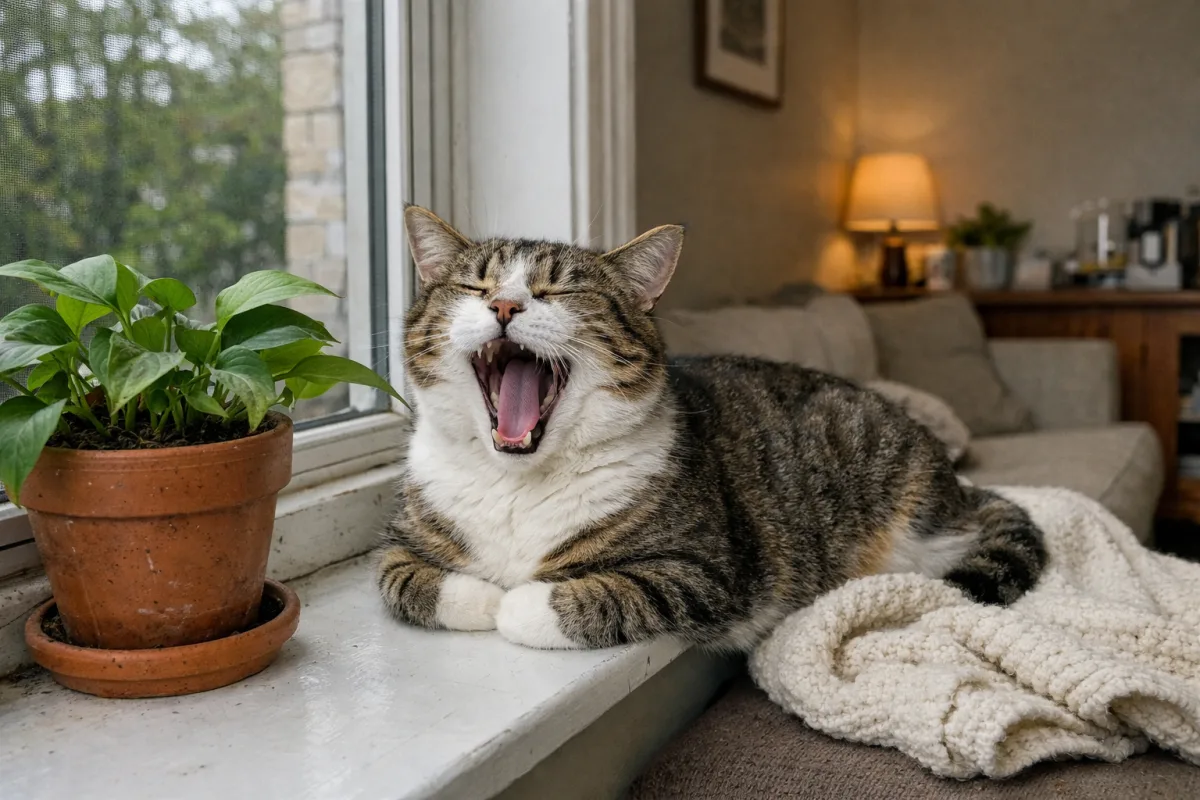
In everyday life, a cat yawn is usually slow and open-mouthed. The jaw widens, the tongue may curl, and the eyes often narrow or close. Some cats look elegant doing it. Others seem almost comic, with a full facial stretch that lasts only a second or two.
You might notice yawning during several common moments:
- right after waking from a nap
- before moving from one resting spot to another
- during a quiet period with little activity
- after grooming for a long time
- while observing the room without much interest
- before or after light play
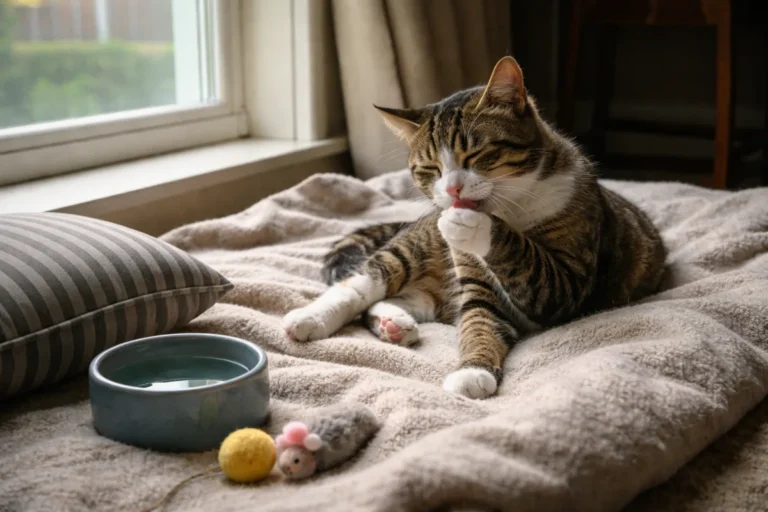
These are ordinary situations. The yawn may be part of a gentle body reset, not a sign of discomfort. A cat that yawns and then stretches out on a warm blanket is often fully at ease.
Possible Internal Reasons Behind the Behavior
There are several internal reasons cats yawn, and they do not all point to the same thing. The most common is simple state change. A cat resting in a deep, quiet position needs a small physical transition before becoming active again. The yawn can be part of that shift.
Another reason is mild arousal. That sounds more complicated than it is. It simply means the cat is moving from low energy to moderate attention. A sound in the kitchen, a person walking by, or a toy being picked up can create that brief change. The yawn may appear as the cat prepares to decide whether to engage.
Some cats also yawn when they are overstimulated in a subtle way. This is not always a problem, and it does not always mean stress. A cat that has been touched for a while, watched closely, or surrounded by activity might yawn as one way to reset before choosing its next move. The behavior may look gentle, but it can still be part of a small internal adjustment.
Relaxation and Sleep Transitions
The most familiar cat yawn comes after sleep. Cats do not wake up all at once. They move gradually, often through a sequence of blinking, stretching, licking, and yawning. This makes sense for an animal that spends a lot of time resting and conserving energy.
When a cat yawns during a wake-up routine, the yawn usually carries no hidden meaning. It is just one piece of the body’s return to alertness. If the cat then walks away calmly, eats, or finds a new place to settle, the yawn was probably only about waking up.
Attention Shifts and Decision Points
Cats are skilled at pausing before action. They watch, listen, and decide. A yawn may appear at these quiet decision points, especially when the cat is weighing whether to stay still or get involved. It can seem like nothing is happening, but the cat may be making a choice internally.
This is especially common in indoor cats. They often live in a world of repeated routines, soft noises, and small environmental changes. A yawn can appear when the cat is in between responses.
How Context Changes the Meaning
Context is the most important part of understanding cat yawning. The same behavior can be normal in one setting and more meaningful in another. A cat yawning after a nap on a sunny windowsill is different from a cat yawning repeatedly during a vet visit or during a tense interaction with another animal.
Look at what happened just before the yawn. Was the cat sleeping? Was someone petting the cat? Was the cat watching another pet? Was there a loud noise, a new smell, or a change in the room? The answer often shapes the meaning more than the yawn itself.
If yawning appears with flattened ears, a tight body, avoidance, or repeated licking of the lips, it is worth paying more attention to the full situation.
In a peaceful home, a cat may yawn freely while lying near a person without any concern. In a busy home, that same yawn may appear when the cat is trying to manage stimulation. One behavior, two very different settings.
Body Language That Helps You Read a Yawn
Yawning becomes clearer when you watch the rest of the cat’s body. Cats rarely communicate with one signal alone. Their ears, tail, eyes, posture, and movement all help shape the message.
Signs of a relaxed yawn
- soft or half-closed eyes
- loose shoulders and spine
- tail resting calmly
- slow blinking before or after the yawn
- steady breathing
- returning to rest, stretching, or walking away casually
Signs that suggest tension
- ears turned sideways or back
- body held tight or low
- tail flicking sharply
- avoidance of touch or movement
- repeated yawning in a short period
- other stress signals such as lip licking or sudden freezing
These patterns matter because a yawn can show up in both relaxed and uneasy moments. The surrounding details tell you which one you are seeing.
What Yawning May Signal About a Cat’s State
In daily life, a cat yawn often says one of four things: the cat is waking up, winding down, mildly resetting, or managing a small amount of internal pressure. None of those are dramatic. They are part of regular feline behavior.
A sleepy cat yawn usually looks soft and unhurried. A bored cat yawn may appear in the middle of a quiet room when nothing is really happening. A socially tired cat may yawn during extended petting or attention. A slightly stressed cat may yawn while trying to stay composed in a situation that feels a little much.
That last point matters because stress yawning in cats is often subtle. It does not always look dramatic. It can be a quiet, brief action that appears just before the cat leaves the room, turns away, or chooses to disengage. The yawn is not the whole stress response, but it can be part of it.
How Home Life Shapes the Behavior
Indoor life influences yawning in obvious and less obvious ways. Cats in calm homes may yawn mostly after sleep and during quiet pauses. Cats in lively homes may yawn more often during transitions, especially when the environment changes from quiet to active and back again.
Routine matters. Cats thrive on predictability, even when they seem independent. Feeding time, play time, nap time, and household noise all create regular patterns in the day. Yawning often appears at the edges of those patterns, when the cat is shifting from one part of the day to another.
Outdoor access, multiple pets, children, and visitors can all change how often a cat yawns and what that yawn seems to mean. A cat that spends a lot of time monitoring the environment may use yawning as one of several small reset behaviors. Another cat in a quieter setting may yawn less often because there is less to react to.
Differences Between Calm, Playful, and Defensive Yawns
Not every yawn feels the same when you watch it closely. Some are loose and sleepy. Others happen right before play. And some show up in moments that feel defensive or uncertain.
Calm yawns
These are the easiest to spot. The cat is relaxed, the movement is slow, and the body stays soft. The yawn may come with a stretch or a slow blink. Often, the cat simply continues resting afterward.
Playful yawns
Some cats yawn before pouncing, chasing, or rolling into a playful stance. In these moments, the yawn may look like part of a warm-up. The cat is alert but not tense. You may see a quick shift into movement right after.
Defensive or uneasy yawns
These are more subtle. The cat may yawn while feeling cornered, watched, or pressured. The yawn can serve as a small self-regulating action. It may appear when the cat is trying to stay calm, but other signals will usually show the tension more clearly than the yawn alone.
| Type of yawn | Common setting | Body language | Likely meaning |
|---|---|---|---|
| Calm | After sleep or during rest | Loose, slow, soft eyes | Relaxation or transition |
| Playful | Before activity | Alert, springy, engaged | Warm-up before action |
| Uneasy | During pressure or conflict | Tight, avoidant, tense | Small reset or stress response |
How Owners Often Misread the Signal
People often assume a yawn means boredom, and sometimes that is partly true. But cats are more layered than that. A cat can yawn during a perfectly good moment of rest, while also being alert enough to notice every sound in the room.
Another common mistake is treating repeated yawning as harmless no matter what. Repetition can be normal when a cat is sleepy or just waking slowly. But repeated yawns paired with tension, hiding, or avoidance deserve closer attention. The behavior is not alarming by itself. The pattern is what matters.
Some owners also think a yawn is an invitation to keep interacting because the cat is “fine.” That can be true, but not always. A cat may yawn as a polite way of stepping out of engagement. If the cat turns away, moves off, or stops responding after yawning, it may be choosing space.
Daily Examples That Show the Difference
Picture a cat curled on a chair after lunch. It opens its mouth in a slow yawn, stretches its front legs, then settles back down. That is a simple rest transition. Nothing more needs to be read into it.
Now picture a cat lying near a doorway while a vacuum runs in another room. The cat yawns once, keeps watching, then flattens slightly and leaves. Here the yawn may be part of a low-level stress response. The cat was probably trying to handle the noise before deciding to move away.
Or imagine a cat sitting near a toy, ears forward, tail twitching lightly. It yawns, then springs into play. That yawn may reflect a short pause before activity, not fatigue. The body is ready, even if the face looks sleepy for a second.
When Yawning Becomes More Noticeable
Some cats yawn more at specific times of day. Morning wake-ups, late evening calm-down periods, and post-meal rest are all common windows. The behavior may also become more visible when the household is quieter and the cat has space to fully relax.
Changes in routine can make yawning stand out too. A new pet, a rearranged room, a guest staying over, or a different feeding schedule may all create small internal adjustments. The cat may yawn more during those transitions, especially if the environment feels less predictable.
Age can influence the rhythm as well. Older cats may appear to yawn more often simply because they rest more and move between states more slowly. That does not automatically mean something is wrong. It may only reflect a slower pace and more frequent rest periods.
What Long-Term Patterns Can Tell You
One yawn means almost nothing on its own. A pattern over time means more. If your cat usually yawns after naps, before stretching, and during quiet moments, that is likely just a normal habit. If yawning starts showing up in stressful settings, during handling, or alongside other signs of discomfort, the context has changed.
Long-term observation helps you learn your cat’s personal rhythm. Some cats yawn often and openly. Others do it rarely. Some use it as part of their wake-up routine every morning. Others show it only when they are pushed a little past their comfort zone.
The behavior is flexible, but not random. Once you know your cat’s usual pattern, unusual yawning becomes easier to notice. That does not mean every change is serious. It just means the signal is easier to interpret when you already know the baseline.
The most useful question is not “Why did my cat yawn?” but “What else was happening when it happened?”
What to Watch Without Overthinking It
You do not need to monitor every yawn. Most are simply part of normal cat life. But it helps to notice the handful of details that make the behavior clearer.
- What came right before the yawn?
- Did the cat just wake up?
- Was the cat being touched, watched, or approached?
- Did the cat stay relaxed afterward?
- Were there other signs like ear changes, tail movement, or body tension?
These small observations are usually enough. Cats communicate through patterns, not single moments. A yawn is one piece of that pattern, and often a minor one.
Natural Rhythm in Everyday Life
In daily life, cat yawning often reflects ordinary movement through the day. A resting cat wakes, a watchful cat pauses, a playful cat prepares, and a stressed cat tries to settle itself. The same motion can appear in all of those situations, which is why context matters so much.
When you watch the whole scene, a yawn becomes easier to place. It may mark a transition, soften a moment of tension, or simply accompany a relaxed stretch on a quiet afternoon. The behavior is small, but it sits inside the larger rhythm of a cat’s day, where rest, alertness, and caution all blend together in quick shifts.
That rhythm is part of living with cats. They do not announce every change clearly. They show it in brief, ordinary ways. A yawn is one of them.