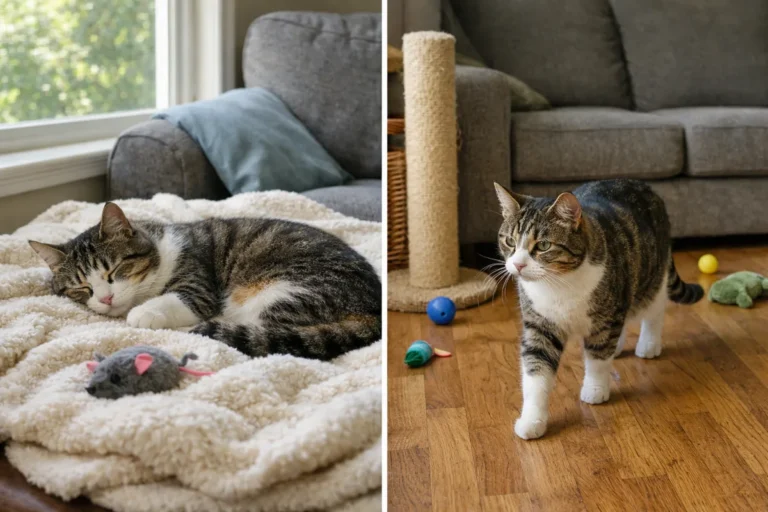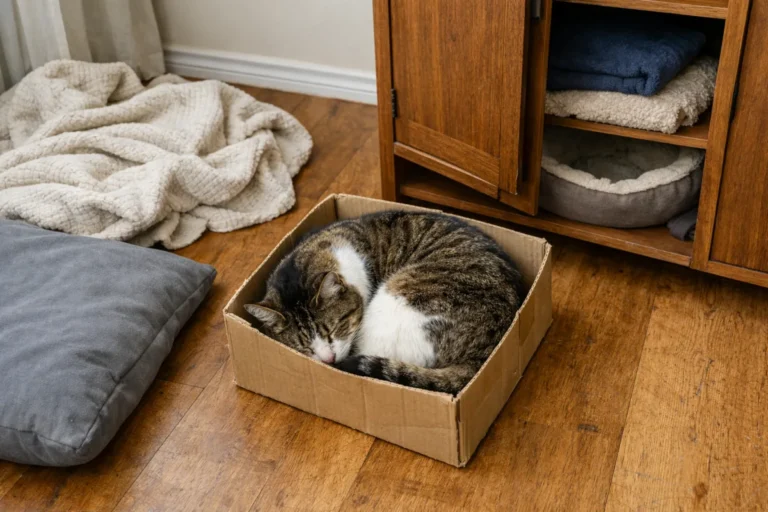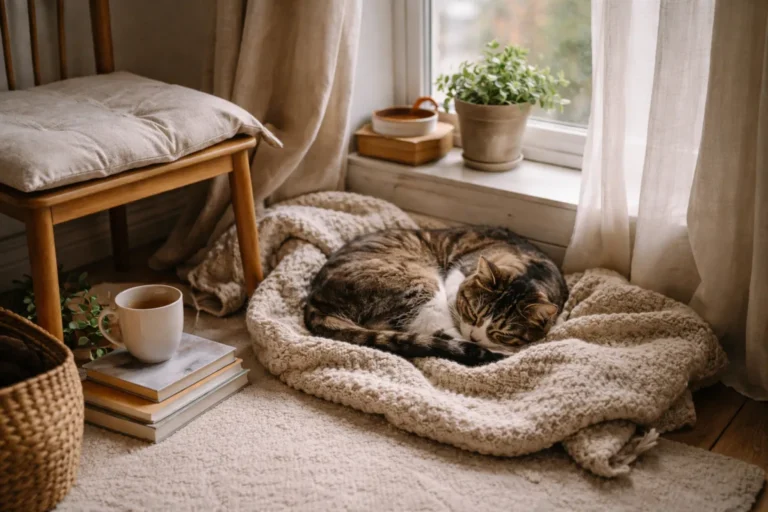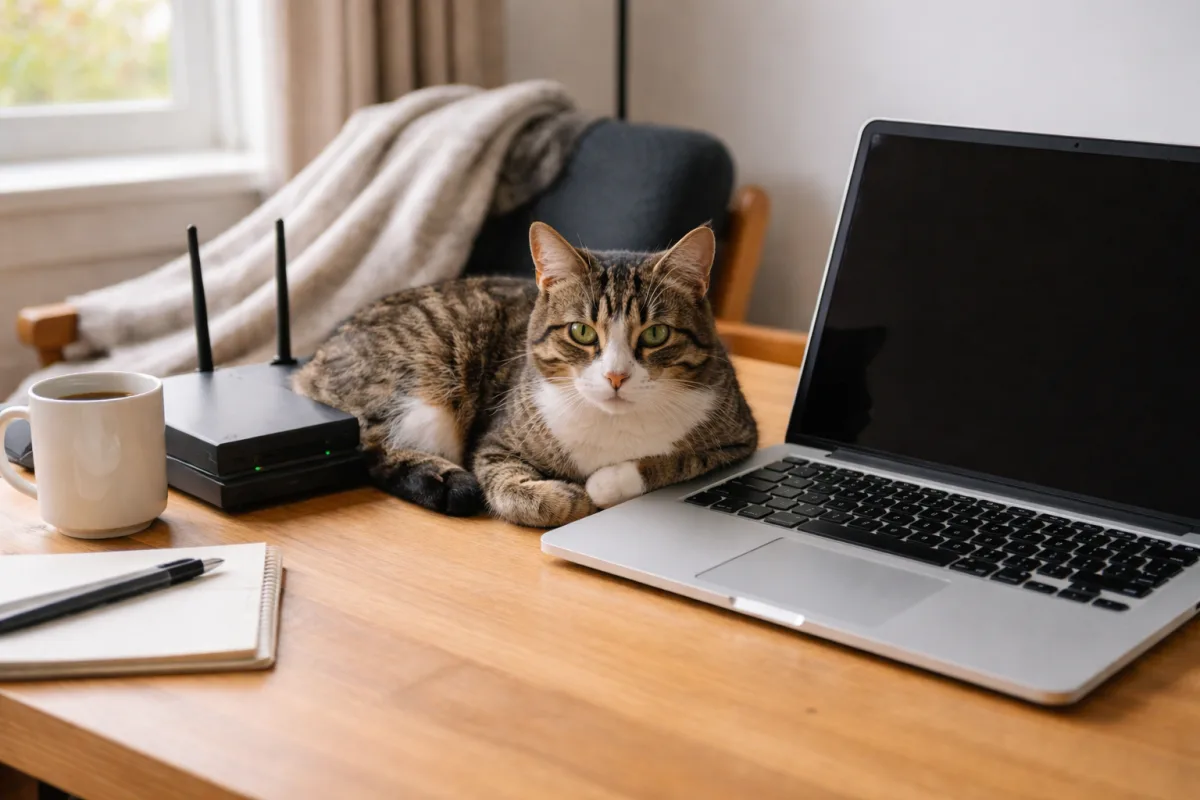
A cat that settles beside a laptop, curls against a router, or plants itself on top of a warm cable box is doing something many owners recognize immediately. The spot looks inconvenient to people, but to the cat it often makes perfect sense. Electronics and other warm objects give off heat, and cats are built to notice small comfort changes that humans usually ignore.
Sometimes the reason is simple. A warm surface feels good after a nap, after a meal, or during a cold afternoon. Other times the choice is more layered. The object may be quiet, steady, elevated, or close to a person the cat trusts. What looks like random furniture behavior is often a mix of temperature, habit, observation, and preference.
That is why this habit shows up in so many homes. One cat may stretch beside a gaming console every evening. Another may sleep on a sunlit modem. Another may ignore a heated blanket but remain loyal to the back of a television. The pattern is familiar, but the details change from cat to cat.
What the behavior looks like in everyday situations
Cats do not usually choose warm objects in only one way. Some lie directly on top of them, while others stay close enough to catch the heat without fully touching the surface. A cat may drape a paw over a laptop, tuck its body against a printer, or sit beside a charging station as if guarding it. The behavior can be brief or repeated every day in the same place.
In many homes, the choice becomes part of a routine. A cat may arrive when the family turns on a computer, then leave once the device cools. Some cats wait near the back of a refrigerator or near a vent because those places collect warmth at predictable times. Others prefer the soft buzz and gentle heat of electronics during quiet evenings.
There is often a practical side to the habit. Cats like spots that feel stable and controlled. A warm object can offer both physical comfort and a sense of security, especially in homes with movement, noise, or fluctuating temperatures.
Common places cats choose
- aptops and keyboards
- Game consoles
- Routers and modems
- Televisions and cable boxes
- Heating pads and electric blankets
- Sunny windowsills near warm devices
- Appliance tops, such as refrigerators or dryers
These spots may seem unrelated, but they often share three traits: warmth, steadiness, and a clear boundary. Cats tend to like places where they can rest without being disturbed.
Why warmth matters so much to cats
Cats conserve energy by resting a great deal of the day, so comfort has real value. Warmth helps them relax muscles, settle more deeply, and maintain body heat without effort. A warm object can feel especially inviting after a cat has been active, eaten, or just moved from a cooler room.
Domestic cats also retain instincts shaped by their wild ancestors. In nature, a warm resting place could mean shelter, sunlight, or proximity to a safe nesting area. Indoor life changes the setting, but the preference remains. A laptop becomes the modern version of a sun-warmed stone, and a cable box takes the place of a heated rock near a protected den.
Warmth is not only about comfort. For many cats, it is part of how they choose a resting place that feels safe, efficient, and easy to settle into.
This is why a cat may ignore a plush bed that is cool to the touch but immediately claim a tiny heated patch of carpet near a router. Temperature can outweigh softness.
Why electronics stand out
Electronics are interesting to cats because they often produce a low, steady heat rather than a sudden burst. That kind of warmth can be more appealing than a hot surface that changes quickly. Many devices also sit in predictable places and stay put for long periods, which makes them easy to revisit.
There is also the matter of routine. Cats pay close attention to household patterns. If a person sits at a desk every afternoon and that desk includes a warm computer, the cat learns that the area is worth checking. Repetition turns into expectation, and expectation turns into a habit.
Some cats are drawn to the faint vibrations or humming sounds that come with certain equipment. These are subtle cues, but cats notice them. A quiet room with a warm device may feel especially appealing compared with a busy room full of movement.
What the behavior may signal about the cat’s state
Most of the time, sitting near electronics or warm objects is normal and unremarkable. It usually means the cat has found a comfortable place. Still, the details matter. A relaxed cat usually has loose body language, slow blinking, and a comfortable posture. The cat may knead, stretch, or sleep deeply without seeming startled by nearby activity.
If the cat is seeking warmth more than usual, that can reflect changes in the environment. A colder home, a drafty room, or a change in bedding can make warm spots much more attractive. Older cats and thin cats may be especially motivated to stay close to warmth because they lose body heat faster or feel joint stiffness more sharply.
In some cases, the behavior can also reflect a need for quiet. Electronics are often placed in low-traffic areas or create a personal bubble around them. A cat that wants less interruption may choose that spot because it stays still and predictable.
If a cat suddenly starts searching for warm places more often than before, it is worth noticing the broader picture: room temperature, age, energy level, appetite, and sleep patterns all matter.
Body language that usually fits a normal preference
- Loose, tucked, or sprawled posture
- Soft eyes or slow blinking
- Normal grooming and appetite
- Leaving the spot willingly
- No signs of distress when moved
When these signs are present, the cat is probably simply choosing comfort. The object is acting like a favorite resting place, not a message.
How the home environment shapes the habit
The same cat may behave differently depending on the home. In a cooler apartment, warm objects become much more appealing. In a busy household, a cat may choose a quiet electronics shelf because it offers both heat and distance. In a home with several sunny windows and cozy blankets, the cat may still return to electronics if they provide a slightly better level of warmth or a more stable location.
Placement matters too. Cats often like height, corners, and enclosed spaces. A television stand or desk shelf can feel safer than a floor cushion because the cat can watch the room from there. If that spot also gives off warmth, the combination becomes hard to resist.
Season changes often make the pattern more obvious. Many owners notice it most in fall and winter, when the cat begins following warm appliances the way it might follow patches of sunlight in summer. The behavior may seem new, but the preference is usually just more visible.
Things that increase the habit
- Colder indoor temperatures
- Drafts near windows or doors
- Older age or joint stiffness
- Quiet rooms with little foot traffic
- Predictable daily electronics use
- Limited access to other warm resting spots
A cat that has several good options may still return to the same warm object because cats like dependable routines. Repetition creates familiarity, and familiarity matters a great deal to many of them.
When warmth and attachment overlap
Sometimes what looks like a preference for a device is partly a preference for the person using it. A cat that sits near a laptop may really want the nearby human, but the computer provides the extra draw of heat and a fixed place to rest. This is common on desks, couches, and beds where people and warm surfaces share the same area.
That overlap can explain why a cat chooses one warm object over another. The cat may not care about the electronics themselves. It cares about what they create in the environment: warmth, routine, closeness, and a place where attention is available if desired.
In that sense, the habit is not only about temperature. It is also about proximity. A cat resting near a computer might be choosing the warmest spot near a trusted person, which is a very different decision from random curiosity.
What owners often notice at the same time
- The cat arrives when the person sits down
- The cat stays close but not always in direct contact
- The cat becomes more active when the device turns on
- The cat leaves when the room gets louder or busier
These small details help explain the behavior better than the object alone. A cat is responding to the full setting, not just the heat source.
When it is playful, neutral, or stress-related
Not every approach to an electronic device means the same thing. A cat that climbs onto a keyboard with a relaxed body is likely seeking warmth or attention. A cat that repeatedly interrupts typing, paws at moving cords, or seems restless around the object may be expressing curiosity or trying to engage with activity. A cat that hides near warm equipment while also acting withdrawn may be using the space for comfort and security rather than simple laziness.
The difference is usually in the energy behind the choice. Calm behavior tends to be steady and unhurried. Playful behavior is more animated, with quick shifts, pawing, and interest in movement. Stress-related behavior often comes with other changes, such as hiding, reduced appetite, tension, or clinginess.
It is the pattern around the warm spot that matters most. One cat sits there because it is cozy. Another uses the same place because it is trying to feel safer, warmer, or less exposed.
Soft and strong signals to compare
| Behavior | Likely meaning |
|---|---|
| Sleeping beside a warm device | Comfort, habit, or quiet preference |
| Choosing the spot after activity | Warming up and recovering energy |
| Blocking access to a keyboard | Attention-seeking or claiming a favored place |
| Hovering near electronics while tense | Possible stress or desire for security |
How age and physical condition can change the pattern
Kittens may be drawn to warm places because they are still small, easily cooled, and highly curious. They may climb onto electronics more for exploration than for deep rest. A warm object that buzzes, hums, or glows slightly can be a fascinating target for a young cat learning about the home.
Adult cats usually develop more consistent preferences. Once they find a warm spot that feels right, they often return to it with little hesitation. Their choices may become more efficient and less impulsive than those of kittens.
Older cats can show the strongest attachment to warmth, especially if they have reduced muscle mass, arthritis, or a tendency to feel cold more quickly. A warm resting place can ease stiffness and make it easier to settle for long periods. In these cats, the behavior may be less about curiosity and more about physical relief.
Age-related patterns
- Kittens: exploration, play, brief resting
- Adults: routine, comfort, predictable use
- Seniors: warmth-seeking, joint comfort, longer resting periods
These shifts are normal, but they are useful to notice. A change in how a cat uses warm spots can reflect a change in needs.
How to read the habit without overthinking it
A cat sitting near electronics or warm objects is usually making a simple choice: this place feels good. The surrounding details help explain why. Maybe the room is colder than usual. Maybe the cat wants to be near a person. Maybe the object gives off the exact amount of warmth the cat prefers.
The habit becomes more meaningful when it changes. If the cat suddenly avoids other favorite spots, seems uncomfortable, or becomes unusually fixated on warmth, the broader context deserves attention. But in everyday life, the behavior is often just a practical feline decision shaped by comfort, routine, and environmental cues.
That is what makes it so common. Cats do not need complicated reasons to pick a warm patch beside a laptop or a sunlit appliance. For them, the best place is often the one that feels steady, safe, and pleasantly warm at just the right moment.