Cats do not pick a sleeping place at random. One day they curl up on a folded blanket, the next they stretch across a windowsill, and later they may claim the exact center of your bed. These choices can seem mysterious, but they usually follow clear patterns.
A cat’s preferred sleeping spot often says something about comfort, temperature, safety, routine, and even social comfort. Some places feel secure. Others feel warm. A few give the cat a good view of the room without putting them in the middle of the action. The reasons are practical, even if the behavior looks charming or strange from the outside.
What seems like a simple nap habit can reveal how a cat reads the home. Quiet corners, soft textures, elevated surfaces, and familiar scents all play a role. Some cats rotate between several favorite spots, while others guard one spot as if it were their private apartment within the house.
What a Cat’s Sleeping Spot Choice Looks Like in Daily Life
In everyday life, cats tend to return to the places that match their needs at that moment. A cat may sleep in direct sunlight during the morning, then move to a cooler tile floor later in the day. Another cat may prefer a shelf, the top of a sofa, or the back of a chair because those places allow them to rest without feeling exposed.
Many owners notice that the “best” sleeping spot changes with the weather, the noise level in the home, and the cat’s age or mood. A young cat may nap wherever activity is highest because curiosity keeps them moving. An older cat may choose a quieter location with less foot traffic and easier access.
Some common patterns show up again and again:
- Sleeping near warmth sources such as heaters, sunny windows, laptops, or laundry
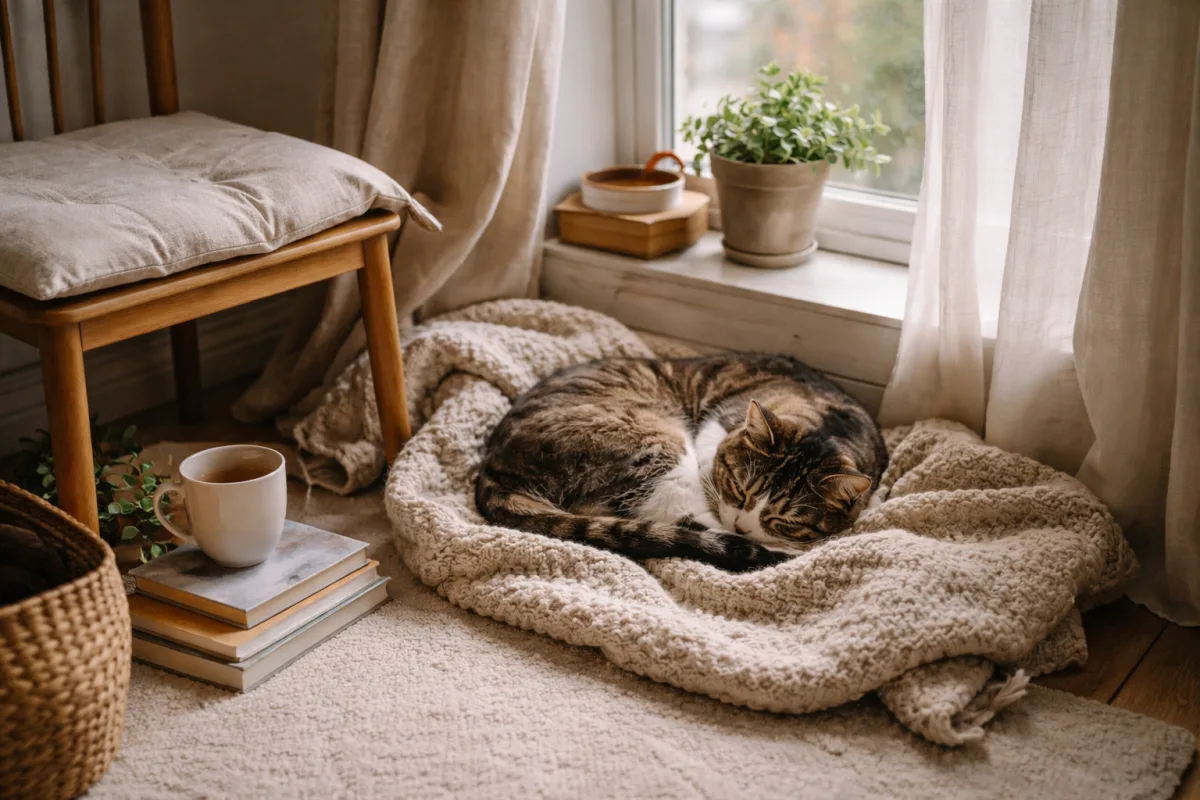
- Choosing soft, familiar fabrics that hold the cat’s scent
- Picking elevated spots that provide a better view
- Moving to hidden areas when the home becomes louder or busier
- Returning to one “safe” nap place during stressful days
These choices often shift throughout the day. A cat is not usually being picky for no reason. They are adjusting to what feels best in the moment.
Why Cats Prefer Certain Places Over Others
The most obvious reason is comfort, but comfort includes several things at once. A sleeping spot can feel soft, warm, familiar, quiet, and secure all at the same time. Cats are skilled at finding places that satisfy more than one need at once, which is why their favorite spots are often not the most obvious ones to people.
Temperature matters a great deal. Cats conserve energy by resting, and a warm place can help them feel settled quickly. That is why they often gravitate toward sunny patches, blankets fresh from the dryer, or the warm spot on a couch after someone leaves. In a cool room, they may seek out enclosed beds or tight corners that trap heat.
Safety is just as important. A cat sleeping deeply is vulnerable, so many cats prefer places where they can hear and see what is happening without being directly in the path of movement. They may like a chair that faces the room or a perch from which they can monitor the household. Even relaxed cats often keep one eye on the environment, especially in homes with children, dogs, or frequent guests.
For many cats, the ideal sleeping spot is not just soft. It is warm, familiar, and easy to monitor.
Scent also plays a role. Cats are deeply influenced by smell, and places that carry their own scent or the scent of trusted people can feel reassuring. A blanket, pillow, or even a sweater can become a preferred nap spot for that reason alone. The place itself may not be special, but the smell attached to it is.
Internal Reasons Behind the Choice
A cat’s sleeping spot can reflect the cat’s internal state. Calm cats often choose open but secure locations, where they can relax without feeling trapped. More cautious cats may favor hidden or partially enclosed spots, especially if the house has been loud or full of activity.
Routine is another internal factor. Cats are creatures of habit, and once a place becomes associated with safe rest, they often return to it again and again. The brain links that location with sleep, making it an easier place to settle the next time. Over time, a favorite spot can become part of the cat’s daily rhythm.
Age can affect the choice too. Kittens tend to sleep wherever they are most exhausted, which means a chair, a lap, a cardboard box, or the middle of the floor may all work. Adult cats are usually more selective. Senior cats may want easier access, less jumping, and warmer surfaces that help stiff joints feel better.
Health can influence the pattern as well. A cat that suddenly begins sleeping in unusual places may be responding to discomfort, noise, or changes in the household. When a favorite location changes without an obvious reason, it is worth watching the rest of the cat’s behavior too. Eating, grooming, and movement patterns matter alongside sleep.
How the Home Environment Shapes the Choice
Indoor homes create many options, and cats learn quickly which ones work best. A quiet bedroom may become a private retreat. A living room window may turn into the best sunny bed in the house. A hallway closet, laundry basket, or the space behind the sofa may feel like a perfect hiding place when the day gets loud.
Room layout matters more than many owners realize. Cats often like sleeping spots with a clear line of sight and an easy escape route. A place tucked into a corner can feel safer than one that is exposed from every side. That is why cats sometimes choose the side of a couch rather than its center, or the top shelf rather than the floor.
Noise levels change the picture too. Vacuum cleaners, televisions, visitors, and children can push a cat toward quieter rooms. In a calmer home, a cat may sleep more openly and choose high-traffic areas simply because they still feel predictable. In a busier home, the cat may look for a spot that buffers sound and movement.
Even small changes can matter. A new blanket, a rearranged chair, or a moved cat bed may change the cat’s routine. Some cats adapt quickly. Others need time to trust the new arrangement. A favorite sleeping spot is often not about the object alone, but about what the object has come to mean.
Common Situations and What They Often Mean
Sleeping on your bed
This often signals trust, familiarity, and comfort. The bed carries a strong human scent, stays soft, and usually feels stable. Some cats also like the social closeness of sleeping nearby without being handled or disturbed.
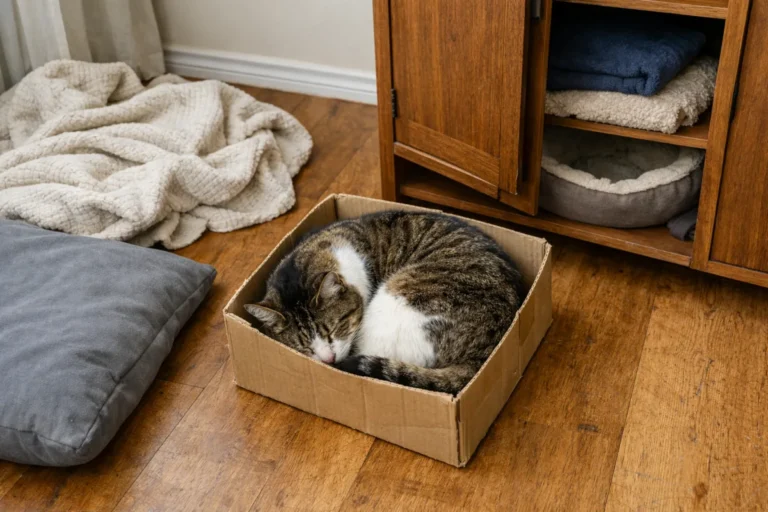
Sleeping in a box or covered bed
Enclosed spaces help many cats feel protected. The sides create a sense of shelter, and the smaller space holds warmth. This kind of spot is especially common in cats that like peace and quiet.
Sleeping in a sunny patch
Warmth is the main attraction. A cat may move with the sunlight as the day goes on, using the sunniest area available at each hour. These spots are especially popular in cooler homes or during colder seasons.
Sleeping in a high place
An elevated sleeping place often combines comfort with observation. Cats can rest while still keeping track of the room. This is common in cats that are alert by nature or live in active homes.
Sleeping in an odd spot, like a sink or laundry basket
Odd-looking choices are usually practical from the cat’s point of view. A sink can feel cool and secure. A laundry basket may smell familiar and hold the right shape for curling up. Cats do not always pick the most sensible place from a human perspective, but their reasons are usually consistent.
| Sleeping spot | Likely reason | What it may suggest |
|---|---|---|
| Bed or pillow | Scent, softness, closeness | Trust, comfort, social preference |
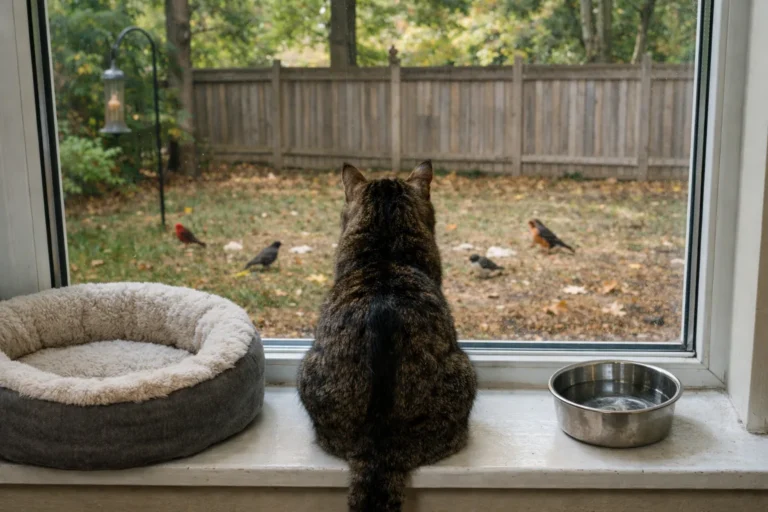
| Window perch | Warmth, view, stimulation | Curiosity, routine, alert rest |
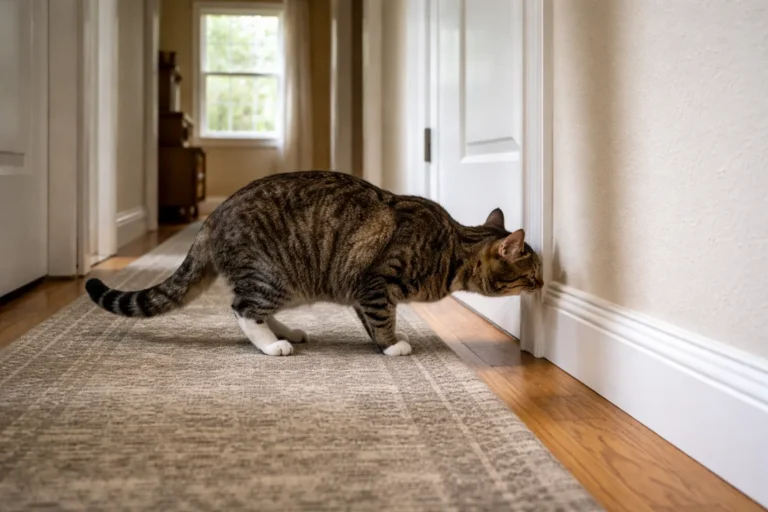
| Closet or under furniture | Privacy, reduced noise | Need for security or quiet |
| Box or covered bed | Enclosure, warmth | Desire for protection and calm |
| Floor tile | Cooling off | Temperature management |
How Cats Balance Comfort and Control
One reason cats seem so particular about sleeping spots is that they like control. A good place gives them a choice to rest without giving up awareness of their surroundings. That balance matters. Cats often want comfort, but they want it on their own terms.
This is why some cats will not sleep in a new bed until it has been moved to the “right” location. The bed itself may be fine, but the placement may feel wrong. It could be too exposed, too close to a doorway, too noisy, or too far from the family scent that makes the room feel settled.
Owners sometimes assume the cat is being difficult when in reality the cat is making a fast, silent calculation. Is the place warm enough? Is it safe enough? Can I leave quickly if needed? Those questions shape the final choice far more than decoration does.
Cats often choose sleeping spots that let them relax without losing control of the room around them.
What Changes When the Cat Feels Different Emotionally
A cat that feels secure may sleep more openly, stretch out fully, and choose visible places. A cat that feels uncertain may tuck itself into corners, hide under furniture, or switch spots more often. The sleeping spot can become a quiet reflection of the cat’s emotional state.
That does not mean every change is serious. Cats move around. A louder day, a guest in the house, or a shift in temperature can change sleeping habits for a few hours. What matters is the pattern over time. A single unusual nap spot means little on its own.
If a cat suddenly avoids a once-loved place, the reason may be practical or emotional. The spot may have become too hot, too noisy, or simply less appealing. In some cases, another pet may have claimed it first, and the cat has decided not to compete. Cats often prefer easy comfort over confrontation.
When a cat keeps choosing the same protected spot for days or weeks, that consistency can matter. It may indicate that the place feels especially reassuring. It can also point to a cat that is seeking more privacy than usual. Context makes the difference.
How Owners Often Misread the Choice
It is easy to assume a cat is “being antisocial” when it sleeps alone, or “being clingy” when it sleeps on top of a person. Those labels miss the practical side of the behavior. The cat is usually responding to the combination of warmth, scent, comfort, and security.
Another common misunderstanding is assuming the most expensive cat bed should automatically become the favorite. Cats care far less about the price of the object than about its feel and placement. A cardboard box in the right corner can beat a plush bed in the wrong one every time.
Some owners also overlook timing. A sleeping spot used in the morning may not appeal at night. A cat that chooses the hallway during the day might move to the bedroom after lights go off. The home feels different at different hours, and the cat adjusts accordingly.
When people pay attention to where the cat sleeps and when, the pattern often becomes easier to understand. The cat is not making random choices. It is selecting the option that suits the moment.
Signs That the Sleeping Spot Is More Than a Preference
Most sleeping spot choices are ordinary. Still, a few patterns deserve attention because they may suggest discomfort or stress.
- Sudden rejection of a long-favorite sleeping spot without an obvious reason
- Constant hiding in places that are unusually hard to reach
- Choosing cold, isolated areas while also seeming less active than usual
- Frequent restless movement from spot to spot with little settling
- Sleeping more in places that seem unsafe or out of character for the cat
These patterns do not point to one single issue, but they can be useful clues. A cat that is less willing to rest comfortably may be telling you that something about the environment or the body feels off. Sleep location is only one piece of the picture, but it is often one of the first pieces people notice.
Why Favorite Spots Can Stay the Same for Years
Some cats change sleeping places every week. Others keep returning to the same corner, cushion, or windowsill for years. Stability often comes from repetition. If a place has been safe, warm, and undisturbed many times, the cat has no reason to look elsewhere.
Long-term favorites also tend to be shaped by household rhythm. If mornings are quiet, a bedroom chair may remain a favorite for years. If afternoons are sunny, the same window perch may stay popular season after season. The behavior becomes part of the cat’s sense of home.
At the same time, older cats may hold onto a favorite spot because it remains easy to access and comfortable for resting joints. That can make the place feel even more important over time. A well-chosen sleeping spot becomes a reliable part of the cat’s day, not just a location.
Even so, cats often keep a few backup places. They may have one spot for warmth, another for privacy, and another for being near the family. That flexibility is normal. It shows how carefully cats adapt their rest to the life around them.
The Quiet Logic Behind the Choice
Sleeping spots are one of the clearest ways cats organize their environment. They use the home like a map of comfort, and each location serves a purpose. One place may offer sunlight. Another may offer cover. A third may simply carry the right smell and the right mood.
Once those preferences are understood, the behavior feels less mysterious. A cat on a windowsill, under a blanket, or halfway across a pillow is usually not being random. It is choosing a place that fits the moment, the room, and the cat’s own sense of ease.
That quiet logic shows up every day in small ways. The spot changes when the room changes. The place matters because the cat has assigned it meaning. And in a house full of movement, that chosen place becomes the one part of the day where everything feels settled enough to sleep.