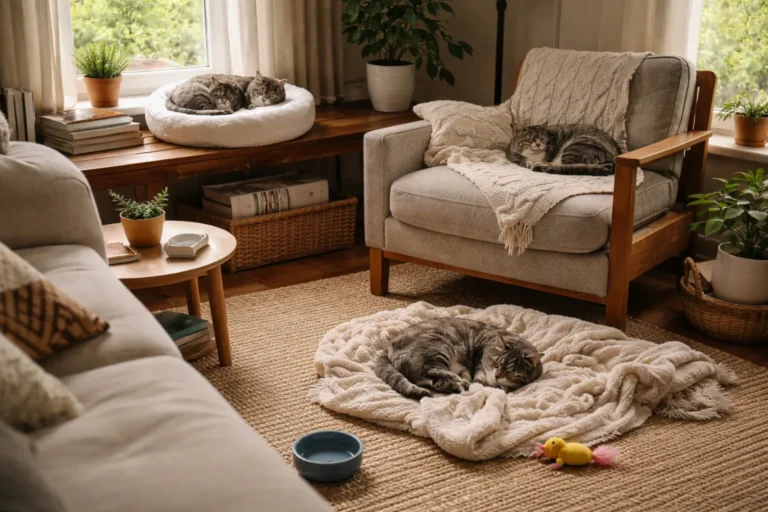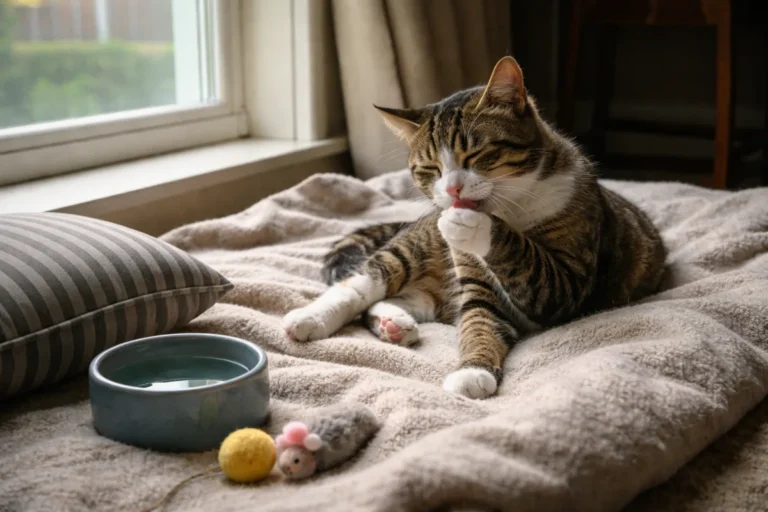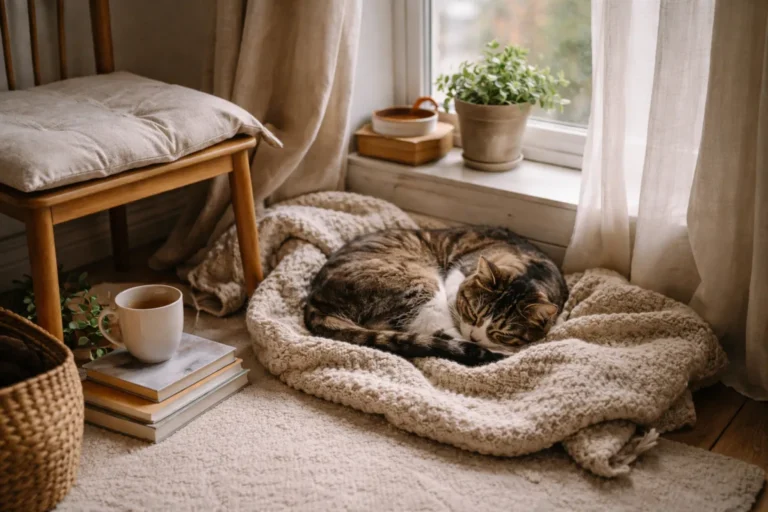
A cat choosing an unusual place to sit can look amusing at first, then strangely specific the next time it happens. One day it is the middle of a hallway. The next, it is a laundry basket, a windowsill that barely fits one paw, or the top of a bookshelf no one expected to matter.
Some cats seem to collect odd sitting spots the way others collect toys. They shift from place to place, settling in areas that feel inconvenient to people but seem perfectly logical to them. The behavior is often harmless, yet it can reveal a lot about comfort, routine, curiosity, and the way a cat reads its environment.
What looks random usually has a pattern. Cats do not choose unusual places by accident as often as it seems. Temperature, height, scent, privacy, and daily activity all play a part, and a cat may return to the same spot because it meets a need that is not obvious at a glance.
What Unusual Sitting Looks Like in Everyday Life
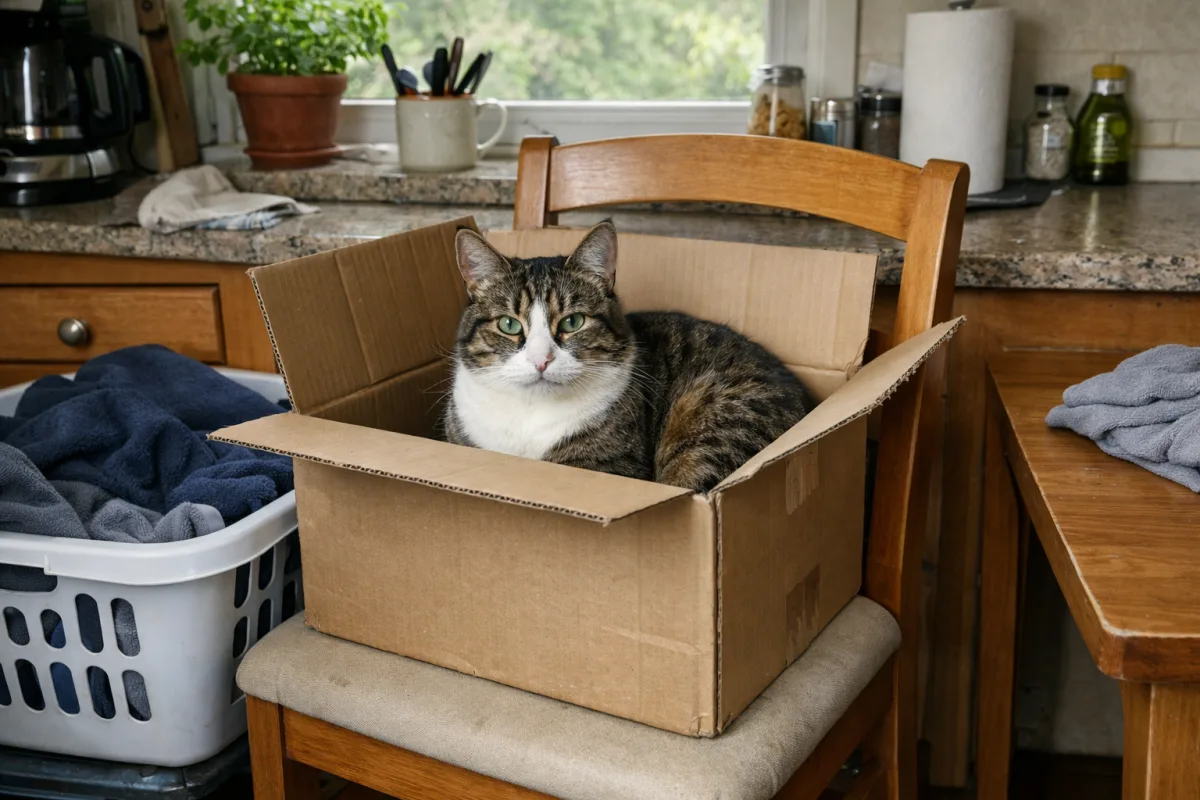
Unusual sitting can mean a cat prefers a place that is awkward, cramped, or unexpected compared with a normal bed or couch cushion. It may sit inside a sink, on top of a backpack, in an empty cardboard box, between two pillows, or directly on a stack of freshly folded clothes. Some cats pick places with a strong smell, like shoes or grocery bags. Others prefer locations that let them watch the whole room without being touched.
The choice often changes throughout the day. A cat may sit in a warm sunbeam in the morning, move to the bathroom floor after lunch, and end up on the back of a chair in the evening. These shifts are not necessarily signs of confusion. They can show that the cat is responding to small changes in temperature, noise, movement, or household activity.
Examples that often surprise owners
- A cat sitting in a sink or bathtub, even when it is dry
- A cat wedging itself into a grocery bag or open suitcase
- A cat choosing the top of a refrigerator or cabinet
- A cat resting on books, laptops, or paperwork
- A cat sitting near a doorway instead of in a bed
- A cat picking the narrow space behind furniture
Sometimes the appeal is simple: the spot is warm, soft, sheltered, or elevated. Other times, the attraction is more about position than comfort. A cat may choose a place because it can see everyone else while staying out of reach. That balance of observation and safety matters more to many cats than plush bedding ever will.
For many cats, “unusual” to a person is just “better suited to the moment” from the cat’s point of view.
Why Cats Choose Strange Spots in the First Place
Cats are highly selective about where they rest. Even a healthy, relaxed cat may move through several locations in a single day because different places meet different needs. A spot that seems odd may offer warmth, privacy, security, scent familiarity, or a better view. Cats often rest where they can remain aware of what is happening around them without needing to actively engage.
There is also a strong instinct to seek control over the surroundings. Cats like to choose positions that let them leave quickly if needed. A spot may seem inconvenient to a person, but if it gives the cat a clear route out, that can make it appealing. This is one reason corners, shelves, chair backs, and narrow spaces can be attractive.
Another common reason is texture and shape. Some cats love cardboard because it feels stable and smells interesting. Others prefer hard surfaces during warm weather and softer ones when the house is cool. The actual material underneath them may matter more than whether it looks like a proper bed.
Common practical reasons
- Temperature control
- Height and visibility
- Privacy from people or pets
- Familiar smells
- Surface texture and support
- Ease of escape
- Proximity to a preferred person or room
These reasons can overlap. A cat sitting on top of a dresser might enjoy the height, the warmth from the room, and the fact that the spot is quiet after the household becomes busy. One decision can satisfy several needs at once, which is part of why cats keep returning to specific unusual places.
How the Behavior Shows Up in Different Daily Situations
Unusual sitting often becomes more obvious when the home changes around the cat. During cleaning, a cat may choose a hallway corner or a closed laundry basket simply because all the familiar resting spots have been disrupted. During guests’ visits, the cat may move to a high shelf or under a bed. In a busy household, the odd spot might be the only place that feels untouched.
Some cats become especially creative after a shift in routine. A new work schedule, a rearranged room, or the arrival of another pet can push them toward alternative sitting places. The cat is not necessarily acting out. It may be adjusting to a different map of the home and trying to find a location that still feels secure.
Weather matters too. On cold days, cats often pick enclosed or insulating spots such as baskets, drawers, or sunlit patches near appliances. On warm days, they may stretch out on tile, bathroom floors, or shaded shelves. The same cat can seem inconsistent simply because the environment is changing under its feet.
Situations that make odd spots more tempting
- A noisy vacuum or other household sound
- Guests moving through the home
- New furniture or a changed room layout
- Another pet taking over a favorite bed
- Open containers, bags, or boxes left nearby
- Seasonal temperature changes
When a cat suddenly favors a new spot, the surrounding activity is often as important as the spot itself.
Possible Internal Reasons Behind the Behavior
Not every unusual sitting choice is about comfort in the physical sense. Cats also use space to manage emotion. A cat may choose a secluded or elevated place when it wants to feel more in control. Another cat may sit in a strange place because it is mildly curious and likes watching from a distance without being interrupted.
Sensitivity plays a big role. Some cats notice tiny changes in sound, scent, and movement long before people do. A doorway that feels fine to a person may feel too exposed to a cat if there is a new smell in the room or if other animals have passed through recently. An unusual spot can function as a kind of safe buffer.
There is also a strong connection to routine and predictability. Cats often repeat sitting habits once a place has proven useful. If a cat sat in a box during a storm and felt secure, that box may become a preferred rest spot later. A place becomes meaningful not because it looks special, but because it has already worked.
Internal reasons that may influence the choice
- Need for security
- Need for observation without engagement
- Preference for familiar scents
- Comfort with enclosed or elevated spaces
- Positive memory linked to the location
In this sense, unusual sitting can be a sign of a cat managing its own comfort carefully. The location may reflect personal preference more than mood in the dramatic sense. Many cats are simply making a small, deliberate choice that helps them feel settled.
How Environment Shapes the Habit
The home environment strongly affects where a cat decides to sit. A quiet home with many hiding choices gives a cat more freedom to rotate through odd places. A busy home may lead the cat toward higher shelves, tucked-away corners, or narrow spaces that people rarely use. The more active the household, the more likely the cat is to search for places that feel untouched.
Indoor cats often show this behavior more clearly because they rely on the home for all their resting and observing needs. If a cat has access to window perches, cat trees, boxes, blankets, and quiet rooms, it may still prefer the sink or the top of the speaker. That does not mean the usual items are bad. It may just mean the unusual spot fits the moment better.
The shape of the home matters too. Apartments with limited floor space can push cats upward. Large homes may lead cats to choose isolated rooms where they feel less disturbed. Even small details, such as a draft near a window or the warmth from a device, can explain why one sitting place becomes suddenly appealing.
Environmental features cats often respond to
| Feature | Why it may attract a cat |
|---|---|
| High shelf | Provides a clear view and a sense of control |
| Cardboard box | Offers enclosure, scent absorption, and stability |
| Bathroom sink | Feels cool, smooth, and enclosed |
| Closet shelf | Quiet, dark, and low traffic |
| Laundry basket | Combines scent, softness, and privacy |
People often notice the visible part of the behavior and miss the environmental cue that led to it. A cat that starts sitting under the dining table may be reacting to a louder room, stronger scents, or a new routine around mealtimes. The choice is easier to understand when the whole setting is taken into account.
What Owners Often Miss in the Cat’s Body Language
The place itself matters, but so does the cat’s posture. A relaxed cat in an odd spot usually looks loose through the shoulders, rests evenly, and may blink slowly or shift position without urgency. A tense cat can sit in a strange place very differently. Its body may look compact, guarded, or unusually still. The difference is subtle but important.
Tail position, ear direction, and movement speed give useful clues. A cat sitting in a high place with forward ears and a loose tail is often simply observing. A cat tucked tightly into a hidden corner with flattened ears or a fixed stare may be seeking distance rather than comfort. The same spot can mean very different things depending on the cat’s body language.
Signs that the sitting choice is likely relaxed
- Soft eyes and loose facial muscles
- Normal breathing
- Easy grooming before or after resting
- Changing positions without hesitation
- Interacting normally when approached
Signs that may suggest discomfort
- Hunched or tightly compressed posture
- Refusing to move for long periods
- Hiding and avoiding interaction
- Stiff body when someone comes near
- Eating, grooming, or litter habits changing at the same time
A cat’s chosen place matters less than the way the body behaves while it is there.
When the Behavior Is Playful, Neutral, or Stress-Related
Not all odd sitting is the same. Some cats choose unusual places in a playful, exploratory way. They hop into bags, sit in boxes, and move quickly from one new perch to another. The cat seems engaged and curious, not tense. In these cases, the behavior often appears alongside alert ears, lively movement, and a willingness to leave when something else catches its interest.
Neutral behavior looks calmer and more routine. A cat may settle into a strange spot because it simply likes it there. It may stay for a long nap, shift once or twice, and leave later without any fuss. Nothing about the posture suggests discomfort. The location is odd only from a human perspective.
Stress-related sitting tends to look different. The cat may choose hidden or elevated places more often than usual, avoid open areas, and remain guarded. It might sit in an unusual spot because it wants distance from noise, other animals, or changes in the home. If the behavior appears with appetite changes, litter changes, vocalization, or withdrawal, the cause deserves more attention.
How the three forms can differ
- Playful: quick entry, active curiosity, frequent movement
- Neutral: settled posture, normal routine, no obvious tension
- Stress-related: guarded posture, withdrawal, repeated hiding
These categories are not rigid, but they help narrow down what the cat may be communicating. A cat can move between them over time, especially if the household changes or the cat’s comfort level shifts.
How Age and Habit Affect the Choice
Kittens often treat unusual places as part of exploration. They climb into anything that fits them, then sit there as if they have discovered a private kingdom. Their choices can be random, playful, and full of trial and error. A cardboard box, a shoe, and a pile of blankets may all seem equally appealing because the kitten is learning how spaces feel.
Adult cats usually become more selective. Their odd sitting places often reflect established preferences. One cat may return to the same chair arm every afternoon. Another may prefer the top of the cat tree because it balances comfort with observation. By adulthood, the behavior tends to be less about testing and more about choosing what works.
Older cats can change again. Some choose unusual spots that are easier to access if jumping has become uncomfortable. A low basket, a cushioned step, or a sunny floor patch may replace a favorite high shelf. Age-related changes in mobility, temperature preference, and sleep depth can all influence where an older cat sits.
A shift in preferred sitting places over time can reflect changing comfort, not just changing taste.
What It Means When the Same Spot Becomes a Favorite
When a cat returns to the same unusual place again and again, the spot has likely become part of its routine. Repetition usually means the location meets multiple needs at once. It may offer the right amount of privacy, the right amount of height, and a predictable smell that has become reassuring.
Owners sometimes try to replace the spot with a “better” one and are puzzled when the cat ignores it. The newer bed may be softer, but the original place may have a better view or a stronger sense of safety. Cats often choose what feels dependable over what looks comfortable to people.
If the spot is safe and does not create a problem, there may be no need to interrupt the pattern. A cat sitting in a box by the sofa or on a stair landing is usually just building a habit around a location that suits it. The consistency can be useful information, especially if the cat prefers one place during stressful times and another during calm periods.
Why a recurring spot matters
- It can signal a strong comfort preference
- It may show that the cat feels secure there
- It can reveal seasonal or routine-based changes
- It may help identify stress if the spot changes suddenly
When Unusual Sitting Deserves Closer Attention
Most of the time, a cat’s odd sitting place is just part of normal feline behavior. Still, sudden change is worth noticing. If a cat starts choosing hidden places after being social and open, or if it begins sitting in one odd place while acting withdrawn, that change may point to discomfort. The location is only one clue, but it can be a useful one.
Pay attention to patterns rather than one isolated moment. A cat that occasionally sits in the sink is different from a cat that spends most of the day under the bed and avoids usual contact. A cat that briefly rests on top of a bookshelf is not the same as one that seems unable to relax anywhere else. Context matters more than the label of the spot.
Look for changes in eating, grooming, movement, and social interest. These often tell the fuller story. Unusual sitting becomes meaningful when it fits into a broader shift in behavior, not just when it happens in a strange place.
If the sitting habit changes quickly and comes with other behavior changes, the cat is likely telling you something beyond simple preference.
Living With a Cat That Loves Odd Places
Many owners learn to leave a little room for their cat’s preferences. That may mean keeping a box available, leaving a sunny windowsill clear, or allowing a cat to claim the top of a shelf it reliably uses. Cats appreciate having options, and they often settle more easily when they can choose between a few safe, familiar spots.
It also helps to notice which spots seem to work best at different times of day. A cat may prefer a high perch in the morning, a cool floor in the afternoon, and an enclosed nook at night. Those shifts are usually practical. They reflect the cat’s way of balancing comfort, temperature, and awareness as the home changes around it.
Over time, unusual sitting becomes easier to read. The pattern may not be dramatic, but it is rarely meaningless. Whether the cat chooses a laundry basket, a shelf, or the narrow edge of a chair, the habit often points to a small set of needs being met in a very cat-like way.
And that is often the whole story: a cat scanning the room, weighing comfort against safety, and settling where the balance feels right for that moment.