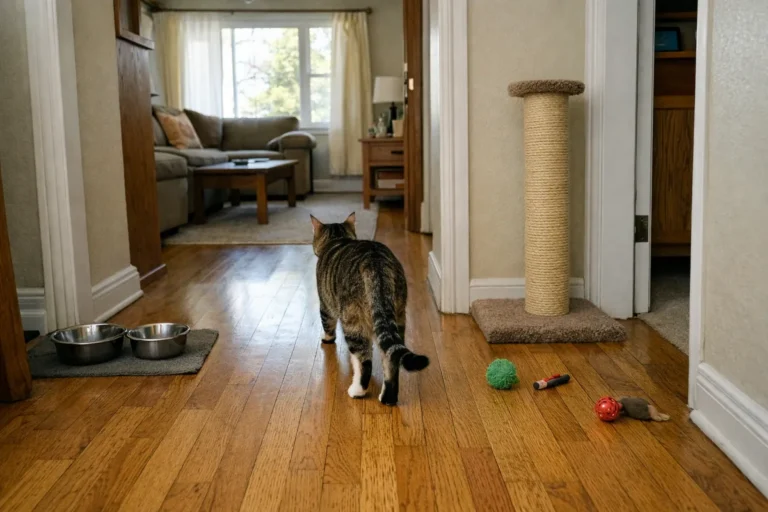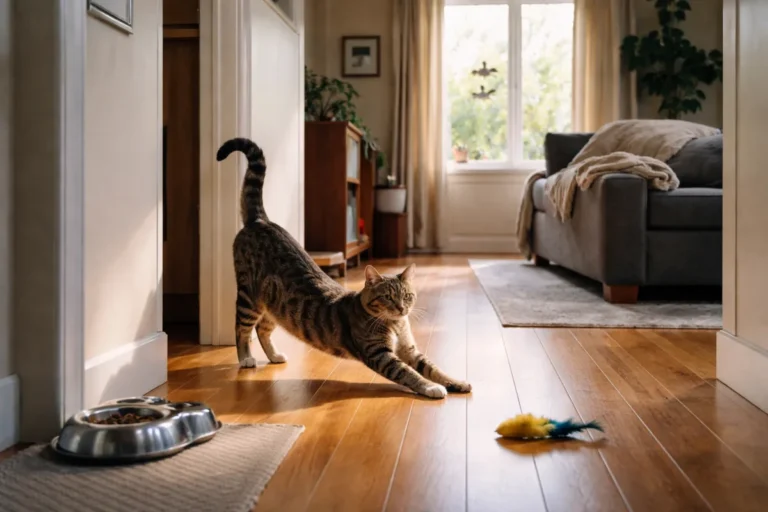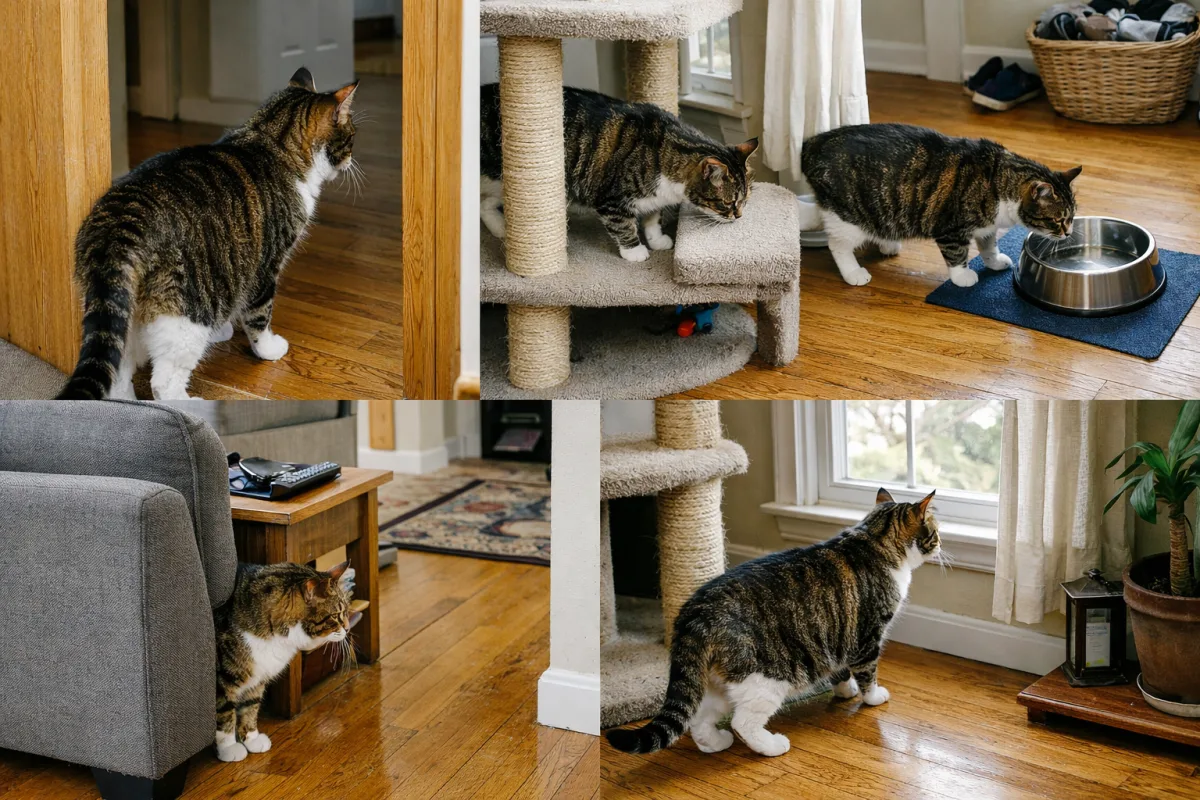
A cat that moves from room to room with steady purpose can look almost like a tiny security guard. It checks the hallway, circles the sofa, pauses at the window, and visits the kitchen again a few minutes later. This is not random wandering. In many homes, patrolling is one of the clearest ways cats keep track of their world.
The behavior can seem simple on the surface, but it usually reflects several things at once. A cat may be following scent, checking for changes, confirming safety, or marking a familiar route. Sometimes the reason is calm and routine. Sometimes it is more alert and tied to curiosity, tension, or a shift in the household.
When people ask why cats patrol their environment, they are often noticing a habit that shows up at the same doors, corners, windows, and furniture edges. The pattern matters. Cats are not just moving because they feel restless. They are gathering information, and they often do it in a very efficient way.
What Cat Patrolling Looks Like in Daily Life
Patrolling does not always look dramatic. A cat may simply walk the perimeter of a room, sniff along baseboards, jump to a windowsill, then continue to the next quiet spot. Some cats do it slowly and methodically. Others move with more speed, especially if something in the environment has changed.
In a normal home setting, this behavior often has a familiar route. Many cats check entry points first, such as doors or windows. They may revisit places where people come and go, where another pet sleeps, or where food is usually prepared. The path can repeat several times a day.
Some common examples include:
- walking the same hallway after a meal
- checking under furniture after a loud sound
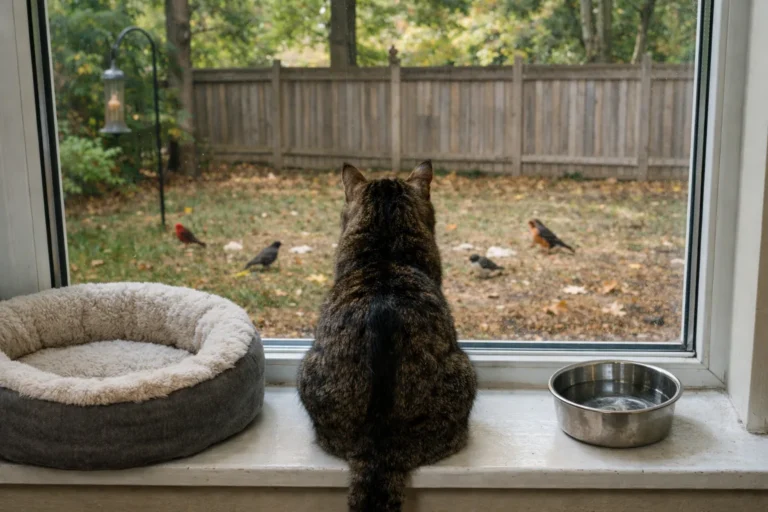
- sniffing around a window after seeing another cat outside
- circling a room when a visitor arrives
- returning to a favorite corner after naps or play
Patrolling is often quiet. A cat may keep its tail level, ears moving, and eyes scanning without appearing tense. In other cases, the pace is faster, the body is more upright, and the cat seems ready to react. Both versions can be normal, but they do not always mean the same thing.
Patrolling is often less about “looking for trouble” and more about confirming that the cat’s environment still feels familiar, safe, and unchanged.
Why Cats Feel the Need to Check Their Territory
Cats are naturally territorial animals, but territorial does not always mean aggressive. In everyday life, it often means the cat maintains a mental map of important places, scents, sounds, and routines. Patrol behavior helps update that map.
One major reason is scent awareness. Cats rely heavily on smell, and every room carries layered scent information. When they walk through the home, they are reading those cues. They notice when a smell has faded, when a new scent appeared, or when another animal has left a trace nearby.
Another reason is security. Cats feel most settled when they know what is where. A patrol helps them confirm that familiar objects are in familiar places. If a chair has been moved, a door has opened, or a new bag sits by the couch, the cat gets the chance to inspect and adjust.
Patrolling can also serve a social purpose. Cats live with people, other cats, and sometimes dogs. Walking around the environment helps them keep track of who is active, who is resting, and where each presence is located. That matters in a home where multiple beings share space and timing.
Internal Reasons Behind the Behavior
1. Information gathering
One of the simplest explanations is that cats patrol to collect information. They do not need a dramatic reason every time. A cat may just be checking whether the environment has changed since the last round. That is normal, practical behavior for an animal built around observation.
2. Self-soothing through routine
Many cats repeat the same patrol path because routine itself is calming. Predictable movement can help a cat settle after activity, noise, or social interaction. The route becomes part of how the cat organizes the day.
3. Scent maintenance
Cats also use movement to refresh scent boundaries. By walking around key spots, rubbing on furniture, or pausing to sniff, they reinforce what feels like “their” space. This is not always obvious to people, but it is a major part of feline communication.
4. Alertness and readiness
Sometimes patrolling reflects a higher level of alertness. The cat may be listening for sounds beyond the room, watching movement under doors, or responding to outdoor activity. In these moments, the behavior can look more focused and less relaxed.
That does not automatically mean something is wrong. Cats are built to notice small changes. Their environment is full of signals people tend to miss.
How Cats Use Patrolling to Track Their Territory
A cat’s environment is not just a collection of rooms. It is a network of important zones. A sleeping area, feeding area, litter area, lookout spot, and hiding spot all have different value. Patrolling links these zones together.
When a cat walks between them, it reinforces the layout of the territory. The cat knows where to retreat if startled, where to observe activity from a safe distance, and where comfort usually waits. In a familiar home, this process can look almost automatic.
Indoor cats often patrol in smaller loops than outdoor cats because their environment is more limited. Still, the instinct remains strong. A windowsill may function like a watchtower. A hallway may act like a border. A couch behind which the cat can disappear may become a checkpoint worth visiting several times a day.
A cat’s patrol route often reflects the spaces that matter most to that cat, not the places people think should matter.
How Context Changes the Meaning
The same behavior can mean different things depending on the setting. A slow patrol in the morning after breakfast may be part of a comfortable routine. A quick, repeated circuit at night after a noise outside may reflect heightened alertness. The action is the same. The meaning is not.
Household changes matter too. Moving furniture, adding a new pet, bringing in guests, or changing a work-from-home schedule can all influence how often a cat patrols. Cats often respond to these changes before people notice them. Their routes may become longer, more frequent, or more cautious.
Seasonal changes can have an effect as well. More outdoor movement near windows, open doors, or stronger scents carried in from outside can make patrolling more obvious. A cat that usually naps for much of the afternoon may suddenly begin making regular rounds if the outside world becomes more active.
Noise level matters. In a quiet home, the patrol may be relaxed and almost invisible. In a busy home, the same cat may move with more purpose, especially when several people are active at once. The cat is not simply “being nosy.” It is adjusting to the pace of the environment.
What Patrolling Can Reveal About a Cat’s State of Mind
Patrolling does not point to one emotional state. It can show confidence, curiosity, mild stress, or a desire for control over a changing environment. The challenge is reading the details instead of the label.
A confident cat often patrols with a loose body, normal tail position, and pauses for sniffing or resting. A curious cat may be more interested in exploring new objects and checking each area with focused but unhurried movement. A stressed cat may repeat the same route over and over, move too quickly, or seem unable to settle after checking the space.
Look for the surrounding signals:
- tail height and stiffness
- ear position and movement
- pupil size
- frequency of vocalizing
- whether the cat relaxes after the patrol
- whether the cat returns to normal activities afterward
If the patrol ends with calm grooming, eating, play, or sleep, it often suggests the cat simply completed a routine check. If it ends with repeated pacing, hiding, or agitation, the behavior may be tied to stress or a need for more environmental stability.
Differences Between Calm, Playful, and Defensive Patrolling
| Type | Common signs | Possible meaning |
|---|---|---|
| Calm patrol | Slow walking, sniffing, relaxed body, brief pauses | Routine checking and scent awareness |
| Playful patrol | Quick movement, sudden pounces, exploring corners, high engagement | Mixed patrol and play behavior |
| Defensive patrol | Stiff body, scanning, repeated checking, cautious approach | Alertness to a perceived change or threat |
These categories can overlap. A cat may start with a calm round and end in a playful chase around the house. Another cat may look relaxed until it hears a sound, then move into a more defensive mode. The shift itself often tells the real story.
How Indoor and Outdoor Life Shape Patrolling
Indoor cats often patrol because their world is contained and predictable, yet still full of variation. They know every sound in the refrigerator, every shift in foot traffic, and every window entrance for light, smells, and movement. Since their territory is enclosed, patrolling becomes an important way to keep track of change.
Outdoor cats tend to patrol larger and more fluid areas. Their routes may include fences, yard borders, porch edges, garden paths, or familiar neighboring spots. These cats need to keep checking for other animals, weather changes, and new scent markers more often because the environment changes more quickly.
Even among indoor cats, lifestyle differences matter. A quiet apartment with one person creates a different pattern from a busy household with children or several pets. Cats in active homes may patrol more often because there is simply more to monitor. Cats in calmer homes may patrol less visibly, but they still keep track of space in their own way.
Daily Routines and Patrol Habits
Many cats build patrols into the rhythm of the day. The behavior often shows up after waking, after eating, after a visitor leaves, or when the home changes from active to quiet. This is not accidental. Cats like transitions, and patrolling helps them move between states.
Morning patrols may involve checking feeding areas and windows. Evening patrols often overlap with increased household activity, especially if the cat is watching people settle in for the night. Some cats also patrol right before sleep, as if making sure all is in order before resting.
Interruptions to routine can increase the behavior. If a cat’s feeding time changes, litter box placement shifts, or a door stays closed longer than usual, the cat may inspect the area more often. The patrol is a way of reestablishing familiarity.
Consistency matters here. A cat that patrols in a steady, relaxed pattern is usually showing a stable habit. A cat that suddenly patrols far more than before may be reacting to something new, even if the change seems minor to people in the house.
When Patrolling Becomes More Noticeable
There are times when the behavior stands out more than usual. New furniture, construction noise, guests, another pet, or a recent move can all cause a cat to increase its rounds. The cat is trying to re-map the environment.
New smells also make patrolling more noticeable. A bag from another house, cleaning products, a new plant, or a delivery box can all trigger inspection. Cats often respond to the smallest changes because scent is such a large part of how they understand space.
Outdoor events can play a role too. Cats may patrol more when they hear neighborhood animals, birds near a window, or people moving around outside. The home still feels like territory, but the border seems active, so the cat checks it more closely.
When a cat suddenly patrols more, the first question is often not “What is wrong with the cat?” but “What changed in the cat’s world?”
Body Language That Often Accompanies Patrol Behavior
Patrolling is easier to understand when the body gives the full picture. A cat that is comfortable while patrolling may have loose shoulders, a gently moving tail, and a neutral face. It may stop to look, sniff, then continue at an even pace.
A more alert cat may lower its body slightly, keep its ears rotating, and scan corners before moving forward. This version is still ordinary in many cases, but it signals stronger attention. The cat is watching more closely and staying ready to react.
Stress-related patrolling can look more repetitive. The cat may pace the same area again and again without settling. It may ignore food, avoid touch, or seem unable to choose a resting place. If the patrol feels compulsive rather than purposeful, that is a different pattern than simple environmental checking.
Timing helps as well. A cat that patrols briefly after a noise and then resumes normal behavior is usually responding in a temporary way. A cat that patrols constantly, especially with other changes in appetite, litter habits, or social behavior, may need a closer look at the environment.
How People Often Misread the Behavior
Owners sometimes assume a patrolling cat is bored, anxious, or trying to control the house. Those ideas are not always wrong, but they are too narrow. The behavior can come from ordinary feline habits that have little to do with a problem.
Another common misunderstanding is that patrol behavior is the same as roaming without purpose. In reality, many cats have a very specific route in mind. They know where they want to go, what they want to check, and when they are done.
Some people also mistake alertness for fear. A cat that pauses at a doorway or watches a hallway with focused attention may simply be gathering information. The cat is not necessarily distressed. It may just be doing what cats naturally do: tracking movement, scent, and space.
That said, repeated pacing, inability to relax, and other behavior changes are worth noticing. The difference between routine patrolling and persistent restlessness often lies in how the cat behaves after the check is finished.
The Deeper Role of Cat–Human Interaction
Cats patrol not only because of the physical environment, but also because the social environment matters. People change the home all the time without realizing it. A chair gets moved. A bag sits by the entryway. Someone works longer hours. A door stays shut. Each shift can alter the cat’s sense of order.
Patrolling can therefore become part of how a cat reads human patterns. The cat may check the route where people usually pass, pause near a room where sounds often come from, or inspect spaces after family activity increases. It is not always asking for attention. Sometimes it is updating its understanding of the household.
This is also why some cats patrol more when their people are home. The cat has more activity to monitor. A busy kitchen, moving feet, opening cabinets, and shifting furniture all create a changing scene. The cat stays involved in that scene by checking it repeatedly.
In a calm home, the behavior may be softer and less frequent. In a lively home, it may become a central part of the cat’s daily rhythm. Neither setting is automatically better or worse. The cat simply adapts to the world it lives in.
What Long-Term Patrol Patterns Can Suggest
Over time, patrol habits often become part of the cat’s identity. Some cats are naturally more watchful. Others are more laid-back and only patrol when something changes. These patterns can stay fairly stable, but they can also shift with age, health, or home routine.
A young cat may patrol with more playfulness and curiosity. An adult cat may settle into a tighter, more predictable route. An older cat may simplify its patrols, choosing a few important spots rather than checking every corner. Those changes are not necessarily signs of trouble. They often reflect energy level and comfort.
If the behavior remains stable and the cat otherwise eats, rests, plays, and interacts normally, the patrol is usually just part of everyday life. If the pattern changes sharply, especially with tension or withdrawal, the environment deserves attention. Cats often show their unease through movement long before they show it through anything more obvious.
Natural Instincts, Modern Homes
Patrolling makes sense because it connects deeply with how cats are built. They are observant, cautious, and sensitive to change. They prefer to know where they stand in a space, and they use movement to maintain that knowledge.
Modern homes do not erase those instincts. They simply give them a new setting. Instead of fence lines and outdoor borders, the cat may care about the kitchen threshold, the top of the stairs, the back of the sofa, or the window facing the street. The instinct stays the same, even if the landscape changes.
That is why the behavior can feel so familiar from one cat to another. One cat patrols with quiet precision. Another patrols in quick bursts between naps. Another checks the same door twelve times a day. The details differ, but the purpose is often the same: keeping the environment known, readable, and manageable.
When a cat walks its usual route with steady focus, it is not wasting energy. It is doing a kind of ongoing maintenance work that helps the home feel organized from the cat’s perspective. That daily checking is part of how cats live in close contact with a space and make it feel like theirs.