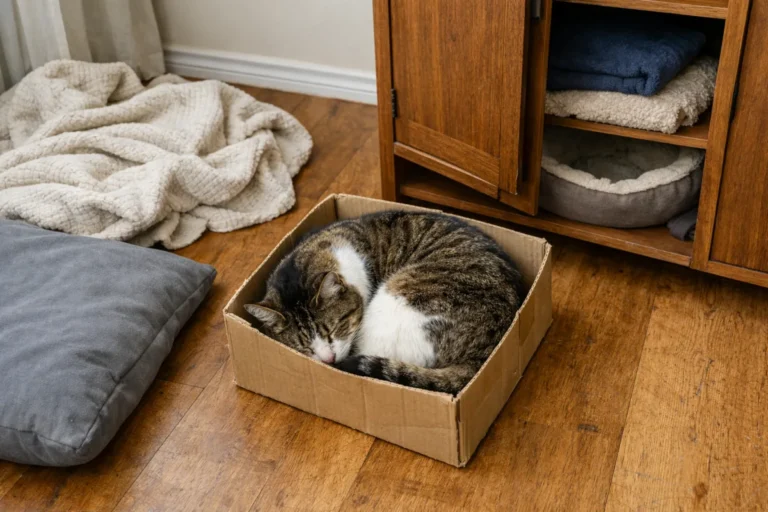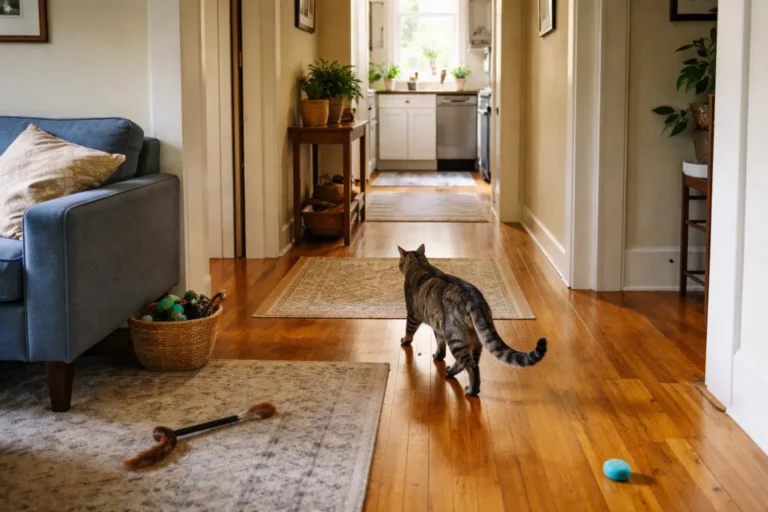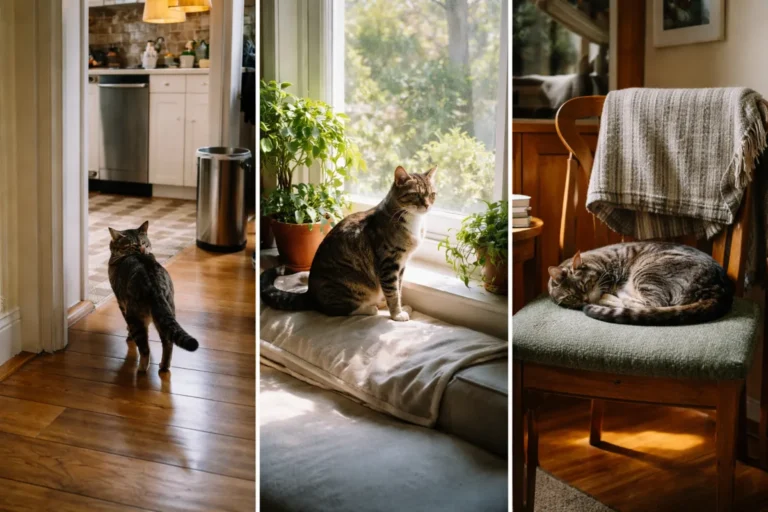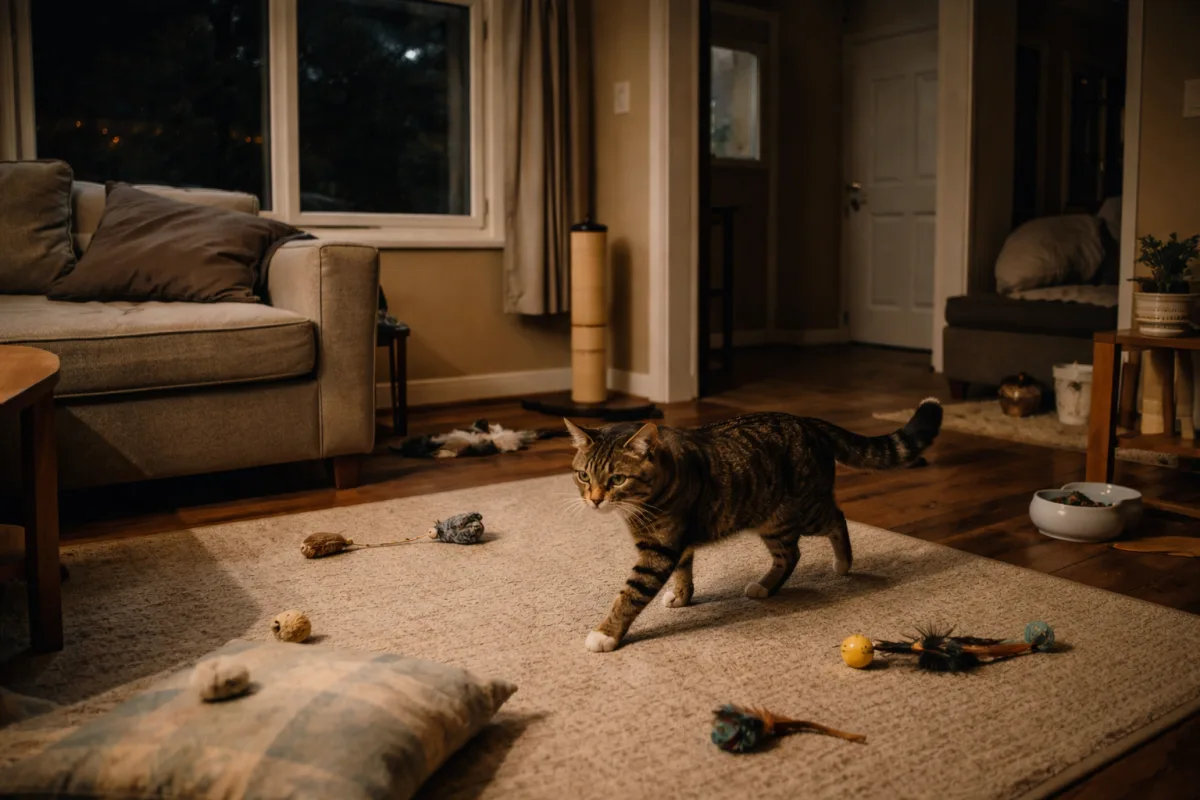
Many cat owners notice the same pattern: the house is quiet, the lights are low, and suddenly the cat seems ready to sprint, jump, chase, or demand attention. This nighttime energy can feel confusing, especially when the same cat spent much of the day sleeping in the sun or curled up on the couch.
The behavior is usually not random. Cats have a natural rhythm that often makes them more alert during dawn and dusk, but that is only part of the story. Daily routine, hunger, boredom, age, and the amount of stimulation a cat gets during the day can all shape how active they become after dark.
For some cats, nighttime activity looks playful and harmless. For others, it can include loud meowing, knocking items off shelves, pawing at doors, or pacing through the hallway. The same behavior may mean different things depending on the cat’s habits, health, and home environment.
Why Nighttime Energy Is So Common in Cats
Cats are crepuscular, which means they are naturally most active around dawn and dusk. That pattern comes from their wild ancestors, who hunted when small prey was easiest to catch. In a modern home, that instinct does not disappear just because dinner has already been served and the family is trying to sleep.
Even well-fed indoor cats may still feel a strong urge to move, explore, and react to little sounds after dark. A rustling bag, a shadow in the hallway, or the movement of a toy can trigger a burst of energy that seems to come from nowhere. In reality, the cat’s body is simply responding to familiar biological timing.
Night activity does not always mean a cat is “misbehaving.” In many cases, it reflects a normal rhythm that becomes more obvious in a quiet home at bedtime.
What It Looks Like in Everyday Life
Nighttime activity can show up in many small ways. Some cats start with a slow walk across the room and then suddenly race from one end of the house to the other. Others begin by sitting near the bed, tapping a paw on the blanket, or staring at their owner until attention is given.
It can also look like repeat behavior that is easy to miss at first. A cat may jump onto windowsills, watch moving lights outside, or paw at doors and drawers. If a cat hears a family member moving around in another room, they may decide that is the perfect time to join in.
When the behavior becomes more intense, owners often notice it most during bedtime routines. A cat may become active just as the house settles down, which creates the impression that they are being deliberately disruptive. Often, though, the cat is simply becoming awake at a time when the environment is finally calm enough for them to notice every small change.
Natural Instincts Behind the Behavior
A cat’s nighttime energy is closely tied to hunting instincts. Even domesticated cats keep the alertness, quick reflexes, and burst-like movement patterns that helped their ancestors survive. These instincts are strongest in activities like chasing, stalking, pouncing, and climbing.
That is why a cat may seem sleepy for hours and then suddenly show focused interest in a toy, dust particle, or moving hand. Their energy is not always constant. It often appears in short, sharp bursts, followed by resting again.
Some cats seem especially active at night because their instincts have no clear outlet during the day. A cat that spends many hours alone, with little climbing space or interactive play, may save up energy until evening. Once the home becomes still, that stored energy can finally surface.
Common instinct-driven behaviors include:
- Chasing invisible targets across the floor
- Watching insects, shadows, or outside movement
- Leaping onto furniture or counters without warning
- Patrolling rooms and doorways
- Meowing or pawing when they want engagement
How Daily Routine Shapes Night Activity
Routine has a major effect on a cat’s energy pattern. Cats quickly learn when meals happen, when people leave for work, and when the household becomes quiet. If a cat eats most of its food late in the evening, that may encourage more movement around the same time.
Play and attention matter too. A cat that spends the day sleeping with few interruptions may wake up with a burst of energy at night. On the other hand, cats that get regular play sessions, climbing opportunities, and attention throughout the day often settle more easily when the house gets quiet.
Indoor cats usually show nighttime activity more clearly than outdoor cats because their schedule is shaped by the home. They do not follow the natural outdoor light and weather in the same way. Instead, they respond to the rhythms of the household, which can create a mismatch between the owner’s sleep schedule and the cat’s natural awake times.
| Factor | How It Can Affect Night Activity |
|---|---|
| Late meal | May increase movement after dinner or before bed |
| Long daytime naps | Can leave more energy for nighttime bursts |
| Limited play | May lead to pent-up energy at night |
| Quiet home at night | Makes normal cat activity more noticeable |
Play, Hunger, and Attention Seeking
Not every nighttime cat is driven by instinct alone. Some are simply looking for a response. A cat that feels hungry, bored, or under-stimulated may learn that nighttime is the best time to get attention. If meowing near the bed leads to food, petting, or conversation, the behavior can become more frequent.
Food-related waking is especially common when feeding times are inconsistent. Cats often notice patterns very quickly. If breakfast arrives late, or if the evening meal is much smaller than usual, the cat may begin acting restless before dawn or shortly after the household goes to sleep.
Playfulness can also be part of the picture. A cat may not be upset at all; they may simply be ready to chase, leap, or wrestle with a toy. This is why nighttime activity sometimes looks exciting rather than stressful. The challenge is that a cat’s idea of “play time” may arrive exactly when a person is trying to rest.
A cat that becomes active at night is often asking for something: movement, food, attention, or mental stimulation. The exact reason depends on the pattern that comes with it.
What the Cat’s Body Language Can Reveal
Body language helps show whether nighttime activity is playful, neutral, or stress-related. A cat with relaxed ears, loose movements, and a soft tail often looks curious and engaged. Their behavior may be energetic, but it is usually not tense.
When a cat is overstimulated or uncomfortable, the signs can look different. Wide eyes, a low crouch, quick tail flicks, or repeated pacing may suggest agitation rather than simple play. In those cases, the cat may seem unable to settle because something in the environment is bothering them.
Subtle changes matter. A cat that quietly sits by the bedroom door every night may be asking to be included. A cat that suddenly starts acting restless after a change in the home may be reacting to stress, noise, or an altered routine. The timing of the behavior often tells as much as the behavior itself.
Useful body language clues:
- Loose body and steady tail: likely playful or curious
- Forward ears and focused gaze: alert and interested
- Rapid tail flicking: possible irritation or overstimulation
- Pacing and repeated vocalizing: possible frustration or need for attention
- Hiding after activity: may indicate stress or sensitivity
Age Can Change the Pattern
Kittens often seem especially active at night because they have short bursts of energy and little self-regulation. Their sleep cycles are still developing, and they may wake suddenly, race around, then crash again. This can make evenings feel chaotic, even when nothing is wrong.
Adult cats may settle into a more predictable rhythm, but many still show clear nighttime energy if their daytime needs are not fully met. A healthy adult cat can appear calm for most of the day and then become lively after sunset, especially if the home is quiet and interesting things begin to happen.
Senior cats are different again. Some older cats become quieter overall, while others seem more active at night due to changes in hearing, vision, or comfort. A cat that wakes often, wanders at odd hours, or vocalizes more than usual may need a closer look at what is happening physically or emotionally.
When the Behavior Is Stronger in Certain Homes
The same cat may act very differently in two environments. In a busy home with children, other pets, and daytime movement, a cat may spend more energy during the day and sleep more at night. In a very calm home, there may be fewer chances to burn off energy before bedtime.
Indoor-only cats often show the strongest nighttime patterns because they live by human schedules. If their world is mostly the same every day, they may become highly tuned in to small changes. A late-night sound or a shift in household routine can trigger activity quickly.
Multi-cat homes can create another layer. One cat may wake another, then both begin moving. A race through the hallway can spread fast, especially if the cats have learned that nighttime brings extra space and less interruption.
How Owners Often Misread the Behavior
It is easy to assume that nighttime activity means a cat is being stubborn or trying to annoy someone. More often, the cat is following a pattern that feels completely natural to them. They are awake, alert, and responsive to things people may barely notice.
Some owners also mistake normal bursts of energy for a problem that needs heavy correction. In many cases, the cat is not acting out. They are simply sleeping when the household is busy and becoming active when the environment finally quiets down. That timing alone can make the behavior seem more extreme than it really is.
Still, not every case is harmless. A sudden increase in nighttime activity, especially when paired with loud vocalizing, restlessness, or unusual bathroom behavior, may point to discomfort or a health change. Patterns that develop quickly deserve attention, especially if they are very different from the cat’s usual habits.
When a cat’s nighttime behavior changes suddenly, the first question should be not “How do I stop this?” but “What changed for my cat?”
Environmental Triggers That Make It Worse
Small things in the home can make nighttime activity more noticeable. Bright movement outside a window, a dripping faucet, new furniture, or even a shift in sleeping arrangements can change how a cat behaves after dark. Cats are sensitive to detail, and they notice patterns that humans often overlook.
Boredom is another common trigger. A cat that has very little to do during the day may look for stimulation at night. If the home is quiet and predictable, the cat may invent activity on their own by running, climbing, or turning furniture into a playground.
Changes in the family schedule can also matter. A vacation, late work hours, or fewer play sessions can create inconsistency. Cats tend to notice routine changes fast, and their nighttime behavior may become louder or more persistent when the day feels less structured.
What Helps Without Forcing the Cat to Change Too Much
The goal is not to erase a cat’s natural rhythm. That usually does not work, and it ignores what is normal for the species. A better approach is to make the cat’s awake time fit the household a little more smoothly.
Interactive play earlier in the evening often helps. A short but focused session with a wand toy or chase game can give the cat an outlet before bedtime. Feeding after play may also encourage a more settled mood, since many cats naturally relax after activity and eating.
Enrichment matters during the day too. Cat trees, window access, puzzle feeders, and short play breaks can reduce pent-up energy. When a cat has enough to observe and enough to do, the nighttime burst may become shorter or less disruptive.
Practical changes that can help:
- Keep feeding times as consistent as possible
- Schedule active play before the house settles down
- Offer climbing, scratching, and window-view spaces
- Avoid rewarding loud overnight demands immediately
- Notice whether the behavior changed after a routine shift
When Night Activity Suggests Something More
Most nighttime activity in cats is normal, but there are times when it points to a deeper issue. A cat that suddenly becomes restless, vocal, or unable to settle may be dealing with pain, anxiety, or a medical condition. This is especially important if the change is new and does not match the cat’s usual pattern.
Watch for extra signs like poor appetite, hiding, litter box changes, weight loss, or repeated wakefulness without an obvious reason. A cat that seems active because they are uncomfortable is often not playful in the usual sense. Their energy may look sharp, scattered, or hard to interrupt.
Long-term patterns matter more than one unusual night. A cat that has always been lively after dark is very different from a cat that suddenly starts pacing and crying at 2 a.m. Consistency, timing, and the cat’s overall condition help show whether the behavior is simply part of their rhythm or a sign that something needs attention.
Living With a Cat’s Night Rhythm
Nighttime activity is one of the clearest reminders that cats do not live on the same clock people do. Their instincts, habits, and sensitivity to the home environment all shape when they feel awake and engaged. Some cats are light, brief, and easy to redirect. Others are determined and highly energetic, especially when the house is quiet.
Understanding the pattern helps make the behavior less mysterious. A cat that moves around at night may be following instinct, looking for stimulation, reacting to routine, or asking for something simple like food or play. Once the reason becomes clearer, the behavior often feels less like a puzzle and more like a familiar part of living with a cat.
The rhythm may never disappear entirely, and in many homes it does not need to. What matters is noticing how the activity appears, when it happens, and whether it fits the cat’s usual pattern. Those details tell the real story.