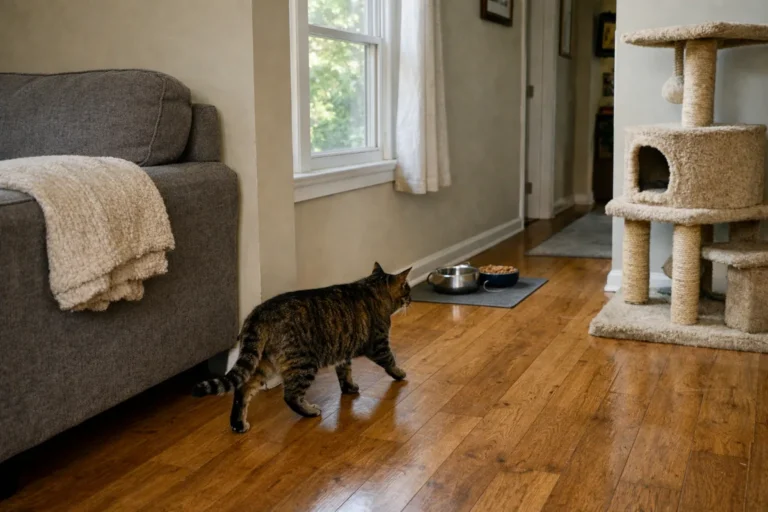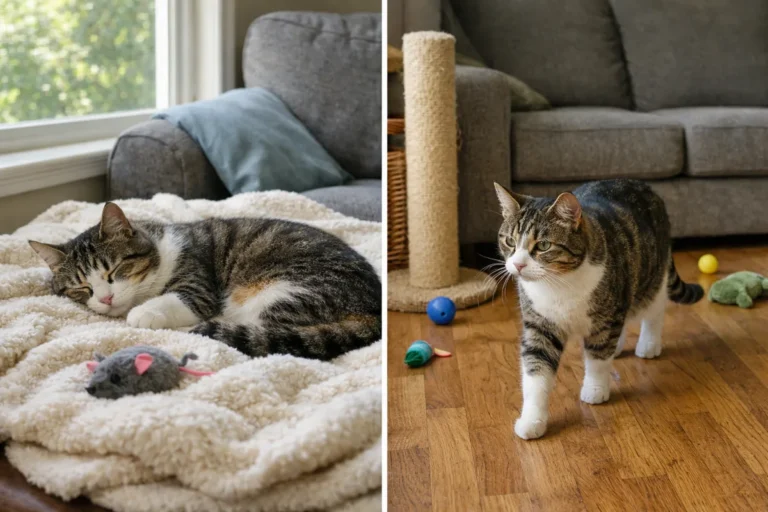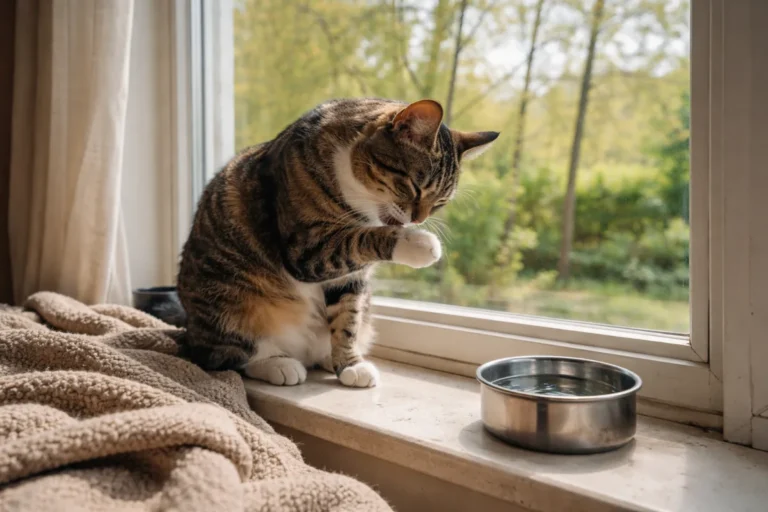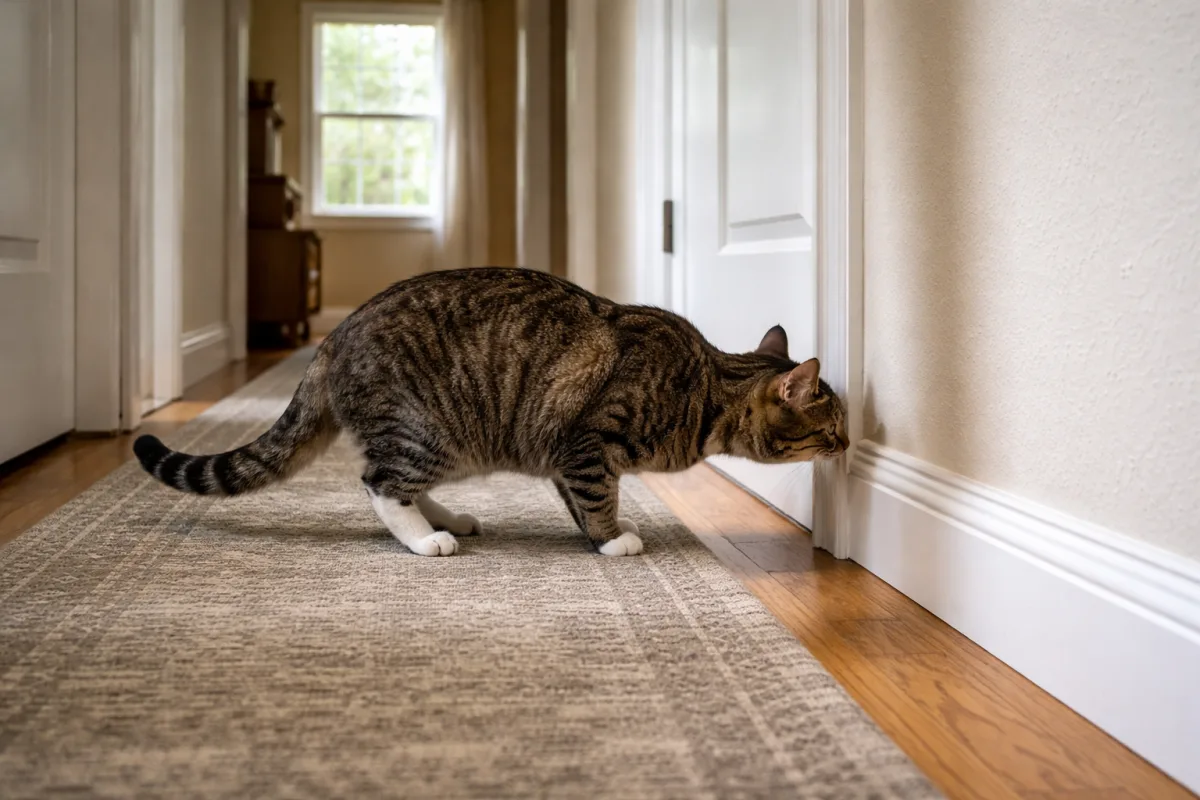
A cat that keeps checking the same areas is not always being strange or difficult. In many homes, this behavior looks ordinary at first: the cat walks past the hallway corner again, returns to the food area, pauses by the bedroom door, or circles the sofa and window several times in a row. The pattern can be quiet and subtle, but it often stands out because it happens with purpose.
Some cats revisit the same spots because those areas matter to them. A doorway can feel important. A warm patch of floor can feel worth guarding. A place with a familiar smell can feel safer than the rest of the room. Repetition often says more about the cat’s routine and state of mind than about the room itself.
In daily life, this behavior can look playful, cautious, alert, or simply habitual. The same movement may mean something different depending on the time of day, the cat’s age, the household activity, and the cat’s body language. A relaxed cat that checks the same windowsill every afternoon is not sending the same message as a cat that repeatedly patrols the litter box area with tense posture and a fixed stare.
Why Cats Keep Returning to the Same Spots
Cats rely heavily on memory, scent, and spatial familiarity. A place that has once held food, a favorite nap, or a glimpse of outdoor movement often stays important in the cat’s mind. Revisiting that area can be a way of confirming that nothing has changed.
There is also an instinctive side to this. Cats are natural observers. They like to monitor locations that matter for safety, comfort, and access. A hallway, a chair near a window, a feeding station, or the base of a staircase may all become regular checkpoints in the cat’s internal map.
Repeated checking is often a sign of attention, not confusion. The cat may be confirming a safe route, a scent trail, or a routine event that happens in that exact place.
Sometimes the pattern is tied to expectation. If a cat has learned that a person arrives through one door, or that mealtime begins near one corner of the kitchen, the cat may keep returning there because the area predicts something useful. The spot becomes more than a location. It becomes a cue.
What This Looks Like in Everyday Situations
Not every cat checks the same areas in the same way. The behavior can be calm and almost invisible, or it can become intense and repetitive. The differences matter because they often point to different needs.
Common everyday patterns
- Walking back and forth between the kitchen and feeding area
- Returning to the same window to look outside several times
- Checking the hallway near a bedroom or bathroom door
- Inspecting a litter box area more than once without using it
- Circling the bed, sofa, or favorite sleeping spot before settling down
- Revisiting a toy, blanket, or rug that carries a strong scent
In many homes, these habits appear around routine events. A cat may check the kitchen before dinner time, inspect the entryway when the household gets louder, or keep revisiting a window after hearing birds or cars outside. The same place can become important for sound, scent, sight, or memory.
The behavior can also appear during transitions. When someone changes work schedules, moves furniture, brings home a new pet, or rearranges the house, the cat may return to familiar spots more often. Rechecking helps the cat understand what has stayed the same.
Possible Internal Reasons Behind the Behavior
There are several reasons a cat may keep checking the same area, and they do not all mean the same thing. A cat can be curious without being anxious. A cat can be cautious without being stressed. A cat can also be repeating a routine simply because it works.
1. Curiosity and information gathering
Cats learn by comparing what they remember with what is in front of them now. If a spot seems slightly different, they may go back to it again. A new smell, a sound from inside the wall, or a change in light can make a familiar place feel worth checking twice.
2. Scent monitoring
Scent matters a great deal to cats. They may revisit areas where their own scent is strongest, or where another animal has passed through. This can happen near doors, windows, pet beds, litter boxes, and furniture corners. The cat is often reading the room through smell more than through sight.
3. Comfort-seeking
Some spots simply feel good. A warm mat, a sunny floor patch, a perch with a stable view, or a couch arm that carries family scent may become a regular destination. The cat returns because the area offers calm and predictability.
4. Territory checking
Many cats like to verify that their known spaces still belong to their routine. This does not mean they are being aggressive or possessive in a dramatic way. It usually means the cat is keeping track of a meaningful zone.
5. Mild uncertainty
If a cat checks the same area repeatedly but stays loose in the body, the behavior may reflect uncertainty rather than fear. The cat may want more information before moving on. A brief pause, a sniff, a glance, and then a return later can be part of that process.
A repeating pattern becomes more meaningful when it is paired with body tension, hiding, vocalizing, or changes in eating and litter habits.
How Context and Environment Shape the Pattern
The same behavior can look very different in a busy apartment, a quiet house, or a home with multiple pets. Context changes the meaning. A cat that repeatedly checks the front door in a busy household may simply be tracking arrivals and departures. A cat that checks the same corner after a loud noise may be confirming that the environment is safe again.
Indoor cats often develop stronger checking routines because their world is smaller and more structured. They may revisit windows, litter box areas, favorite sleeping spots, and feeding stations more often than outdoor cats do. These areas become central points in the cat’s daily map.
In multi-cat homes, the behavior may be shaped by social pressure. One cat may keep checking the same path because another cat has claimed a nearby resting place. The repeated visits can reflect timing, caution, or the need to avoid conflict.
Changes in furniture or household routine can also make the pattern more noticeable. Moving a couch can alter a cat’s path through a room. Closing a door that was once open can change how often the cat checks that area. Even small shifts can matter when a cat is strongly attached to routine.
What the Behavior May Signal About the Cat’s State
Rechecking an area is not automatically a problem. The signal depends on the rest of the picture. The cat’s posture, facial expression, timing, and willingness to disengage all help explain what is happening.
Calm checking
A calm cat usually moves with softness. The body is loose, the tail is neutral, and the cat can walk away without resistance. The repeated visits often look like simple monitoring. The cat may sniff, look, and continue on with the day.
Playful checking
Some cats revisit areas because they expect movement, sound, or a game. A toy under the couch, a shadow by the door, or a family member moving around the kitchen can keep the cat engaged. The checking is part of active exploration.
Alert or defensive checking
When the cat is tense, the pattern can mean something different. The body may crouch, the ears may rotate frequently, and the cat may stare at one area for a long time. The cat may return again and again without fully relaxing. That pattern deserves closer attention.
Stress-related checking
Repeated checking can also show up when a cat feels unsettled. The cat may revisit the same spots while pacing, vocalizing, avoiding contact, or acting less interested in food. Stress can make a cat’s world feel less predictable, so familiar places get checked more often.
The key question is not only where the cat goes, but how the cat behaves while doing it. A relaxed return and a tense patrol do not mean the same thing.
Body Language That Helps Explain the Repetition
Watching the body often tells you more than watching the path. The same trip back to a room can mean different things depending on how the cat carries itself.
Signs of relaxed repetition
- Tail carried naturally, not stiff
- Slow, unhurried steps
- Ears in a neutral position
- Sniffing followed by moving on
- Ability to rest shortly after checking the spot
Signs of heightened concern
- Stopping abruptly and staring
- Low body posture or crouching
- Repeated sniffing in the same place without settling
- Startle response to small sounds
- Frequent back-and-forth movement without rest
Timing also matters. A cat that checks the litter box area right before or after using it is acting within a normal routine. A cat that keeps returning to the litter box area for no clear reason, especially if the box is clean, may be signaling discomfort, scent sensitivity, or a need to reassess that space.
How Owners Often Read It, and What It May Actually Mean
People often assume repetitive checking means the cat is being anxious, obsessed, or stubborn. Sometimes that is partly true, but often the behavior is more practical than that. Cats repeat actions because repetition helps them gather information and feel in control of their environment.
For example, a cat that keeps checking the same window may not be worried at all. The cat may be tracking birds, watching neighbors, or waiting for the afternoon sun to move into place. The routine can be pleasant and stable.
On the other hand, a cat that keeps checking the front door after a family member leaves may be struggling to settle. The same behavior can come from attachment, habit, or uncertainty. The surrounding details matter.
Owners sometimes miss the importance of small changes. If a cat suddenly starts checking one area much more than usual, the trigger may be minor: a new smell, a different cleaning product, a draft, a new sound, or another animal outside the house. Cats notice things people overlook.
When the Repetition Becomes More Noticeable
The behavior often becomes easier to spot during predictable moments. Feeding time is a common one. So is the hour before household activity begins. Cats like to know what is coming, and checking the same area can be part of that anticipation.
It may also become more obvious after a disruption. Visitors, moving boxes, medical visits, storms, and home repairs can all make a cat return to familiar places again and again. The cat is not being difficult. It is adjusting.
Older cats may also show more consistent checking because routine matters more as they age. Familiar paths, resting spots, and daily locations can offer a sense of control when energy is lower and the world feels less flexible.
Examples of noticeable shifts
- Checking the same area more often after a move
- Revisiting the kitchen when meal times change
- Spending extra time near doors during storms or fireworks
- Repeating routes in a home with a new pet
- Returning to one room after a favorite object is moved
When It Is Just a Habit
Not every repeated check has a deeper problem behind it. Cats are creatures of routine, and habits can form quickly when a place reliably offers a reward. If a cat always finds a warm floor, a good lookout, or a quiet rest there, the cat will return with little ceremony.
Habitual checking often appears smooth and predictable. The cat may visit the same place at the same time each day, then move on. There is no obvious tension. The behavior fits neatly into the cat’s normal rhythm.
That kind of repetition can be completely healthy. It shows the cat has mapped the home, identified useful spots, and built a dependable routine. Some cats are simply very consistent. They like familiar locations and revisit them because those places have earned their trust.
How to Think About Long-Term Patterns
Looking at one day rarely tells the full story. Cats change their checking behavior over time, especially as their environment, age, and social world change. A pattern that feels new may actually have been present all along, just less visible.
Long-term observation is useful because it reveals what is stable and what is temporary. If the cat has always checked the same windowsill before napping, that is probably part of the cat’s personality and routine. If the cat starts patrolling the litter box area repeatedly after a household change, that deserves a closer look.
Consistency matters. A familiar pattern that stays calm over weeks or months is often just part of the cat’s normal life. A pattern that intensifies, spreads to more areas, or appears with other changes may be a sign that the cat is responding to a new pressure.
Repetition is easiest to interpret when you know what is normal for that specific cat. A stable habit looks very different from a new, escalating pattern.
Practical Ways to Read the Situation
When a cat keeps checking the same areas, the most useful response is careful observation. Watch where the cat goes, how often it returns, and what happens just before and after. Patterns usually become clearer when you look at the whole sequence.
- Notice whether the cat is relaxed or tense
- Track the time of day the behavior appears
- Look for nearby changes in scent, noise, or routine
- Check whether the cat settles after visiting the spot
- Pay attention to eating, litter habits, and social behavior
If the checking seems calm and predictable, there may be nothing to change. If it comes with stress signs, it helps to look at the environment first. Cats often react to things in the home before people realize something has shifted.
A repeated patrol, a favorite corner, or a window that gets checked over and over can be part of a cat’s normal way of organizing life. The behavior is often less about mystery and more about memory, comfort, and control. Once the pattern is seen in context, it usually makes more sense than it first appeared.