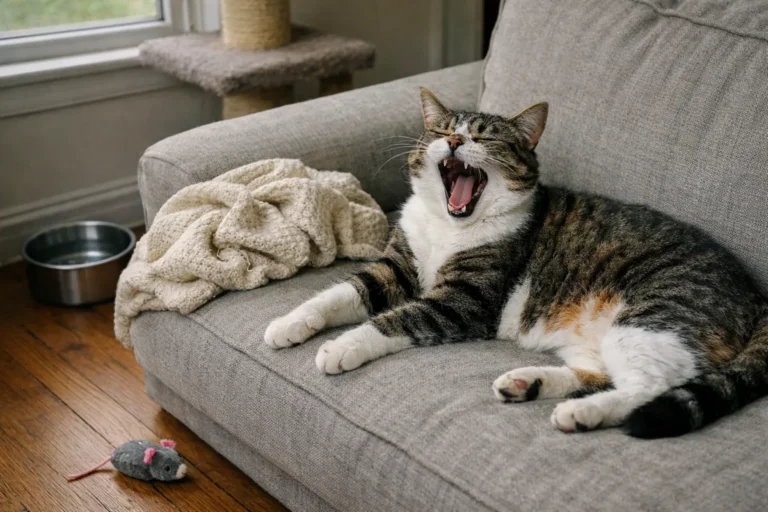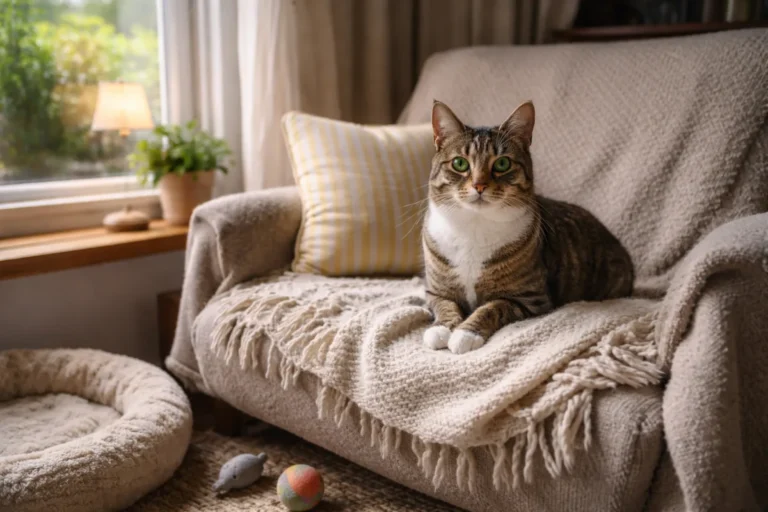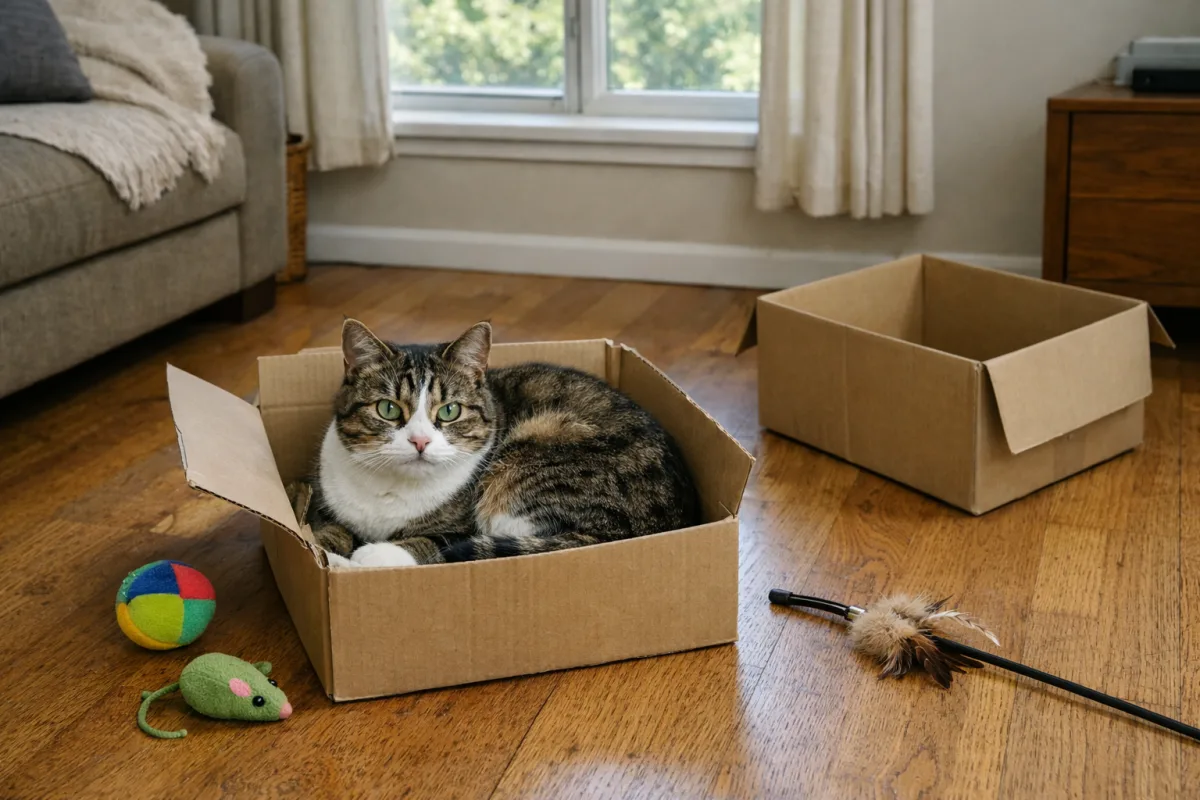
A cat that disappears into a cardboard box can seem like a small mystery, but the behavior is far from random. Boxes give cats something they value deeply: a space that feels enclosed, predictable, and easy to control. In a house full of movement, noise, and open sightlines, a box can feel like the one place where a cat decides the rules.
Sometimes the reason is simple comfort. Sometimes it is curiosity, play, or the need to cool down after too much activity. A box can also be a hiding place, a lookout, a bed, and a toy all at once. That is part of why cats return to boxes again and again, even when there are softer, fancier spots nearby.
What looks like a quirky habit is usually a mix of instincts and daily comfort. Cats do not sit in boxes for one single reason. They use them for protection, rest, observation, and emotional balance, often all in the same day.
What Box-Seeking Looks Like in Everyday Life
Box behavior shows up in small, familiar ways around the home. A cat may step into a delivery box and sit there for hours, or only stay long enough to test it with a paw before settling in. Some cats curl tightly inside, while others stretch out with half their body hanging over the edge. Each version says something slightly different about how the cat feels in that moment.
Many owners notice that boxes become more attractive when a cat is tired, overstimulated, or simply looking for a change in routine. A cat may ignore an expensive bed but choose a narrow shipping box left on the floor. The appeal is rarely about the box itself as a material object. It is about the shape, the boundaries, and the feeling of being enclosed on purpose.
Box use also changes with the cat’s mood. A playful cat may leap into a box and spring out again. A relaxed cat may sink down quietly and stay there for a long nap. A cautious cat may sit in the box with its head up, watching the room rather than sleeping.
Why Boxes Feel Good to Cats
Cats are both hunters and prey animals in instinctive terms. Even in a safe home, they carry the need to feel protected while staying alert. A box creates a covered space with walls close enough to reduce exposure, but open enough for the cat to observe what is happening outside. That balance is hard to recreate with ordinary open bedding.
The sides of a box create a simple kind of shelter. They block movement from several directions and make the environment feel more manageable. For a cat, that can lower tension in a very practical way. When the world feels too open, a box makes it smaller.
A box gives a cat three things at once: concealment, control, and a clear boundary between inside and outside.
There is also the matter of warmth. Cardboard holds heat better than many smooth surfaces, so a box can become a cozy pocket of retained body warmth. Cats naturally seek out places that feel snug and temperate, especially if the room is cool or if the cat has just been active.
The texture matters too. Cardboard is easy to scratch, bite, and knead. It offers a satisfying surface for a cat that wants to explore with its paws and mouth. Even when a box is being used as a bed, it still feels like something the cat can interact with rather than simply lie on.
Common Reasons Cats Sit in Boxes
1. Security
Many cats choose boxes because enclosed spaces reduce stress. A cat inside a box can see out while feeling less visible itself. That small shift in perspective often makes the cat more relaxed.
2. Warmth
Cardboard traps warmth better than tile, hardwood, or metal. A box placed in a quiet room often becomes a preferred resting spot, especially in cooler months or near air conditioning.
3. Rest and sleep
Some cats use boxes as a sleeping den. The edges help them curl into a compact shape, and the limited space can make napping feel more secure. A box with a soft towel inside may become a favorite sleep zone for weeks.
4. Observation
Not every cat in a box is trying to hide. Some are watching. A cat may use the box as a lookout point, especially in a busy household where people, children, or other pets move around constantly.
5. Play
A box can become a game before it becomes a bed. Cats may dart in and out, ambush toys from the opening, or swipe at moving feet from inside. The box turns ordinary space into a hunting setup.
6. Stress relief
During changes in the home, such as guests, loud cleaning, or a new pet, a box can help a cat self-soothe. It gives the cat a controllable retreat. Many cats choose enclosed spaces when they need a break from stimulation.
How a Cat’s Body Language Changes Inside a Box
Body language can make the difference between a cat that is comfortable and one that is on alert. A loose, tucked posture usually points to rest. Ears in a neutral position, slow blinking, and a relaxed tail often suggest the cat feels settled.
A more rigid posture tells a different story. If the cat is crouched low, with eyes wide and ears angled forward or sideways, it may be using the box as a safe lookout rather than resting. That does not automatically mean distress. It may simply mean the cat is cautious and prefers to stay ready.
If a cat is repeatedly darting into and out of a box, that often indicates play or nervous energy. The box becomes part shelter, part toy. On the other hand, if a cat is spending unusual amounts of time hidden in a box and seems reluctant to leave, the context matters more. A recent change in routine, illness, or a new stressor may be contributing.
The same box can mean very different things depending on posture, timing, and how quickly the cat chooses to leave it.
Why Cats Often Prefer Boxes Over Beds
Many cat beds are open, soft, and visually obvious. That is not always what a cat wants. A bed may be comfortable for a human idea of comfort, but a box offers more structure. Cats often prefer a sleeping place that also works as a safe hideout.
Open beds leave a cat exposed from all sides. A box reduces that exposure and can feel more private. For cats that startle easily, this matters. For cats that like to monitor the household without being disturbed, it matters even more.
There is also novelty. A fresh box often feels more interesting than a permanent bed because it carries new smells, new edges, and new possibilities. Even a plain shipping box can feel richer to a cat than a bed that has been in the same corner for months.
How the Home Environment Shapes the Behavior
A quiet home often produces calmer box use. In a low-traffic space, a cat may settle into a box for long naps and treat it as a personal den. The behavior can become more subtle because there is less need to hide from activity.
In a busier home, boxes may become more important. Cats living with children, multiple adults, or other pets often use enclosed spaces to manage the flow of the day. A box near a wall or under a table can give the cat a sense of distance without total isolation.
The placement of the box matters as much as the box itself. A box in the middle of a noisy hallway may be used briefly. The same box in a corner of a quiet room might become a permanent favorite. Cats tend to choose locations where they can see enough but are not forced to watch everything.
Temperature, floor type, and nearby smells also influence the choice. A box on a cool floor may be more appealing during warm weather. A box near laundry or familiar household scents may feel especially safe. Cats are sensitive to small environmental details that people often overlook.
What Different Types of Box Behavior May Mean
| Behavior | Possible meaning |
|---|---|
| Settling in and sleeping | Comfort, warmth, and security |
| Sitting alert with ears forward | Observation and curiosity |
| Darting in and out | Play or nervous energy |
| Hiding for long periods | Need for rest, quiet, or a response to stress |
| Scratching or biting the box | Exploration, play, or excitement |
The meaning is rarely fixed. A cat may sleep in a box one day and ambush a toy from the same box the next. That flexibility is normal. Cats tend to assign multiple uses to the same object, especially when it helps them manage the environment on their own terms.
When Box Sitting Becomes More Noticeable
Box use often becomes more obvious during transitions. Moving to a new home, introducing a new animal, rearranging furniture, or changing the daily routine can all make boxes more appealing. A cat may seek the enclosed shape as soon as something in the home feels less predictable.
It can also increase after active periods. A cat that has chased a toy, watched a bird from the window, or explored several rooms may retreat to a box afterward. The box acts as a reset space. It gives the cat a place to pause before deciding what to do next.
Some cats show box preference at certain times of day. Early morning or evening is often when activity peaks, and a box may become a stage for either play or observation. Other cats use boxes mainly after meals, when they are ready to rest and digest in peace.
When Box Behavior May Reflect Stress
Boxes are not automatically a sign of stress, but stress can make the behavior more frequent. The key is to look at the broader pattern. If the cat is still eating, grooming, and interacting normally, the box may simply be a comfort zone. If the cat is hiding, refusing food, or becoming less social, the box may be part of a wider response.
Stress-related box sitting often comes with stillness and limited movement. The cat may stay tucked inside for long periods and react quickly to sound or motion. In that state, the box is less about play and more about protection.
It helps to notice whether the cat chooses the box voluntarily or seems to rush into it during specific events. A cat that calmly enters a box to nap is different from one that disappears into it when visitors arrive. The behavior itself is similar, but the reason behind it is not.
Box use becomes more meaningful when it changes suddenly, lasts much longer than usual, or appears together with other behavior changes.
How Kittens and Adult Cats Use Boxes Differently
Kittens often treat boxes as playgrounds. They climb, tumble, chew, and pounce. The enclosed space helps them practice coordination and confidence. A kitten in a box is often exploring the box as much as using it.
Adult cats tend to be more selective. They may still play in boxes, but they often use them more deliberately as resting spots or safe observation points. An adult cat understands the value of a box more efficiently and may settle in with less fuss.
Older cats may prefer boxes even more if the space is easy to enter and feels secure. A box with low sides and enough room to move without strain may become especially attractive. Cats at different life stages often use the same object for different reasons.
What Owners Often Misread
One common mistake is assuming that a cat hiding in a box is always unhappy. That is not true. Many cats hide because they feel calm in enclosed spaces, not because they are frightened. The box may simply be the cat’s favorite way to rest.
Another misunderstanding is thinking that a cat is being antisocial if it chooses a box over a lap. In reality, many cats alternate between connection and privacy. A box does not always mean rejection. Sometimes it means the cat is managing closeness in a way that feels comfortable.
Owners also sometimes read play behavior as rest behavior, or the other way around. A cat that pokes a paw out from a box may be inviting interaction or simply testing the environment. The difference usually comes down to energy level and how quickly the cat switches from stillness to motion.
How to Read the Behavior Without Overthinking It
Look at the whole scene. A cat sitting in a box near a sunny window, blinking slowly, and stretching out is probably enjoying comfort and safety. A cat crouched in a box during a loud gathering may be asking for quiet. A cat that races into a box and launches at a toy is clearly using the space for play.
The most useful question is not “Why do cats sit in boxes?” as if there were a single answer. It is “What does this box give this cat right now?” The answer may change from hour to hour. That change is normal and often very revealing.
Over time, many cats develop preferred boxes the way people develop favorite chairs. The shape may matter, but so does the location, the smell, and the feeling of control it gives. Once a box earns a cat’s approval, it can become part of the daily rhythm of the home.
Some boxes disappear into recycling after one use. Others become temporary dens, toy stations, or nap spots until they collapse. Either way, the attraction is built into the cat’s instincts and the cat’s own idea of comfort. A box is small, plain, and ordinary to people. To a cat, it can be exactly the right size for feeling safe.