A cat that repeats the same daily patterns can seem almost clockwork precise. The same morning visit to the kitchen. The same afternoon nap in the sun. The same walk to the window when a certain sound comes from outside. For many owners, those repeating habits feel reassuring at first, then slightly puzzling once the pattern becomes too exact to ignore.
Repeated routines are not random. They often reflect how a cat feels about safety, timing, territory, and the people in the home. Some cats are naturally steady and predictable. Others fall into routines because the environment rewards those habits day after day. A repeated pattern can be completely normal, but the details matter.
What looks like “the same thing every day” may actually be a cat making small, careful choices. Where to sit. When to eat. Which room feels easiest to relax in. The behavior can be simple, but the reasons behind it usually are not.
What Repeating Daily Patterns Looks Like in Real Life
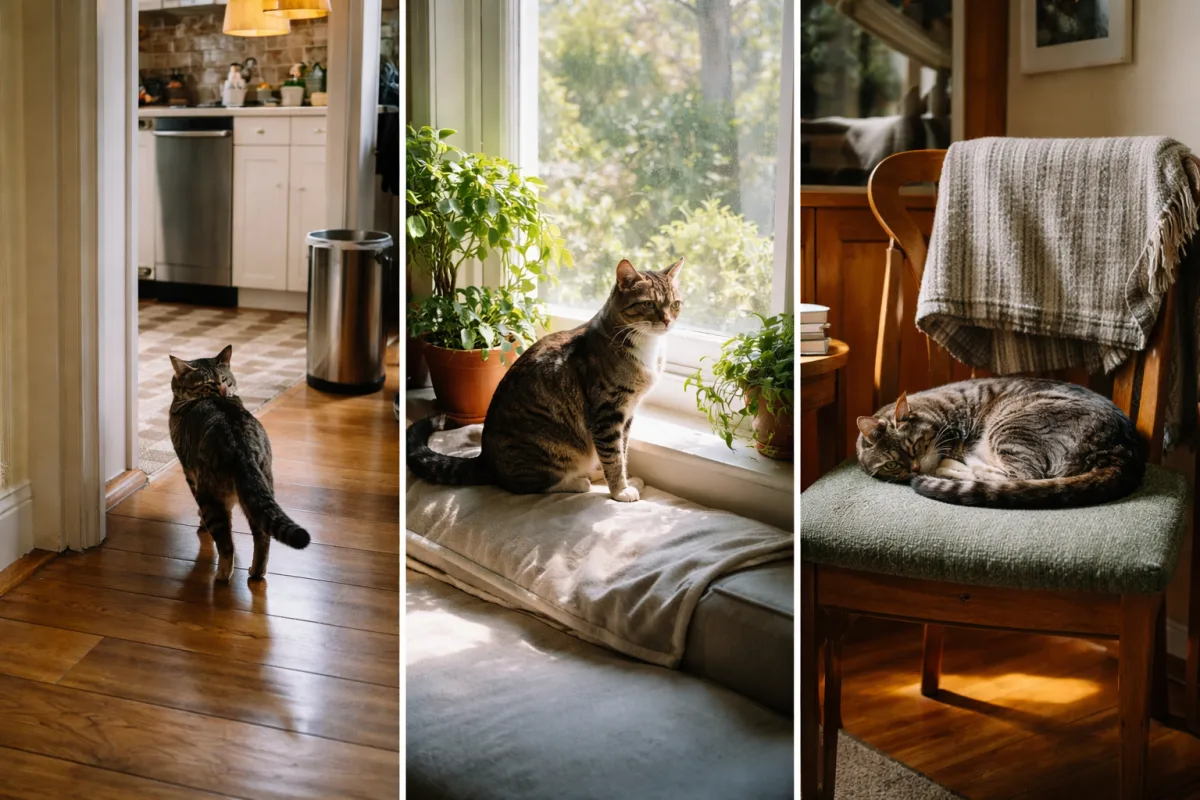
Every cat develops habits, but some make those habits very visible. A cat may wait beside the bedroom door at 6 a.m. every morning, regardless of whether anyone is awake. Another may make the same path through the house after breakfast, checking each room in the same order. Some cats jump onto the couch at the same time each evening and stay there until bedtime.
These patterns can show up in small, consistent ways:
- Eating at the same minute each day, then leaving the bowl immediately
- Using the litter box at predictable times
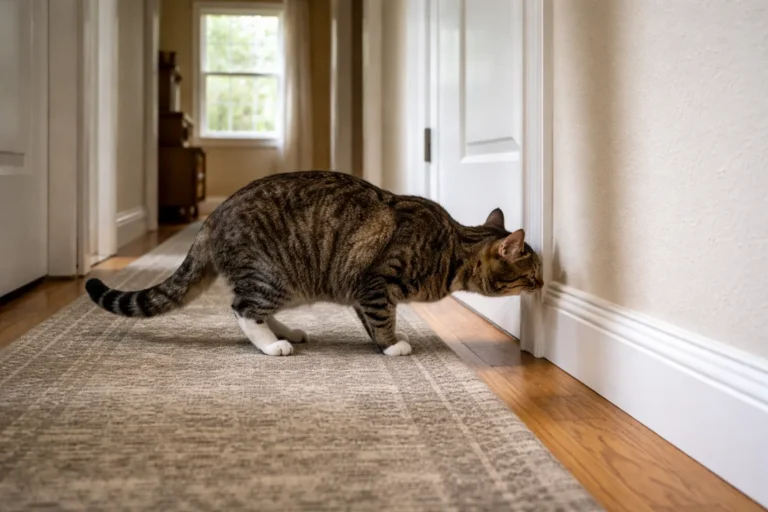
- Patrolling the home in a repeated route
- Sleeping in the same spots based on time of day
- Following the same person from room to room on a schedule
- Waiting near a door, window, or feeding area at the same hour
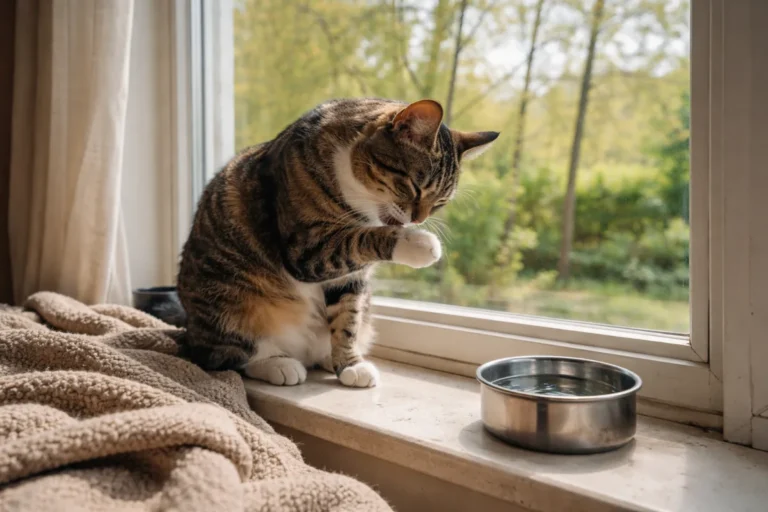
Sometimes the behavior is subtle. A cat may not do the same action with obvious drama, but the routine still repeats with striking consistency. The cat that always jumps to the windowsill after lunch, for example, may be responding to daylight changes, outside movement, or the usual quiet hour in the home.
Repeated patterns matter most when they are stable, familiar, and easy for the cat. A routine that appears “odd” may simply be the cat’s preferred way to organize the day.
Why Cats Show Repeated Daily Patterns
Cats are creatures of habit. They do not build routines in the same way people do, but they are strongly influenced by memory, comfort, and anticipation. Once something becomes predictable, a cat often returns to it because predictability feels efficient and safe.
Feeding time is one of the strongest drivers. A cat quickly learns when meals happen, who prepares them, and what happens just before the food arrives. Even cats that seem relaxed about food may still watch the clock more closely than their owners realize. That is why a cat can appear to “know” the time better than the people in the house.
Territory also shapes repetition. Cats like to keep track of spaces they consider important. A route through the home may help a cat check familiar scents, sounds, and resting places. The same pattern repeated every day can be a way of confirming that the environment still feels stable.
Routine can also come from learned associations. If the window gets good afternoon sunlight, a cat returns there. If a certain chair is close to a favorite person, the cat may choose it every evening. If the laundry room is warm and quiet, that spot may become part of the regular schedule. The cat is not being stubborn. It is choosing what works.
Common Daily Patterns and What They Often Mean
Morning routines
Many cats begin the day with a repeatable set of actions. They may jump onto the bed, circle the room, meow briefly, or lead the owner toward the kitchen. Morning routines often link to hunger, anticipation, and the return of household activity. The cat notices that people wake up, move around, and make food. The routine builds from there.
Midday resting patterns
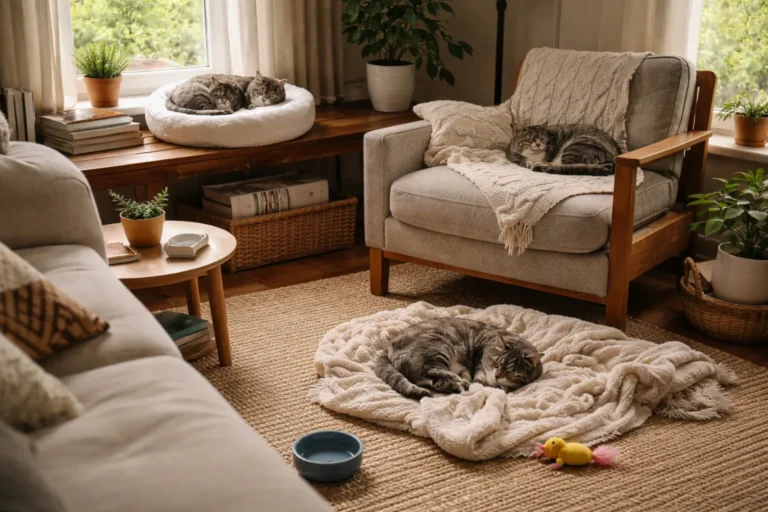
Afternoons often become predictable because the home is quieter. A cat may always sleep in the same chair, on the same blanket, or in the same patch of light. This does not automatically mean the cat is bored. It may mean the location feels secure and the timing is comfortable.
Evening attention patterns
Some cats become more social at a specific hour each day. They may seek petting, sit near the family, or engage in short bursts of play. The pattern can be linked to household rhythm. When people slow down, the cat has more opportunity to interact. Repetition makes the evening feel like the cat’s own predictable social window.
Nighttime patrols
A cat that repeats the same nightly walk through the home is often doing a form of monitoring. The route may not look important to people, but it gives the cat a chance to check sounds, scents, and movement. In a quiet house, even a small change can matter to a cat that pays close attention to its surroundings.
Internal Reasons Behind the Repetition
Some repeated patterns come from a cat’s internal need for control. Cats are sensitive animals. They notice changes in tone, schedule, furniture placement, and household noise. When the world feels inconsistent, routine can act like a stabilizer. A familiar pattern offers something the cat can rely on.
Temperament plays a large role. A cautious cat often repeats the same actions because they reduce uncertainty. A confident cat may also be repetitive, but for a different reason: the cat has learned a preferred route or habit and sees no reason to change it. In both cases, the routine is useful.
Age can influence the behavior too. Kittens often repeat actions because they are learning. Adult cats may repeat them because the routine has become established. Older cats sometimes become even more fixed in their habits, especially if their comfort zone narrows with age or physical changes.
Consistency can be a sign of comfort, but it can also reflect a cat’s need to minimize effort or uncertainty. The same behavior may have very different emotional roots depending on the cat.
How the Home Environment Shapes the Pattern
A cat’s daily routine does not form in a vacuum. The home has a major influence on what becomes repeated and how fixed the pattern becomes. A quiet household often allows routines to become very stable. A busy household can create routines that shift around noise, visitors, meals, and activity.
Placement of resources matters. If food, litter boxes, resting places, and water are all in predictable spots, the cat’s behavior usually becomes more regular. If these things move often, the cat may still repeat a pattern, but it may look more cautious or fragmented. The cat may revisit the same room repeatedly before settling down.
Small environmental changes can make a big difference:
- New furniture can alter the cat’s route through the home
- A changed feeding schedule can shift morning behavior
- Extra noise may push the cat into a more hidden routine
- Seasonal sunlight can change where the cat rests each day
- Other pets can influence which spaces the cat chooses regularly
Indoor cats often show stronger daily repetition because their environment is more stable. Outdoor cats may still have routines, but those routines can be shaped by weather, wildlife, neighbor activity, and access to the outdoors. Even then, many outdoor cats return to the same times and places whenever possible.
When Repetition Is a Normal Habit vs a Sign of Stress
Not every repeated pattern means something is wrong. A cat that climbs to the same perch at sunset or rubs against the same table leg every afternoon may simply be following a comfortable routine. The difference between normal habit and stress-related repetition usually comes down to intensity, flexibility, and body language.
A relaxed routine tends to look smooth. The cat moves easily, settles well, eats normally, and still responds to changes without becoming upset. A stress-related pattern often feels tighter. The cat may repeat the same action more urgently, seem harder to interrupt, or appear unable to settle anywhere else.
Watch for these signs that repetition may be tied to stress rather than preference:
- Restless pacing with no real pause
- Repeated trips to the food bowl without eating much
- Over-grooming in the same area
- Frequent checking of doors or windows with tension in the body
- Hiding in the same place for long periods
- Sudden fixation on one area of the house after a change or disruption
The context matters more than the action itself. A cat that walks the same route every evening with a loose tail and calm posture is very different from a cat that paces the hallway, stays alert, and seems unable to relax. One is a habit. The other may be a response to unease.
What Owners Often Miss About Repeated Patterns
People often notice the obvious schedule parts of a cat’s day, especially feeding and sleeping. What gets missed are the smaller details that show how the routine functions. A cat may always sit near the window before the household becomes noisy. That position may be less about curiosity and more about choosing a safe buffer before activity begins.
Another common misunderstanding is assuming repetition means boredom. Sometimes it does, but not always. Cats repeat preferred behaviors because they are rewarding, soothing, or easy. A cat can be entertained, alert, and content while still choosing the same pattern every day. Repetition does not automatically equal lack of stimulation.
Owners also tend to miss timing patterns. A cat may not be repeating one action all day, but rather repeating it around a specific event. The behavior may happen before meals, after a shower, when the sun shifts, or when a certain family member arrives home. That timing can reveal more than the action itself.
How Repeated Daily Patterns Develop Over Time
Many cat routines begin as small experiments. A kitten tries a sleeping spot. It feels good. The kitten returns. The same thing happens again, and the choice becomes stronger. By adulthood, the habit may look like personality, when in fact it has been built through dozens or hundreds of quiet repetitions.
Adult cats often refine their routines rather than abandon them. If something in the house changes, the cat may adjust the pattern slightly instead of starting over. A favorite nap may move from one chair to another close by. A patrol route may shorten if a room becomes busier. The routine changes, but the structure remains.
Older cats may become even more consistent, especially if they prefer low-effort, low-surprise habits. A stable routine can help an older cat manage energy and reduce unnecessary movement. If the routine suddenly changes a lot in an older cat, that shift is worth paying attention to. It may reflect discomfort, environmental stress, or a shift in what feels safe.
Different Types of Repetition and Their Feel
Calm repetition
Calm repetition is easy to recognize once you know what to look for. The cat seems settled. The movements are unhurried. The routine appears familiar and comfortable, like a well-used path through the day.
Playful repetition
Some repeating behaviors are playful. A cat may chase the same toy every afternoon, leap onto the same shelf, or bat at the same string after dinner. The action repeats, but the energy stays light. The cat stays engaged without seeming tense.
Defensive or alert repetition
When repetition comes from alertness, the posture changes. The cat may keep returning to a doorway, listening toward one room, or pacing a border of the home. The pattern becomes more about monitoring than enjoyment. This kind of repetition often looks purposeful and tight.
Compulsive-looking repetition
Some behavior can appear overly fixed, such as constant licking, spinning, or pacing the same path over and over. When a pattern starts to crowd out eating, resting, or normal interaction, it deserves closer attention. The action itself may not tell the whole story, but the persistence is important.
| Pattern type | Common feel | Typical context |
|---|---|---|
| Calm | Relaxed, steady | Predictable home routine |
| Playful | Energetic, light | Fun, interaction, stimulation |
| Alert | Focused, watchful | Noise, movement, territory checking |
| Compulsive-looking | Rigid, hard to interrupt | Stress, discomfort, unresolved need |
How Cats and Humans Shape Each Other’s Routines
Cat routines and human routines often blend together. People may not realize how much their own habits train a cat’s daily rhythm. If breakfast always happens at the same time, the cat learns to be present. If a person sits in one chair every night, the cat may claim the nearby floor, armrest, or blanket as part of the evening routine.
In homes with strong schedules, cats often become highly attuned to those patterns. They know when the alarm goes off, when the kitchen becomes active, and when the house starts to quiet down. They are not reading a clock. They are reading the household.
That is why repeated daily patterns can feel so personal. The cat is responding to a shared life. The routine may look like the cat’s habit, but it often reflects the rhythm of the whole home.
When a cat repeats the same pattern every day, it is often matching the household’s structure, not resisting it. Familiar human habits can become part of the cat’s own map of the day.
What Makes a Pattern Stable or Changeable
Some patterns stay the same for years. Others shift quietly with the seasons or a household change. Stability usually comes from a combination of comfort, predictability, and positive results. If the cat likes the place, the timing, and the outcome, the habit becomes durable.
Change happens when one of those pieces moves. A new pet enters the house. A feeding time changes. A favorite room becomes noisy. The cat may adjust by shifting the routine to a nearby space or slightly different hour. This is still repetition, just in a new form.
Stability does not always mean rigidity, and flexibility does not always mean insecurity. A cat can be deeply routine-oriented and still adapt when needed. The best clue is whether the cat settles back into a manageable pattern once the environment becomes predictable again.
What to Notice Before Drawing Meaning From the Behavior
Before assigning meaning to a repeated daily pattern, it helps to look at the whole picture. The behavior alone is only one piece. What happens before it starts? What does the cat do afterward? Has anything changed in the home recently? Those details often matter more than the repetition itself.
Three questions are especially useful:
- Does the pattern look calm or tense?
- Does it happen in a predictable situation?
- Does the cat still eat, rest, groom, and interact normally?
If the answer suggests comfort and consistency, the pattern may simply be part of the cat’s daily structure. If the answer suggests pressure, tension, or a sudden shift, the routine may be worth discussing with a veterinarian or behavior professional, especially if it is new or increasing.
A cat repeating the same daily patterns is usually showing that the day makes sense to it in some small way. The rhythm may be simple, but it is rarely meaningless. It often reflects comfort, memory, and the cat’s practical way of organizing life around what feels familiar.