Some cats seem to wake up already full of plans. Others move slowly through the morning, then become lively when the house gets quiet. These shifts are not random. A cat’s energy often follows a daily pattern shaped by instincts, sleep cycles, mealtimes, light, household activity, and age.
That pattern can look different from one cat to another, yet it usually has a rhythm. A cat may be calm after breakfast, active in the late afternoon, and suddenly alert at night. Another may spend most of the day sleeping in short stretches and then appear ready to pounce the moment a toy moves. Paying attention to those changes makes it easier to understand what your cat is doing and when.
Daily energy patterns also reveal how cats respond to their environment. A quiet home, a busy family schedule, a new pet, or a window with birds outside can all shift the way a cat uses its energy. What looks like “random zoomies” often has a clear rhythm once you watch the day closely.
What a Cat’s Daily Energy Pattern Can Look Like
Many cats follow a loose cycle of rest, watchfulness, movement, and play. They do not usually stay active for long stretches the way dogs often do. Instead, they use short bursts of energy, then return to resting. This makes their day feel uneven from a human point of view, but it is normal for cats.
A typical day may include a sleepy morning, a more alert period around feeding time, and another active stretch in the evening. Some cats are also more animated before dawn. Others become playful after sunset when the home becomes quieter. The timing may shift, but the pattern often repeats.
Common signs of low-energy periods
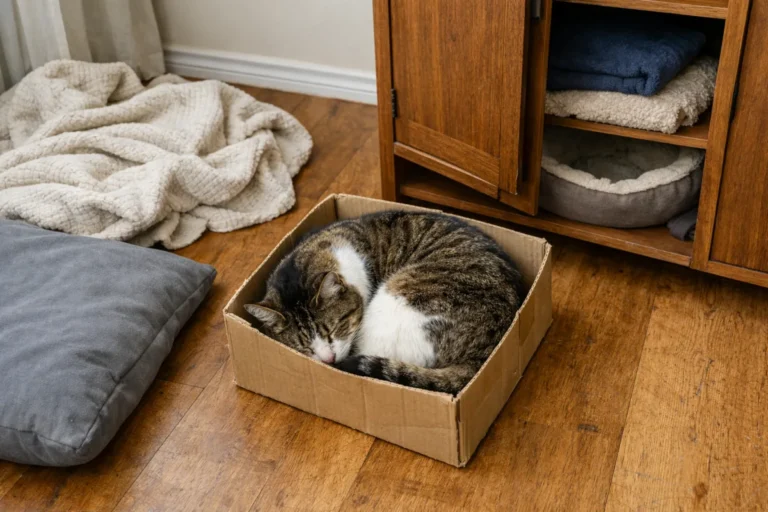
- Long naps in familiar spots
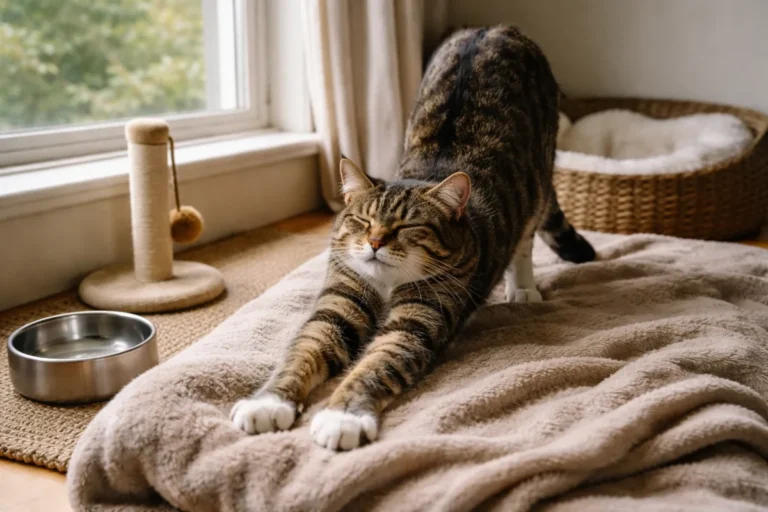
- Slow walking and stretching after sleep
- Limited interest in toys until something catches attention
- Choosing to observe instead of joining household activity
Common signs of higher-energy periods
- Running from room to room
- Climbing furniture more often
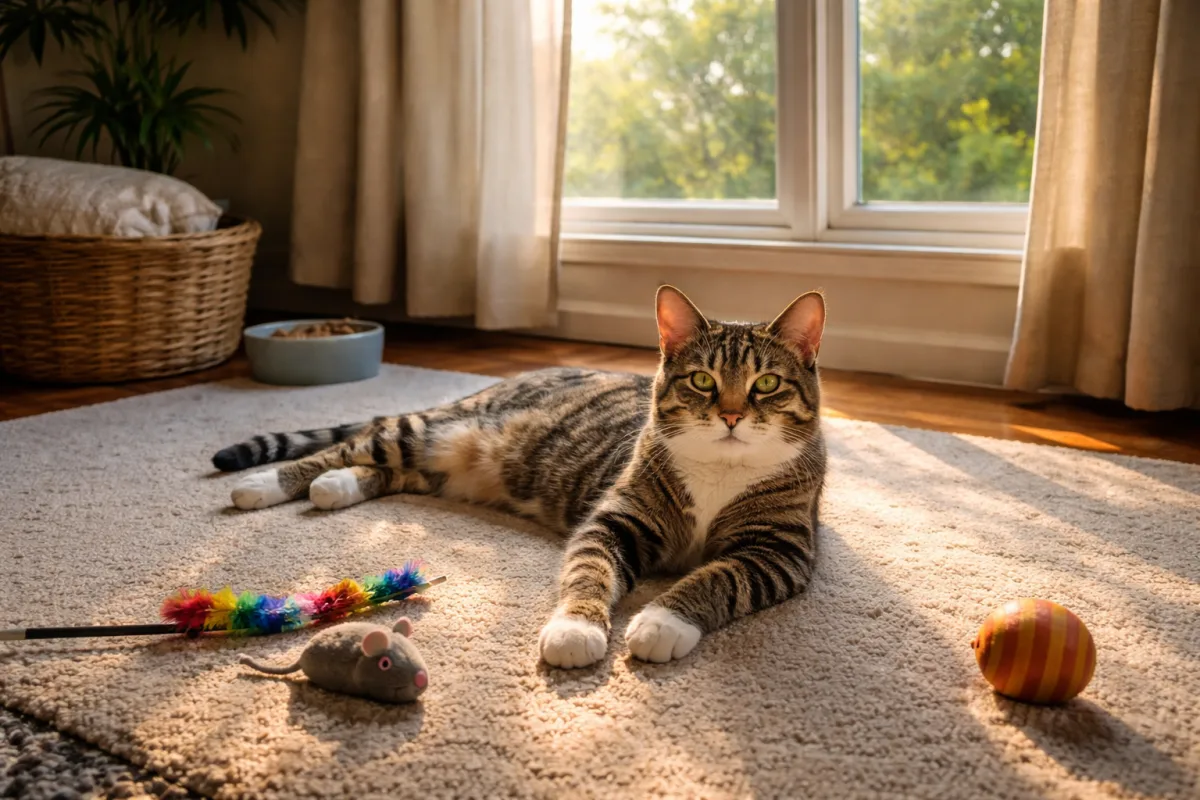
- Chasing toys, shadows, or moving feet
- Vocalizing near feeding times or during active hours
These shifts are often short. A cat may go from sleeping to sprinting in under a minute, then settle again. That change can seem dramatic, but it is part of how cats conserve energy and use it in focused bursts.
Cats are built for short periods of activity, not constant motion. Their energy often arrives in waves rather than a steady line.
Morning Energy: Slow Starts and Quiet Observation
Morning energy in cats depends a lot on the night before and on the household schedule. Some cats wake up ready to eat, pace, and get attention. Others stay drowsy for a while, especially if they had a busy night or a warm sleeping spot. If the home is noisy in the morning, a cat may watch from a distance before deciding whether to join in.
For many cats, morning is less about intense play and more about checking the environment. They may move from room to room, sniff surfaces, and look out windows. This is a time for reading the room. The cat may be awake, but not necessarily ready for intense activity.
Food can also shape the morning rhythm. A cat that expects breakfast at a certain time often becomes active before the bowl is filled. That behavior may include rubbing legs, meowing, or sitting near the feeding area. If breakfast comes late, the energy can turn into restlessness.
What morning behavior may reflect
- Anticipation of food
- A need to orient to the day’s activity
- Residual sleepiness after night rest
- Reaction to human movement and household noise
In some homes, morning is the first real moment of interaction, so cats use that time to make contact. In others, they prefer to stay in a separate room until the house quiets down. Both patterns are common.
Midday Energy: Rest, Sleep, and Short Bursts
Midday is often the quietest time in a cat’s day. Many cats sleep more deeply during late morning and early afternoon, especially if the household is calm. Their energy may seem low, but that does not mean they are inactive the entire time. They may wake briefly to groom, eat, drink, or change sleeping spots.
This part of the day often includes small bursts of movement rather than long play sessions. A cat may suddenly chase a toy, leap onto a shelf, or sprint after a sound, then return to rest. That pattern fits a cat’s natural rhythm very well. They are not trying to stay active for hours. They are using energy when something feels worth the effort.
Household temperature can also matter. Warm rooms often make cats sleep longer. Cool, bright spaces may encourage more movement and exploration. A cat near a sunny window may seem alert even while lying down, simply because there is more to watch.
Midday calm is not laziness. For many cats, it is the deepest part of their rest cycle.
Afternoon Energy: Waking Up and Becoming Curious
As the afternoon moves along, many cats become more interested in their surroundings. This can happen gradually. A cat may start by changing sleeping positions, then begin walking more, then show interest in toys or people. The shift is not always obvious at first, but it often marks the start of a more active part of the day.
Afternoon energy can be strongly tied to boredom. A cat that has been resting for several hours may suddenly need stimulation. If there is a bird at the window, a crumpled paper ball on the floor, or a human walking by with a string bag, the cat may quickly become alert. Even a small change can trigger movement.
Some cats also become more social at this time. They may seek petting, follow people between rooms, or sit near where activity is happening. Others turn more playful when they sense the day shifting toward evening. Their energy is not just physical. It also involves attention and interest.
How to notice an afternoon shift
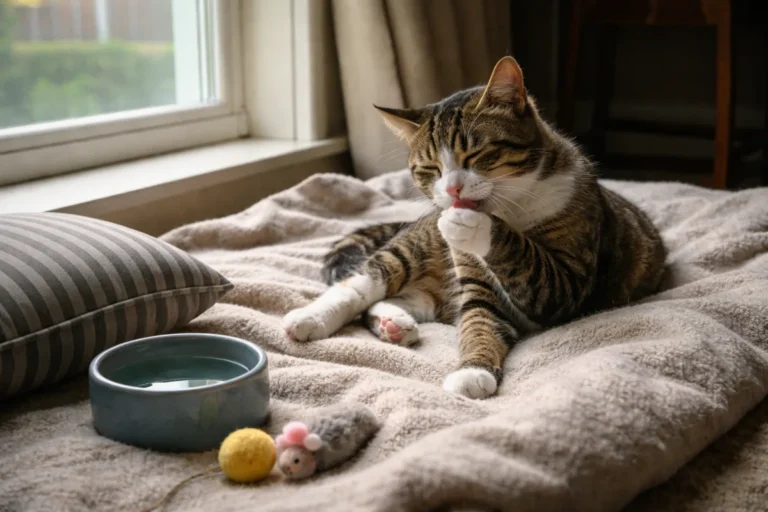
- More frequent grooming followed by movement
- Watching doors, windows, or hallways
- Increased meowing or following behavior
- Sudden interest in toys or climbing
If afternoon energy appears every day, it often becomes part of the cat’s routine. Some owners even plan play sessions for this window because the cat is more likely to respond.
Evening Energy: Play, Interaction, and Zoomies
Evening is when many cats become visibly active. In homes where people return from work or school, the change in household rhythm often wakes the cat up as well. More movement, more conversation, and more lights can all make the environment feel stimulating. A cat that seemed sleepy all afternoon may suddenly be ready to run.
This is also a common time for zoomies. A cat may race through a hallway, leap onto furniture, then stop and stare as if nothing happened. That behavior is usually a release of energy, not a sign of trouble. It often happens after long rest periods, before a meal, or when the cat has extra energy to burn.
Evening play often feels more intense than play at other times of day. Cats may stalk toys more carefully, chase longer, and use more of the room. They may also seek direct interaction with people. Some cats prefer rough-and-tumble movement, while others like a short wand-toy session followed by a nap.
Why evening often feels more active
- Humans are home and moving around
- The cat has rested for several hours
- Feeding time may be approaching
- Lower daylight can trigger hunting-style behavior
In many homes, evening is the best moment for meaningful play because the cat is ready and the household is settled enough to notice it.
Night Energy: Quiet Alertness or Sudden Activity
Cats are often described as nocturnal, but that is only partly true. They are more accurately crepuscular, which means they tend to be most active around dawn and dusk. Even so, some cats do become lively at night, especially if the day has been quiet or if they are not getting enough stimulation.
Night energy can show up as wandering, meowing, pawing at doors, or playing with toys when everyone else is trying to sleep. Some cats simply move from one sleeping place to another and check the household before settling. Others want interaction and may choose the middle of the night to ask for it.
Food routines can intensify this pattern. If a cat learns that nighttime activity leads to attention or feeding, the behavior may repeat. The same is true for cats who get bored late in the evening and start looking for something to do. A dark, quiet house can turn into a hunting ground for the smallest moving object.
Night activity is often a mix of instinct, habit, and unmet daytime energy. The timing matters as much as the movement itself.
What Shapes Energy Patterns Over the Day
Several forces shape how a cat moves through the day. Some are built into the cat’s biology. Others come from the home itself. When these factors work together, the pattern becomes stronger and easier to notice. When they clash, the cat’s rhythm may feel scattered.
1. Sleep habits
Cats sleep a lot, but they do not always sleep in one long block. They nap, wake, shift, groom, and nap again. This scattered rest gives them flexible energy patterns. A cat that sleeps lightly during the day may be more active in the evening. A cat that gets interrupted often may seem restless.
2. Mealtime routine
Many cats build their energy around food. When meals arrive at predictable times, the cat’s alertness often rises before feeding and drops afterward. If meal times vary, the energy pattern may feel less steady. Hunger, anticipation, and routine all influence movement.
3. Household activity
Busy homes often create more stimulation. People moving through rooms, kids playing, and doors opening and closing can keep a cat interested. Quiet homes may encourage longer sleep periods and more noticeable bursts when something finally changes.
4. Age and health
Kittens usually have sharper peaks of energy and less predictable rest. Adult cats often develop clearer daily routines. Older cats may become less active overall or shift to shorter, gentler bursts. Health issues can also change a cat’s rhythm, especially if the cat is suddenly more sleepy, more restless, or less interested in normal activities.
| Life stage | Typical daily pattern | What it often looks like |
|---|---|---|
| Kitten | Frequent bursts | Play, quick naps, sudden jumps |
| Adult | More predictable cycles | Resting, feeding, evening activity |
| Senior | Lower intensity | Longer naps, slower movement, shorter play |
Indoor Life and Daily Energy
Indoor cats often show more obvious daily patterns because their world is shaped by the home. They may wake when people wake, rest when the house is still, and become active when something changes in the environment. Without outdoor hunting or roaming, their energy has to find other outlets.
That can make enrichment important. Window perches, scratching posts, puzzle feeders, and short interactive play sessions help create structure. A cat with enough stimulation is more likely to show a steady rhythm rather than pent-up energy that explodes at odd times.
Indoor life also makes observation easier. Small changes become visible. A cat that starts pacing more at night, sleeping too much during the day, or ignoring usual play may be reacting to a change in routine, stress, or health. Daily patterns become useful when they are compared over time.
When Energy Patterns Change
A cat’s routine can shift from one week to the next. New furniture, visitors, time changes, feeding changes, a new pet, or even a different sleeping spot can alter the day’s rhythm. Sometimes the change is temporary. Sometimes it becomes a new habit.
What matters most is whether the cat still has a pattern at all. A cat that is simply active at different times may be adjusting to a new rhythm. A cat that suddenly stops playing, hides more than usual, or becomes unusually restless may be showing discomfort or stress. The daily pattern matters because changes in it often appear before bigger signs do.
A cat’s energy pattern is useful because it shows what is normal for that cat. A noticeable shift is often more important than the exact amount of activity.
Even subtle changes can matter. A cat that used to nap near the window in the afternoon but now sleeps under the bed may be responding to temperature, noise, or something more personal to the cat’s comfort. Watching the timing of activity helps make sense of those changes.
How Owners Can Read the Pattern More Clearly
It helps to think in terms of timing rather than just energy level. A cat is not simply active or inactive. The better question is when the energy appears, what happens right before it, and how long it lasts. Those details tell a more complete story.
Some practical things to notice include the following:
- When the cat wakes up most often
- Whether movement increases before meals
- What time of day play is most appealing
- Whether certain rooms or windows trigger alertness
- How the cat behaves after household noise or visitors
Patterns become clearer when seen over several days, not just one. A single unusual afternoon does not mean much. A repeated rhythm does. Over time, a cat’s day can start to feel very familiar, even when the details change a little.
Why Energy Patterns Often Feel Predictable
Cats like routines more than many people realize. Predictable food, familiar sleeping spots, repeated human schedules, and consistent environmental cues all help shape when they are alert and when they rest. That is why many cats seem to know exactly when the household is about to eat, leave, or go to bed.
This predictability also gives cats a sense of control. They can conserve energy when nothing interesting is happening and spend it when conditions feel right. Their day may look quiet from the outside, but underneath, the rhythm is organized and purposeful.
When that rhythm is interrupted, the difference is often obvious. A cat that misses a nap may become cranky or extra clingy. A cat that gets less play than usual may release energy at an inconvenient time. The pattern itself is part of how the cat keeps balance.
Watching those changes day by day makes the cat easier to read. Morning stillness, midday sleep, afternoon curiosity, evening play, and occasional nighttime alertness often form a repeating cycle. Within that cycle, the small details tell the real story of how the cat is feeling and how the day is unfolding.