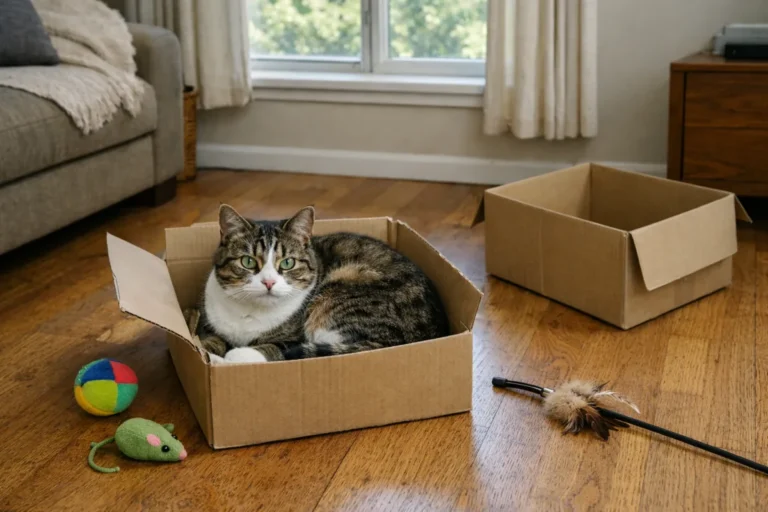
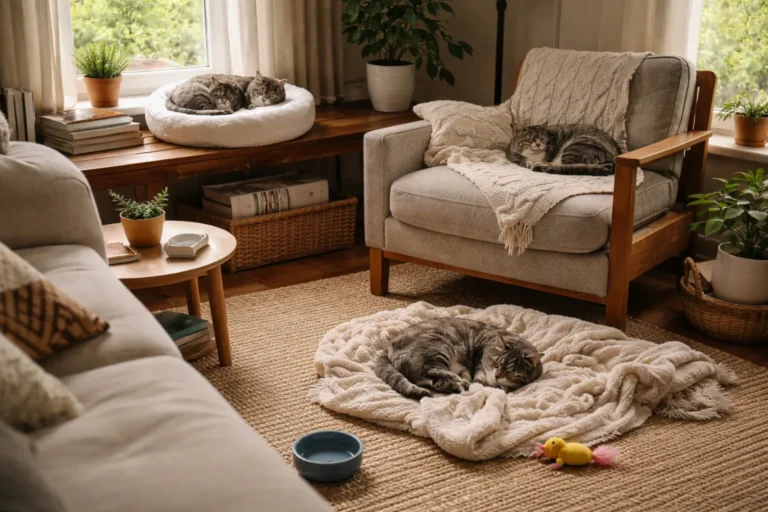
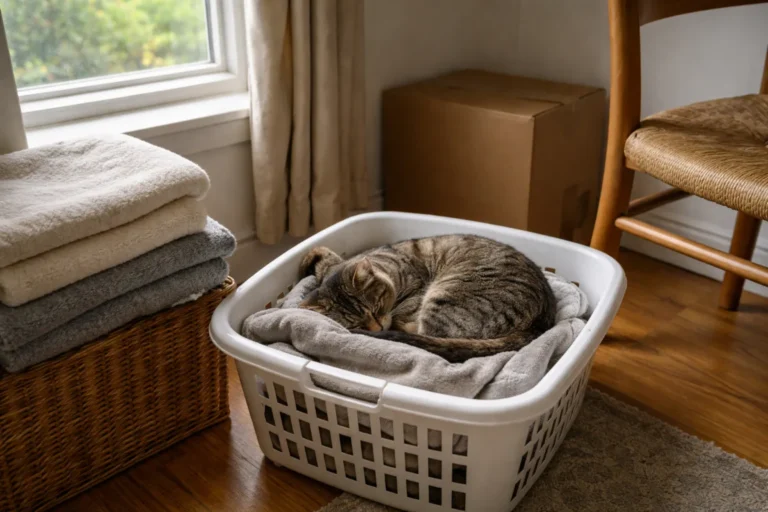
A cat that keeps alternating between rest and activity can seem unpredictable at first. One minute the cat is curled into a tight nap, and the next it is pacing the hallway, batting a toy, or climbing to the top of a shelf. This rhythm is normal in many homes, but it still leaves owners wondering whether the pattern means contentment, boredom, energy bursts, or something else entirely.
The truth is that this back-and-forth behavior often reflects how cats organize their day. They do not usually move through long stretches of constant activity the way dogs or humans do. Instead, they tend to work in cycles. A cat may rest deeply, wake suddenly with a surge of alertness, move with purpose for a few minutes, and then settle again as if nothing happened.
That pattern can be easy to miss when life gets busy. Yet it becomes clearer when you watch the timing, the body language, and the environment around the cat. The same cat may seem active in the morning, sleepy after lunch, and restless again in the evening, and all of that can still fit within a normal routine.
What this behavior looks like in everyday situations
Alternating between rest and activity often shows up in small, repeated moments. A cat may nap on the couch, get up to follow a sound, walk to the kitchen, rub against a chair, and then return to sleep. Another cat might spend ten minutes chasing a toy, then disappear for a long nap in a warm corner.
In many homes, this rhythm is especially noticeable around regular triggers. Meal times, sounds from outside, visitors, or changes in the household can all break a rest period. Once the brief burst of attention or movement is over, the cat often returns to stillness.
Some cats move through these shifts quietly. Others make the transition obvious by stretching, yawning, grooming, and then springing into motion. The change does not always mean the cat is anxious or overly excited. Sometimes it simply means the cat has decided to spend energy, then conserve it again.
Common forms of the pattern
- Short naps followed by brief play sessions
- Resting near people, then leaving to explore another room
- Grooming, then pacing or investigating sounds
- Active movement in one part of the day and long quiet periods in another
- Sudden bursts of energy after sleep
In cats, movement is often efficient rather than constant. A short active period can be completely normal when it is followed by calm resting and the cat otherwise seems comfortable.
Why cats show this behavior in general
Cats are built around energy conservation. Their bodies are designed for quick bursts of movement rather than long, steady exertion. That helps explain why many cats rest so often and then become sharply active without much warning. They are not trying to follow a human schedule. They are following their own pattern of alertness, curiosity, and recovery.
This alternation also connects to instinct. Even a relaxed indoor cat may still carry a deep sensitivity to movement, sound, and shifting routines. A nap can end fast if something catches the cat’s attention. Once the alert moment passes, rest returns just as quickly.
Another reason is simple efficiency. Cats often do not need to “stay busy” the way people think of activity. Instead, they respond when something feels worth noticing. That can make their behavior look uneven, when in reality it is often very economical and deliberate.
Possible internal reasons behind the behavior
Not every cat alternates in the same way. Some are naturally more playful, while others are more watchful. The balance between rest and activity can reflect age, personality, health, hunger, confidence, and overall comfort.
A younger cat may jump from sleep to play more often because the body is ready for short bursts of action. An older cat may still alternate between rest and movement, but the active periods may be shorter and more measured. A confident cat may rest deeply in open spaces, while a cautious cat may interrupt rest more often to check the room.
Hunger can also change the pattern. A cat that wakes up and walks to the feeding area at predictable times is showing a normal internal schedule. A cat that becomes active after a long nap and starts searching around may simply be anticipating food, attention, or routine.
Internal factors that often matter
- Natural age-related energy changes
- Daily hunger and meal anticipation
- Alertness to sounds or movement
- Personality differences between cautious and bold cats
- Physical comfort and sleep quality
A cat’s energy pattern is shaped by both instinct and circumstance. The same behavior can mean “I’m ready to move” in one moment and “I need a quick check of my surroundings” in another.
How context and environment influence it
The home environment often decides how obvious this alternating pattern becomes. In a quiet room with few interruptions, a cat may settle into long naps and only occasionally get up to shift locations. In a busier home, the cat may rise more often because the room keeps offering new sounds, people, or movement.
Indoor cats often show this pattern in a very structured way. They may rest after breakfast, become active when a window catches their attention, nap again in the afternoon, then have a stronger play burst at night. Outdoor-access cats may show it differently because their activity is influenced by weather, smells, territory, and outside sounds.
Even small environmental details matter. A sunny window, a newly moved piece of furniture, a bird outside, or another pet walking by can interrupt rest and lead to activity. Once the event passes, the cat may settle back down quickly.
Environment cues that can trigger activity
- Birds, insects, or movement outside the window
- Human meal preparation
- Visitors arriving or leaving
- Other pets moving nearby
- Changes in household routine
A cat that alternates between rest and activity in a predictable way often feels most comfortable in a familiar environment. When the pattern becomes much more erratic, the surroundings deserve a closer look. Sometimes the cat is reacting to new noise, limited enrichment, or a disrupted schedule rather than showing a behavior problem.
What the behavior may signal about the cat’s state
Most of the time, alternating rest and activity is simply a normal rhythm. Still, the details matter. The cat’s posture, speed of movement, and return to calm can help separate ordinary behavior from something more significant.
If the cat moves easily, stretches normally, eats well, and returns to rest without strain, the pattern usually points to comfort and healthy energy cycling. If the active periods seem frantic, repetitive, or difficult to interrupt, the cat may be under stress, overstimulated, or dealing with an unmet need.
A cat that paces, cannot settle, or seems to wake from rest in a tense state may be communicating discomfort. On the other hand, a cat that alternates peacefully between dozing and exploring is often just following its own natural pace. The difference is less about the amount of movement and more about the quality of it.
Signs that the pattern is likely normal
- Relaxed body before and after activity
- Regular eating and drinking
- Normal grooming habits
- Easy return to sleep
- Interest in play without agitation
Signs that the pattern deserves attention
- Restlessness with no clear pause
- Repeated pacing or inability to settle
- Sudden changes in sleep habits
- Hiding after short active bursts
- Activity paired with appetite or litter box changes
When a cat’s energy cycle changes sharply, the pattern matters more than the single moment. One burst of play is ordinary; repeated agitation or disrupted rest is worth noticing.
How body language adds meaning
Body language often tells you whether the cat is moving out of curiosity, comfort, or tension. A relaxed cat usually stretches before standing, moves with loose muscles, and may blink slowly before settling again. The tail stays neutral or gently lifted, and the ears are not locked forward or pinned back.
A more excited cat may have a quick, purposeful walk, a high tail, and focused attention on a toy or sound. That is still normal if the cat can cool down afterward. But a cat with tense muscles, sharp head turns, or repeated start-and-stop pacing may be responding to stress rather than simple interest.
Watch the transition as much as the action. A cat that rises, looks around, takes a few steps, then returns to sleep is usually easy to read. A cat that keeps changing direction, scanning the room, or never fully relaxes is sending a different message.
How owners often interpret it vs. what it may actually mean
Owners sometimes assume that a cat alternating between rest and activity is either bored or hyperactive. Those are possible explanations, but they are not the only ones. Many cats simply have a naturally segmented day and do not think in the continuous blocks humans expect.
It is also easy to read the behavior too emotionally. A cat that wakes up and leaves the room is not necessarily being distant. A cat that suddenly becomes active is not automatically demanding attention. Often the cat is responding to a small internal cue, like thirst, a sound, a change in temperature, or the feeling that it is time to move.
On the other hand, some cats do use activity as a way to communicate. A cat may start wandering near the kitchen because it expects food, or begin play near the owner because it wants interaction. The behavior can be practical, social, or purely instinctive depending on the moment.
Daily routines and life patterns
Routine shapes this behavior more than many people expect. Cats notice breakfast times, evening quiet, the arrival of family members, and even the sound of a phone alarm. When those cues repeat every day, the cat’s rest and activity cycles often become tied to them.
Some cats are most active early in the morning, then rest through the middle of the day, then become engaged again in the evening. Others show a more broken pattern, with several short rests and several short activity periods. Both patterns can be normal if the cat seems balanced and comfortable.
Changes in routine can make the alternation more visible. A holiday schedule, a different work-from-home pattern, extra visitors, or a shift in feeding time may all lead to more waking, more wandering, or longer naps. Cats usually adapt, but they often do so by adjusting when they rest rather than by abandoning the cycle entirely.
When the pattern becomes more noticeable
The behavior often stands out during transitional moments. A cat may seem sleepy all morning, then suddenly become active as the household starts moving around. A quiet afternoon can turn into a short play session if a bird lands outside the window or if the cat hears a crinkling bag in the kitchen.
It can also appear more strongly after periods of inactivity. A cat that slept deeply may wake up with a rush of energy and move rapidly for a few minutes. This does not necessarily mean the cat was deprived of exercise. It may simply be how the cat reenters the world after resting.
Some cats are especially expressive at night. They may sleep heavily through the day and then alternate between resting and quick activity in the evening. This often reflects their natural sleep pattern, not stubbornness. Still, if the night activity becomes disruptive, the schedule and enrichment level may need a closer look.
Long-term patterns and stability
Over time, a cat’s rest-activity rhythm often stays fairly stable, even as details change. A kitten’s bursts may be faster and more frequent. An adult cat may settle into a dependable pattern that fits the home. An older cat may keep alternating, but with more rest and less explosive movement.
That stability can help owners notice what is normal for their own cat. A cat that has always been active in short bursts and calm afterward may simply be following a lifelong pattern. A cat that suddenly stops moving as much, or becomes restless in a new way, is showing a change that stands out against the usual rhythm.
Long-term observation is useful because the meaning of the behavior lives in comparison. One quiet afternoon is not enough to judge the cat. But a steady record of how the cat rests, wakes, moves, and settles can reveal the difference between a healthy pattern and a changing one.
| Pattern | What it often looks like | Possible meaning |
|---|---|---|
| Short rest, brief play, return to sleep | Predictable cycles throughout the day | Normal energy rhythm |
| Repeated pacing without settling | Rest interrupted again and again | Stress, discomfort, or unmet need |
| Rest with quick responses to sounds | Cat wakes, checks, and relaxes again | Healthy alertness |
| Long activity followed by deep sleep | Stronger burst before recovery | Typical cat movement cycle |
Practical ways to read the pattern at home
It helps to look at the full day instead of one moment. Notice when the cat tends to rest, what usually wakes the cat, and how quickly it settles again. A few days of observation often reveal a pattern that a single afternoon cannot show.
Keep an eye on the basics. Appetite, litter box use, grooming, and willingness to engage all help put the behavior in context. A cat that alternates between rest and activity while eating normally and staying socially comfortable is usually following a healthy rhythm.
If the cycle feels too sharp or too irregular, start with the environment. More predictable feeding, a calmer resting area, window access, or a bit more daily play can sometimes smooth the pattern. Small changes often matter more than large ones.
Useful questions to ask yourself
- Does the cat return to calm after activity?
- Is the activity tied to a routine cue?
- Has the sleep pattern changed recently?
- Are there new noises, pets, or household changes?
- Does the cat look relaxed or tense during transitions?
A cat’s alternation between rest and activity becomes easier to understand when you track timing, triggers, and recovery. The return to calm is often the clearest part of the pattern.
Conclusion
Alternating between rest and activity is one of the most familiar cat rhythms, and it often looks more complex than it really is. Many cats simply move through short cycles of sleep, alertness, exploration, and recovery. The pattern becomes meaningful when you notice how smoothly the cat shifts, what tends to trigger movement, and how easily rest returns.
In a stable, comfortable cat, the back-and-forth usually feels soft and predictable. The cat wakes, checks the environment, moves with purpose, and then settles again. That rhythm may change with age, household routine, or surroundings, but it often remains part of the cat’s daily language for a very long time.
What matters most is not the fact that the cat alternates between rest and activity, but how that alternation fits the cat’s usual way of moving through the day. The pattern itself is familiar. The details are where the story lives.