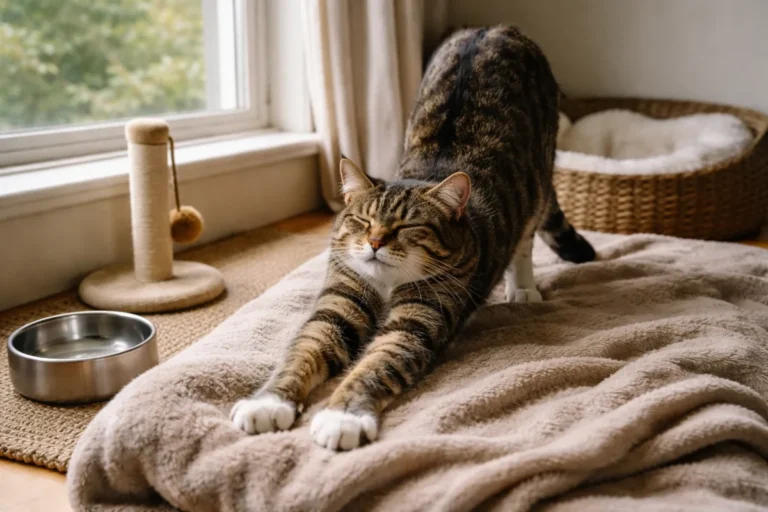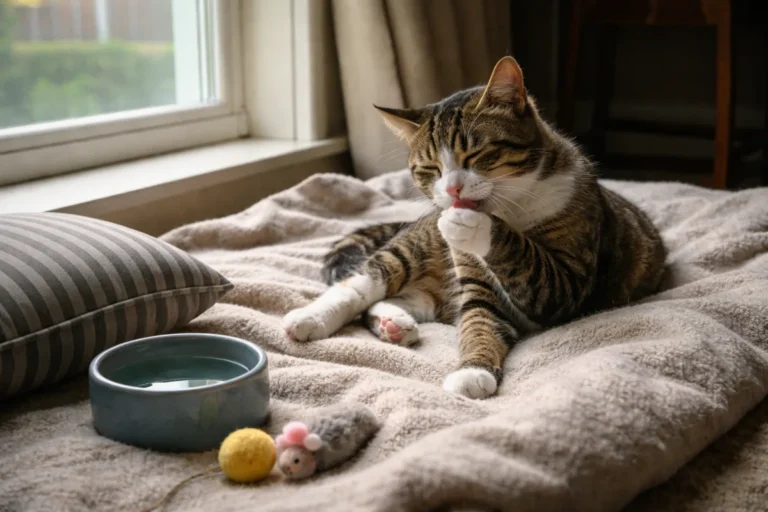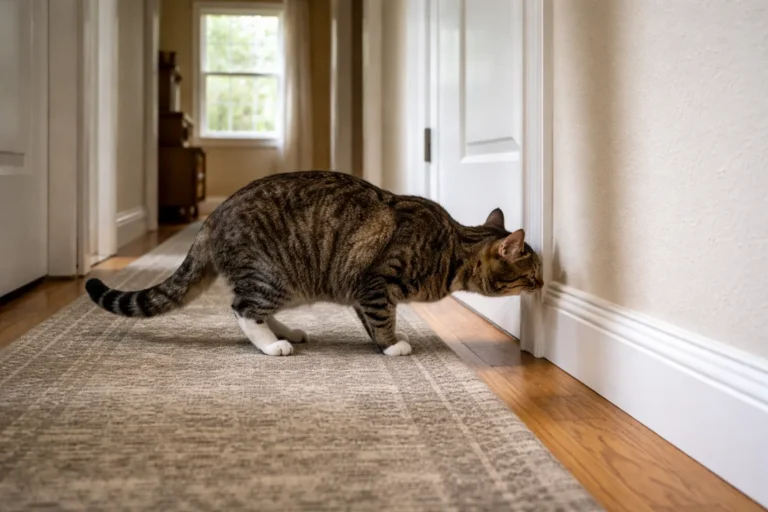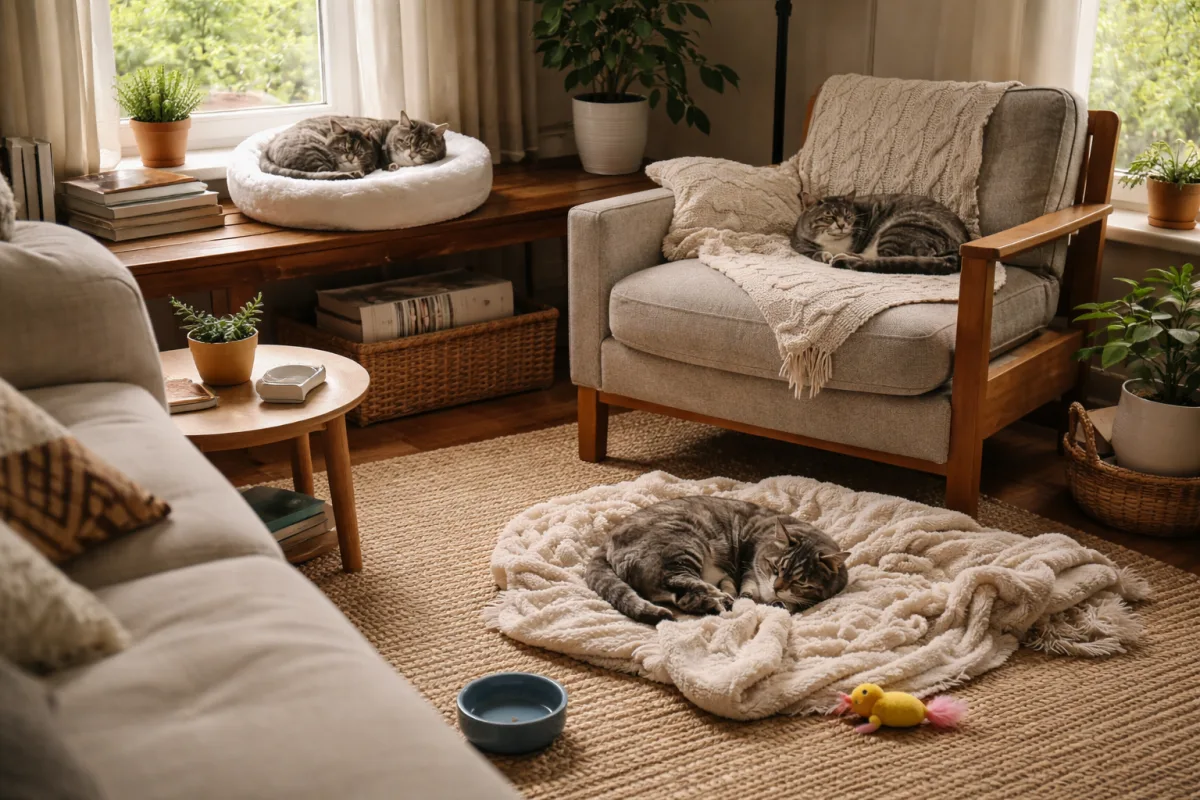
One day your cat is curled up at the foot of the bed. A few days later, that same cat is under a chair, on top of a closet shelf, or tucked into a laundry basket. Changing sleep locations can seem random, but cats usually have reasons for where they settle.
Sleep is one of the clearest ways cats manage comfort, safety, temperature, and routine. When a cat starts moving from one resting place to another, it often reflects something small but meaningful in the home or in the cat’s state of mind. Sometimes the shift is harmless and temporary. Other times it points to a change in the cat’s preferences, energy, or environment.
Watching where a cat sleeps is less about finding one “correct” bed and more about noticing patterns. A cat that rotates through several spots may be doing exactly what cats do best: adjusting quickly to what feels best in the moment.
What Changing Sleep Locations Looks Like in Daily Life
Some cats keep a clear routine. They pick one favorite blanket, one window perch, or one corner of the couch and return to it almost every day. Others move around constantly. They may start the morning in a sunny patch, nap after lunch in a hidden spot, and end the evening in a bed near their person.
In everyday homes, changing sleep locations can look very ordinary. A cat may sleep on cool tile in the summer and switch to the softest throw blanket in winter. A cat that used to sleep on the bed may decide the laundry room is quieter. Another may move closer to family activity after previously preferring distance.
Not every change means something is wrong. Cats often choose sleeping places based on simple comfort factors:
- temperature
- noise level
- light and shade
- access to people or distance from them
- surface texture and height
- whether the area feels predictable
Those preferences can shift from day to day. A cat may sleep in a high place when the house feels busy, then choose a low, open spot when things are calm. Another cat may move because a favorite location now smells different, feels less private, or gets disturbed too often.
Changing sleep spots is often a comfort decision first, not a behavior problem. The location can tell you what the cat is trying to avoid or seek out.
Why Cats Change Where They Sleep
Cats are selective about rest. Sleep makes them vulnerable, so they tend to choose places that fit the moment. A shift in sleeping location can reflect basic needs, but it can also reflect mood and confidence.
Temperature and comfort
Cats are sensitive to warmth. A sunny window ledge may be ideal in the morning, while a bathroom floor may feel better in a warm afternoon. When the weather changes, many cats quietly change their sleeping habits too. Some seek heat sources. Others look for cooler surfaces and more airflow.
Safety and visibility
Location matters because cats like to control what happens around them. A cat sleeping in an open area may want to see the room and stay aware of movement. A cat hiding under furniture may want protection from noise, visitors, or other pets. Both choices can be normal depending on the situation.
Routine and household rhythm
Household activity affects sleep more than many owners expect. Vacuuming, children running through rooms, guests, construction noise, or even a change in work-from-home schedules can alter where a cat feels comfortable napping. Some cats adjust instantly. Others move only after repeated disruption.
Social preferences
Some cats sleep near their favorite person because it feels familiar and secure. Others prefer different rooms when they want uninterrupted rest. A cat that used to share a bed but now sleeps alone may simply want more quiet, or it may be reacting to a change in how often the bed is used.
Age and physical comfort
As cats get older, sleeping habits often change. A senior cat may choose lower, easier-to-reach places instead of jumping onto high furniture. Cats with joint stiffness may avoid spots that require climbing. They may also rotate resting places more often if one position becomes uncomfortable over time.
When a cat changes sleep locations because of physical discomfort, the new spot is often easier to reach, softer, cooler, or less demanding to settle into.
What the Behavior May Signal About the Cat’s State
Changing sleep locations is not a single message. It can mean relaxation, caution, curiosity, or discomfort. The meaning depends on the pattern, not just the location itself.
| Pattern | Common meaning | What to notice |
|---|---|---|
| Moves between several cozy spots | Normal comfort-seeking | Cat still eats, plays, and acts relaxed |
| Sleeps more hidden than usual | Needs quiet or feels uncertain | Less social behavior, more retreating |
| Chooses cooler floors instead of soft beds | Temperature preference | Season, room heat, proximity to sunlight |
| Stops using a favorite place | Discomfort or environmental change | Noise, smell, access, or physical issues |
| Moves closer to people than before | Seeking contact or reassurance | Changes in routine, boredom, or new house dynamics |
A cat that changes sleep locations while staying otherwise normal is often just following comfort. A cat that changes locations and also changes behavior in other areas may be communicating something broader.
Signs that the change is likely harmless
- The cat still eats normally
- The cat still grooms and uses the litter box as usual
- The cat remains playful or relaxed at some points in the day
- The cat switches among several spots rather than avoiding rest
Signs that deserve more attention
- The cat hides far more than before
- The cat avoids heights it used to use comfortably
- The cat seems restless and cannot settle
- The cat stops using favorite resting spots after a stressful event
- The cat appears stiff, tense, or sensitive when moving
Those patterns do not automatically mean illness, but they do tell you that the cat’s needs may have shifted. A cat that cannot get comfortable may keep moving from spot to spot until something feels safe enough.
How Environment Shapes Sleep Choices
The home itself often explains more than people realize. Cats pay attention to small environmental details that humans ignore. A bed near a heating vent may be perfect in winter and unpleasant in summer. A quiet hallway may suddenly become attractive after the family starts gathering in another room every evening.
Smells matter too. Cats are very sensitive to scent. A new detergent, different air freshener, recent cleaning products, or another pet’s scent can make an old sleeping spot less appealing. Even moving a chair a few inches can change how safe a place feels.
One common shift happens after rearranging furniture. A cat may avoid a previously loved spot because the room feels different. Another may move into the newly opened space because it offers a better view or a more protected corner.
Some cats also follow sunlight. They may rest in a beam of light in the morning, then relocate to shade later. This can happen quietly throughout the day, so the cat appears to have a lot of different favorite places when the real reason is simply comfort.
If a cat suddenly avoids one sleeping area, it is worth checking the basics first: temperature, noise, smell, access, and recent changes in the room.
How Daily Routine Changes Show Up in Sleep Patterns
Routine affects rest more than owners often expect. Cats notice when people leave earlier, stay up later, move furniture, host guests, or bring home a new pet. They may respond by choosing new places to sleep that fit the revised rhythm of the house.
For example, a cat that used to sleep in the bedroom at night may move to a hallway if the room becomes too active. A cat that once preferred the sofa may shift to a closet shelf after a toddler starts using the living room more often. Another may begin sleeping in shorter intervals across several locations instead of staying in one place for long stretches.
This can also happen when an owner changes work schedules. Cats are highly observant of repeated patterns. If quiet daytime hours disappear, the cat may adjust by finding a secluded nap place somewhere else in the home.
Sometimes the timing matters as much as the location. A cat that changes spots only during loud periods is probably responding to activity. A cat that changes locations regardless of noise may be following temperature, security, or physical comfort instead.
Different Cats, Different Patterns
No two cats sleep exactly alike. One cat may keep a stable routine for years. Another may behave like a traveler, moving from room to room depending on the hour. Both patterns can be normal.
Confident cats
Confident cats often sleep in visible places. They may move around, but they do not necessarily hide. Their changing locations are usually tied to warmth, sunlight, or where people are gathering. They tend to stay relaxed even as they switch spots.
Cautious cats
Cautious cats often use elevated or tucked-away places. If they change locations frequently, it may reflect caution about noise, visitors, other animals, or changes in routine. They may still be content, but they want more control over their surroundings.
Social cats
Some cats sleep near people because they enjoy proximity. When those cats change locations, it may be because they are responding to changing social energy in the home. If the person they prefer is less available, the cat may find a new base nearby instead of keeping the old one.
Independent cats
Other cats are more solitary in their rest. They may rotate among secluded corners and rarely pick a shared sleeping place. For these cats, changing locations is not distancing behavior. It may simply reflect a strong preference for privacy and control.
When the Change Becomes More Noticeable
Owners often start paying attention when a cat abandons a very specific favorite spot. A cat that used to sleep on the same pillow every night and suddenly stops doing that is easier to notice than one that already switches between four or five places.
Changes become more noticeable after something in the household shifts. A move, new furniture, new pets, a heat wave, colder weather, or a loud event can all lead to temporary changes in sleeping locations. Some cats return to old patterns after a few days. Others keep the new routine because it suits them better.
It can also become more noticeable when the cat ages. A kitten may nap anywhere and everywhere, while an adult cat may settle into more predictable habits. Later, a senior cat may start choosing softer or lower places. These changes can happen gradually and look like simple preference shifts at first.
The key is to notice whether the movement seems purposeful and comfortable, or restless and unsettled. A comfortable cat settles quickly. A restless cat keeps relocating without fully relaxing.
What Owners Often Misread
It is easy to assume a cat is being stubborn, distant, or unusually needy when sleep locations change. But sleeping behavior usually makes more sense when viewed through the cat’s senses rather than human expectations.
For example, a cat that stops sleeping in bed may not be rejecting its owner. The bed may simply have become too warm, too crowded, or too unpredictable. A cat that suddenly chooses a closet may not be frightened. It may just want a smaller, quieter space for deeper rest.
Another common misunderstanding is assuming that a new favorite spot means the cat has “decided” to dislike the old one forever. Cats often cycle through preferences. A spot that feels perfect one month may lose appeal the next because of temperature, smell, or household activity. The change can be temporary and very ordinary.
Look at the full picture, not just the sleeping place. Eating, grooming, energy, and body posture tell you far more than the location alone.
How to Read the Pattern Over Time
One isolated change is less important than a pattern. If a cat starts sleeping in different locations but otherwise seems relaxed, the behavior is usually just part of normal adjustment. If the cat keeps changing locations along with other signs of discomfort, the pattern deserves attention.
Try noticing a few details over several days:
- Does the cat prefer warmth or cooler surfaces?
- Does the cat choose open spots or hidden ones?
- Does the change happen after noise, visitors, or cleaning?
- Does the cat return to old spots once the environment calms down?
- Does the cat seem physically comfortable when settling?
Patterns like these can reveal whether the cat is responding to temperature, stress, social changes, or simple preference. The answer is often practical rather than mysterious. Cats are adaptable, but they are also exacting. They choose places that help them rest well in the moment.
A cat changing sleep locations is often speaking in the quietest way possible. The message may be straightforward: this spot is too hot, that room is too loud, this corner feels safer, or that blanket is finally the best one today. When you watch the shifts closely, the behavior usually stops looking random and starts looking like what it is—an ongoing series of comfort decisions made one nap at a time.