A cat waking up and immediately starting to groom is one of the most familiar little routines in a home with pets. The moment can seem almost automatic: stretch, blink, lick a paw, smooth the face, then move on to the rest of the day. It looks simple, but the behavior carries a lot of meaning.
For many cats, grooming after waking is part hygiene, part reset, and part communication. It helps remove loose fur, wake up the body, and restore a sense of comfort after sleep. The habit is so common that it can be easy to overlook, yet it gives useful clues about how a cat feels in the moment.
Some cats groom in a slow, relaxed way right after rising from a nap. Others do it with more intensity, especially if they have just been disturbed or are preparing to move to a new spot. The difference matters. The timing, speed, and body language around grooming can say a lot about a cat’s emotional state and daily rhythm.
What Grooming After Waking Looks Like in Everyday Life
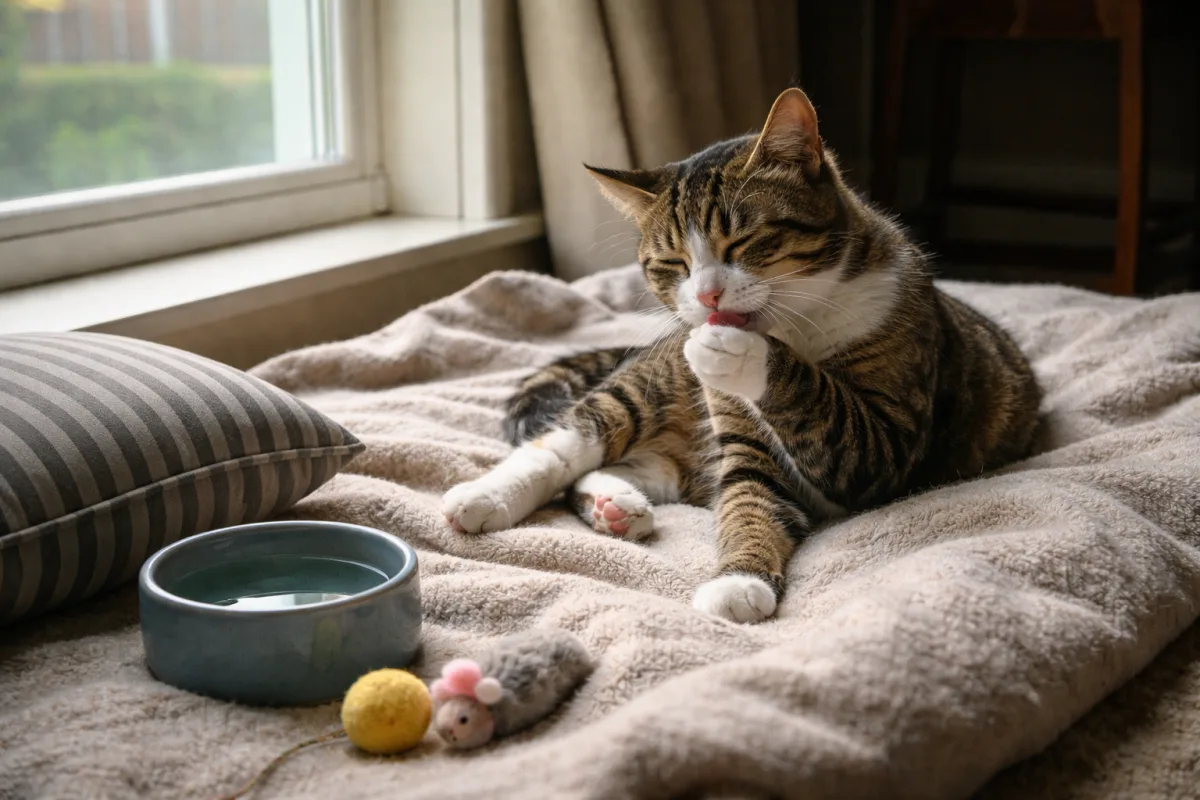
The pattern usually starts with a long stretch. A cat may extend its front legs, arch its back, or roll slightly onto one side before beginning to lick its fur. Often the first target is the face, then the ears, chest, shoulders, front legs, and finally the body or hindquarters if the cat stays in one place long enough.
Sometimes this happens right after a cat opens its eyes. Other times the cat sits still for a few seconds, as if gathering itself, and then begins grooming in a methodical sequence. In a quiet house, the routine may be almost invisible because it blends into the cat’s normal waking pattern.
It can also appear in smaller, quicker versions. A cat may wake, lick one paw, rub the face once or twice, and stop. That shorter version is still grooming after sleep, but it often suggests the cat is comfortable and just doing a quick maintenance pass before getting active.
Why Cats Groom Right After Sleeping
Sleep changes how a cat feels physically. Fur gets flattened, the nose and face may feel dusty, and the body can be stiff from being still for a while. Grooming helps restore order. It removes debris, spreads natural oils through the coat, and helps the cat feel “put together” again.
There is also a sensory side to it. Cats rely heavily on smell and touch, and grooming can help them reestablish a familiar body state after waking. It is a small ritual that brings the cat back into the present. A clean coat and a settled posture often go together.
Grooming after waking is usually a normal self-care routine, not a sign of vanity or boredom. It often means the cat is simply resetting after sleep.
In addition, the action can help the nervous system transition from rest to alertness. A cat is not a human, so it does not “start the day” in the same way, but the routine still serves a useful purpose. It bridges the gap between sleep and movement.
Common Reasons Behind the Behavior
1. Basic coat maintenance
Cats are fastidious animals. Even after a nap, fur can collect loose hairs, saliva, or tiny bits of litter and dust. Grooming keeps the coat in better condition and reduces tangles, especially in long-haired cats.
2. Waking up the body
Licking and repositioning can be part of a warm-up sequence. The cat stretches first, then grooms, then walks away more comfortably. It is a gentle way to shift from rest to activity.
3. Comfort and self-soothing
Some cats groom because it helps them feel calm. After sleep, particularly after a deep nap, the behavior can be reassuring. It creates a predictable routine that feels safe.
4. Resetting after a dream or disturbance
If a cat wakes suddenly from a dream, noise, or a change in the room, grooming may look more deliberate. The cat may be smoothing out tension or regaining composure before deciding what to do next.
5. Social and environmental signals
In some homes, cats use grooming as a subtle way to signal that they are not immediately available. A cat that wakes, grooms, and then slowly walks off may be expressing independence and control over its own pace.
What the Timing Can Suggest About the Cat’s State
The moment a cat chooses to groom matters. Grooming after a nap in a sunny window often looks relaxed and steady. Grooming after waking in a busy room may be shorter, sharper, or repeated more often. The behavior is the same on the surface, but the context changes its meaning.
When grooming happens after a deep, undisturbed sleep, it usually points to comfort. The cat feels secure enough to remain in a vulnerable resting state and then wake without tension. That is a good sign in daily life.
When grooming follows a sudden awakening, it can also be a way to regain control. A cat may lick the fur rapidly, turn the head away from a stimulus, or groom while staying alert to the room. The cat is not just cleaning itself; it is managing the transition from sleep to awareness.
Fast, repetitive grooming after waking can be normal, but the surrounding body language matters. Loose posture usually signals comfort, while tense shoulders, flattened ears, or scanning eyes suggest alertness or stress.
How Body Language Changes the Meaning
Grooming never happens in isolation. The rest of the cat’s body tells the fuller story. A relaxed cat usually has soft eyes, loose whiskers, and unhurried movements. The ears stay in a neutral position, and the tail may rest still or curl lightly around the body.
A more cautious cat may groom with pauses. It licks once or twice, looks up, listens, then resumes. That pattern can show that the cat is comfortable enough to groom but still paying attention to the environment. Cats often divide their attention this way, especially in homes with noise or frequent activity.
There is also the difference between full grooming and partial grooming. A cat that only rubs the face and ears may simply be refreshing itself. A cat that keeps grooming the same area repeatedly, especially after every nap, may be responding to something more specific, such as irritation, anxiety, or skin discomfort.
Influence of the Home Environment
Daily surroundings shape how often the behavior appears and how noticeable it is. In a quiet home, grooming after waking may be a short, regular habit. In a lively house with children, other pets, or frequent movement, a cat may wake more cautiously and groom in interrupted bursts.
Temperature matters too. Cats often groom more after sleeping in warm spots because their coat can feel slightly compressed or damp from body heat. In cooler spaces, they may groom less and move on to stretching or seeking another resting place.
Household routines also play a role. If a cat wakes at the same time each morning because breakfast is near, the grooming may become part of a predictable sequence: wake, stretch, groom, look for food. Repetition is comforting for many cats, and this habit often fits neatly into the day.
What Cats May Be Doing Beyond Cleaning
Grooming after waking can do more than tidy the coat. It may help a cat organize its next move. After sleep, a cat is deciding whether to stay put, change location, seek attention, or find food. Grooming gives a moment to assess the surroundings before acting.
It can also function as a transition between states. Sleep is one state; alertness is another. Grooming sits in the middle. That is why the behavior often appears in a calm pause between stretching and walking away.
For some cats, grooming is part of a private routine that feels almost ceremonial. They wake, clean, observe, and only then decide what comes next. That steady pattern is part of what makes cats seem so deliberate in their daily lives.
When It Looks More Intense Than Usual
Most wake-up grooming is brief and ordinary. But when the behavior becomes intense, persistent, or focused on one area, it deserves attention. Repeated licking can point to itchiness, dry skin, allergies, fleas, or discomfort in a joint or muscle. Sometimes a cat grooms after waking because a spot feels sore once the body starts moving again.
Look closely at the pattern. Is the cat grooming the same patch every time? Does it stop if distracted, or does it continue with urgency? Is there hair loss, redness, or rough skin? Those details help separate a normal habit from a behavior that may have a physical cause.
Excessive grooming can also appear when a cat feels unsettled. A cat that wakes, immediately grooms hard, and seems unable to settle may be reacting to stress, noise, or changes in the home. The behavior itself is not the problem; it is the intensity that gives a clue.
How Age and Lifestyle Affect the Habit
Kittens often groom after waking in imperfect, clumsy ways. They may lick a paw, miss part of the face, or lose interest quickly. The habit becomes more coordinated as they grow. Adult cats tend to develop a clearer post-wake routine, especially if their environment is stable.
Older cats may groom differently again. They can be less flexible or less energetic, so the sequence may be shorter. A senior cat may wake, stretch, lick the front legs, and stop sooner than a younger cat would. That can still be entirely normal as long as the cat is comfortable and the coat remains in good condition.
Indoor and outdoor lifestyles can shape the frequency as well. Outdoor cats may wake and groom more thoroughly after exposure to dirt, moisture, or debris. Indoor cats may do lighter grooming, but they often repeat it more often because they spend much of the day resting in clean, controlled spaces.
How Owners Often Misread the Behavior
It is easy to assume a cat is grooming after waking simply because it wants to be clean. That is partly true, but not the whole picture. Owners sometimes miss the fact that the habit can also be about comfort, recovery, and alertness. A cat may be telling you it needs a minute before interaction.
Another common misunderstanding is to think that all wake-up grooming is the same. In reality, there is a wide range. One cat may groom as a soft, calming routine. Another may do it because it feels overstimulated after a loud sound. The surface action looks similar, but the meaning differs.
The best reading comes from watching what happens before and after. If the cat wakes, grooms, then settles back down or calmly walks away, the habit is likely just part of normal rhythm. If the grooming is paired with hiding, vocalizing, stiffness, or sudden avoidance, the picture changes.
Signs That Help Put the Behavior in Context
- Slow, loose movements usually suggest comfort.
- Repeated pauses may mean the cat is alert to its surroundings.
- Grooming only one spot can point to irritation or discomfort.
- A cat that grooms and then stretches often feels settled.
- A cat that grooms and then leaves the room may be choosing quiet time.
These signals are small, but they matter. Cats rarely explain themselves in one clear gesture. Their behavior makes more sense when several details are read together.
What Stable Grooming Patterns Can Tell You
Over time, a cat’s wake-up grooming becomes part of its individual rhythm. Some cats always start with the face. Others lick a front paw first and use it to clean the ears. A few cats barely groom at all after waking unless something has disturbed them. These patterns often stay consistent for years.
That consistency can be useful. If a cat normally gives itself a brief grooming session after each nap, a sudden change may stand out. A cat that stops grooming after sleep, or begins grooming much more than usual, may be signaling a shift in health or mood. The behavior is familiar enough that changes become easier to notice.
Consistency also shows personality. A neat, deliberate cat may always complete the same sequence. A more restless cat may groom in fragments. Neither version is better. They simply reflect different temperaments and different ways of moving from rest into activity.
When Grooming Becomes Part of a Wider Routine
In many homes, wake-up grooming is tied to other daily events. A cat may rise, groom, visit the food bowl, inspect a window, and then return for another nap. Another cat may groom and then seek a person’s lap. The behavior helps organize the day, giving the cat a dependable transition point.
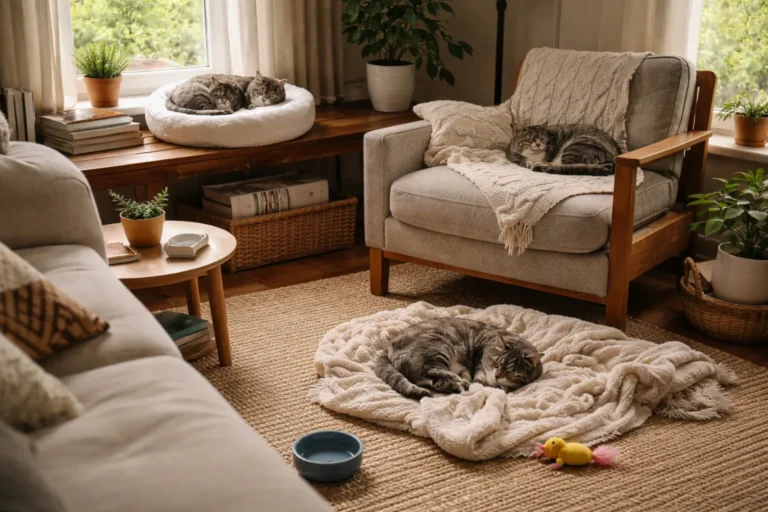
That routine can be especially visible in multi-cat homes. One cat may wake and groom before approaching another cat. Another may groom after leaving a shared resting space, as if resetting before moving into the rest of the house. The pattern can be subtle, but it often reflects a cat’s need for order and personal space.
Even in a very social household, grooming after waking is still a private act. The cat may tolerate attention while doing it, but the behavior itself remains self-directed. That independence is part of what makes it so characteristic of cats.
A cat that grooms after waking is usually settling back into awareness, not sending one single message. The full meaning comes from timing, body language, and consistency over time.
Reading the Habit Without Overcomplicating It
Not every instance of grooming needs to be interpreted deeply. Sometimes a cat wakes up, cleans its face, and moves on because that is simply what cats do. The habit is normal, useful, and built into feline daily life.
Still, it is worth noticing how your own cat does it. A calm, steady routine after waking usually reflects comfort and good adjustment. A sudden change in frequency, intensity, or focus is what deserves closer attention. The behavior itself is common; the details around it are what make it informative.
In the end, a cat grooming after waking is often doing several things at once. It is tidying the coat, easing back into movement, and marking the quiet moment between sleep and the rest of the day. For a cat, that small pause can matter more than it seems.