If you live with a cat, you have probably seen it many times: a nap ends, the eyes open slowly, and then the body unfolds in a long, deliberate stretch. Back legs reach out. Front paws press forward. The spine curves. Sometimes the tail lifts, and the whole cat seems to lengthen for a moment before settling back into motion.
It looks simple, almost automatic, yet it is doing several things at once. Stretching after sleep helps cats wake their muscles, reset their bodies, and move from rest into alertness. It can also reveal how relaxed, comfortable, or even slightly stiff a cat feels in that moment.
What makes this behavior so noticeable is the way cats do it with intention. They do not just stand up and walk away. They pause, extend, and often hold the stretch long enough for us to notice. That pause is part of the pattern. It tells us the body is shifting from a low-energy state to readiness.
In many households, this little ritual happens dozens of times a week. After a window nap. After a long afternoon on the couch. After curling in a bed, a box, or a sunny patch on the floor. The exact setting changes, but the movement is familiar. And once you start paying attention, you can often tell a lot from how the stretch looks, how long it lasts, and what comes right after it.
What the stretch looks like in everyday life
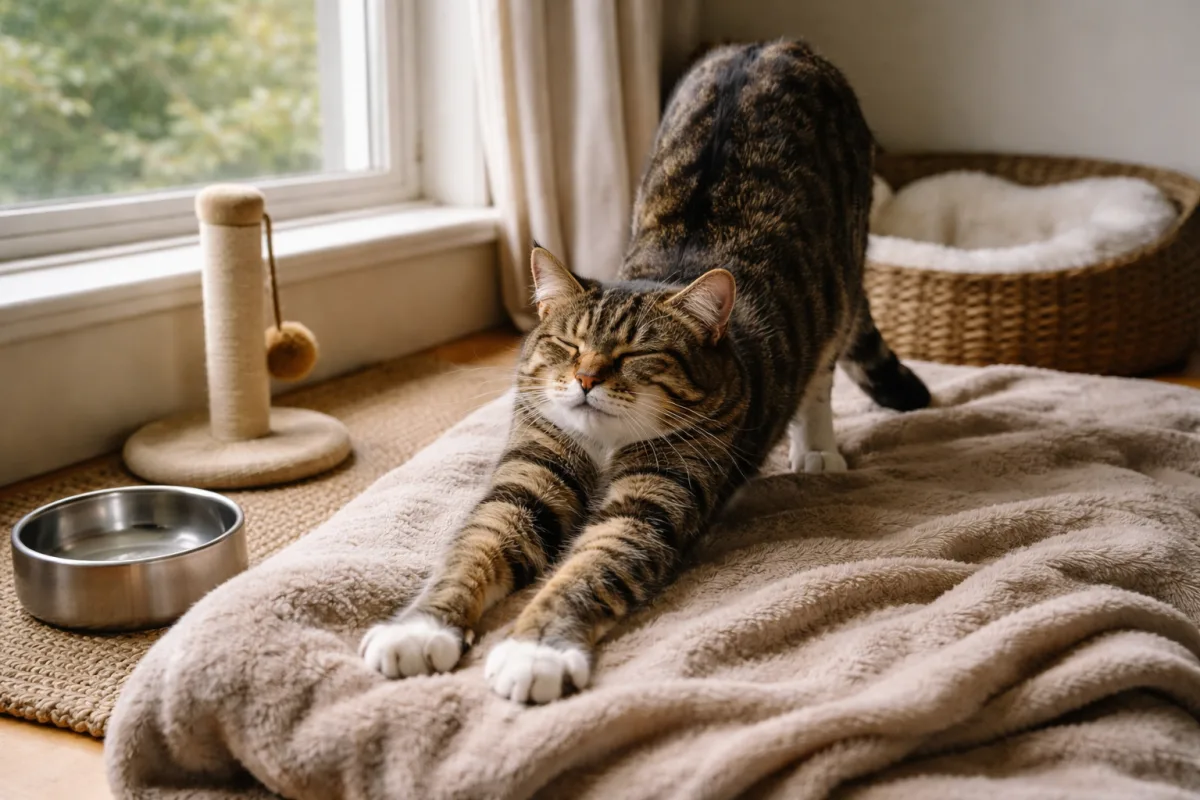
Cat stretches after sleeping do not all look the same. Some are brief and neat. Others are full-body events that begin in the toes and travel all the way through the back. A cat may stretch one front leg first, then the other, then push the hind legs straight behind the body. In some cases, the stretch ends with a yawn. In others, it finishes with a quick shake or a slow, lazy walk across the room.
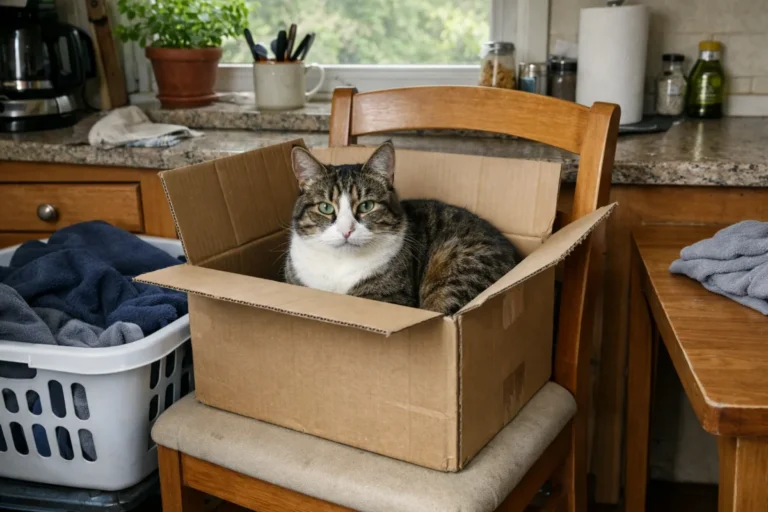
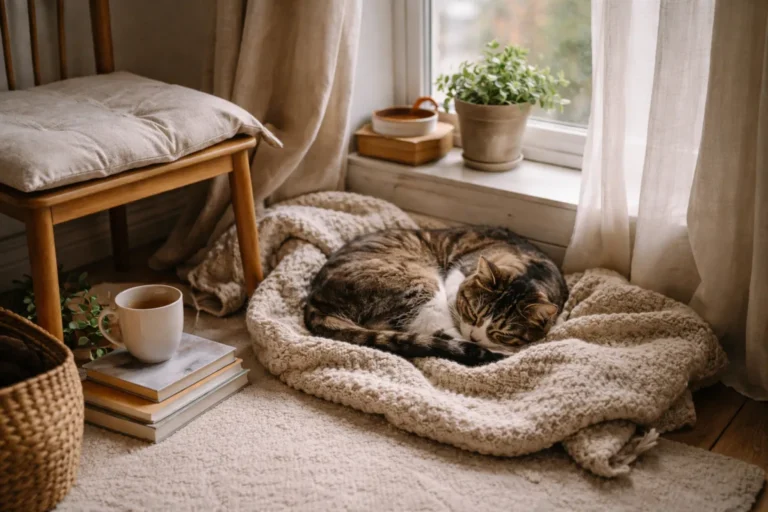
Many owners notice that the stretch appears most often right after deep rest. A cat may have been curled tightly in a box, tucked under a blanket, or stretched out on a warm surface. When it wakes, the body seems to need a moment to reassemble itself. The stretch is that transition.
It is also common to see a cat stretch before doing something active. A cat may sleep, stretch, then immediately head for food, a litter box, or a favorite lookout spot. That sequence makes sense. After rest, the body gets a quick reset before the next task.
Common forms of post-sleep stretching
- Front-leg reach with the chest lowered
- Long back-leg extension while standing or lying down
- Full-body stretch with the spine arched
- Side stretch after waking from a deep nap
- Stretch paired with yawning or blinking
- Slow movement into a walk after the stretch ends
The details can be subtle, but they matter. A cat that stretches slowly and evenly is often just easing into wakefulness. A cat that stretches in a rigid or unusual way may be telling you something different, especially if it happens often or seems uncomfortable.
Why the body wants to stretch after sleeping
Sleep changes how a cat’s muscles and joints feel. While asleep, the body is still active in some ways, but movement is limited. Muscles stay still for a long stretch of time, and that can leave a cat feeling a little stiff on waking. Stretching helps restore flexibility and brings blood flow back to the limbs and back.
It also helps with coordination. Cats are built for quick bursts of movement, sudden turns, and precise landings. That means their bodies need to move from rest to action efficiently. A stretch is a natural bridge between those states. It loosens tight muscles and helps the cat prepare for standing, jumping, grooming, or walking.
There is another simple reason too: stretching feels good. Cats do not stretch only because they need to. They also stretch because the movement itself provides relief and comfort. After a nap, the body may want to extend in the opposite direction from the sleeping curl. That long line through the spine and legs can be deeply satisfying.
Stretching after sleep is usually a normal wake-up behavior. It helps cats loosen muscles, increase circulation, and shift from rest to movement.
For many cats, the stretch is part of a larger wake-up routine. Blink. Yawn. Extend. Shake. Walk. Groom. Eat. The order is not always the same, but the pattern often shows that the cat is reorienting itself after rest.
How cat instincts shape this behavior
Cats are careful, efficient animals. Even when they seem relaxed, they are built to be ready for movement. In the wild, a cat that stayed stiff or unprepared after sleeping would be at a disadvantage. It might need to jump, run, climb, or react quickly. Stretching helps the body stay ready without wasting energy.
That instinct has stayed with domestic cats. Even a cat that spends the day on a sofa still carries the same basic body design and wake-up habits. The stretch is one small expression of that design. It is not random. It comes from a body that values quick readiness and controlled motion.
The behavior also fits another common cat trait: sensitivity to physical comfort. Cats tend to notice how their bodies feel. They choose sleeping positions carefully, shift when something feels off, and often respond to changes in texture, temperature, or surface height. Stretching is one more way they manage those sensations.
When a cat wakes from sleep, it may not be thinking about the stretch in a human sense. The movement is still purposeful, though. It serves comfort, function, and readiness at the same time.
What different stretches can suggest
Not every post-sleep stretch means the same thing. The context matters. So does the way the cat moves.
Relaxed, easy stretching
A slow, smooth stretch usually suggests that the cat feels safe and comfortable. The cat may extend fully, hold the position for a moment, and then move on without hesitation. This is common after a good nap in a familiar, quiet place.
Repeated or extra-long stretching
Sometimes a cat stretches more than once in a row, especially after a long sleep. That can simply mean the body needs a little more time to wake up. Older cats may do this more often, as may cats that have been lying in one position for a while.
Stiff-looking or cautious stretching
If a cat stretches carefully, pauses often, or avoids putting full weight on a limb, the behavior may reflect discomfort. That does not mean something is wrong every time. But if the pattern is frequent, uneven, or accompanied by limping, it deserves attention.
Stretching with a big yawn
Yawning and stretching often appear together. This is common and usually harmless. The yawn may come as the nervous system shifts out of sleep and into a more active state. Many cats do this as part of a normal wake-up sequence.
Stretching and then immediately acting alert
Some cats wake, stretch, and then switch into full attention very quickly. Their ears sharpen, their eyes widen, and they may head toward a sound or movement. In that case, the stretch is not a sign of laziness. It is part of a fast transition from rest to readiness.
A stretch that looks smooth and balanced is usually just a sign of comfort. A stretch that looks uneven, guarded, or reluctant can mean the cat is feeling stiff or sore.
How age changes the way cats stretch
Kittens often stretch in a loose, playful way. Their bodies are still developing, and they move with a kind of open-ended energy. A kitten may wake from a nap, stretch, and then immediately launch into play or exploration. The movement can seem exaggerated because the kitten is still learning control and coordination.
Adult cats usually stretch with more precision. Their movements are cleaner and more consistent. They know exactly how far to reach, how long to hold the position, and when to move on. A healthy adult cat often repeats the same wake-up routine many times a day without much variation.
Senior cats may stretch more slowly. They may need extra time to get the back legs under them or to shift weight through the spine. This does not automatically mean pain, but age can change how the movement looks. The stretch may become shorter, more deliberate, or less symmetrical.
When an older cat begins stretching differently than usual, the change is worth noticing. A small shift can tell you a lot about comfort, mobility, or joint stiffness. Cats are good at adapting, so a change may appear gradually rather than suddenly.
How the home environment influences the behavior
The place a cat sleeps can affect how it stretches afterward. Cats that sleep in warm, soft, quiet spots often wake more slowly. Their stretches may look leisurely because their bodies are not under stress. A cat that naps in a cool room or on a hard surface may seem to stretch more deeply when it wakes up.
Activity level in the home matters too. In a busy household, a cat may wake and stretch as part of staying aware of its surroundings. In a quiet household, the same cat may stretch more lazily and linger in the movement. The behavior is the same at its core, but the surrounding energy changes how it appears.
Routine also plays a role. Cats often sleep and wake at predictable times. If a cat usually wakes when someone starts moving in the kitchen or near the bedroom door, it may stretch and then go straight into investigation mode. If the home is calm, the stretch may be followed by another nap.
Temperature can influence the body as well. Cats often stretch more noticeably after sleeping in a cool area, since muscles may feel tighter. In a warm, comfortable spot, the movement may be softer and shorter.
Environmental factors that can change the stretch
- Surface firmness
- Room temperature
- Length of the nap
- Noise level in the home
- Age and mobility of the cat
- Whether the cat feels secure in the space
None of these factors changes the meaning completely. They just shape how the stretch looks and how often you notice it.
What owners often misread
Many people assume a cat stretching after sleep is always a sign of laziness or simple comfort. Comfort is part of it, but not the whole story. The stretch also supports movement, body awareness, and readiness. It is more active than it appears.
Another common misunderstanding is thinking that any stiff stretch means something serious. In reality, cats can look awkward when waking up from a very deep sleep, especially after lying still for a long time. One odd stretch is not enough to draw a conclusion. Pattern and context matter much more.
Owners may also mistake a stretch for a request for attention. Sometimes that is partly true. A cat may wake, stretch, and then move toward a person because it is ready for interaction. But the stretch itself is not usually a social signal. It is primarily about the body.
Pay attention to what the cat does next. The stretch alone tells part of the story; the next few seconds often tell the rest.
If the cat stretches and then eats, grooms, or walks calmly, the behavior is likely routine. If the cat stretches and then seems unwilling to move normally, that is a different picture. The difference lies in the follow-up.
The connection between stretching and body language
A cat’s stretch often comes with other small signals. The ears may stay loose. The eyes may blink slowly. The tail may float upward at the end of the motion. These details usually suggest a relaxed state.
If the body looks tight, the stretch may be more guarded. The cat may move in short bursts, keep weight off one side, or stop before fully extending. That can happen when a cat is cold, sore, or simply not ready to move freely yet. The shape of the stretch matters as much as the fact that it happens.
Timing can matter too. A cat that stretches right after waking from a nap is showing a normal pattern. A cat that stretches repeatedly throughout the day, especially without resting first, may just enjoy the movement. Cats sometimes stretch while changing positions, preparing to jump, or resetting after grooming. The wake-up version is only one part of a larger set of movement habits.
Some cats stretch in front of a person as soon as they wake. That can look affectionate, but it is often more practical than emotional. The cat is present, comfortable, and unguarded. It is simply moving through its routine in a shared space.
When the behavior seems different from usual
Most of the time, post-sleep stretching is ordinary. Still, it helps to notice changes. A cat that suddenly stops stretching, stretches less on one side, or moves stiffly afterward may be dealing with discomfort. The same is true if the cat seems reluctant to climb, jump, or walk after waking.
Other signs can add context. Slower movement, reduced interest in play, hesitation before jumping, or frequent position changes can all suggest that a cat is not feeling entirely comfortable. A single strange morning is easy to miss. A repeating pattern is harder to ignore.
Some cats hide soreness very well. They may still stretch, but the movement can become shorter, tighter, or less graceful over time. That is why familiar routines are useful. When you know how your cat usually wakes and moves, it becomes easier to notice small changes.
Why the behavior stays so consistent
Stretching after sleep is one of those cat habits that remains stable across many homes and lifestyles. Indoor cats do it. Outdoor cats do it. Young cats do it. Older cats do it. The details vary, but the underlying reason remains the same: the body is moving from rest to function.
That consistency makes the behavior easy to overlook. It happens so naturally that it can seem meaningless. But regular behaviors often reveal the most about a cat’s normal state. A familiar stretch in a familiar spot can show that the cat feels settled enough to relax fully and wake at its own pace.
There is comfort in that predictability. A cat that wakes, stretches, and moves on in its usual way is showing a body and environment that are working together smoothly. When the motion is steady and unforced, the whole routine tends to feel stable.
So when a cat stretches after sleeping, it is not just waking up. It is easing into the day in the way cats have done for a very long time, with a movement that supports the body, reflects comfort, and fits neatly into the rhythm of daily life.