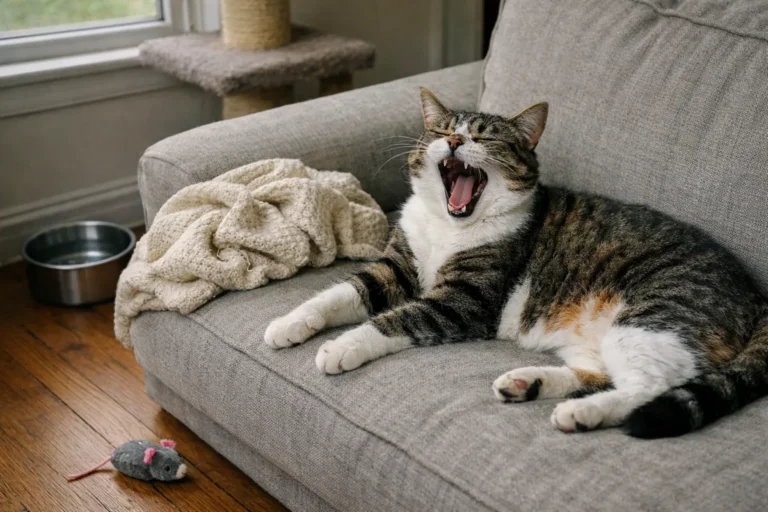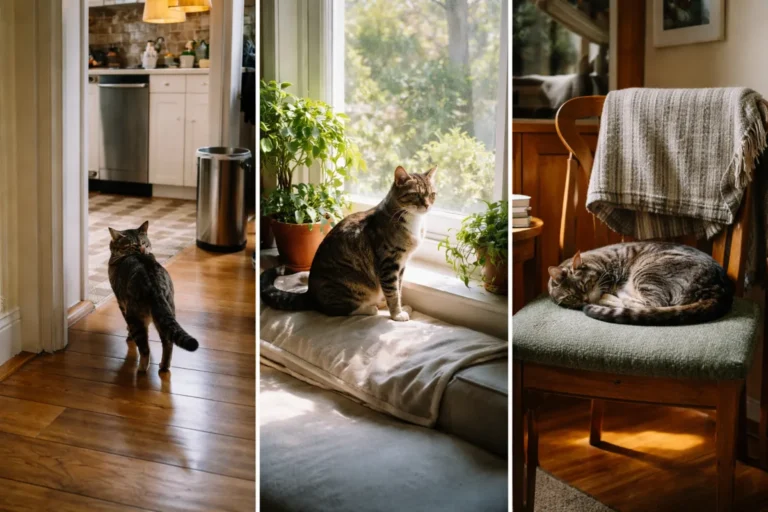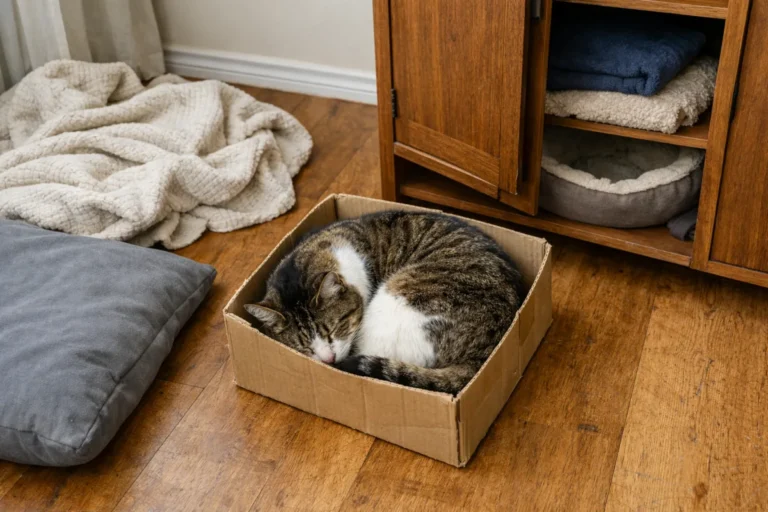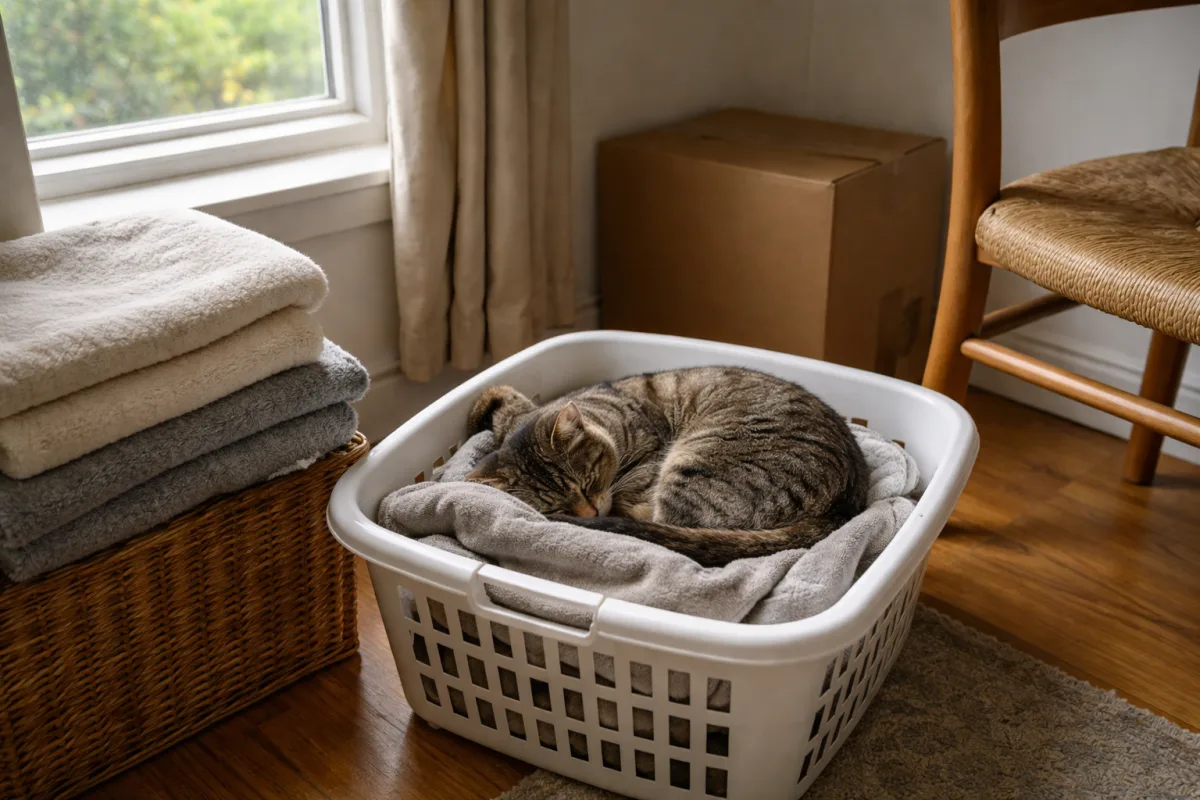
A cat curled inside a cardboard box is normal. A cat asleep in the bathroom sink, inside a laundry basket, or balanced on top of a shoe rack feels a little less predictable. Yet these odd sleeping spots are usually not random at all. Cats choose them for reasons that make sense to a cat, even when the choice looks inconvenient to everyone else.
Strange sleeping places often reveal small details about comfort, temperature, safety, routine, and personality. One cat may prefer the highest shelf in the house. Another may return again and again to a pile of clean towels. A third may settle on a windowsill for a short nap, then move to the back of the couch when the house gets busy. The pattern can look quirky, but it usually follows a clear logic once you know what to notice.
That logic starts with the cat’s body and instincts. Sleep is when a cat is least alert, so the place they choose has to feel secure enough to lower their guard. At the same time, the spot may need to offer warmth, airflow, privacy, or a view of the room. When several of those needs line up in one unusual corner of the home, that corner suddenly becomes the best bed in the house.
Why cats sleep in strange places
Cats do not always choose a sleeping place because it is soft or designed for pets. They often care more about how a space feels than how it looks to people. A spot that seems awkward can meet a cat’s needs better than a plush cat bed sitting out in the open.
Temperature is one of the biggest reasons. Cats are drawn to warm places, especially those that hold heat well. A laptop bag, a sunlit patch on the floor, a sweater left on a chair, or the top of a refrigerator can all feel ideal. Even cooler spots can attract a cat if the area gives them a break from noise or activity.
Security matters too. Many cats like sleeping where they can see the room without being easily reached. That may mean under a table, on a stair landing, behind a curtain, or inside an open cabinet. These places let them rest while still keeping a loose watch on what is happening around them.
Some cats also choose strange places because of scent. Laundry, shoes, blankets, and human clothing carry familiar smells. For a cat, that can make a spot feel safe and comforting. The smell of the household may be more soothing than the softness of the surface.
Cats often sleep in odd places because the spot fits a need: warmth, safety, scent, privacy, or a good view of the room.
What these sleeping spots look like in daily life
In everyday homes, strange sleeping places usually follow a few familiar patterns. A cat may pick the same unusual location each day, or they may rotate between several odd spots depending on the time of day and the activity in the house. The behavior often looks casual, but it tends to be consistent.
Common examples
- Inside sinks, bathtubs, or shower stalls
- On top of cabinets, shelves, or bookcases
- In cardboard boxes, shopping bags, or storage bins
- On clothes, shoes, towels, or blankets
- Under beds, sofas, or chairs
- Next to a heater, vent, or sunny window
- Inside drawers, closets, or open bags
Each of these locations offers a different mix of comfort and control. A bathroom sink may be cool and enclosed. A closet may be dark, quiet, and full of scent. A laundry basket may feel soft and surrounded by family smells. A shelf may give the cat a wide view of the house while keeping them out of the way.
Sometimes the appeal is purely practical. A cat may choose a sink during hot weather and a blanket pile when the room cools down. They may move from one place to another as the sun shifts across the floor. What looks like a mysterious habit is often a changing response to the environment.
Internal reasons behind the behavior
There is no single answer to why a cat prefers unusual sleeping spots. The choice usually reflects a mix of instinct, comfort, and emotional state. A healthy cat may behave this way simply because the spot suits them. But the details can still tell you something about how they feel.
Instinct and survival habits
Even in a safe home, cats carry instincts shaped by the need to avoid danger. They are both hunters and prey animals, and that creates a strong preference for resting in places where they feel protected. A strange sleeping spot may mimic the shelter of a den, a hidden nest, or a high perch that would have offered safety in the wild.
Height is especially attractive to many cats. Elevated spots help them monitor movement and reduce the chance of being startled. That is why shelves, cat trees, backs of sofas, and tops of furniture can become preferred sleep zones. The cat is not being difficult. They are following a deep preference for observation and control.
Comfort and body awareness
Cats are very sensitive to physical comfort. They may select a hard surface if they feel warm, a soft surface if they feel cold, or a narrow ledge if it helps them curl tightly. They also adjust based on age, energy level, and stiffness in the body. A cat with sore joints may stop climbing to high places and choose a lower, easier spot instead.
Small changes in sleeping position can reflect what the cat wants at that moment. A loose sprawl often suggests comfort and relaxation. A tucked-up loaf or a tight curl may mean they are trying to conserve warmth or feel more protected. The spot and the posture together create the full picture.
Emotional safety
Some strange sleeping places are less about physical comfort and more about emotional safety. Cats that feel overstimulated may look for quiet, tucked-away locations. Cats that are more confident may sleep in exposed areas because they do not mind being seen. Both choices can be normal.
If a cat suddenly starts hiding in unusual places after a change in the home, the reason may be more emotional than practical. New furniture, guests, construction noise, another pet, or a disrupted routine can all push a cat toward more private sleeping spots. In that case, the behavior is not about being quirky. It is about trying to feel settled again.
A cat’s sleeping place can reflect body comfort, emotional security, or both at the same time.
How the home environment shapes the choice
A cat’s environment has a strong influence on where they sleep. The same cat may choose very different places in a calm apartment, a busy family home, or a house with multiple pets. Noise, traffic, temperature, and available hiding spots all affect the decision.
Indoor homes and limited options
Indoor cats often invent sleeping places because the home itself becomes their entire territory. They study every corner and learn where sunlight lands, where footsteps are rare, and where they are least likely to be disturbed. A hallway closet, the space behind curtains, or the top shelf of a pantry can become a favorite retreat.
When a cat lives indoors, even ordinary household objects can become appealing. A pile of folded clothes is not just laundry. It is a warm, scented surface. A paper bag is not just packaging. It is a hideout. The environment gives them many small opportunities to make a sleeping place their own.
Busy homes and unpredictable activity
In active homes, cats often choose strange places because they need control over exposure. They may sleep somewhere unusual simply because the usual bed gets too much traffic. The path between the kitchen and living room may be noisy. A chair near a window may feel safer than the center of the room.
When routines are noisy or irregular, the cat may shift to spots that are less accessible to children, guests, or other pets. That can look like avoidance, but it may also be a sensible response to too much movement. The quieter the house, the more likely a cat is to sleep in open, visible places.
Weather and season
Seasonal changes also matter. In colder months, cats may migrate toward radiators, heat vents, sunlit spots, or blankets. In warmer months, they may prefer tile floors, sinks, bathrooms, or shaded corners. Their sleeping choices often track temperature more closely than people expect.
Humidity, drafty rooms, and sunlight patterns can all affect the decision. A bathroom floor can feel inviting in summer but ignored in winter. A window perch may be perfect in the morning and too hot by afternoon. These shifts are normal signs of a cat responding to the environment in real time.
What the behavior may signal about the cat’s state
Sleeping in strange places can signal a simple preference, but the pattern may also give hints about the cat’s overall state. The key is not the odd location alone. It is how the cat uses it, how often they return, and whether the choice is changing in a noticeable way.
Relaxed and content
When a cat chooses an unusual place and sleeps there easily, it often means the spot feels right. They may arrive calmly, settle quickly, and wake without seeming tense. This is common when the place offers the right mix of warmth and quiet.
A cat that naps on top of a bookshelf, then stretches and walks away with no hesitation, is usually just using the room in a cat-like way. The sleeping place is odd to people but perfectly workable to the cat.
Seeking distance
If a cat suddenly starts sleeping far from usual activity, the change may suggest they want more distance. That can happen when the home has become louder, more crowded, or more unpredictable. It may also happen if the cat is feeling sensitive and wants more control over who approaches them while they rest.
In these cases, the sleeping spot may be less about novelty and more about protection. A cat that sleeps in a closet during a loud renovation, for example, is showing a clear preference for calm and containment.
Feeling unwell or uncomfortable
Sometimes a new sleeping pattern can reflect discomfort. A cat in pain may stop climbing to a favorite perch and choose a lower, easier place. A cat that seems unusually restless may try several spots before settling. A cat that sleeps in odd places more than usual, while also acting withdrawn or less active, may need a closer look.
Context matters here. A cat that changes sleeping spots but still eats, grooms, and interacts normally is usually just adapting. A cat that changes habits and seems less like themselves may need attention from a veterinarian.
What matters most is the pattern. One quirky nap spot is normal. A sudden shift in sleep behavior can mean the cat is reacting to stress, discomfort, or a change in the home.
How owners often misread the behavior
People often assume a cat sleeping in a strange place is being stubborn, silly, or overly independent. Sometimes they are simply following instincts that do not look logical from the outside. Other times, the place chosen by the cat reveals something more specific than the owner expected.
“They must not like their bed”
That is possible, but not always true. Many cats ignore store-bought beds because the bed is too exposed, too warm, too soft, or located in the wrong area. A cat may reject a bed that looks perfect to a person and instead settle in a laundry basket because it feels safer and more familiar.
Placement matters as much as the bed itself. A bed in the middle of a busy room may go unused, while the same bed moved under a table or near a wall may become much more attractive.
“They are acting out”
Cats do not usually choose sleeping places to make a point. The behavior is more often practical than dramatic. If they sleep in a sink, on a pile of papers, or inside a cardboard box, they are responding to the conditions that make that place useful to them.
That said, a change in sleeping habits can still be meaningful. A cat that suddenly starts sleeping away from the family after being sociable may not be making a statement. They may simply be tired, sensitive, or uncomfortable with something in the environment.
“They only like strange places because it is funny”
There is a playful side to many cats, and some do seem to enjoy unusual choices. But even the funniest-looking sleeping spot usually has a reason behind it. Cats rarely waste energy on a place that feels wrong. If they choose it, it usually works for them in some way.
That does not mean the choice is always serious. A cat may love a paper bag today and ignore it tomorrow. Preferences shift quickly. Cats often test the environment, then settle where the combination of comfort and control feels best.
Body language that adds more meaning
The sleeping spot itself tells part of the story. The cat’s posture, breathing, and entry behavior tell the rest. Small signals can help distinguish a relaxed choice from a more guarded one.
Signs of ease
- Loose body posture
- Slow, even breathing
- Soft paws and relaxed whiskers
- Slow blinking before sleep
- Easy repositioning without tension
These signs suggest the cat feels safe in the chosen place. They are not defending the spot. They are settling into it naturally.
Signs of caution
- Frequent checking of surroundings
- Sleeping with one ear angled forward
- Quick wake-ups from small noises
- Tense body or tucked paws held tightly
- Reluctance to be approached in the spot
These signals do not always mean something is wrong. Some cats are simply light sleepers. Still, when caution appears often, it suggests the spot is serving as a refuge rather than a purely comfortable bed.
How strange sleeping places change with age and routine
Kittens, adults, and older cats may all use strange places differently. Younger cats often choose spots that mix security with curiosity. They may sleep in cardboard boxes, inside open drawers, or under furniture while exploring the home. Their choices can change fast because they are still learning the layout and rhythm of the house.
Adult cats usually become more selective. Many develop a few favorite places and return to them consistently. These spots often reflect a steady understanding of the household: where the noise is, when people are active, and which corners stay calm.
Older cats may shift again. A senior cat might avoid high places that once were easy to reach and choose lower but still unusual spots instead. Warmth, softness, and easy access become more important. A cat that used to sleep on top of a dresser may start choosing a chair cushion or a blanket near the floor.
Routine can strengthen any of these patterns. If the house is predictable, cats often settle into repeat sleeping habits. If the routine changes often, their sleeping places may shift too. The pattern can remain stable for years or change within a few days depending on life at home.
When the pattern becomes more noticeable
Strange sleeping places tend to stand out more when something in the home changes. That might be a new pet, a moved bed, a different work schedule, guests, louder weather, or seasonal shifts in light and temperature. Cats are quick to notice these changes and adjust accordingly.
Some changes are subtle. A cat may begin sleeping under the dining table every afternoon after the room gets brighter at that time of day. Another may move to the closet after a new air vent starts blowing nearby. These small environmental details can have a bigger effect than owners expect.
If the pattern is stable and the cat otherwise seems content, the strange place is probably just part of their normal routine. If the pattern is new, intense, or paired with other behavior changes, it deserves more attention. A useful question is not “Why is this place weird?” but “What changed around the time this place became important?”
What long-term observation can reveal
Over time, a cat’s sleeping places can show how they feel about the household. Repeated use of the same odd spot often means the location meets a specific need very well. A cat who returns to the same closet shelf, sink, or blanket pile is not being mysterious. They are choosing consistency.
Long-term patterns can also reveal personality. Some cats prefer open perches and bright spots. Others prefer hidden corners and enclosed spaces. Some move with the sun. Others always choose the most sheltered part of the room. Those preferences usually stay recognizable even when the exact spot changes.
When the pattern changes, it may reflect a real change in the cat’s life. New sleeping habits can appear after a move, a medical issue, a household conflict, or a change in weather. Looking at the pattern across weeks, not just one afternoon, gives a much clearer picture than reacting to a single unusual nap.
Natural reasons behind the odd choices
At the center of all this is a simple idea: cats are selective sleepers. They do not just want a place to lie down. They want a place that fits the moment. If that place happens to be a laundry basket, a bathroom sink, or the top of a cabinet, the choice is still doing real work for them.
That is why the same cat may seem fussy one day and perfectly settled the next. Their needs shift with temperature, noise, scent, routine, and mood. The home may look the same to a person, but a cat experiences it as a changing landscape of safe zones, warm surfaces, and quiet corners.
So when a cat drifts into a strange sleeping place and stays there for hours, they are usually not being random. They are making a small, practical decision in the language of cats: this is warm enough, hidden enough, familiar enough, or high enough. And for that moment, that is exactly what sleep requires.