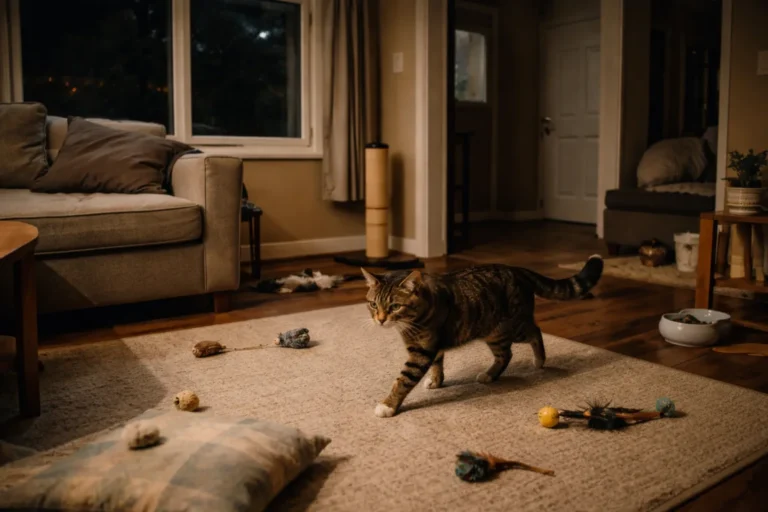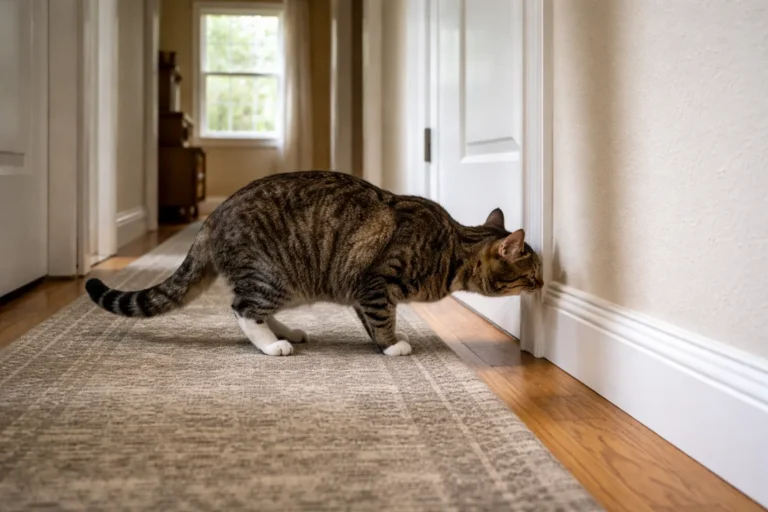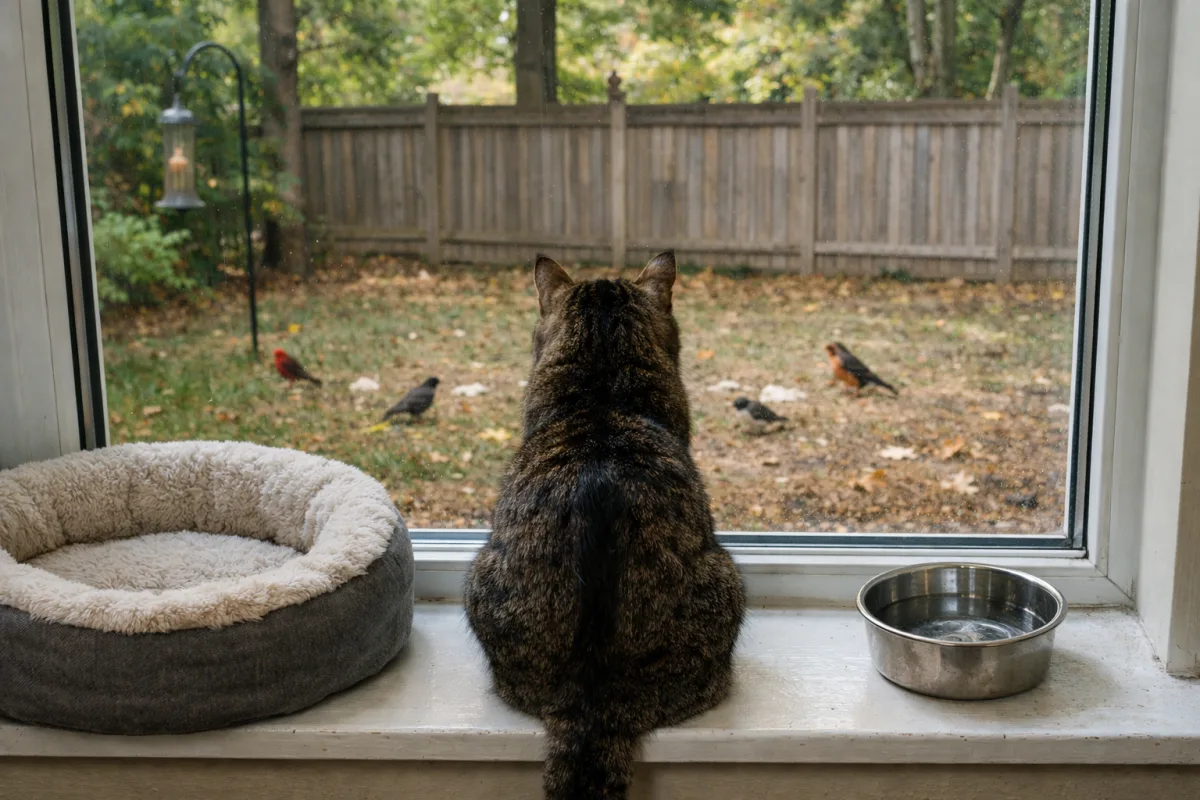
A cat can sit in front of the same window for a long time and seem completely content doing it. To people, that can look repetitive. To the cat, it is often a small routine filled with information, comfort, and quiet purpose.
Window watching is one of those cat habits that looks simple on the surface but usually has several layers underneath. A passing bird, the movement of a tree branch, a shift in neighborhood sounds, or even the warmth of the sill can all matter at once. The cat may not be looking for one single thing. It may be tracking a whole changing scene.
When cats return to the same window again and again, they are often answering a familiar need. Sometimes that need is curiosity. Sometimes it is security. Sometimes it is just the pleasure of watching a world that never stays exactly the same.
What Cats Are Really Doing at the Window
A cat at a window is rarely doing nothing. Even when the body looks relaxed, the mind is usually active. The ears may swivel toward outside sounds, the eyes may follow motion that people barely notice, and the tail may make tiny adjustments as the cat measures what is happening beyond the glass.
That behavior can look almost meditative. The cat is still, but not disengaged. Windows give cats a steady stream of stimulation without requiring them to move around much, which makes the spot appealing for both active and calm cats.
In many homes, the same window becomes the main observation post. The cat learns that this place consistently offers a good view, a familiar routine, and enough stimulation to keep attention. Over time, the habit becomes part of the day.
Common things cats notice outside
- Birds hopping across a fence or feeder
- People walking dogs or carrying packages
- Leaves, branches, rain, or snow moving in the yard
- Cars, bicycles, and delivery activity
- Other cats in the neighborhood
- Insects near the glass or on the screen
These details may seem minor, but cats are built to notice motion quickly. Even a brief movement can be enough to hold attention for several minutes. A window turns ordinary outdoor life into a changing display.
For many cats, the same window matters because it offers the same reliable view with new details every day.
Why the Same Window Becomes the Favorite Spot
Cats tend to choose places that feel predictable. A favorite window usually combines several advantages in one location. It may have the best angle toward birds or street activity. It may stay warm in the afternoon. It may also be quiet enough that the cat can rest without interruption.
Once a cat has had a few interesting moments there, the place starts to carry meaning. Cats remember where things happen. If the window has repeatedly offered movement, sunshine, or a chance to observe without being disturbed, the cat is likely to return.
There is also a comfort factor. Familiar spots reduce uncertainty. A cat can stay alert without having to scan the entire home. The world outside becomes the main event, while the room behind the cat stays known and safe.
Reasons a window can feel especially rewarding
- It gives the cat control over when to engage and when to rest
- It combines quiet with light activity
- It provides a clear territory to monitor
- It creates a routine the cat can repeat each day
- It often sits near a comfortable sleeping or lounging area
That mix of predictability and change is part of the appeal. The location stays the same, but the details outside never fully repeat. For a cat, that balance is especially attractive.
Instincts Behind the Habit
Window watching is tied to instinct. Cats are natural observers, and observation is not passive for them. It is a basic way of gathering information. In the wild, tracking movement helps a cat avoid threats, locate prey, and understand what is happening in the surrounding space.
Indoor cats still carry those instincts, even though their daily lives are very different. A window gives them a low-risk way to practice the same attention skills. They can watch, judge, and react without having to leave the house or commit to action.
This is one reason the behavior may repeat so strongly. Cats are not just looking at scenery. They are checking their environment, comparing sounds and sights, and staying aware of change. The habit fits the way their minds work.
Cats often watch the same window because the behavior satisfies curiosity while still preserving safety and control.
What the Behavior Can Say About a Cat’s State of Mind
A cat’s window habit can reflect different internal states depending on how it is done. A relaxed cat may sit quietly, blink slowly, and settle in for a long observation session. The body stays loose. The attention is steady but not tense.
A more alert cat may fixate on one specific movement, crouch low, or flick the tail more sharply. That does not always signal a problem. Sometimes the cat is simply highly engaged. The difference is usually in the overall body language, not just the act of watching.
Some cats use the window as a safe outlet for energy. They may be playful, stimulated, or mildly frustrated that the outside world is out of reach. Others may sit there because the room feels quiet and the outside view gives them a sense of company.
Possible meanings behind the watchful posture
- Curiosity about activity outside
- Relaxation in a comfortable spot
- Alertness to movement or sound
- Anticipation of a routine event, such as a person arriving
- Desire for stimulation in an otherwise quiet home
The key is to read the whole picture. One cat may seem deeply focused but completely calm. Another may appear equally focused but carry tension in the body. Same window, different inner state.
How Body Language Changes the Meaning
The cat’s posture tells more than the staring itself. A loose body, soft eyes, and slow breathing usually suggest simple interest or comfort. A cat that kneads the windowsill before settling may be marking the spot as safe and pleasant.
On the other hand, if the cat’s pupils are very wide, the ears are pulled forward hard, and the tail is twitching with intensity, the cat may be highly aroused by what is outside. That can happen with birds, squirrels, strange cats, or sudden noises. The behavior is still normal, but it is more charged.
Sometimes a cat seems to stare through the window rather than at anything specific. In those moments, the cat may be resting while staying loosely attentive. The eyes stay open, but the brain is not necessarily tracking one exact event.
Signs that the cat is calm
- Loose shoulders and relaxed limbs
- Slow blinking or half-closed eyes
- Even breathing
- Minimal tail movement
- Repositioning occasionally, not repeatedly
Signs that the cat is highly stimulated
- Forward-leaning posture
- Rapid tail flicking
- Brief chirps or trills
- Sudden tracking movements
- Intense focus on one target
Both states can happen at the same window. The difference matters because it changes how the behavior should be interpreted. A calm observer and an overstimulated hunter are doing different things, even if they look similar at first glance.
How the Home Environment Shapes the Habit
The surrounding environment often determines how appealing the window becomes. A home on a busy street will offer different stimulation than one facing a quiet yard. Birds, parked cars, neighboring pets, and even reflected movement from glass can all influence how often a cat returns to the same spot.
Indoor-only cats may rely on windows more heavily because they cannot directly explore outside. The window becomes a substitute for outdoor access. It gives them a way to stay connected to the larger world while still remaining indoors.
In a home with few daily changes, the window may become even more important. It becomes one of the only places where something new might happen at any moment. That can make the habit stronger and more regular.
Environmental factors that strengthen the pattern
| Factor | Effect on window watching |
|---|---|
| Bird feeders nearby | More frequent and longer watching sessions |
| Busy sidewalks or roads | Regular movement to track throughout the day |
| Warm sunlight on the sill | Longer stays and repeated visits |
| Quiet indoor routine | Window becomes a main source of stimulation |
| Access to screens or partially open windows | Stronger scent and sound cues increase interest |
Even small environmental changes can shift the behavior. Moving a chair near the window or placing a cat bed there may turn a casual glance spot into a daily destination.
Different Cats, Different Reasons
Not every cat watches the same window for the same reason. A young cat may do it out of energy and interest. An older cat may do it because the routine is soothing and easy on the body. A shy cat may prefer it because the view allows observation from a protected position.
Breed tendencies can influence behavior too, but individual personality matters more. Some cats are naturally more observant. Others are more active and will spend long periods tracking movement. Some are simply very attached to routine and will return to the same window at nearly the same time each day.
A cat’s history also matters. A cat that previously spent time outdoors may show strong interest in windows because the view connects to older habits. Another cat may have learned that the sill is a peaceful place to nap after a meal, so the watching and resting blend together.
Repeated window watching is often a mix of instinct, comfort, routine, and the cat’s own personality.
When the Behavior Becomes More Noticeable
Some cats watch a window occasionally. Others seem to organize a large part of the day around it. The habit often becomes more noticeable during certain times. Morning and evening are common, especially when outdoor activity changes or animals become more active.
Weather can increase the pattern as well. Rain, wind, falling snow, and strong sunlight all create motion or light shifts that catch a cat’s attention. The cat may return to the window more often on these days because the scene outside changes in ways that are easy to track.
The behavior can also increase when the household is quiet. If people are sleeping, working, or occupied elsewhere, the window becomes one of the few lively places in the cat’s environment. In that sense, the habit can grow out of boredom as much as curiosity.
Times cats often watch windows more closely
- Early morning, when birds and outdoor movement increase
- Late afternoon, when household routines slow down
- After meals, when the cat is alert but not active
- During weather changes
- When the cat is home alone or under-stimulated
These patterns are often stable. Cats like repetition, and if a window becomes interesting at certain times, they remember.
What Owners Often Misread
It is easy to assume a cat is bored, lonely, or “just staring.” Sometimes that is partly true, but the behavior usually has more texture than that. A cat can be perfectly satisfied while watching the same window, especially if the body language is relaxed and the routine is consistent.
Another common misunderstanding is to treat all intense watching as stress. In some cases, the cat is simply highly engaged. A bird feeder can produce a level of excitement that looks dramatic without being harmful. The cat may be tracking, calculating, and enjoying the challenge all at once.
What matters most is the full context. If the cat still eats well, sleeps normally, uses the litter box as expected, and behaves comfortably at other times, the window habit is usually just a normal part of daily life. If the cat seems agitated, trapped, or unable to settle anywhere else, then the behavior may be part of a bigger pattern.
Questions that help with interpretation
- Does the cat seem relaxed or tense at the window?
- Is the watching occasional or constant?
- Does the cat move away easily when something else happens?
- Is the cat also playing, eating, and resting normally?
- Has the environment changed recently?
These questions keep the focus on the cat’s overall behavior rather than one repeated action. That leads to a more accurate reading of what the window means to that cat.
How the Habit Can Change Over Time
A cat’s relationship with a favorite window often shifts with age. Kittens may approach the window as a place of discovery, full of sudden jumps and quick turns. Young adults may watch with more intensity and chase every moving shadow. Older cats may settle into slower observation, using the window as a comfortable checkpoint during the day.
The window itself may stay the same while the cat’s behavior changes around it. A cat that once leapt onto the sill every hour may later prefer a padded chair nearby. Another cat may watch less often but stay longer once settled. The pattern is flexible, even when the spot remains important.
Long-term observation can reveal small changes in attention, energy, and timing. Some cats become more attached to windows as indoor life becomes quieter. Others lose interest when their environment gains more stimulation through toys, companionship, or access to secure outdoor time.
As cats age, the same window may serve the same purpose in a different way: exploration in youth, calm monitoring later on.
What the Same Window Means in Everyday Life
In daily home life, a favorite window becomes more than part of the room. It can be a lookout, a resting place, and a familiar ritual all at once. The cat may visit it after breakfast, return there in the afternoon, and check it once more before bed. That rhythm can be steady for months.
Owners often notice that the cat seems to “keep watch” on the home from that one position. In practical terms, the cat is using a stable vantage point to monitor a world full of small changes. The window is not chosen at random. It is chosen because it keeps giving something worth noticing.
That is why cats return to the same window. It offers a blend of safety, information, and interest that fits the way they naturally move through the day. The scene outside changes, but the comfort of the spot stays the same.
When a cat settles there again and again, it is usually following a pattern that makes sense to it. A window can be quiet without being empty, still without being dull, and familiar without becoming boring. For many cats, that is exactly the right balance.