A cat that keeps walking from room to room can look restless, mysterious, or even a little dramatic. One minute it is in the hallway, the next it is back in the kitchen, then it circles the sofa and returns again. That repeated movement usually means something, even if the reason is simple.
Sometimes the behavior is ordinary. A cat may be checking territory, following a routine, looking for a person, or waiting for a meal. Other times, the walking has more to do with emotion, energy, or a change in the environment. The details matter: how fast the cat walks, whether it pauses to look around, and what happens right before and after the pattern starts.
Repeated walking is not always a problem. In many homes, it is just part of how a cat interacts with space. But when the pattern becomes frequent, intense, or paired with other changes, it helps to pay attention. The house layout, daily schedule, and the cat’s age all shape what this behavior means.
What Repeated Walking Looks Like in Everyday Life
Some cats move through the house in a loose loop. They pass the same spots again and again, often with a calm body and a focused face. Others pace in a sharper way, walking quickly, turning around, and repeating the path without settling.
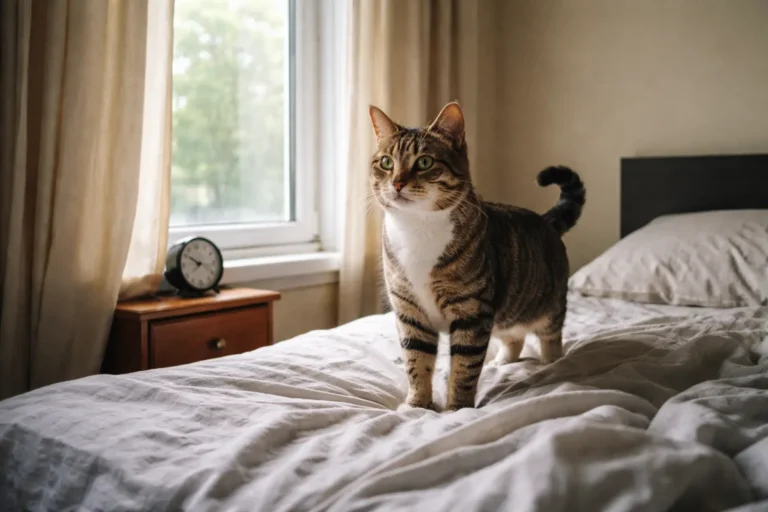
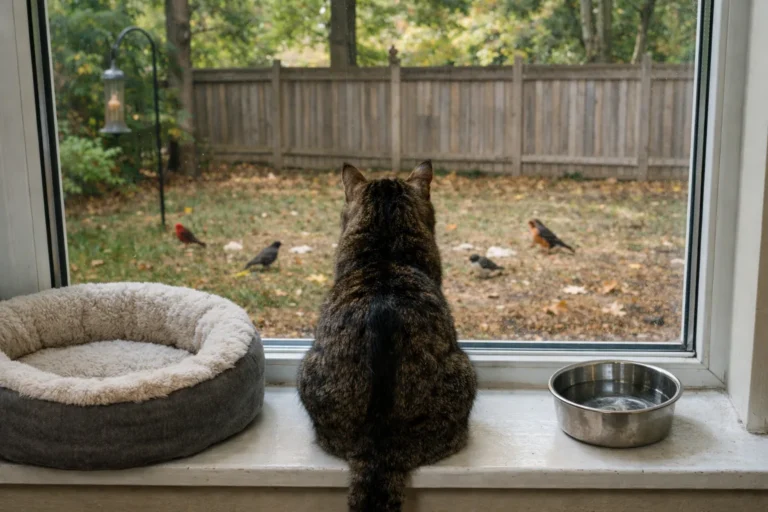
In practice, this can look like a cat starting in the bedroom, moving to the kitchen, crossing the living room, and then doing the same route several times. It may stop at a window, sniff a door, or glance toward a sound before continuing. The behavior can last a few minutes or stretch across an entire evening.
Not every repeated walk means the same thing. A cat that strolls through the house once or twice while the family is getting ready for dinner is different from one that paces constantly near the hallway at night. The first may simply be curious. The second may be looking for something more specific, or reacting to a need that has not been met.
Why Cats Do It in General
Cats are territorial animals. Walking around the home helps them keep track of their surroundings and gather information. Each pass through a room gives them new scent cues, sound cues, and visual updates. Even a familiar home changes throughout the day, and cats notice those small shifts.
Repeated walking can also come from a cat’s strong connection to routine. If food, play, sleep, and attention usually happen at certain times, the cat may begin moving around as that moment approaches. The behavior is often a form of anticipation. The cat is not simply wandering; it may be checking whether the expected event is about to happen.
There is also the matter of energy. Indoor cats especially may build up motion that needs an outlet. A quick circuit through the house is one way to express that energy when there is no outdoor space to explore. It is not the same as a full play session, but it can still serve a purpose.
Repeated walking often reflects one of three things: a cat is checking its environment, preparing for a routine event, or working through inner restlessness.
Common Situations When It Appears
Before Meals
Many cats start walking repeatedly when they sense feeding time is near. They may head to the kitchen, circle near the feeding area, and return to nearby rooms. The behavior becomes even more noticeable if the household is late with food or if the cat has learned to link certain sounds, like a cabinet opening, with meals.
This is usually not random. Cats are skilled at reading patterns. If dinner has happened around the same time for weeks, the cat may begin pacing beforehand as part of its internal clock. The walking is often paired with watching, meowing, or standing in a place where the person usually appears.
When Waiting for Attention
Some cats walk repeatedly when they want interaction. They may pass by a person several times, pause near a chair, then continue into another room as if inviting someone to follow. This can happen when the cat wants petting, play, or simple acknowledgment.
In homes where people are busy, a cat may repeat this pattern more often. The walking becomes a quiet way to ask for response. It may not be loud or obvious, but it is often deliberate.
After a Change in the Home
A new smell, new furniture, visitors, an open window, or a change in routine can make a cat start checking the house more often. Walking repeatedly is one way to re-map the environment. The cat may move through the same rooms again and again until the situation feels settled.
This is especially common in cats that are cautious by nature. A small change that seems meaningless to a person can feel important to a cat. Repeated walking helps the cat monitor the new conditions.
Possible Internal Reasons Behind the Behavior
Curiosity and Information Gathering
A cat’s repeated walking is often linked to curiosity. Cats do not just look at a room once and move on. They inspect spaces in layers. A second or third pass can reveal a scent trail, a sound, or movement that was missed before.
Because their senses are so sensitive, a cat may revisit the same route to confirm what is happening. This can look like needless pacing, but from the cat’s point of view, the investigation is still ongoing.
Anticipation and Routine
Routine has a strong influence on feline behavior. A cat that eats, plays, or sleeps at predictable times may begin to pace as those events approach. The walking can seem like impatience, but it is often more accurate to think of it as readiness.
Some cats become especially active around dawn or dusk. These hours fit natural hunting rhythms, and many indoor cats still carry that pattern. Even if they are not going outside, their bodies may still expect movement at those times.
Restlessness or Understimulation
When a cat has too little to do, repeated walking can become a way to release built-up energy. This is more likely in homes with limited climbing space, little play, or long quiet periods. The cat may move because it needs a physical or mental outlet.
This type of walking often has a different feel. The cat may seem unable to settle. It may move through the house with purpose but no clear destination, then repeat the same sequence again soon after.
Stress or Unease
Not all pacing is playful or routine-based. Stress can also push a cat to move around repeatedly. A frightened cat may check exits, avoid certain rooms, or keep moving because it does not feel safe staying still. In these cases, the walking is part of a larger tension pattern.
Look at the body along with the movement. Tense muscles, flattened ears, a low tail, dilated pupils, hiding, or vocalizing can all point toward discomfort. The walking itself is only one piece of the picture.
When repeated walking comes with tension, hiding, or sudden behavior changes, it is more likely to reflect stress than curiosity.
How the Home Environment Shapes the Pattern
The same behavior can mean different things in different homes. A cat in a busy apartment may walk repeatedly because it wants a quiet spot or is reacting to noise from neighbors. A cat in a large house may do it because the space gives it many routes to inspect. The layout matters more than people sometimes realize.
Long hallways, open doorways, stairs, and access to windows can all encourage repeated movement. Cats often use these features like checkpoints. They may move from one “safe” point to another, pausing to survey the area before continuing.
Household rhythm matters too. A cat in a home with irregular schedules may walk more often because it cannot predict what comes next. In a calmer, more predictable home, the same cat may settle more easily. This does not mean one lifestyle is better in every case, but it does show how sensitive cats are to timing.
Indoor Versus Outdoor Background
Cats with outdoor experience often behave differently from cats that have always lived indoors. An outdoor cat may be used to patrolling territory, so repeated walking inside can look like a miniature version of that same habit. It may be checking boundaries or revisiting pathways it considers important.
Indoor-only cats may walk more through the home when their environment lacks variety. A window perch, scratching post, or access to different levels can change that pattern by giving the cat more interesting places to stop. When those options are limited, walking becomes one of the easiest ways to stay active.
What Body Language Says About the Meaning
The same walking pattern can carry very different messages depending on the rest of the body. A cat that walks with a loose spine, a neutral tail, and soft eyes is often calm. That kind of movement may simply be part of daily exploration.
A cat that walks quickly with a fixed stare, quick turns, or frequent meowing is showing more intensity. It may be looking for a person, waiting for something, or reacting to a strong internal state. Fast movement does not always mean distress, but it usually means the cat has a goal.
When the walking is paired with rubbing, sniffing, or stopping to sit near people, attention is often part of the message. When it is paired with hiding, freezing, or skittish reactions, the cause may be nervousness. The behavior is best understood as a pattern, not a single gesture.
How Owners Often Misread It
People sometimes assume a cat is “just being weird” when it keeps walking around the house. That may be true in the sense that every cat has habits, but the behavior usually has a reason. Another common mistake is to treat all pacing as anxiety. That is not accurate either.
A cat that walks repeatedly near the kitchen might be hungry. A cat that circles the hallway before playtime may be excited. A cat that checks every room after a loud sound may be trying to feel safe again. The same motion can come from several different states.
Because of that, it helps to notice timing. Does the walking happen before meals, after guests arrive, during quiet evening hours, or when the cat has been alone too long? Patterns around the behavior often reveal more than the walking itself.
When the Behavior Is Normal and When It Deserves Attention
Many cats walk around the house repeatedly as part of normal life. The key is whether the pattern is flexible. A normal pattern usually comes and goes. The cat may pace for a while, then rest, groom, eat, or play. It still shifts easily into other activities.
More concern is warranted if the walking becomes constant, intense, or new. A sudden change in behavior can point to discomfort, illness, anxiety, or a change in the household that has not been obvious to the people living there. Cats often show subtle signs first, and repetitive movement can be one of them.
If the cat is also restless at night, eating less, vocalizing more, urinating outside the litter box, or acting differently in other ways, the walking may be part of a broader issue. A pattern that lasts beyond a few days deserves a closer look.
Questions That Help Clarify the Cause
- Does the walking happen at the same time each day?
- Is it linked to meals, play, visitors, or noise?
- Does the cat look relaxed or tense while moving?
- Does the cat stop to rest, or keep going without settling?
- Has anything changed in the home recently?
What the Behavior May Be Saying in Different Moments
| Situation | Possible Meaning |
|---|---|
| Walking before dinner | Anticipation, routine, hunger |
| Walking after a loud noise | Alertness, checking safety |
| Walking while meowing | Seeking attention or communication |
| Walking in a loop at night | Energy, habit, or restlessness |
| Walking and sniffing every corner | Environmental checking and scent tracking |
| Walking with tense body language | Stress or discomfort |
The Deeper Role of Movement in a Cat’s Day
For a cat, movement is not only exercise. It is also information, habit, and emotional expression. Repeated walking around the house can be a small but meaningful way to stay connected to the environment. The cat is not simply covering distance. It is reading the home again and again.
That is why the behavior often changes with age, routine, and household activity. A young cat may walk repeatedly because it has energy to burn. An older cat may do it more slowly, perhaps due to habit, changing needs, or discomfort. A highly sensitive cat may walk in response to small disruptions that other cats ignore.
When the behavior is viewed this way, it becomes easier to understand. The house is not just a backdrop. It is part of the cat’s daily territory, and repeated movement is one of the ways that territory gets managed.
Repeated walking is often the cat’s way of checking the world, preparing for what comes next, or expressing a need without using obvious signals.
Closing Thought
A cat that walks around the house repeatedly is usually doing more than passing time. It may be tracking routine, looking for attention, revisiting familiar territory, or trying to settle a feeling that has not yet gone away. The meaning changes with the timing, body language, and environment.
When the pattern is calm and occasional, it often fits normal feline behavior. When it grows intense or comes with other changes, the walking starts to tell a different story. Watching where the cat goes, how it moves, and what happens around the behavior gives the clearest answer.