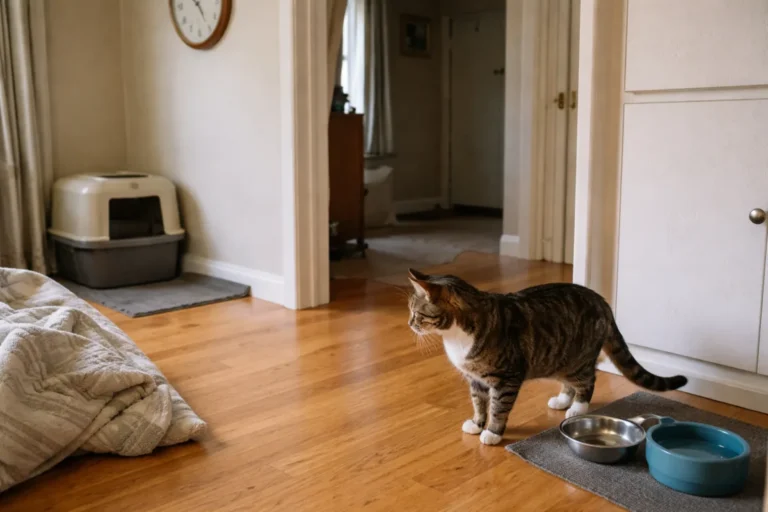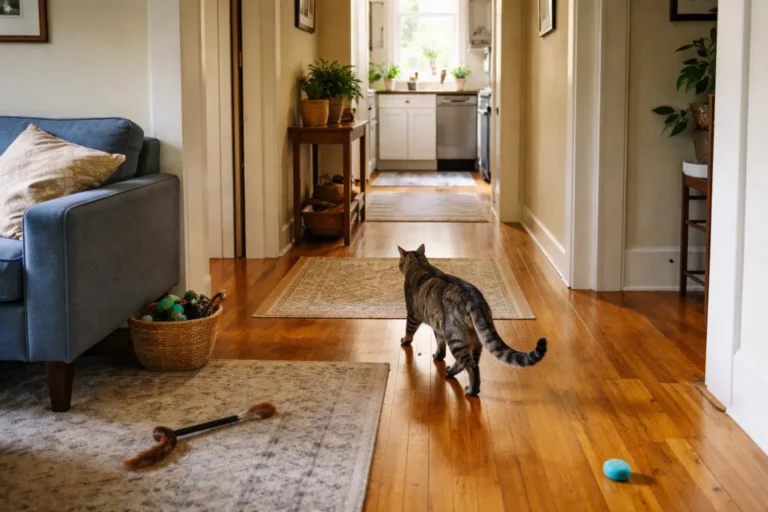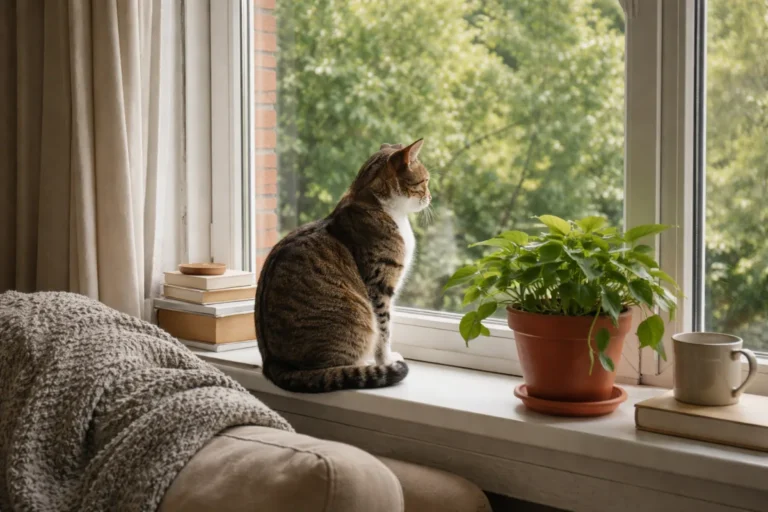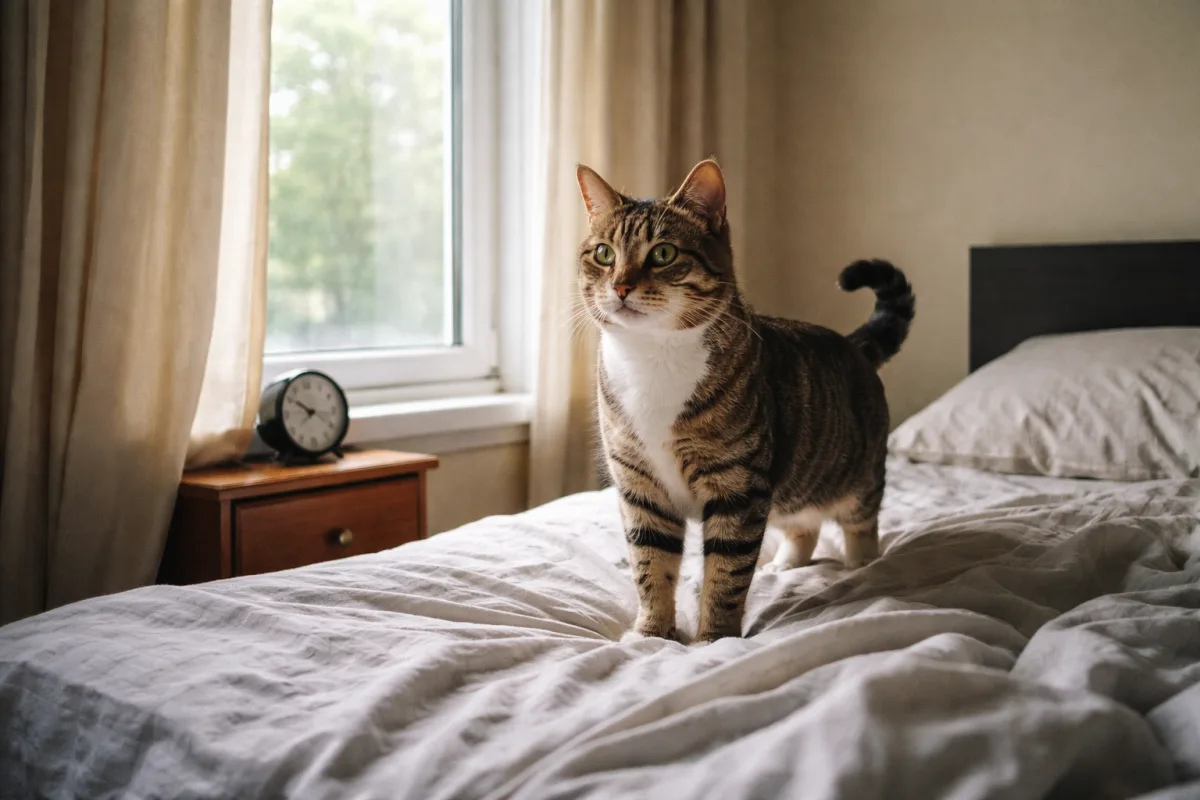
If your cat seems to open one eye, stretch, and appear in the room at almost the exact same time every day, it is not just coincidence. Cats are excellent pattern readers. They notice light changes, sounds, movement in the home, and the little routines people repeat without thinking.
That regular wake-up time often comes from a mix of body clock, habit, and expectation. A cat does not need a watch to learn that breakfast usually arrives at 7:00, that the bedroom door opens at 6:45, or that the house becomes active when the sun comes through the window. Once those clues line up, the pattern can become remarkably steady.
It can look almost mysterious from the outside. One morning the cat is already circling your feet before the alarm sounds. On another day, the cat is pressing a paw to your face right before you reach for the phone. The timing feels deliberate because, in a way, it is. The cat has learned the rhythm of the household and adjusts to it.
Still, waking at the same time every day does not always mean the same thing. Sometimes it is about hunger. Sometimes it is about energy, temperature, or light. Sometimes the cat simply has built a strong association between a time of day and something that happens next. Understanding the pattern makes it easier to tell harmless routine from behavior that may need attention.
What the Daily Wake-Up Pattern Looks Like
Many cats wake up before their people do, then move into a predictable sequence of actions. They may meow near the bedroom door, sit on the chest, paw at the blanket, or patrol the hallway at exactly the same hour. Others are quieter. They may simply appear in the same spot every morning and wait for movement, as if they have marked the start of the day.
In some homes, the pattern is so precise that it seems tied to the alarm clock. The cat wakes just before the alarm rings, not because it hears the alarm itself, but because it has learned the timing of the human’s schedule. Cats are very good at anticipating routines. They often know when a person usually gets up, feeds them, leaves for work, or sits down for coffee.
The consistency can also show up in smaller ways. A cat may nap deeply during the afternoon, then become active again at the same hour each evening. Another cat may wait at the kitchen door at sunrise because that is when the first feeding usually happens. These repeated actions are clues that the cat is tracking daily life closely.
Why Cats Develop Such Regular Timing
Cats are naturally attuned to cycles. Their brains notice patterns in the environment and store them quickly. Once a cat connects a specific time with a useful outcome, the behavior tends to repeat. That makes the wake-up routine one of the strongest daily habits in many households.
There is also a physical side to it. Cats are crepuscular, which means they are often most active around dawn and dusk. That is why early morning restlessness is so common. The cat’s energy may rise naturally around sunrise, even before any food or human activity gets involved.
When a cat wakes at the same time every day, it usually reflects a learned routine, a strong internal rhythm, or both.
Some cats also link morning wakefulness to feeding pressure. If breakfast usually follows immediately after waking, the cat may start rousing at that time because the body has learned to expect food. Over weeks or months, this can become a reliable habit. The cat is not only hungry; it is following a timed expectation built by repetition.
In other cases, the pattern comes from comfort and security. A cat that feels settled in its home often relaxes into a stable schedule. The same light, the same noises, the same sleeping place, and the same human movements all support that predictability. Cats usually prefer knowing what comes next.
Internal Reasons Behind the Behavior
The body clock at work
Cats have an internal rhythm that helps regulate sleep, activity, and alertness. Like people, they experience daily cycles that affect when they feel awake or sleepy. This internal timing does not work in isolation. It responds to light, feeding, and household routine, which is why some cats become very consistent morning risers.
Even if a cat sleeps many hours, that sleep is not a simple switch from off to on. Cats drift through lighter and deeper periods of rest. If the surrounding environment changes at the same time each day, the cat may naturally wake at that moment and stay awake. The routine becomes part of the cat’s internal schedule.
Hunger and anticipation
Food is one of the strongest reasons a cat wakes up at the same time daily. If breakfast has always appeared at 6:30, the cat may start waking at 6:20, then 6:15, and eventually settle into that early habit. The cat does not need to be starving. It only needs to expect that food arrives soon.
This can happen even when the actual feeding time varies slightly. Cats are sensitive to small signals, such as footsteps in the kitchen, the sound of a cabinet opening, or the rustle of a food bag. Once those cues repeat, the cat may wake before the food appears because it has learned to read the household sequence.
Attention and interaction
Not every early wake-up is about food. Some cats wake at a set time because that is when they expect attention. If the human usually pets them, talks to them, or picks them up first thing in the morning, the cat may begin appearing right on schedule. The cat has learned that that time of day comes with interaction.
For social cats, this can be a genuine comfort. They may enjoy the quiet predictability of morning contact. The behavior is not necessarily demanding. It can simply reflect a cat that likes to start the day in contact with the household.
How the Home Environment Shapes the Pattern
The environment often explains why one cat wakes at exactly 5:50 every day while another sleeps until noon. Light, noise, feeding routines, and the number of people in the home all shape the pattern. A room that brightens at sunrise may prompt waking earlier than a darker room with blackout curtains. A home with active morning traffic can create a more fixed schedule than a quiet one.
Outdoor access matters too. An indoor-outdoor cat may wake with the neighborhood sounds, birds, and changing light. A fully indoor cat may be more dependent on household cues, which means the human routine becomes the main clock. If the person rises, feeds, and leaves at the same times, the cat learns the pattern quickly.
Seasonal changes can also shift the schedule. In summer, earlier sunrise may make a cat more active before dawn. In winter, a cat may sleep longer if the room stays dark and the house is quieter. Some cats adjust smoothly. Others keep the same routine regardless of the season because the habit is already deeply built.
Strong daily timing often comes from the combination of light, sound, feeding, and repeated human behavior.
Household consistency
Cats notice the order of events, not just the clock. They may wake when the coffee maker starts because that sound usually means the kitchen is about to become busy. They may stir when a person showers, because breakfast often follows. Over time, the cat begins to anticipate a chain of events rather than one exact time.
This is why changes in the household can affect wake-up timing. A new work schedule, a different feeding time, or even a change in the bedroom door can shift the pattern. Some cats adjust quickly. Others keep waking at the old time for weeks because their expectation is still set there.
What the Timing May Say About the Cat’s State
A regular wake-up time usually points to a stable routine, but the details matter. A cat that wakes calmly, stretches, and waits nearby is different from one that wakes loudly, paces, and appears distressed. The timing can be the same while the meaning is very different.
Calm timing often means the cat feels secure and knows what to expect. The cat wakes, checks the environment, and settles into the morning pattern. Intense timing may suggest higher arousal. That does not always mean a problem, but it can mean the cat is more driven by hunger, boredom, or a strong desire for interaction.
When routine becomes insistence
Some cats move from “I know what happens now” to “I need this to happen now.” The difference can be subtle. A cat may begin with a quiet nudge at 6:30 and later progress to repeated meowing, door scratching, or jumping onto furniture. That shift often reflects a reinforced habit. The more often the cat is rewarded, the stronger the wake-up behavior becomes.
If the cat is getting food immediately after waking every day, the timing may become very sharp. The cat learns that being early works. If the cat is getting out of bed only after more and more effort, the behavior may grow louder and more determined. The schedule itself becomes a tool the cat uses to produce results.
When the pattern changes
A cat that suddenly wakes at a different hour may be responding to a new environmental cue. Sometimes the change is harmless, like earlier sunrise or a different feeding schedule. Other times, it may reflect stress, discomfort, or a health issue that affects sleep and alertness.
That is why the pattern should be read in context. A cat that has always woken at dawn and stays otherwise relaxed is likely following routine. A cat that starts waking much earlier, seems restless, or cannot settle afterward deserves closer attention.
Common Signals That Accompany the Behavior
- Meowing at the bedroom door
- Sitting on or near the owner’s pillow
- Walking between the bed and the hallway
- Watching the human closely before sunrise
- Rubbing against legs once the person stands up
- Heading straight to the feeding area
These signals often appear together. A cat may not wake up the same way every day, but the overall pattern tends to stay recognizable. Some cats are gentle about it. Others are persistent. The style matters because it often shows how strongly the cat expects the routine to continue.
Body language can reveal whether the cat is relaxed or keyed up. Soft eyes, a loose tail, and a slow stretch usually point to calm anticipation. A stiff body, repeated vocalizing, or fast pacing may point to stronger urgency. The timing may be similar, but the emotional tone is not.
How Owners Often Interpret It
Many people assume the cat wakes them because the cat is hungry, and often that is part of the answer. But hunger is only one piece of the picture. Cats also wake at the same time because they are reacting to the household schedule, the light outside, or a learned pattern that has become very reliable.
It is also easy to mistake a routine wake-up for disobedience. In reality, the cat is usually being consistent, not difficult. If the cat has learned that a certain time leads to breakfast, movement, or attention, it makes sense that the cat would appear right on time. The behavior is practical from the cat’s point of view.
Owners sometimes overlook how much their own habits shape the pattern. Even small details matter. Waking up and reaching for the food container at the same minute each morning can train a cat very quickly. So can opening the bedroom door immediately after the first meow. Cats remember the sequence well.
What looks like “my cat always wakes me up” is often a shared routine shaped by both cat and human.
How to Read the Pattern More Clearly
To understand why a cat wakes at the same time every day, it helps to notice what happens before, during, and after the wake-up. The cat may be reacting to dawn light, a nearby sound, a human alarm, or the expectation of a meal. Watching the sequence reveals the trigger more clearly than the clock alone.
Questions that help identify the cause
- Does the cat wake before the alarm or after it?
- Is the wake-up time tied to feeding?
- Does the cat act calm or restless?
- Has the household routine changed recently?
- Does the pattern shift on weekends or holidays?
If the wake-up time is stable across many days, the cat is likely following a well-established rhythm. If it changes with feeding or noise, the environment is probably doing most of the work. If it changes with stress or discomfort, the cat may be signaling that something in its routine no longer feels right.
When the Same Time Means Something Else
Sometimes a regular wake-up is simply a sign of good adaptation. The cat knows the rhythm of the household and moves with it. That can be a very normal part of life with cats. They like predictable sequences, and many build them into their sleep-wake habits.
But the same pattern can also emerge from frustration. A cat that has too little stimulation during the day may become more intense in the morning. A cat that is used to being fed very early may demand that schedule with increasing persistence. A cat that is uncomfortable in the night may also start waking in a regular but unhappy way.
That is why the meaning of the behavior depends on the tone around it. Quiet anticipation looks different from sharp urgency. A cat that wakes, waits, and settles is reading the day. A cat that wakes, cries, and cannot relax may be asking for a closer look at its routine, environment, or comfort level.
Why the Pattern Stays So Strong
Once the routine is established, it tends to repeat because it works. The cat wakes, the human responds, and the sequence is reinforced. Even when the human tries to sleep in, the cat may keep trying because the behavior has been successful so many times before. Cats learn from history more than intention.
This is why the wake-up time can stay stable for months or years. The cat has a strong memory for what happens around that hour. The bedroom may be dark. The house may be quiet. Still, the cat knows the shape of the morning and moves into it with confidence.
That consistency can be useful. It gives the cat structure. It also gives the owner a clearer picture of what the cat expects. Once the pattern is understood, it becomes easier to decide whether to keep the schedule as it is or make small changes that encourage a later, calmer start to the day.
Some cats will always be early risers. Others become later sleepers once the routine shifts. What matters is not the exact hour, but the system behind it: light, food, attention, and learned habit. Those elements create the daily rhythm that makes the cat appear to wake at the same time every single day.