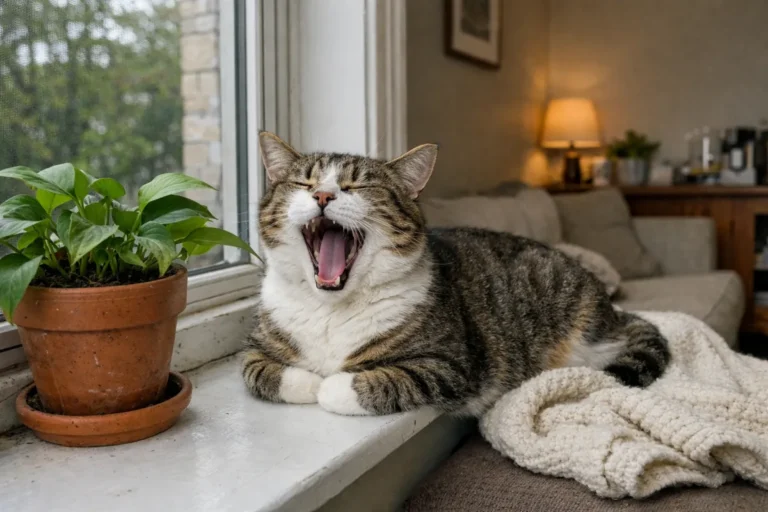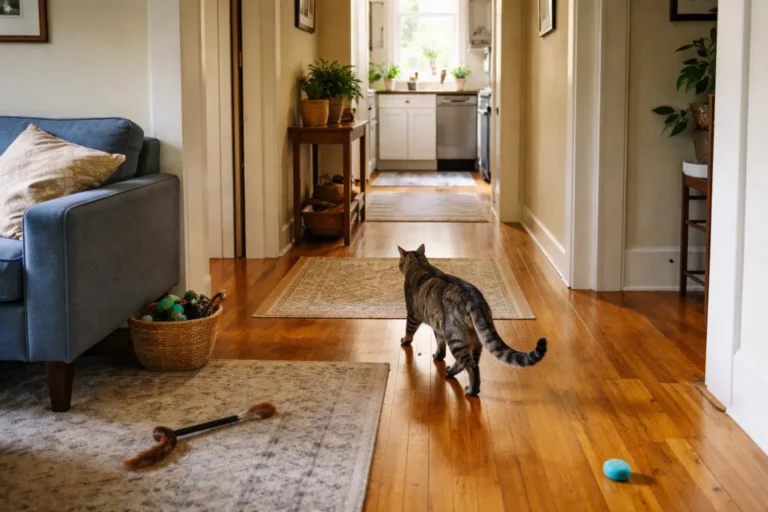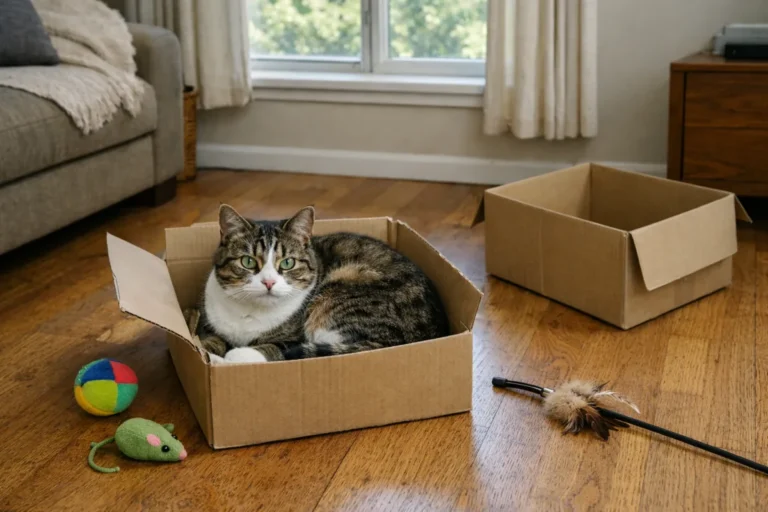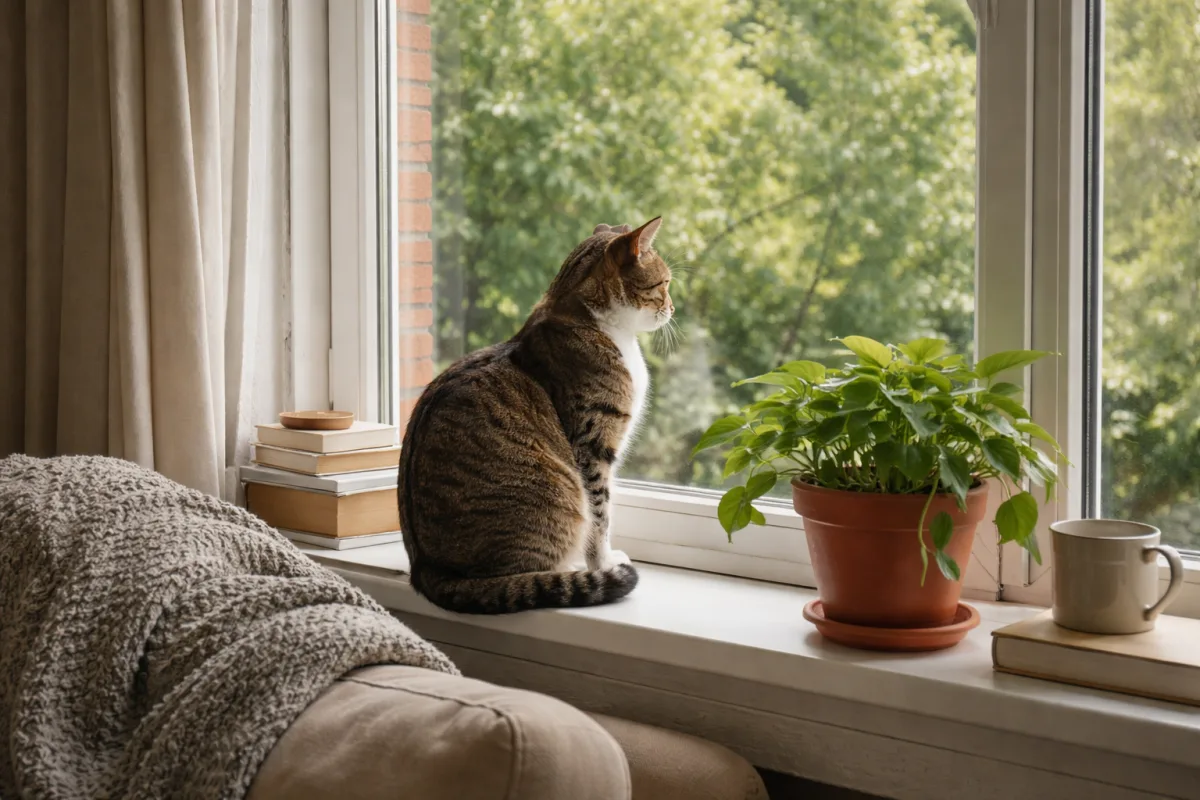
A cat that sits quietly for long periods can look almost statuesque. One moment they are curled on a chair, the next they are still on a windowsill, a rug, or the edge of the bed, watching the room with half-closed eyes. To people who move quickly, that kind of stillness can seem unusual. In reality, it is one of the most recognizable parts of cat behavior.
Quiet sitting is not one single signal. It can mean rest, comfort, caution, observation, or simply a cat doing what cats do best: conserving energy while keeping track of everything. The same pose may appear after play, during a quiet afternoon, or when the household feels too busy. The meaning changes with context, body language, and timing.
Understanding this behavior is less about finding one answer and more about noticing patterns. A cat that sits quietly with loose muscles and soft eyes is telling a very different story from a cat that sits frozen with a tense body and fixed stare. The difference matters, and it often explains why one cat seems peaceful while another seems withdrawn.
What Quiet Sitting Looks Like in Daily Life
In everyday settings, quiet sitting can take many forms. Some cats perch near a window and watch birds for an hour. Others settle beside a doorway and remain there through a long stretch of household activity. Some sit in the middle of a room, not sleeping, not playing, just present.
The posture may stay the same, but the details shift. A relaxed cat might tuck paws neatly under the body, blink slowly, and change position now and then. Another may sit upright with the tail wrapped around the feet, listening to sounds in the home. These are not empty poses. They are active, even if they look still.
Many owners notice this behavior most during calm parts of the day. Early morning, late evening, and the quiet hours after meals are common times. Cats often use these intervals to rest without fully letting go of awareness.
Common Places Cats Choose
- Window ledges facing outdoor movement
- Hallways or doorways where people pass often
- Soft furniture near family activity
- High places like shelves, cat trees, or backs of chairs
- Hidden but comfortable corners, such as under a table
These spots are rarely random. Cats tend to choose places where they feel safe, can observe the environment, and can leave quickly if needed. A long quiet sit is often linked to that sense of control.
Why Cats Sit Quietly for Long Periods
The simplest reason is that cats are built for conserving energy. Their wild ancestors needed to save strength for hunting, escaping danger, and moving efficiently through changing environments. Domestic cats still carry that pattern, even when their biggest challenge is deciding whether to nap on the couch or the windowsill.
Stillness does not mean inactivity in a cat’s mind. A cat may be listening, scenting, monitoring movement, and processing the room all at once. Cats are careful observers, and quiet sitting gives them time to collect information without drawing attention to themselves.
There is also a comfort element. When a cat feels secure, it does not always need to move from place to place. Sitting quietly can be a sign that the environment feels stable enough for rest, but not so dull that the cat loses interest. In a good home, a cat may alternate between motion and stillness many times a day.
Quiet sitting is often a normal blend of rest, observation, and energy conservation. The body language around it tells you whether the cat feels relaxed, alert, or uneasy.
Instinct and Efficiency
Cats are famously economical with movement. They do not waste energy if they do not need to. That habit shows up in the way they sit for long stretches, especially after a meal, during warm parts of the day, or when nothing interesting is happening.
This is one reason cats can seem to “do nothing” for long periods while actually staying highly aware. Their ears may rotate toward sounds, whiskers may shift, and the eyes may open briefly when something changes. To a cat, quiet sitting is often efficient surveillance.
Comfort and Security
A cat that feels safe may sit quietly because there is no pressure to remain active. If the room is familiar, the routine is predictable, and the cat knows where food, water, and escape routes are, stillness can be a sign of trust.
In some homes, a cat becomes especially calm after a period of predictability. Feeding at regular times, gentle handling, and stable surroundings often make quiet sitting more noticeable. The cat is not necessarily seeking attention. It may simply be settled.
How Body Language Changes the Meaning
Quiet sitting can point in very different directions depending on the body. A loose, open posture usually suggests ease. A compact, tight posture can suggest caution, discomfort, or a desire not to be disturbed.
It helps to look at the whole cat, not just the pose. Eyes, ears, tail, whiskers, and breathing all add context. A cat may sit silently while feeling content, but a cat in stress can also become unusually still. The surface behavior may look similar at first glance.
Relaxed Quiet Sitting
- Soft eyes or slow blinking
- Ears in a natural, forward or neutral position
- Loose shoulders and back
- Tail resting calmly, not flicking sharply
- Regular breathing without visible tension
This version is common in comfortable environments. The cat may be resting between activities or simply enjoying a familiar spot. In many homes, this is the version owners see most often.
Tense Quiet Sitting
- Body held very still, almost rigid
- Eyes open wider or fixed on one point
- Ears angled back, sideways, or constantly adjusting
- Tail tucked tightly or moving in small, controlled motions
- Minimal response to normal household sounds
In this case, the cat may be watching something it finds concerning. That could be another animal outside, a strange noise, a new object, or a change in the room. Stillness here is not the same as relaxation. It can be a pause before action or a way to avoid drawing attention.
When a cat sits very still, ask whether the body looks soft or locked. Relaxed stillness and defensive stillness may look similar from across the room, but they feel very different up close.
How the Environment Shapes the Behavior
Where a cat lives has a strong influence on how often it sits quietly for long periods. Indoor cats in calm homes may spend much of the day in settled observation. Outdoor-access cats may show shorter stretches of stillness because they are more frequently reacting to movement, weather, and territory.
Noise level matters too. A busy household can make quiet sitting more strategic. A cat may choose a high shelf or an isolated room simply to keep distance from children, visitors, or other pets. In a quieter home, the same cat may sit in the open because the environment feels predictable.
Temperature also plays a role. Cats often sit quietly in warm patches of sunlight or on surfaces that feel comfortable against the body. During cold seasons, they may become more stationary as they seek warmth and conserve energy.
Indoor Homes vs. Outdoor Exposure
| Situation | Typical quiet sitting pattern |
|---|---|
| Indoor, calm household | Longer periods of relaxed stillness in familiar spots |
| Indoor, noisy household | Quiet sitting in elevated or hidden places |
| Outdoor-access cat | Shorter stillness, often tied to observation or territory checks |
| Single-pet home | Stillness may look more peaceful and regular |
A cat’s daily environment can also affect where it sits. A window with a clear view, a soft chair near family movement, or a tucked-away bedroom corner may all become routine resting points. Cats are creatures of habit, and they often return to the places that feel best.
What Quiet Sitting May Signal About Mood
Sometimes owners read quiet sitting as boredom. That can happen, but it is not the only explanation. Cats do not need constant stimulation in the same way dogs do. A cat may be content, attentive, or simply in a resting phase.
At other times, the behavior can reflect a mild emotional shift. A cat that has been active and playful may suddenly settle into a long still period because it is processing the environment. A cat that has experienced a change, such as a new pet, a move, or a different routine, may sit quietly while adjusting.
There is also a difference between choice and withdrawal. A cat that chooses a quiet place and settles there comfortably is different from a cat that seems to avoid interaction and remains tense for long periods. The first usually looks settled. The second may need more observation.
Possible Reasons Behind the Behavior
- Rest after play or mealtime
- Watching sounds, people, or outdoor movement
- Waiting for a familiar routine to happen
- Seeking warmth or comfort
- Feeling cautious in a changed environment
- Maintaining distance from a stressor
The same cat can show several of these reasons in a single day. Cats are rarely one-note. A quiet sitting period in the afternoon may be restful, while the same posture near a loud appliance may mean something entirely different.
How Owners Often Interpret It
People often assume that a cat sitting quietly is either sleepy or aloof. Sometimes that is true, but the behavior is more layered than that. A cat may be quietly engaged rather than detached. It may be listening to the house, noticing a change in scent, or simply resting in a place that feels right.
Owners sometimes worry when a cat becomes very still after a change in the home. That concern is reasonable, especially if the cat also stops eating, hides more than usual, or becomes hard to approach. In those cases, quiet sitting is only one piece of the picture.
On the other hand, some cats naturally spend more time in quiet observation than others. Breed tendencies, age, energy level, and past experience can all shape how often a cat chooses stillness. A thoughtful, reserved cat may spend long stretches sitting without being unhappy.
If quiet sitting comes with appetite changes, litter box changes, constant hiding, or a stiff posture that lasts, the behavior deserves closer attention. The full pattern matters more than the stillness itself.
How It Changes with Age and Routine
Kittens usually sit quietly for shorter periods. They move quickly, sleep deeply, and then jump back into activity with little warning. Their stillness is often brief, interrupted by play or curiosity. Even so, kittens may pause to watch before darting into action, and that is one of the first ways the behavior begins to appear.
Adult cats often become more consistent. Many settle into familiar quiet-sitting habits tied to daily routines. They know when meals happen, when the house becomes noisy, and where the best resting spots are. Their stillness can become more purposeful with age.
Senior cats may sit quietly for longer periods because movement takes more effort. That does not automatically signal a problem. It may simply reflect a slower pace and a greater preference for comfortable, predictable places. The important part is whether the cat still moves, eats, grooms, and responds normally when needed.
Patterns That Stay Stable
- Choosing the same favorite spot repeatedly
- Sitting quietly after meals or grooming
- Observing household activity from a fixed place
- Resting in warm or elevated locations
Patterns That May Shift Over Time
- Duration of stillness
- Preferred resting locations
- How alert the cat appears while sitting
- Response to noise, visitors, or new animals
A cat’s quiet sitting pattern often becomes easier to read over months, not days. Once owners know what is normal for their cat, changes stand out more clearly. That makes the behavior useful as a quiet baseline.
When Quiet Sitting Becomes More Noticeable
There are certain moments when this behavior tends to stand out. After a move, during remodeling, when a new pet arrives, or when schedules change, a cat may spend more time sitting and watching. The body is still, but the cat is processing a lot.
Seasonal shifts can also make the behavior more obvious. In colder months, cats often seek cozy spaces and remain there longer. During hot weather, they may sit quietly in shaded areas and move less during the day. These changes can look dramatic, but many are simply practical responses to the environment.
If a cat sits quietly more often than usual, the best question is not only “why is it still?” but “what else is happening around it?” That context usually explains more than the posture alone.
Signals That Quiet Sitting Is Part of Normal Cat Life
Some signs make quiet sitting look routine rather than concerning. The cat may still seek food at normal times, use the litter box as usual, greet familiar people, or change position when something interesting happens. It may sit quietly, but it does not seem disconnected from the world.
Other signs point to healthy rest. Slow blinking, flexible posture, occasional grooming, and the ability to move comfortably all suggest that the stillness is simply one of many normal behaviors. A cat that can sit quietly for a while and then stretch, walk, or play is usually showing a balanced rhythm.
Quiet sitting is part of the cat’s everyday language. It can mean the cat is comfortable enough to stop moving, focused enough to keep watching, or cautious enough to hold position until it feels ready. The meaning shifts with the details, and that is what makes the behavior worth noticing.
The best reading of a cat’s stillness comes from combining posture, timing, environment, and routine. One quiet pose means very little on its own; a pattern tells the real story.
When a cat settles into a silent corner or a sunny patch and stays there for a long time, it is often doing exactly what its body and instincts are built to do. Some days that means rest. Other days it means observation. And sometimes it is simply a cat enjoying a comfortable place where nothing is being asked of it.