Cats rarely move through the day in one steady rhythm. They burst into action, pause, watch, nap, groom, then suddenly sprint again. Those short activity breaks can look random from the outside, but for many cats they are completely normal.
A cat may chase a toy for two minutes, stop to sit in a doorway, and then return later as if nothing happened. Another cat might race through the house, leap onto a couch, and collapse into a nap almost immediately after. These quick shifts are part of how cats manage energy, attention, and comfort.
Short activity breaks often reflect a balance between instinct and practicality. Cats are built to conserve energy, stay alert, and react quickly when something interesting appears. That means their “exercise” is often brief, intense, and followed by rest.
What Short Activity Breaks Look Like in Daily Life
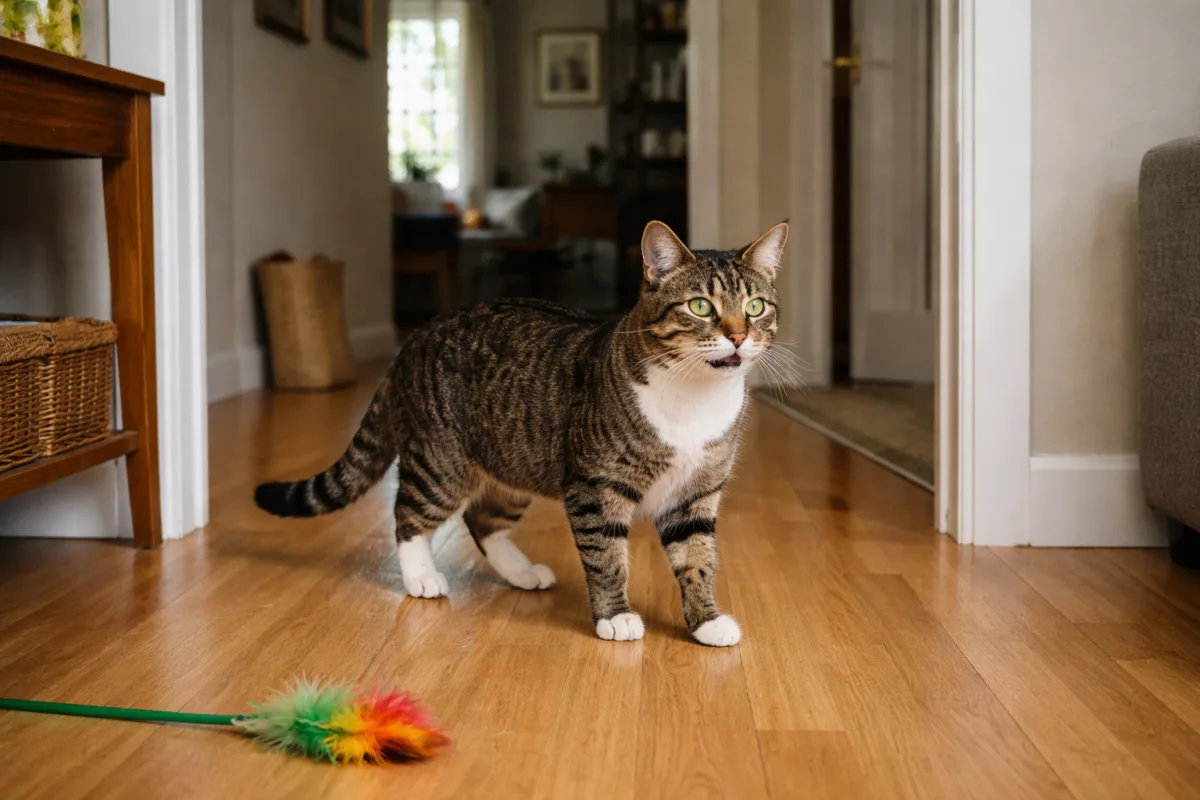
In a home setting, short activity breaks can show up in many small ways. A cat may wake up, stretch, dash down the hallway, and stop at the window. One may stalk a toy for a moment, bat at it twice, and walk away. Another may jump onto a counter, inspect a room, and leave just as fast.
These breaks are often easy to miss because they happen so quickly. A cat may not seem especially playful overall, yet still have several tiny bursts of activity across the day. Some cats are most active in the morning or evening, while others sprinkle these moments between long naps.
Common examples include:
- brief chasing of toys, dust, or moving shadows
- short bursts of running through the home
- quick jumps onto furniture or cat trees
- fast pouncing followed by a pause
- momentary interest in sounds, movement, or light
These moments are not always about play. Sometimes they are about checking the environment, releasing tension, or simply responding to a sudden impulse. A cat can look lively without being in a true “play session” the way a dog might.
Why Cats Take These Breaks in General
Cats are natural sprinters, not endurance animals. In the wild, they would conserve energy for hunting, then use a short, focused burst when the moment was right. That pattern still shapes domestic behavior today, even when the hunt is replaced by a toy mouse or a hallway zoom.
They also tend to organize energy in waves. A cat may seem deeply relaxed for hours, then suddenly become alert for a few minutes. That shift is not always caused by boredom or a need for attention. It often comes from the cat’s own internal timing.
Cats are designed for brief action, not constant motion. Short activity breaks fit their body, their instincts, and their need to rest between bursts.
Another reason is efficiency. Cats do not need long exercise sessions to use up energy. A few minutes of climbing, chasing, or jumping can be enough to meet their immediate need for movement. After that, rest usually becomes more important than continuing.
Possible Internal Reasons Behind the Behavior
Energy Management
One of the biggest reasons cats take short activity breaks is simple energy management. A cat may feel ready for movement, but only for a short time. Once that energy is spent, the body often shifts toward rest without warning.
This is especially obvious in younger cats, but adult cats do it too. The burst may look dramatic, yet it often uses less total energy than people assume. A short sprint or a few leaps can satisfy a cat much more quickly than a long play session would satisfy a person.
Curiosity and Vigilance
Cats are observant by nature. They notice sounds, movements, changes in scent, and shifts in routine. A short activity break may begin because something has caught their attention, even if the event seems tiny to a human.
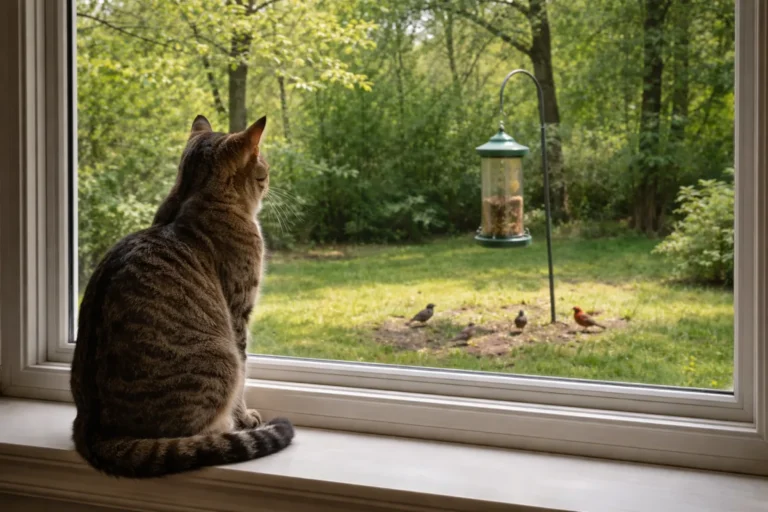
A bag rustling in the kitchen, a bird outside the window, or a door opening in another room can all trigger a quick response. The cat checks, reacts, then moves on. That brief involvement is often enough.
Emotional Regulation
Some cats use short activity as a way to regulate their internal state. A bit of running or jumping can help a cat release tension, shake off restlessness, or reset after a quiet stretch. This does not automatically mean the cat is anxious. Often it is simply part of how cats handle transitions between resting and alertness.
After grooming, waking up, hearing noises, or changing rooms, a cat may need movement to settle into the next phase of the day. The activity looks small, but it can serve a useful purpose.
How Context and Environment Influence the Pattern
Home environment matters a lot. A cat in a quiet apartment may show activity in short, concentrated bursts because there is limited space and fewer opportunities to roam. A cat in a busy home may break up movement around people, sounds, or household routines.
The setup of the home can also shape how often these breaks happen. Climbing spaces, window views, tunnels, and toys may invite quick movement. A cat that feels safe and stimulated often moves in a flexible, stop-and-go pattern rather than in one long session.
Indoor cats especially rely on the rhythm of the home. They may become active when the sun shifts, when a person starts cooking, or when another pet moves through the room. These cues can create a cycle of small activity windows throughout the day.
| Context | Typical Effect |
|---|---|
| Quiet home | Activity may be brief and sudden, with long rest periods between bursts. |
| Busy household | Cats may react to more sounds and movement, creating more frequent short breaks. |
| Limited enrichment | Bursts may appear as random zoomies or pacing. |
| Rich environment | Short activity breaks often include climbing, watching, and playful exploration. |
Even weather can play a role. On cold days, a cat may move in short bursts and then return to a warm bed. On bright days, window watching may trigger brief excitement. The pattern is flexible because the cat is responding to the environment in real time.
Common Situations When the Behavior Appears
Short activity breaks often happen after waking. Cats may sleep hard, then rise suddenly with a stretch and a burst of movement. That transition from deep rest to quick action is one of the most familiar cat patterns.
They also appear before meals, after meals, and during the evening. Some cats become more animated when they expect food or notice routine changes. Others seem to use the time after eating for a quick walk, a playful leap, or a fast grooming break.
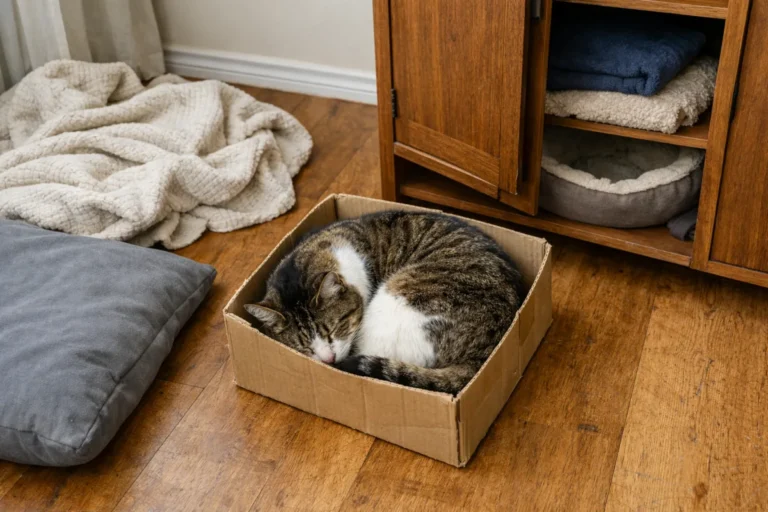
Another common moment is after a nap in a sunny or warm spot. The cat wakes, shakes off stiffness, moves around briefly, and then chooses a new resting place. This is often not a sign of discomfort. It is simply a shift in comfort and position.
During Play
Play sessions are often naturally short. A cat may engage strongly for a minute or two, then pause to assess the situation. If the toy moves again, the cat may restart immediately. If not, the break may turn into a nap or a grooming session.
This stop-start pattern is part of normal feline play. Cats often prefer short, repeated attempts over one long continuous game. Their interest tends to rise and fall quickly.
When Something Changes
A cat may also show a brief activity break when something in the home changes. New furniture, a visitor’s scent, a different sound outside, or even rearranged objects can lead to quick checking behavior. The cat moves, pauses, scans, and then decides whether to stay involved.
These breaks can seem odd because the cat appears interested and then immediately loses interest. In many cases, the cat has already gathered the information it wanted.
What the Behavior May Signal About the Cat’s State
Short activity breaks can mean different things depending on the cat’s body language and timing. A relaxed cat often moves with loose muscles, normal breathing, and an easy return to rest. A more intense burst may look sharper, faster, and more reactive.
If the cat’s movement is playful, you may notice quick pounces, crouching, tail flicks, and a return to curiosity after a pause. If the cat is simply resetting, the motion may be less focused. The cat may walk, stretch, inspect, and settle somewhere new.
Body language matters as much as the movement itself. The same short burst can reflect play, curiosity, overstimulation, or a need to release energy.
Playful Short Breaks
Playful activity often includes stalking, batting, hopping, or chasing. The cat may reengage easily if something interesting happens again. Ears stay fairly neutral or forward, the tail moves in a relaxed way, and the cat seems willing to return to the game.
Neutral Short Breaks
Neutral breaks are the easiest to overlook. The cat is active for a moment, then simply stops. This can happen when a cat is exploring, reorienting, or changing from one resting place to another. There may be no strong emotional signal at all.
Stress-Related Breaks
Sometimes short activity looks more like restless pacing or sudden bursts that do not lead anywhere. The cat may dart from room to room, appear unable to settle, or stop and start repeatedly without obvious purpose. In those moments, context becomes important.
Stress-related movement is often paired with other signs such as tucked posture, dilated pupils, hiding, overgrooming, or changes in appetite. Short activity alone is not enough to define the cat’s state, but the full picture can be telling.
How Owners Often Interpret It vs. What It May Actually Mean
Many people assume that a cat with short activity breaks is either bored or asking for immediate entertainment. Sometimes that is true. Often it is only part of the story. Cats are not always looking for a long interaction just because they moved around for a minute.
A cat may jump, dash, or investigate and still not want a full play session. The activity may have satisfied a small internal need already. If the cat then walks away, rests, or watches from a distance, that does not mean the moment was meaningless.
Owners sometimes read every burst of motion as a request. But a cat may be self-directed. It may use the break to reset, survey the room, or respond to an internal rhythm that has nothing to do with human attention.
At the same time, repeated short activity with no settling can matter. If a cat seems unable to relax, the behavior may point to unmet needs, discomfort, or environmental stress. The pattern over time matters more than one isolated burst.
How Cats Use Short Breaks to Balance Sensitivity and Independence
Cats often want control over when they move, watch, or rest. Short activity breaks fit that preference neatly. They allow the cat to act on impulse without committing to a long interaction. That flexibility matches the way many cats prefer to live.
It also reflects sensitivity. Cats notice small changes and often respond right away, but only briefly. They may investigate a sound, sniff a corner, or leap onto a perch, then move on once the situation feels understood.
This mix of independence and alertness is easy to see in a home. A cat may approach you, play for a minute, then leave without drama. Later it may return for another tiny burst of contact or movement. That stop-start rhythm is part of how many cats stay emotionally comfortable.
Differences Between Busy and Quiet Households
In an active home, cats often have more reasons to interrupt their rest. People walk through rooms, doors open and close, objects move, and noise levels shift. A cat may respond to all of that with brief movement and observation.
In a quieter home, the activity may be more self-initiated. The cat might create its own movement around mealtimes, toy time, or window watching. The breaks can still be frequent, but they may feel more predictable because fewer outside events are interrupting them.
Multiple cats can also change the pattern. One cat’s quick burst may encourage another to follow, or a cat may limit activity because it wants to avoid contact. The same short break can mean different things depending on the social setting.
When the Pattern Becomes More Noticeable
Owners often notice short activity breaks more during transitions. A cat that seems calm all day may suddenly show several bursts around dusk. Another may become active after the house gets quiet at night. These are common times for feline energy to rise.
Seasonal changes can also make the pattern more visible. Longer daylight, open windows, and more outdoor sounds can all increase brief alertness. In colder months, cats may alternate between short movement and long naps more often because staying warm becomes a priority.
Some cats also show these breaks more clearly with age changes. Kittens have quick bursts that can seem endless. Adult cats usually become more measured. Senior cats may still move in short intervals, but the bursts are often gentler and shorter.
Long-Term Patterns and Stability
For many cats, short activity breaks are a stable part of personality. They remain stop-start movers for years, even if the exact timing changes. A cat that likes brief play at dawn may keep that habit well into adulthood.
What changes more often is the intensity. A younger cat may leap, sprint, and pounce with force. An older cat may keep the same pattern but with smaller movements and longer pauses. The rhythm stays familiar even when the energy level shifts.
If the behavior suddenly changes, it is worth paying attention. A cat that becomes far less active than usual, or suddenly much more restless, may be telling you something about comfort, health, or stress. The key is not the existence of short breaks, but the change from the cat’s own normal pattern.
Consistency matters more than intensity. A cat’s usual rhythm is often the best reference point for understanding whether a short activity break is normal.
Reading the Meaning Without Overthinking It
Short activity breaks do not always need a deep interpretation. Sometimes a cat just wants to move for a moment, then stop. That simple pattern is part of being a cat.
Still, it helps to look at the whole picture. Notice what happens before and after the burst. Does the cat settle easily? Does it return to play? Does it look relaxed, tense, curious, or distracted? Those details tell more than the movement alone.
In everyday life, these breaks are often a healthy sign of a cat working through its own rhythm. They show alertness, independence, and the ability to shift quickly between action and rest. That rhythm can be sharp and brief, yet completely normal.
When a cat races across the room, pauses to listen, and then curls up again, it is usually following a pattern that makes sense to it. The activity is short, but the purpose is often clear in the cat’s own terms.