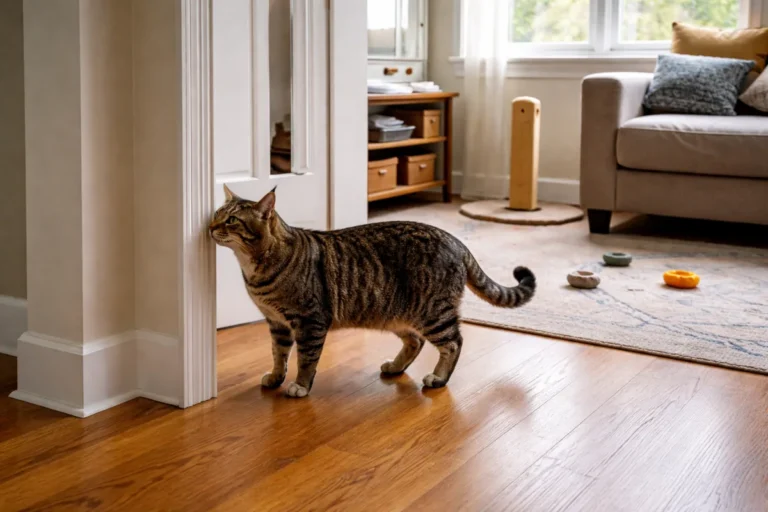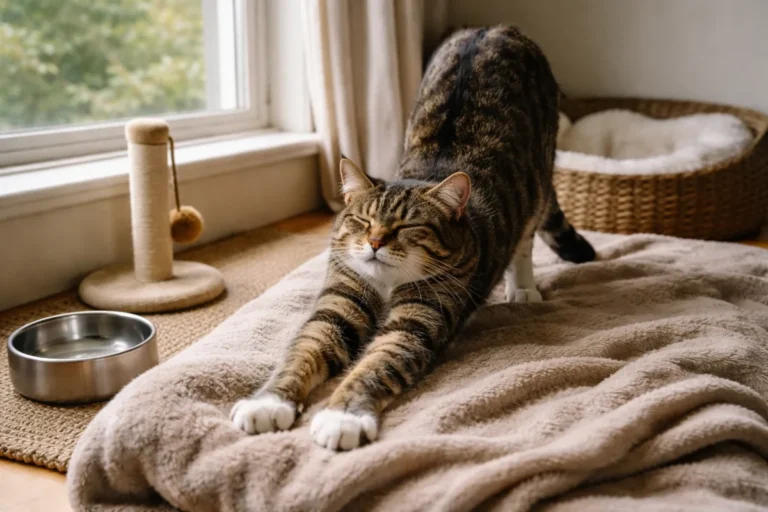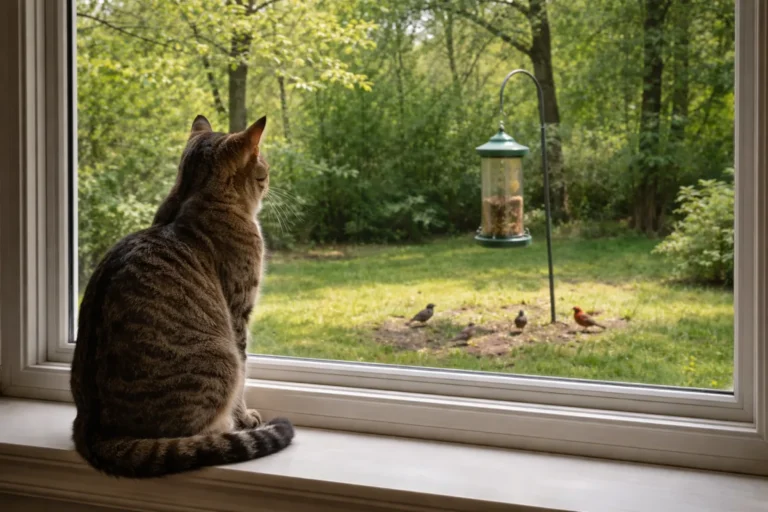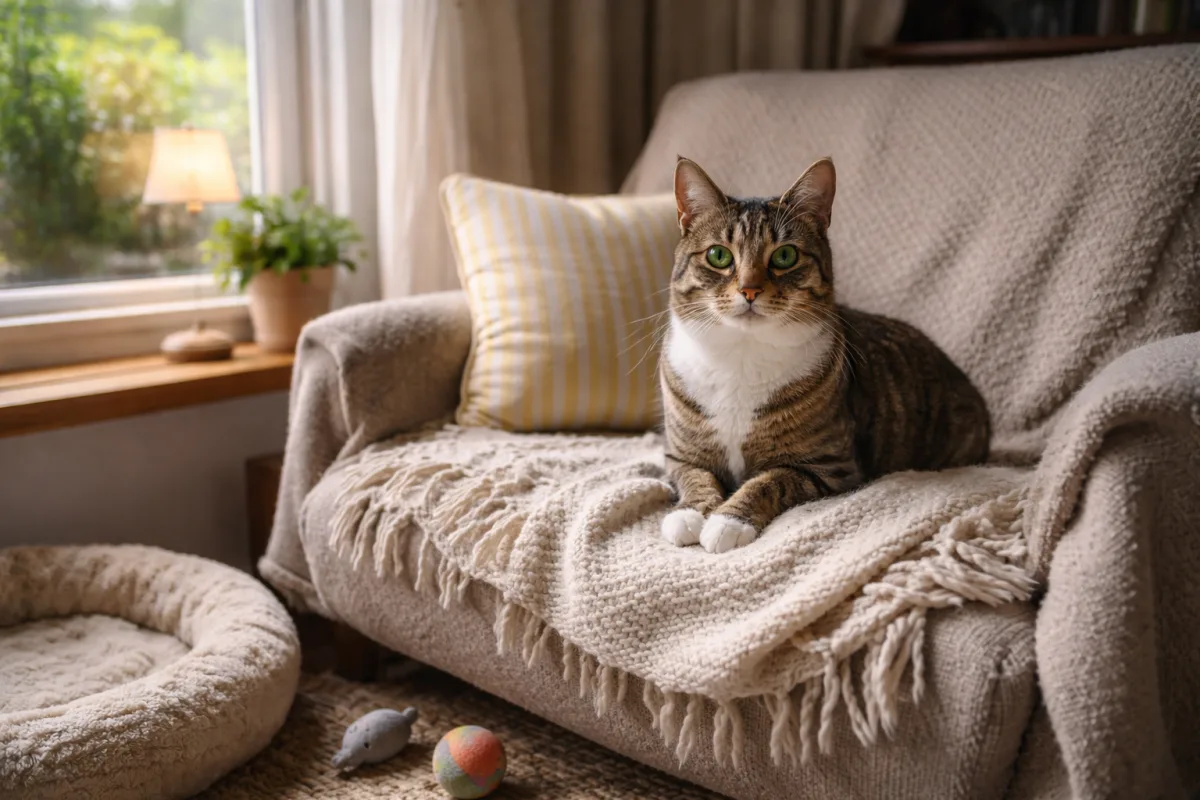
If a cat keeps returning to the same spot every day, it often looks like a tiny mystery with no obvious answer. One afternoon it may be the windowsill, the next it is the corner of the sofa, and by evening the same cat is back in the exact place again, as if it were part of a private routine.
That habit is usually not random. Cats are animals that build strong preferences around comfort, safety, scent, temperature, and habit. A spot that feels right once can become the spot they choose again and again, even when other areas of the home seem equally available.
Sometimes the reason is simple. The place is warm, quiet, elevated, or near something the cat likes to watch. Other times the behavior reveals something more subtle, such as a need for predictability, a strong attachment to that area, or a response to how the home feels at certain times of day.
What the Same Spot Means in Daily Life
In everyday life, this behavior often shows up as a cat choosing one resting place, one lookout point, or one napping zone and making it part of its routine. A cat may sleep there in the morning, return after meals, and settle there again in the evening without much variation. The spot may not look special to a person, but to the cat it can carry several useful qualities at once.
Many cats prefer places that give them control over their surroundings. A favorite area may let them see the room, hear approaching footsteps, and still feel tucked away enough to relax. That balance matters. Cats usually like to stay aware of what is happening without feeling exposed.
Other cats choose the same place because it has become part of their schedule. If a cat spends enough time in one location while feeling safe and comfortable, the habit strengthens. The routine itself becomes reinforcing. Returning there feels familiar, and familiar often means better.
Why Cats Return to One Place So Often
There are several common reasons cats repeat the same choice day after day. Most of them are practical. Cats pay close attention to the details of a place, even when humans do not notice them.
-
Comfort: The surface may be soft, stable, warm, or shaped in a way that fits the cat’s body well.
-
Safety: The location may feel protected, with fewer interruptions or less foot traffic.
-
Observation: Cats like places where they can watch doors, windows, hallways, or other animals.
-
Scent: A familiar smell can make a spot feel more secure and appealing.
-
Routine: Once a cat repeats a choice enough times, it often becomes the default choice.
These reasons often overlap. A windowsill may be warm, high, quiet, and full of interesting outdoor movement. A blanket on the end of a bed may smell like the cat, feel soft, and sit in a low-traffic area. What seems like a simple preference can actually be a combination of comfort and control.
When a cat chooses the same spot daily, the place is usually meeting more than one need at once: comfort, safety, and predictability often work together.
How Instinct Shapes the Habit
This behavior has a strong instinctive side. Cats are natural territory users, not just casual wanderers. They notice where they feel secure, where they can rest without being surprised, and where they can monitor movement around them. A repeated resting place can become a small, trusted part of their territory.
Wild and feral cats often rely on repeated routes and reliable resting spots because consistency reduces risk. Domestic cats may live in a very different environment, but the underlying instinct remains. A familiar place makes the world feel easier to manage.
That is one reason some cats react strongly when their favorite spot changes. If furniture moves, a blanket is washed, or a new pet begins using the area, the cat may hesitate or search for another similar location. The importance of the spot is not always about the object itself. It is about what the object represents in the cat’s map of the home.
Temperament and Personality Matter Too
Not every cat chooses a favorite place for the same reason. Personality plays a role. A cautious cat may return to one hidden or elevated spot because it offers reassurance. A confident cat may choose the same sunny area because it has the best view and feels like a good base of operations.
Some cats are strongly routine-driven. They wake, eat, groom, and rest in patterns that stay remarkably stable. Others are more flexible but still have one or two locations they use when they want to settle down. A cat with a strong attachment to routine may seem almost fixed in its habits, while a more curious cat may rotate through several places but keep returning to one central favorite.
Age can influence this as well. Older cats often become less interested in exploring multiple resting areas and more likely to use spots that feel easy on the body. A warm, supportive place may become a daily destination simply because it is comfortable and low effort.
The Role of the Home Environment
The environment around the cat has a major effect on where that repeated spot ends up. Cats usually choose places that fit the rhythm of the household. In a busy home, they may favor a high shelf, a spare chair in a quiet room, or the end of a couch away from sudden movement. In a calm home, they may settle in the middle of activity while still keeping one eye on what is happening.
Heat sources are a common factor. Cats are often drawn to sunny patches on the floor, the top of a radiator, a blanket near a vent, or a place that stays warm after someone has sat there. Temperature matters more than many people realize. A small change in warmth can make one spot far more appealing than another.
Sound and traffic also matter. A cat may return to the same place because it is away from loud appliances, kids running through the room, or other pets that invade personal space. The more predictable the area, the more likely it is to become a favorite.
| Spot Type | What It Often Offers | Why Cats Return |
|---|---|---|
| Windowsill | Height, light, outdoor watching | Observation and stimulation |
| Bed corner | Warmth, scent, softness | Comfort and familiarity |
| Chair or sofa arm | Elevation, quick escape routes | Security and control |
| Quiet closet or nook | Seclusion, low activity | Rest and privacy |
What the Spot Can Reveal About Mood
Sometimes the daily return to one place can reflect a cat’s emotional state, but context matters. A cat that looks relaxed, stretches out, and naps peacefully is likely using the spot as a comfortable base. The behavior is then a sign of contentment, habit, or both.
If the cat stays alert in that place, watches everything carefully, or seems reluctant to leave, the meaning can shift. The same spot may be serving as a safe observation point rather than a purely restful bed. A cat that repeatedly returns there after disturbances may be seeking stability after feeling unsettled.
It helps to look at body language. A loose body, slow blinking, kneading, or full-body relaxation usually points to comfort. A tense posture, tucked paws with constant scanning, or quick retreats may indicate that the cat is using the location to feel protected. The place stays the same, but the reason behind it can differ.
A favorite spot is not always a sign of laziness or boredom. Often it is a sign that the cat has found a place where the body and mind can settle.
Why Owners Notice the Pattern More in Some Cats
Some cats seem to have a single permanent seat in the house, while others move around more freely. The difference often comes down to lifestyle and personality. An indoor cat with a stable routine may develop a stronger attachment to one area because the environment itself is predictable. A cat with access to multiple rooms, supervised outdoor time, or more household changes may rotate more often.
Owners may also notice the pattern more when the cat chooses a visible and shared place. A cat that always sits on the same dining chair, at the foot of the bed, or on the back of the couch becomes part of the daily scenery. The habit stands out because it intersects with human routines.
There is also a social element. Some cats pick spots based on where their favorite person spends time. They may not want direct contact every minute, but they like staying near the person’s usual path or seating area. That makes the chosen spot feel both secure and socially connected.
When the Habit Is Harmless and When It Deserves Attention
Most of the time, sitting in the same spot every day is harmless. It is often just a sign that the cat has found a place that works well. The key is to notice whether the rest of the cat’s behavior also looks normal.
If the cat is eating well, grooming normally, using the litter box as expected, and moving around with ease, the favorite spot is usually just part of a healthy routine. Many cats maintain one preferred location for months or even years without any issue.
There are times, though, when the pattern becomes more meaningful. A cat that suddenly starts hiding in one place all day, avoids interaction, or refuses to leave the spot may be responding to stress, discomfort, or illness. A new habit can be more important than an old one, especially if it appears alongside changes in appetite, posture, or activity.
Signs the Spot Is Just a Preference
-
The cat moves around normally at other times.
-
The cat seems relaxed in the spot.
-
Eating, grooming, and litter box habits are unchanged.
-
The cat still responds to people or sounds in a calm way.
Signs the Spot May Reflect Discomfort
-
The cat is harder to rouse than usual.
-
The cat avoids jumping, climbing, or moving as before.
-
The cat seems tense, withdrawn, or unusually still.
-
The cat starts guarding the spot or reacts sharply when approached.
These differences matter because the same behavior can have very different meanings depending on the larger picture.
How Cats Learn That a Place Is Worth Keeping
Once a cat finds a spot that feels good, memory strengthens the choice. Cats are observant learners. They remember where they were undisturbed, where they felt warm, and where they could rest without interruption. If that place consistently delivers the right experience, the cat keeps returning.
Scent also reinforces the habit. Cats rely heavily on smell, and they leave their own scent on places they use often. That scent helps make the area feel like home. The more the cat uses the spot, the more familiar it becomes, and the more familiar it becomes, the more likely the cat is to return.
Human behavior can reinforce the pattern too. If people avoid disturbing the cat there, place a soft blanket in that area, or only offer quiet attention nearby, the cat may learn that the spot comes with pleasant conditions. Over time, what began as a random choice turns into a stable preference.
Small Changes That Can Shift the Favorite Spot
Even a strong favorite is not always permanent. Cats can change spots when the environment changes. A room may get noisier, a piece of furniture may move, sunlight may shift with the seasons, or another pet may begin using the area. Cats notice these details quickly.
Sometimes the shift is subtle. A spot that was perfect in winter may be too warm in summer. A windowsill that was ideal in the morning may become noisy when a household routine changes. The cat may quietly move on without any obvious announcement.
That flexibility is normal. A cat returning to the same place every day is showing consistency, but that consistency is usually based on changing needs. If the needs change, the choice can change too.
Still, some cats are remarkably attached to one place. They may return to it even after it becomes less ideal, simply because the memory of comfort is strong. In those cases, a new blanket, a better perch, or a quieter alternative may encourage a shift without forcing it.
A daily favorite spot is often a mix of habit, comfort, and territory. When one of those parts changes, the pattern may change too.
What Repetition Says About a Cat’s World
The habit of sitting in the same spot every day often reveals how a cat organizes its surroundings. Cats do not usually choose places the way humans do. They are not looking for decoration or convenience in a human sense. They are looking for a combination of physical comfort, emotional ease, and environmental awareness.
A cat may choose the same exact place because it offers warmth at the right hour, a safe view of the room, a familiar smell, and a sense of control. That is not a small thing in a cat’s world. It is a practical solution to daily life.
For many cats, the repeated spot becomes part of the home’s structure. It is where they pause, observe, rest, and reset before moving on to the next part of the day. The pattern may look simple from a distance, but for the cat it is often the result of careful, silent selection made over and over again.
That is why the same patch of carpet, the same chair cushion, or the same corner of the bed can matter so much. To a cat, it is not just a place. It is the place that keeps making sense.