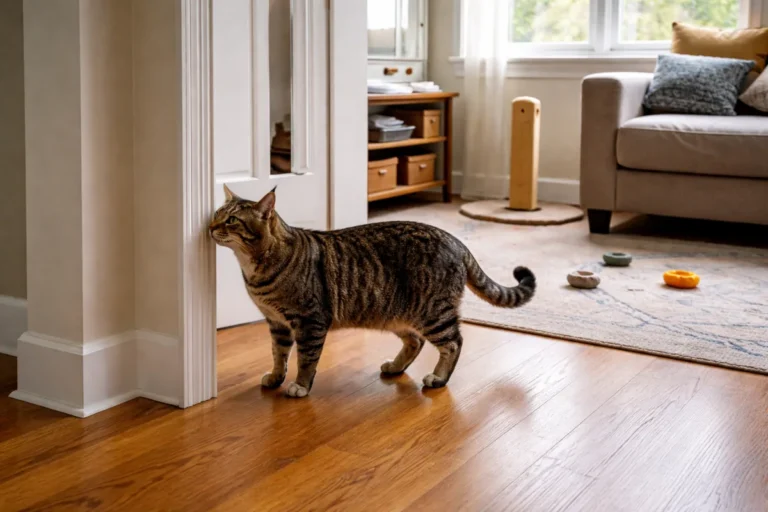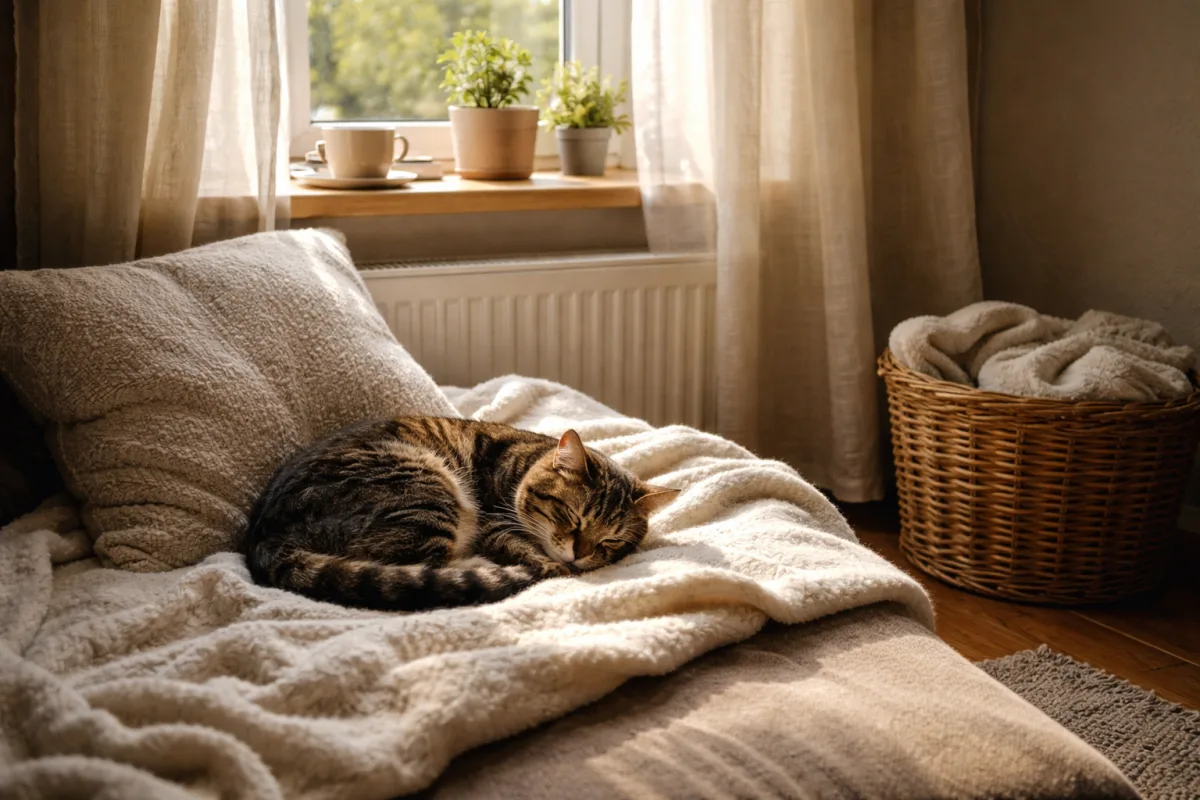
Walk into a room with a cat in it, and there is a good chance you will find the same scene again and again: a cat stretched across a sunny patch on the floor, tucked beside a heater, or folded into a blanket that still holds a bit of warmth. It is not random. Cats actively seek out warm places, and they do it with impressive consistency.
This habit is easy to notice in daily life. A cat may ignore an empty bed, then settle instantly when that bed has been warmed by the sun or by a recently used laptop. Another cat might rotate between spots through the day, following the soft heat of a windowsill, a radiator, or a blanket fresh from the dryer. Warmth is not just pleasant to them. It shapes how they rest, relax, and move through the home.
There is also something very practical behind the preference. Cats are small animals with a higher resting body temperature than humans, and they spend a large portion of the day conserving energy. Warm places help them do that without effort. What looks like a simple comfort choice is often a mix of instinct, body regulation, and a cat’s constant search for the most efficient place to be still.
Why warmth feels so good to cats
Warmth supports one of the cat’s most basic needs: conserving energy. Cats are natural hunters, but they are also designed to rest for long stretches between bursts of activity. A warm resting place helps them stay comfortable without having to burn extra energy to maintain body temperature.
That matters more than many owners realize. A cat lying in a cold area may need to use more energy just to stay warm, even if the room feels mild to a person. A soft, warm spot lets the body settle faster. Muscles loosen, breathing often slows, and the cat can drift into deeper rest with less effort.
Cats often choose warmth because it reduces the work their bodies need to do during rest.
Warmth can also feel safer. Cats tend to prefer places where they can relax without being fully alert, and a snug warm spot often comes with the same qualities they like in other sleeping areas: softness, partial enclosure, and a sense of control. The heat itself is only part of the appeal. The whole setting matters.
How cats find warm places in everyday life
The pattern shows up in ordinary household routines. A cat may move from a cool tile floor to a blanket after dinner. In the morning, it may head straight to a sunny chair. Later, it could choose the space near an appliance that gives off mild heat. Cats are observant, and they remember which parts of the home feel best at different times of day.
Some of the most common warm places include:
- sunlit windowsills and floor patches
- blankets, cushions, and freshly laundered bedding
- the top or side of a radiator
- near vents, heaters, or fireplaces
- spots that still hold warmth from a person, laptop, or folded laundry
Not every cat chooses the same kind of warmth. One may want direct heat, while another prefers the faint warmth left behind in a soft chair. Some cats seek warmth only in colder months. Others do it year-round, adjusting the intensity of the spot rather than the habit itself.
Warmth as part of a sleep routine
For many cats, warmth and sleep are linked. They often rest more deeply in places that are not just comfortable, but predictably warm. This is especially noticeable after active periods, after eating, or in the late afternoon when cats often seem to settle into longer naps.
That habit can be very stable. A cat may return to the same warm location day after day, especially if the spot also offers quiet and a clear view of the room. In many homes, the warmest place becomes the most valued resting place simply because it is reliable.
What the behavior says about a cat’s internal state
Choosing warm places is usually normal, but the reason behind it can vary. In a healthy, relaxed cat, warmth is mostly about comfort and efficiency. The cat is not trying to tell you something dramatic. It is simply following a preference that supports rest.
At the same time, changes in this behavior can sometimes hint at a shift in how the cat feels. A cat that suddenly seeks heat more often than usual may be reacting to cooler weather, a drafty home, or a change in routine. In some cases, increased warmth-seeking can also appear when a cat feels tired, less active, or slightly unwell.
A cat’s attraction to warm places is usually normal, but a sudden increase or a new pattern can be worth paying attention to.
It is helpful to look at the whole picture. Is the cat eating normally? Moving comfortably? Using the litter box as usual? A warm spot by itself usually means little. Warmth-seeking paired with a change in appetite, energy, grooming, or movement is more meaningful.
Comfort versus compensation
Most cats choose warmth for comfort. Some, though, may seek it as a way to compensate for feeling chilled, stiff, or low on energy. Older cats often do this more often because their joints may feel better when they are warm. Cats recovering from a nap, a bath, or a cooler environment may also seek heat more eagerly than usual.
The difference is often subtle. A cat using warmth for comfort may look loose, peaceful, and fully settled. A cat seeking warmth because it feels off may seem restless, less interactive, or harder to satisfy. The body language gives clues if you watch closely.
Body language that often accompanies warm-place preference
Cats do not just pick a warm place and lie down. They often show small signs that reveal how they feel about the spot. A cat that is happy with the temperature may circle once, knead the blanket, stretch out slowly, and then sink into stillness. The body is relaxed, not tense.
Other common signs include:
- slow blinking before settling
- kneading or pawing at blankets
- spreading out to absorb heat, then curling up as it gets warmer
- tucking paws under the chest when the warmth is just right
- moving between warm and cooler areas to regulate comfort
Some cats are very methodical. They will start on the warmest edge of a blanket, then shift as they get comfortable. Others commit quickly and remain in place for hours. Neither pattern is unusual. It often depends on personality, age, coat thickness, and how secure the space feels.
When a cat avoids warmth
Just as some cats love heat, some prefer only moderate warmth or may avoid it if they feel too hot. A cat that drapes itself beside a heater one day and avoids it the next may simply be regulating temperature. Cats are good at balancing comfort with caution. They do not want to overheat, and they will move away when a spot becomes too intense.
Frequent shifting can mean the cat is trying to fine-tune its environment. That is normal. A cat that always seems unable to settle, however, may be reacting to discomfort rather than preference. In that case, the pattern matters more than the single moment.
How the home environment shapes the habit
The modern home gives cats many possible warm places, and their behavior often reflects the layout of the space. A sunny apartment with large windows may create obvious daytime favorites. A cooler house with tile floors may make blankets, couches, and hidden nooks more appealing. Even the way furniture is arranged can affect where warmth collects.
Indoor cats, in particular, depend on the environment their people create. They cannot choose a sheltered spot outdoors or move far to escape a draft. Instead, they learn the warm zones of the home and return to them often. That is why the same cat may favor different places in winter than in summer, or different rooms depending on how often they are used.
Noise and activity also matter. A warm area that is busy or unpredictable may be less attractive than a slightly cooler but quieter one. Cats often want both warmth and peace. If they must choose, many will pick the calmer place.
Common home factors that affect warm-spot choice
- sun exposure through windows
- heating placement and airflow
- blanket texture and thickness
- traffic in the room
- availability of elevated resting surfaces
- access to hiding places or partial cover
A cat may prefer a warm place not because it is the hottest area, but because it offers the best combination of heat, safety, and stillness. That blend is often more attractive than warmth alone.
Age, body condition, and warm preferences
Kittens often seek warmth very strongly. Their bodies are still developing, and they are not as efficient at regulating temperature as adults. A young kitten may pile into the warmest available spot without hesitation and stay there for long stretches. This is normal and helps support healthy growth and comfort.
Adult cats usually become more selective. They know which warm places work best and may switch depending on the time of day. A mature cat often balances warmth with visibility, access, and routine. It is not just about being warm. It is about choosing the right kind of warmth.
Older cats may return to warm spots even more often than younger adults. Warmth can help stiff joints feel looser and make resting more pleasant. A senior cat may linger near heat sources, seek soft bedding, or nap in sun patches longer than before. That can be part of normal aging, especially when it happens gradually.
Older cats may prefer warmth more strongly because it can make rest feel easier on the body.
Body condition matters too. A lean cat with a thin coat may be drawn to warmth more readily than a heavier cat with a dense coat. A cat recovering from illness or dental discomfort may also spend more time in warm places, partly because rest feels better there.
Warm places and the cat’s sense of control
Cats are sensitive to changes in their environment, and warm places often let them maintain a sense of control. They can choose when to enter the spot, how long to stay, and when to leave. That matters to a species that tends to value autonomy in small daily decisions.
Warmth is especially appealing when it comes with predictability. A cat that knows a particular chair gets warm every afternoon may return to it like clockwork. A cat that finds a blanket in the same basket every night may build a routine around it. The consistency becomes part of the comfort.
This is one reason why cats sometimes seem to prefer human-used items. A sweatshirt left on the couch, a folded throw, or a bed just vacated by a person can hold a familiar warmth and smell. That combination is powerful. The spot does not only feel warm; it feels known.
When warmth-seeking is playful, neutral, or defensive
Not all warm-spot behavior has the same tone. Sometimes a cat races toward a sunbeam in a playful way, then flops down dramatically and rolls over. That is often a light, content expression of the same preference. Other times the cat moves slowly, chooses a warm place without much ceremony, and simply settles in. That is the neutral version.
There can also be a defensive side. A cat may choose warmth that is tucked away from people, pets, or household noise. In that case, the heat is not the only attraction. The cat may be seeking a quiet territory that feels protected. A warm corner behind a chair or near a wall can become a private retreat.
Mixed signals are common. A cat can seem affectionate when it curls next to a heater in the living room, yet also be using that same spot as a boundary. It may be enjoying warmth and simultaneously avoiding interruption.
| Pattern | What it often looks like | Possible meaning |
|---|---|---|
| Calm warmth-seeking | Cat settles easily, relaxed body, long naps | Comfort and energy conservation |
| Frequent spot changes | Moves between sun, blanket, and cooler floor | Temperature regulation |
| Hidden warm spot preference | Chooses warm areas away from traffic | Comfort plus privacy |
| Sudden strong warmth-seeking | New insistence on heat, less usual activity | May deserve closer observation |
What owners often misread
People sometimes think a cat that loves warm places is simply being spoiled. That misses the point. The behavior is deeply practical. Warmth helps with rest, comfort, and body maintenance. It is one of the most straightforward ways a cat manages daily life.
Another common misunderstanding is assuming every warm-spot preference means the cat is cold. Not always. A cat may choose warmth because it likes the feeling, because it feels secure there, or because it has built the behavior into its routine. The temperature may be only one part of the picture.
Owners also sometimes assume that a cat avoiding a warm spot is being picky or dramatic. In reality, the cat may simply be too warm already. Cats are often better at recognizing small shifts in comfort than humans are. If a cat moves away, it may be making a smart choice.
How this preference changes with seasons and daily rhythms
Warm-place seeking often becomes more obvious in colder months, especially in homes with cool floors or drafts. Winter tends to highlight the habit because the contrast is stronger. But the behavior does not disappear in summer. Cats may simply use softer forms of warmth, such as a sunbeam in the morning or a cushion that holds just a little heat.
Daily timing matters too. Many cats look for warmth after waking, after eating, and during long afternoon rests. They may also shift toward warmer spots in the evening when the household gets quieter and their bodies are ready to slow down.
Some cats maintain very consistent patterns across the year. Others are flexible and adapt quickly to changes in weather, household heating, or room use. Both styles are normal. The key is how steady the pattern is for that individual cat.
Why warmth and trust often overlap
Warm places are often also places where a cat feels secure enough to fully relax. That can make the behavior look more personal than it really is, but the connection is still meaningful. A cat that curls up in a warm spot near family activity may be doing so because the environment feels safe enough to let its guard down.
At the same time, some cats prefer warmth in solitude. They may want the room itself, but not the interaction. That is also normal. Warmth can support closeness, but it can just as easily support independence. Cats use it in both ways.
When a cat repeatedly returns to the same warm place, it is usually choosing a combination of comfort, routine, and personal space. That choice can be quiet, but it is rarely accidental. The cat is paying attention to details that people often overlook.
Natural reasons behind the preference
The preference for warm places fits neatly with a cat’s natural design. Cats are small, efficient predators that conserve energy whenever possible. They sleep a lot, move in short focused bursts, and then recover. Warmth supports that rhythm.
It also lines up with their sensitivity. Cats notice subtle temperature differences, changes in surface texture, and shifts in household activity. A warm place is not just a cozy bonus. For many cats, it is one of the best possible resting conditions available in the home.
That is why the behavior stays so stable. Even if the room changes, the basic preference remains. Cats keep looking for the spot that feels best to their bodies and their sense of safety. Warmth often wins because it meets both needs at once.
A cat stretched in a sun patch or tucked beside a blanket is doing something very ordinary, but very intentional. The choice blends comfort, biology, and habit. Once you notice how often cats return to warmth, their favorite places start to make perfect sense.