A cat can spend a surprising amount of time grooming, then come back later and do it again as if the first round never happened. To many people, that routine looks almost obsessive. In reality, it is one of the most normal cat behaviors there is.
Grooming is not just about keeping fur neat. It helps cats manage their coat, comfort themselves, and stay aware of their body and surroundings. A cat may lick, nibble, or paw at the same spots several times a day because grooming serves many purposes at once.
What looks like a simple cleaning habit often reflects a mix of instinct, temperature control, stress relief, and social behavior. The details matter. A relaxed cat after a nap may groom slowly and methodically, while a cat under pressure may lick one area over and over. Those differences tell a lot.
Why Grooming Is So Central to Cat Behavior
Cats are naturally fastidious animals. Their tongues are shaped with tiny backward-facing hooks that help remove loose hair, dirt, and debris. That physical design makes grooming effective, but it also makes the behavior feel rewarding to the cat. It is an action built into the way they are made.
In the wild, grooming does more than make a cat look tidy. It helps reduce odor that might attract attention, keeps the coat in better condition, and supports comfort after hunting or moving through brush. Even though house cats live very different lives now, those instincts are still present.
Grooming also supports a cat’s sense of control. Cats tend to prefer routines they can manage on their own. Since they cannot control everything around them, grooming becomes a familiar task that is fully theirs.
For many cats, grooming is part hygiene, part comfort, and part self-regulation. It is not one behavior with one meaning.
What Grooming Looks Like in Everyday Life
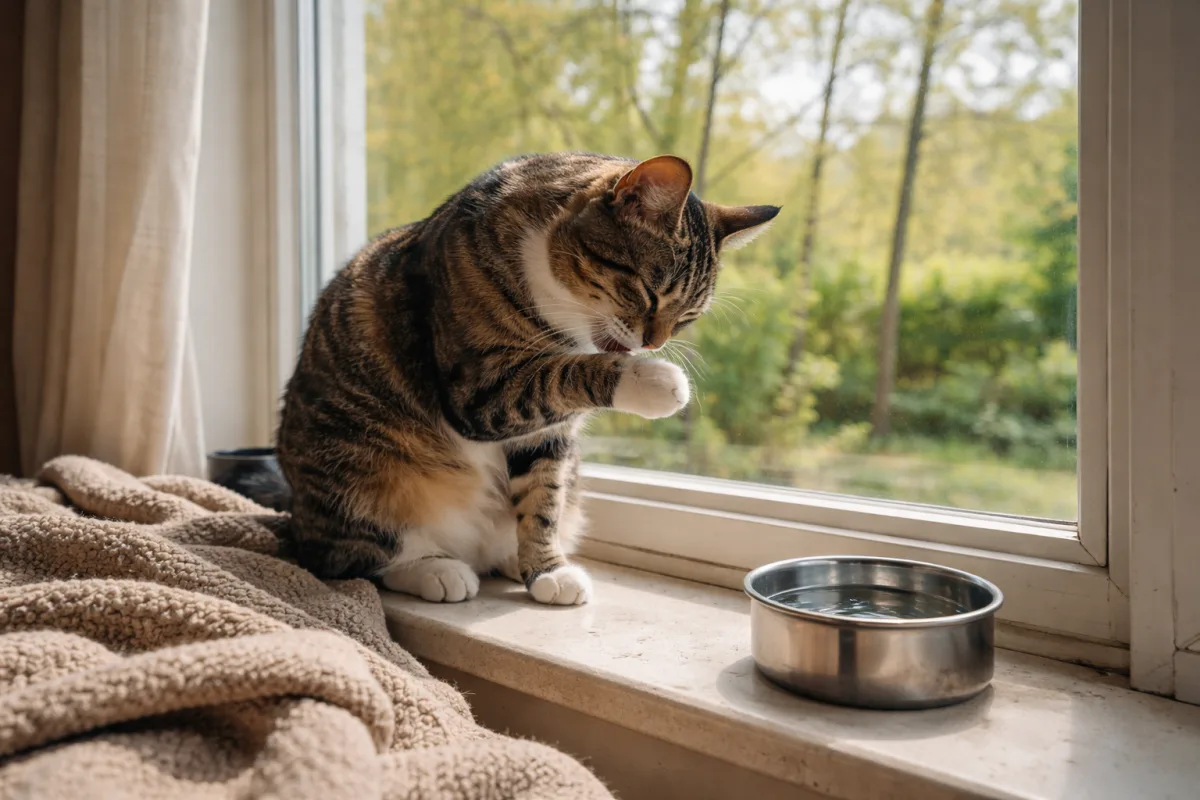
Most owners notice grooming in small, repeated moments throughout the day. A cat may lick its paws after eating, wash its face after a nap, or clean its chest while sitting near a window. These are ordinary routines and usually nothing to worry about.
Some cats groom in a neat sequence. They lick one paw, wipe the face, then move down the body in a predictable pattern. Others are more scattered and may return to the same spot several times before finishing. Both styles can be normal.
You may also see grooming right after a stressful or busy moment. A cat might hide from a visitor, then emerge and clean itself carefully. That is often a way to reset after feeling unsettled.
Common everyday grooming moments
- After waking up from sleep
- After eating or drinking
- Following play or chasing
- After being handled or petted
- During quiet resting time
These patterns are often built into the day without anyone noticing. A cat does not usually groom on a strict schedule, but it often returns to the habit at predictable transitions.
Possible Internal Reasons Cats Groom So Often
One reason is simple maintenance. Cats shed, collect dust, and pick up small particles in their fur. Regular grooming helps remove those things before they become a problem. It also spreads natural skin oils through the coat, which can help keep fur smoother.
Another reason is body comfort. Grooming can ease itching, cool the body slightly as saliva evaporates, and help a cat feel settled after activity. If a cat has been lying in one position for a while, grooming can be part of the transition back to alertness.
Then there is the emotional side. Many cats groom when they need to calm themselves. The motion is repetitive and familiar, which can be soothing. A cat that has just heard a loud noise may start licking almost immediately, even if it was not dirty at all.
Frequent grooming does not automatically mean a cat is worried. It can simply mean the cat is resetting after normal daily stimulation.
Comfort, control, and self-soothing
Cats are highly sensitive to changes in their environment. When something feels slightly off, grooming may help them regain a sense of order. The behavior is quiet, predictable, and private. That makes it useful when a cat wants to settle its own nerves.
Some cats are also naturally more meticulous than others. Breed tendencies, personality, age, and early life experiences can all influence how often a cat grooms. One cat may seem to tidy itself every hour. Another may do the minimum and still be perfectly healthy.
How Environment and Routine Affect Grooming Frequency
Indoor life can make grooming more noticeable because the cat has fewer opportunities to get dirty in the first place. A house cat may spend long stretches in clean surroundings, so even small changes in fur texture or smell can trigger grooming. When the environment is calm, grooming often looks relaxed and balanced.
In a busier home, grooming may happen more often after interruptions. If children are active, guests come and go, or other pets are around, a cat may use grooming as a break between moments of attention. It is a common way to create a little personal space.
Season also matters. Shedding periods, dry indoor air, and changes in temperature can all affect how often a cat grooms. Cats may groom more when they are losing fur or when their skin feels slightly dry.
Environmental factors that can increase grooming
- Seasonal shedding
- Dry indoor air
- Changes in routine
- Noise or household activity
- New animals or visitors
- Warm weather and heat buildup in the coat
None of these factors mean a problem by themselves. They simply shape how often the cat feels the need to clean, smooth, or settle its coat.
When Grooming Is Part of Social and Emotional Behavior
Grooming is not always a solitary act. Cats sometimes groom other cats, and this can strengthen social bonds. Mutual grooming, or allogrooming, often appears between cats that feel comfortable together. It is one of the quieter forms of feline connection.
A cat may also groom after being petted by a person. That does not necessarily mean the petting was unwanted. Often it means the cat is processing contact and restoring its own scent. Cats rely heavily on scent, so grooming helps them feel like themselves again after physical interaction.
Timing matters here. If a cat always grooms after being touched in a certain spot, it may simply be wiping away the extra sensation. If grooming follows every interaction, that can be normal too. The behavior is more meaningful when it appears alongside tension, avoidance, or sudden shifts in posture.
Grooming after contact can be a sign of self-comfort, scent management, or simple habit. It is not automatically a rejection.
Soft Signals Versus Intense Grooming
There is a wide range between healthy grooming and grooming that stands out as unusually intense. A calm cat usually takes its time, changes positions, and stops naturally. The coat may look smooth afterward, but the cat still seems relaxed and available to rest, play, or watch the room.
Intense grooming looks different. The cat may lick the same area for long stretches, chew at the fur, or focus on one spot so much that the skin starts to show. The body may also look tense, with a hunched posture or a tail that stays tight against the body. That kind of repetition can signal discomfort, itchiness, anxiety, or pain.
It helps to look at the whole picture, not just the grooming itself. A cat that grooms and then settles into sleep is acting very differently from a cat that grooms, startles easily, and seems unable to relax.
Soft vs strong signals
| Pattern | What it often looks like | Common meaning |
|---|---|---|
| Soft grooming | Brief licking, full-body routine, relaxed posture | Normal cleaning, comfort, routine |
| Focused grooming | Repeated attention to one area, occasional nibbling | Itchiness, minor irritation, habit |
| Intense grooming | Long repetitive licking, hair loss, skin sensitivity | Possible stress or medical issue |
What Cats May Be Telling You Through Grooming
Grooming can reflect a cat’s state without being dramatic about it. A cat that grooms after a meal may simply be cleaning up. A cat that grooms after hearing a loud sound may be trying to settle. A cat that grooms before curling up to sleep may be easing into rest.
Some cats groom when they are uncertain and want to create a familiar rhythm. Others do it when they are content. This is why context matters so much. The same behavior can mean different things depending on body language and timing.
If the cat’s ears are neutral, eyes are soft, and movements stay loose, grooming usually belongs to ordinary life. If the cat seems restless, hides more often, or changes sleeping patterns along with grooming changes, the behavior deserves a closer look.
Signs to notice alongside grooming
- Body tension or stiffness
- Changes in appetite
- Restlessness or hiding
- Hair loss or bald patches
- Repeated licking of one body area
- Sudden increase or decrease in grooming
Those signs do not point to one single cause, but they help you understand whether grooming is just a habit or something more important.
How Grooming Changes With Life Stage
Kittens begin grooming early, often by watching their mother or other cats. At first, the behavior can look clumsy and incomplete. They may lick awkwardly or forget parts of their body. Over time, grooming becomes more coordinated and deliberate.
Adult cats usually develop a steady pattern. Some are especially diligent, while others take a looser approach. A healthy adult cat often balances grooming with sleep, movement, and play. The habit becomes part of daily rhythm rather than a special event.
Senior cats can change again. Arthritis, dental discomfort, reduced flexibility, or lower energy may affect how thoroughly they groom. Some older cats groom less because it is harder to reach certain areas. Others may groom more in spots they can still access comfortably.
Changes in grooming with age are common, but sudden changes are worth noticing. A cat’s routine often shifts gradually, not overnight.
When Frequent Grooming Is Still Normal
Some cats just groom a lot. If the coat looks healthy, the skin is intact, and the cat seems otherwise relaxed, frequent grooming may simply be part of that cat’s personality. Clean, glossy fur and a settled demeanor usually suggest the habit is doing its job.
Long-haired cats often spend more time on grooming because their coats need more maintenance. Cats that shed heavily can also appear to groom constantly as they work through loose hair. This can be especially noticeable during seasonal transitions.
It is also normal for grooming to come in waves. A cat may groom more after a nap, after play, or when the house becomes quiet. Then it may do very little for hours. That uneven rhythm is common.
When the Pattern Becomes More Significant
What matters most is change. A cat that suddenly starts grooming one area over and over, or begins grooming much more than usual, may be responding to itchiness, allergies, stress, or discomfort. A cat that stops grooming enough can have the opposite problem, especially if age or illness is involved.
Look for patterns rather than one isolated moment. Is the grooming always focused on the belly, flank, or base of the tail? Does it happen after a specific event, like a vet visit or a new pet entering the house? Do you notice skin redness, dandruff, or hair loss?
These observations help you separate ordinary self-care from behavior that is trying to cope with something else.
Questions that help you judge the pattern
- Has the grooming changed recently?
- Is one body area getting extra attention?
- Does the cat seem calm or tense while grooming?
- Are there skin or coat changes?
- Has anything changed at home?
Answers to those questions usually tell a clearer story than the grooming itself.
The Quiet Logic Behind the Habit
Cats groom often because the behavior meets several needs at once. It cleans the coat. It settles the nerves. It supports comfort after activity. It helps a cat manage its scent and feel grounded in its own body. Few behaviors do so much with so little effort.
That is why grooming appears throughout a cat’s day. It is woven into the rhythm of waking, eating, resting, and reacting to the environment. For cats, it is not an extra task. It is part of how they live.
When the behavior stays balanced, it usually blends into the background. When it becomes intense or changes suddenly, it becomes a clue. Either way, grooming says a great deal about how a cat is experiencing the world at that moment.
And that is the real reason it shows up so often. Grooming is practical, soothing, and deeply natural. A cat returns to it because it works, and because it fits the way a cat makes sense of daily life.