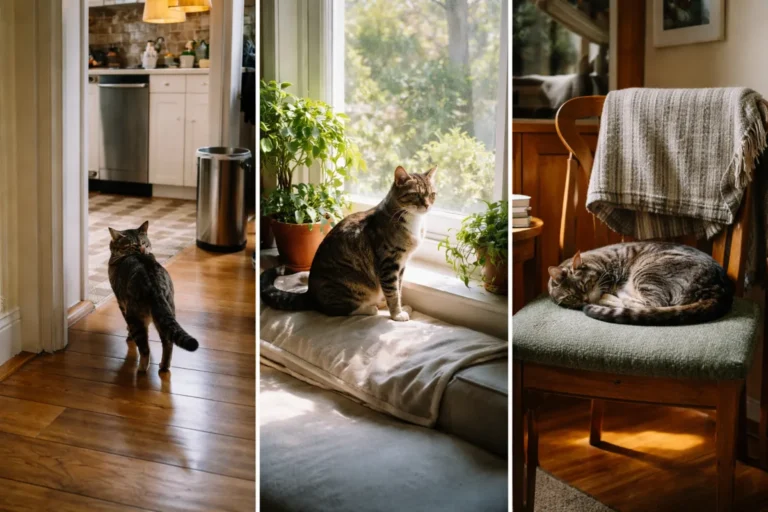
One minute a cat is curled into a quiet ball on the sofa, and the next it is pacing the hallway, batting at a toy, or staring intensely at a window at 5 a.m. This shift can seem random, but it usually is not. Cats often become more active at certain hours because their bodies, instincts, and daily environment all work together to shape when energy appears.
Some cats wake up with a burst of movement at dawn. Others get lively just after their owners settle down for the night. A few seem to follow an invisible schedule that does not match the rest of the household at all. These patterns can be frustrating, amusing, or both, but they usually have a clear logic behind them.
Understanding the timing helps explain more than just a cat’s “zoomies.” It reveals how cats use light, habit, hunger, curiosity, and rest to organize their day. The same cat may seem calm at noon and restless at midnight for reasons that are easy to miss if you only notice the behavior itself, not the hour it happens.
Why Certain Hours Matter to Cats
Cats do not experience the day in the same way people do. Their activity often rises and falls in short cycles rather than following one long stretch of wakefulness. That means a cat may look lazy for hours, then suddenly become alert and mobile when a specific part of the day feels “right” to its body.
Light, sound, household movement, and meal timing all shape this pattern. A cat that has learned breakfast arrives at 7 a.m. may become active before the alarm even rings. Another cat may begin moving once the home becomes quiet, because that is when it can finally hear and notice small things again.
Cats are most likely to become active when their internal rhythm and their environment line up: the right light, the right level of quiet, and the right expectation of food, play, or attention.
What This Looks Like in Everyday Life
The behavior can show up in different ways depending on the cat. Some cats become active in small, obvious bursts. They run from room to room, jump onto counters, or chase invisible targets across the floor. Others show a quieter kind of movement: slow walking, tail flicking, window watching, and repeated trips between favorite spots.
A cat may seem sleepy for most of the afternoon and then suddenly want to play at 9 p.m. It may ask for food at a particular hour with more intensity than at any other time. Some cats become chatty before sunrise, while others become most curious when the family sits down to relax. The pattern can look different, but the timing often stays surprisingly consistent.
Many owners notice that activity appears around transitions. Cats wake up when someone gets out of bed, comes home, starts cooking, or turns off the lights. Those moments matter because cats pay close attention to routine. Once they connect a time of day with something important, the activity often becomes predictable.
Internal Reasons Behind the Timing
1. Crepuscular instincts
Cats are naturally crepuscular, which means they are often most active around dawn and dusk. In the wild, these hours offered good hunting conditions. There was enough light to see, but not so much exposure that movement became obvious to prey or dangerous to the cat. Domestic cats still carry that pattern, even when food no longer depends on hunting.
This does not mean every house cat will behave like a tiny predator at sunrise and sunset. But it does explain why many cats get a second wind during those times. Their bodies are simply tuned to be more alert when the day changes.
2. Energy cycles and rest periods
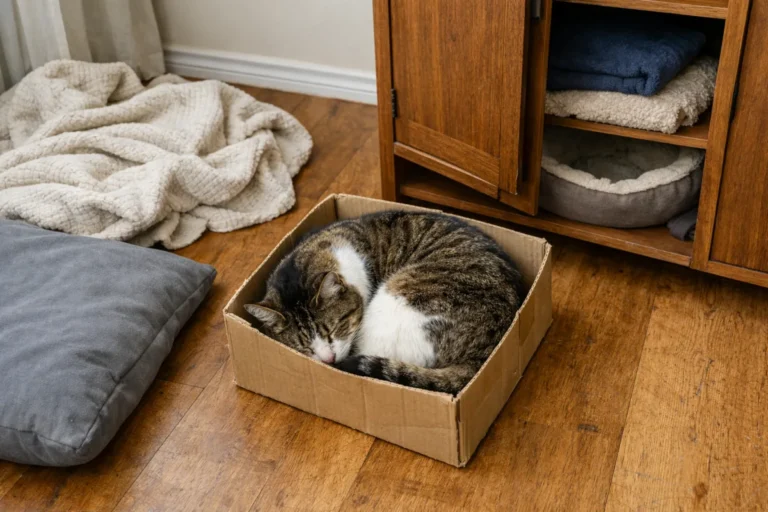
Cats save energy through long naps, then release it in short active spells. This is normal. A cat may sleep deeply for several hours and then wake ready to move, jump, stalk, or investigate. That burst often arrives after rest has restored enough energy to make activity feel worthwhile.
The timing of those bursts can be regular. If a cat naps heavily during the day, it may become active in the evening. If the home is quiet all morning, the cat may wake with a need to interact once people finally start moving around. In that sense, activity is not random. It follows the rhythm of rest.
3. Hunger and anticipation
Feeding schedules strongly shape behavior. Cats are very good at learning what happens at a certain hour, and once they make that association, their behavior often changes before the meal itself. Pacing, meowing, rubbing against legs, or circling the kitchen may all appear well before food is served.
Anticipation can be just as powerful as hunger. A cat that expects breakfast at 6:30 may start acting active at 6:10. That energy is not always about food in a simple sense. It is often a learned response to timing, consistency, and memory.
4. Attention and interaction
Some cats become active when they know their people are available. If evenings are when the household finally slows down, the cat may use that time to seek play, grooming, lap time, or conversation. The behavior can be subtle at first: sitting near a person, following them room to room, or placing a toy nearby.
When those attempts lead to interaction, the timing gets reinforced. The cat learns that a certain hour is useful. Over time, the behavior becomes part of the schedule.
How the Home Environment Shapes the Pattern
Indoor life changes feline timing in important ways. Without outdoor hunting, weather shifts, and natural daylight exposure, cats rely more heavily on the rhythms of the home. That makes household routines especially influential. A noisy family dinner, a quiet midmorning, or a late-night work session can all become signals that affect activity.
Outdoor access can also influence timing. A cat that spends part of the day outside may return inside ready to rest, then wake again later when the home quiets down. A cat that watches birds at the window may become active at the same hours birds are most visible. Small environmental cues can have large effects.
Even room layout matters. A cat that has access to high perches, long hallways, or multiple windows may express more activity during certain hours simply because the space invites movement. A crowded or unpredictable home can create shorter, sharper activity bursts, while a stable and quiet home may produce more regular patterns.
| Timing Pattern | Common Trigger | What It May Look Like |
|---|---|---|
| Early morning | Dawn light, hunger, household waking up | Pacing, meowing, toy chasing |
| Evening | Dinner routine, relaxation time, lower noise | Zoomies, play requests, climbing |
| Late night | Quiet house, leftover energy, attention seeking | Running, knocking items, vocalizing |
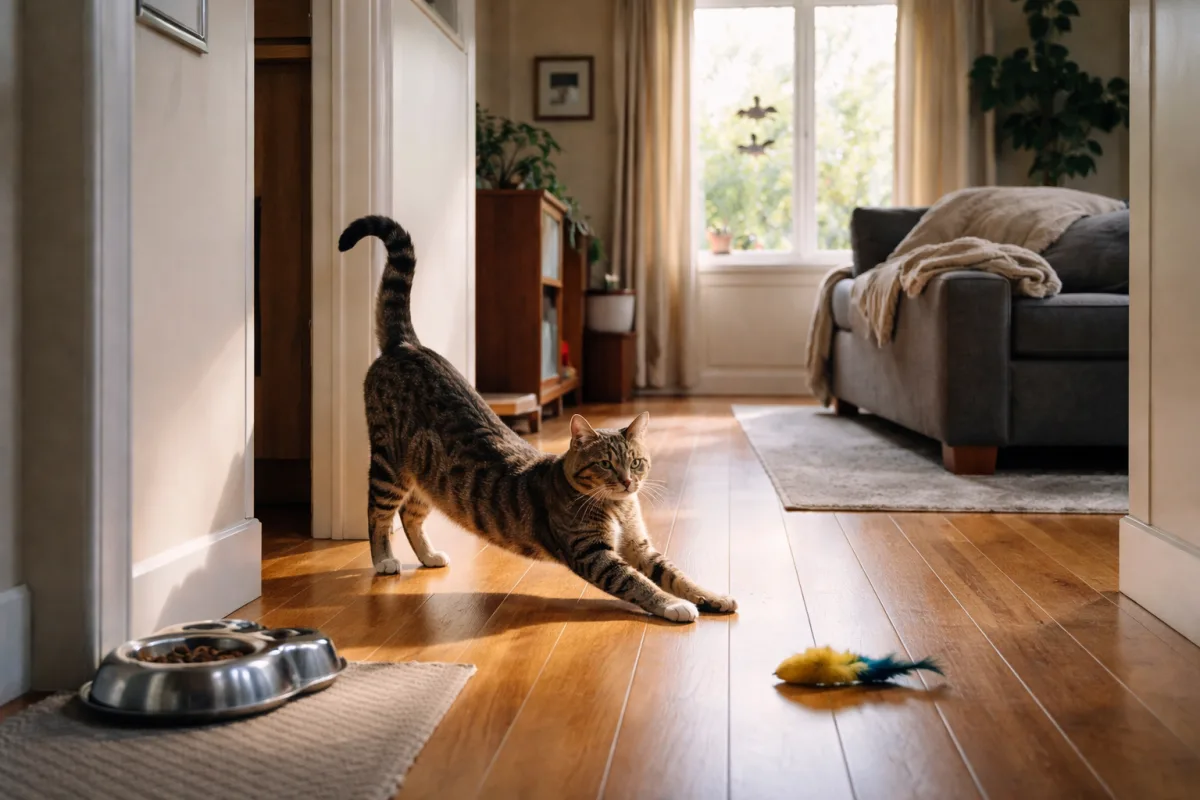
| After naps | Energy restored from sleep | Stretching, grooming, sudden play |
What Different Timing Patterns May Mean
Early morning activity
Morning activity is one of the most common patterns. Cats often become alert just before dawn or shortly after. Soft light, changing sounds, and the memory of breakfast can all contribute. For many cats, this is the hour when the world feels active again.
Some owners assume morning restlessness means a cat has not slept enough. Usually, the opposite is true. The cat has likely slept well and is ready for movement. If the behavior happens every day at the same time, the clock in the cat’s body may be more responsible than anything else.
Evening activity
Evening bursts often appear after the household slows down. Humans sit still, turn on lamps, and stop moving as much. For cats, that can be the perfect chance to wake up. Many cats use this time to initiate play, jump onto furniture, or patrol rooms they ignored earlier.
This pattern can feel more noticeable in homes where the day is busy and the evening is calm. The cat may not be more active overall. It may just be more visible when everyone else is finally available to notice.
Late-night activity
Late-night activity can be the most disruptive because it arrives when people are trying to sleep. But even then, the reason is often practical from the cat’s point of view. The house is quiet, movement stands out, and tiny sounds become interesting. A cat may also have built up energy if it slept much of the day.
When late-night activity becomes a habit, it often reflects the daily schedule rather than a problem with the cat. Feeding too late, playing too little during the day, or allowing energetic games right before bed can all strengthen that pattern.
If a cat becomes active at the same hour every day, look first at routine, light, food, and attention before assuming the behavior is unusual.
How Owners Often Misread the Behavior
It is easy to label a cat as “random” when the pattern is actually very organized. A cat that runs through the house at 4 a.m. may not be mischievous in the human sense. It may be following a strong internal schedule built from instinct and repetition.
Owners also sometimes assume activity always means playfulness. That is not always true. A cat that paces near a door may be waiting for access, not looking for entertainment. A cat that becomes lively near feeding time may be anticipating food rather than asking for attention. Timing matters because it changes the meaning of the movement.
Another common misunderstanding is to treat all activity as a sign of high energy or boredom. Some cats are naturally more active at certain hours even when they are content, healthy, and mentally engaged. The behavior is often a rhythm, not a complaint.
Body Language That Adds Context
The hour alone does not tell the whole story. Body language helps clarify whether the activity is playful, anticipatory, or tense. A cat with relaxed ears, loose movements, and a gently moving tail may simply be ready to interact. A cat with a stiff body, wide eyes, or rapid tail flicking may be overstimulated or alert to something else.
Soft vocalizing, stretching, and brief bursts of play usually point to normal energy. Repeated pacing, hiding, or restless scanning may suggest the cat is responding to changes in the home or outside world. The same time of day can produce very different behavior depending on what the cat has experienced that day.
Common signs and likely meaning
- Rubbing against legs before meals: learned feeding expectation
- Running after sunset: natural active period or pent-up energy
- Watching windows in the morning: interest in outdoor movement
- Following people at night: attention seeking or routine-based interaction
- Quick bursts after naps: normal energy recovery
Why Some Cats Are More Predictable Than Others
Not every cat becomes active at the same hour every day. Some are very consistent because their routines are stable and their environment is easy to read. Others shift depending on season, household noise, guests, work schedules, or changes in feeding time. Personality also plays a part. Some cats like predictable rituals. Others are more flexible and react to whatever is happening around them.
Kittens often show scattered bursts of activity because their energy levels rise and fall quickly. Adult cats usually settle into more defined patterns, especially if household routines stay stable. Senior cats may still become active at certain hours, but their bursts are often shorter and less intense. The timing can remain, even when the style of movement changes.
Health, stress, and environment can also affect the pattern. A cat that becomes suddenly active at unusual hours may be reacting to discomfort, anxiety, or a change in routine. When the schedule changes sharply without an obvious reason, the cat’s timing deserves a closer look.
Long-Term Patterns and Stability
Many cats keep the same active hours for years. That stability is one reason owners start to predict behavior so accurately. The cat is not trying to be difficult. It has learned a dependable rhythm, and that rhythm often remains unless something in the home changes.
Food, sleep, and attention all reinforce timing. If a cat gets breakfast at the same time every morning, it may begin waking up early on its own. If evening play always happens after dinner, the cat may look for activity at that hour without fail. Repetition turns into habit, and habit becomes a schedule.
Still, the pattern is not fixed forever. A new pet, a different work schedule, an additional feeding session, or more daytime play can shift the timing. Cats are adaptable, but they prefer slow, clear changes over abrupt ones. Their activity often follows the path of least confusion.
What to Notice When Timing Changes
A cat becoming active at certain hours is normal. A cat suddenly changing those hours is worth observing. If the cat starts pacing at night after being calm for months, or becomes lively at dawn when it never did before, look at recent changes in food, noise, stress, or sleep. Even small shifts in the household can affect behavior.
It also helps to notice whether the cat is active in a relaxed way or a restless way. Relaxed activity usually fits the cat’s usual rhythm. Restless activity can mean the cat is searching for comfort, stimulation, or a more predictable schedule. The difference is often visible in the cat’s posture and the way it moves through the room.
Stable timing is usually a sign of a cat that has settled into home life. Sudden changes in timing are more informative than steady patterns.
A Quiet Kind of Predictability
When a cat becomes active at certain hours, it is often revealing how closely it tracks the world around it. The hour can mean food, light, quiet, company, or a chance to act on instinct. What looks spontaneous is often tied to a familiar rhythm that repeats day after day.
Once that rhythm becomes clear, the behavior stops feeling mysterious. The cat pacing the hallway before sunrise, stirring at dusk, or launching into a midnight play session is not simply “being weird.” It is responding to a schedule shaped by body, memory, and home life. The pattern is built from small things, and cats notice every one of them.