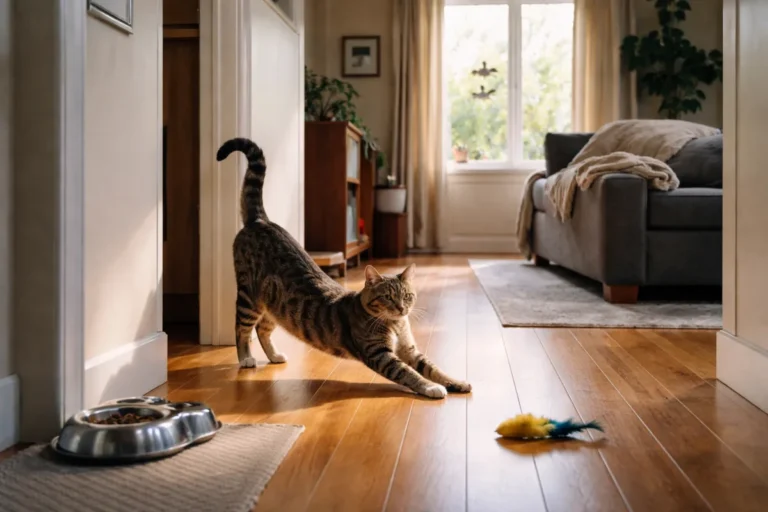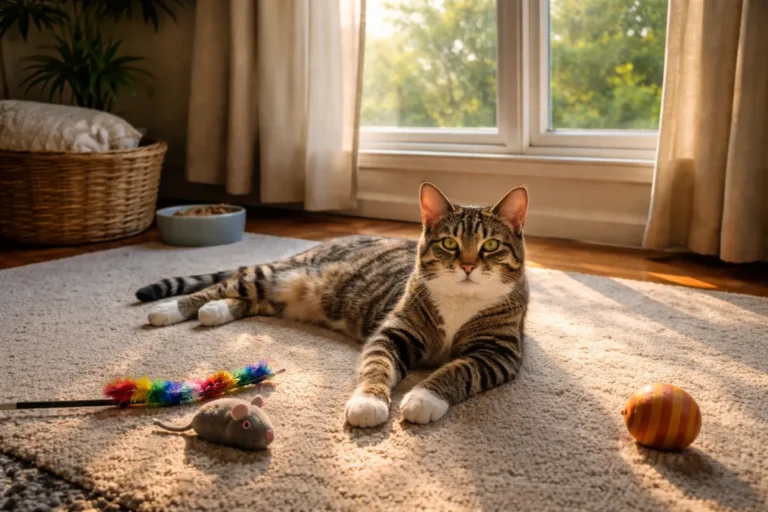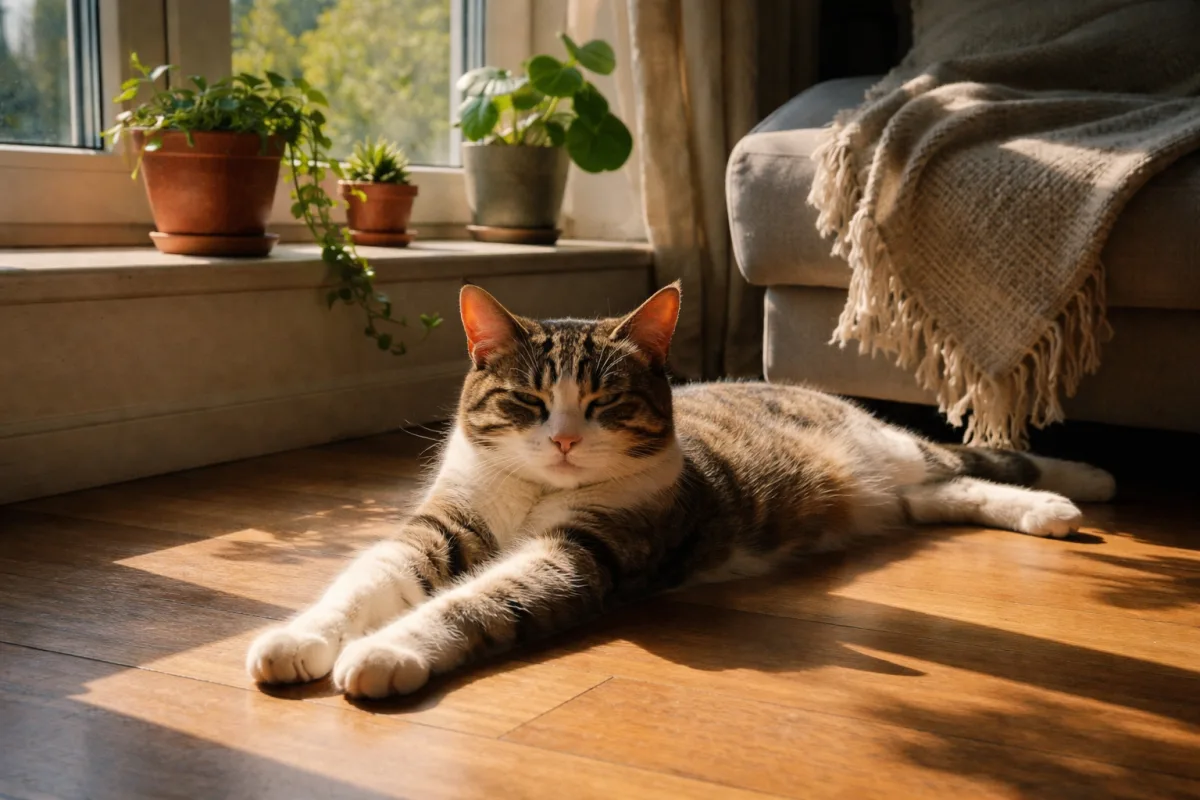
Some cats seem to chase sunlight as if they have a personal appointment with it. They move from one bright patch to another, settle in for a while, then shift again when the sun moves across the room. It can look simple on the surface, but this habit often tells you something about comfort, temperature, routine, and even mood.
Sunbathing is one of those cat behaviors that feels ordinary until you start noticing how precise it can be. A cat may ignore a soft bed, then choose a warm strip of floor beside a window. Another may stretch flat on a porch step, while a different cat will sit upright in the sun and leave the moment it gets too warm. The pattern is familiar, but the reasons behind it are layered.
Most of the time, sunbathing is not random at all. Cats are sensitive to warmth, light, and changes in their environment, so a sunny spot can become more than a place to lounge. It can be a favorite part of the day, a source of comfort, or a way to manage energy without doing much at all.
Why Cats Are Drawn to Sunlight
Sunlight offers cats a mix of warmth and stillness. Their bodies are built to conserve energy efficiently, and a warm surface helps them relax without using much effort. That is one reason a cat may choose a sunbeam over a plush cushion that looks softer to human eyes.
There is also a practical side to this behavior. Cats naturally like to regulate their body temperature in comfortable ways, and a warm patch of sun can feel ideal. Instead of burning energy to stay warm, they simply settle in and let the environment do the work.
Light itself may play a role too. Many cats seem especially aware of changes in brightness and shadow. A beam of sun becomes a distinct feature in the room, almost like a marked destination. Once they notice it, they often return to it again and again.
Sunbathing is usually a normal comfort behavior, not a sign that something is wrong. The important question is not whether your cat likes sun, but how they behave while doing it.
What Sunbathing Looks Like in Everyday Life
In real homes, sunbathing can show up in many small ways. A cat may follow the afternoon light across a hallway, curl up in a window frame, or spread out on a warm rug that catches the morning sun. Some cats like to lie with their belly exposed, while others keep their paws tucked under their chest and simply soak in the heat.
Indoor cats often become especially committed to these spots because they are part of the daily rhythm of the house. When the sun reaches a certain chair or a patch of carpet, the cat may appear there almost like clockwork. Outdoor cats may do the same thing on patios, stones, decks, or protected corners where the sun feels pleasant but not overwhelming.
The body language is often relaxed. Eyes may narrow, whiskers stay loose, and breathing remains slow. A cat that is truly comfortable may stretch out fully, shift once or twice, and then stay put for a long time.
Common sunbathing positions
- Curled into a tight ball to keep warmth close
- Stretched on the side with legs extended
- Lying flat on the belly with paws forward
- Sitting upright and facing the sun
- Half in shade and half in light, adjusting as needed
Possible Internal Reasons Behind the Habit
There are several reasons a cat may seek out sunshine, and they often work together. Warmth is the most obvious one, but comfort is broader than that. A warm patch can soothe muscles, encourage rest, and make a quiet space feel even more secure.
Some cats may also be responding to a natural preference for gentle thermal balance. After sleep, activity, or a cool night, sunlight can feel especially inviting. Older cats in particular may seek warmth more often because it can be easier on stiff joints or simply more pleasant overall.
There may be a sensory component too. Cats rely on their surroundings to help them decide where to rest, and a sunlit area often signals safety, calm, and predictability. If a window seat has become associated with quiet time, birds outside, or a regular nap, the cat may return there because the spot feels familiar as much as warm.
A cat choosing sunlight is often choosing a combination of comfort, temperature, and familiarity. The behavior is rarely about one single reason.
What the behavior may reflect
- Desire for warmth after sleep or activity
- Preference for a predictable resting place
- Need for a low-effort way to relax
- Interest in watching the outside environment
- Comfort with a regular daily routine
How Environment Shapes Sunbathing Choices
Not every home gives the same kind of sunbathing opportunity. A bright apartment with wide windows may produce moving sun patches all day. A shaded house may offer only brief sun exposure in the morning or late afternoon. Cats quickly notice these patterns and often build their routines around them.
Window placement matters a lot. Cats love perches, ledges, and low tables that sit near glass because those spots combine warmth with a good view. Even if the sun itself is only there for an hour, the memory of that spot can stay important to the cat throughout the day.
Season also changes behavior. In cooler months, sunbeams may become prime territory. In hot weather, the same cat may still enjoy sunlight but choose shorter sessions or shift to edges of the bright area where warmth is softer.
Environmental factors that influence sunbathing
- Window direction and how long the light stays in one place
- Room temperature and air circulation
- Availability of elevated resting spots
- Noise level and foot traffic nearby
- Access to both sun and shade
A cat that has several options will often show clear preferences. One may love a warm sill but avoid a crowded couch. Another may prefer a quiet floor spot far from activity, even if a more comfortable bed is available nearby. The sun matters, but so does the feeling of control over the space.
Sunbathing and the Cat’s State of Mind
Sunbathing often happens when a cat feels settled, but the details can reveal more than relaxation alone. A cat that lies down, kneads once, and drifts into sleep is likely enjoying the moment without concern. A cat that keeps lifting its head, scanning the room, or leaving quickly may be using the sun as part rest and part observation.
Some cats like to be in the sun and still remain socially aware. They may lounge where they can see the kitchen, the hallway, or the door. That position lets them relax without losing track of the household. For many cats, this balance is ideal.
Sunbathing can also appear more often when a cat wants a quiet break from interaction. It is not necessarily avoidance in a negative sense. It may simply mean the cat is choosing low stimulation and personal space for a while.
If a cat seeks sunlight but stays alert, it may be using the spot for comfort and monitoring at the same time. Relaxed does not always mean fully asleep.
Relaxed, alert, and overstimulated sunbathing
| Type | What it may look like | What it may suggest |
|---|---|---|
| Relaxed | Loose body, slow blinking, still posture | Comfort, rest, and ease |
| Alert | Head up, ears moving, eyes open | Comfort with awareness of surroundings |
| Overheated or restless | Frequent repositioning, leaving the spot often | The area is too warm or not fully comfortable |
When Sunbathing Becomes More Noticeable
Cat sunbathing often becomes more obvious during seasonal changes. On cold mornings, a cat may seek the first warm beam that reaches the floor. In spring and fall, when temperatures shift throughout the day, the movement of sunlight can create a clear routine.
It can also become more noticeable in quieter homes. A cat living with a calmer schedule may spend long stretches in the same sunny place because nothing interrupts the pattern. In busier homes, the cat may still love the sun but choose shorter visits before moving to a safer or quieter area.
Age can influence how often this happens too. Kittens may race through sun patches without staying long. Adult cats often settle more deliberately. Older cats may linger, especially if warmth helps them feel more comfortable after rest or movement.
Times cats commonly seek sun
- Early morning, especially after a cool night
- Late morning when the light reaches a favorite window
- Afternoon when a familiar room brightens
- After a nap, when the cat wants a warm reset
- During calm household periods with little activity
Routine matters here. If the cat knows that a certain chair becomes sunny around noon, that chair may become part of the day’s structure. Cats are often more schedule-aware than people realize, especially when the environment changes in regular ways.
What Sunbathing Can Mean in Different Homes
Indoor-only cats often build stronger sun habits because light patches become a reliable feature of their territory. A window may serve as entertainment, warmth, and a resting zone all at once. For these cats, sunbathing can be tightly connected to the architecture of the home.
Outdoor-access cats may use sunlight differently. They can choose from more surfaces, more temperatures, and more levels of shade. A cat outdoors may sunbathe briefly, then move to cooler ground or a hidden corner. The pattern can look more fluid because the environment is less fixed.
Multi-cat homes can change the picture again. A sunbeam may become a favored spot not only because it is warm, but because it offers a clear boundary. One cat may enjoy a sunny patch that keeps a comfortable distance from others. Another may avoid the same spot if it is already claimed.
In homes with more than one cat, the best sunbathing place is often the one that feels physically warm and socially easy.
Signals to Watch Alongside the Behavior
Sunbathing by itself is usually easy to understand, but the surrounding signals matter. A cat’s posture, timing, and willingness to move tell you whether the behavior is simple comfort or something else. The sunbeam is only one part of the picture.
If a cat refuses to leave a sunny spot on a hot day, pants, seems weak, or becomes unusually withdrawn, that is different from normal lounging. Likewise, if sun-seeking is paired with shivering, unusual clinginess, or changes in appetite, it may be worth paying closer attention. The sunlight is not the problem, but the overall pattern may be telling you something.
On the other hand, a cat that visits sun spots briefly, stretches, grooms, and then moves on is usually showing a healthy, ordinary preference. Many cats use warm light as part of a comfortable daily routine without any deeper issue.
Body language that often goes with normal sunbathing
- Slow blinking or partially closed eyes
- Loose limbs and soft posture
- Gentle stretching before or after lying down
- Quiet grooming while resting in place
- Easy repositioning when the warmth changes
How Owners Often Read the Behavior
People often see a cat in a sunbeam and assume it is just sleeping. Sometimes that is true, but sunbathing usually includes more awareness than a simple nap. The cat may be resting, but it is also choosing a location, managing warmth, and responding to the room around it.
Some owners worry that a cat is too obsessed with sunlight. In most cases, the behavior is more ordinary than it seems. Cats are efficient animals, and a warm spot lets them settle without much effort. What may look like indulgence is often just sensible comfort-seeking.
Other owners may miss the significance of how a cat uses sunlight. A cat that repeatedly seeks the same window or patch of floor is expressing a preference in a very consistent way. That preference can help you understand where the cat feels safest and most at ease in the home.
How to Make Sunbathing Safer and More Comfortable
A good sunbathing setup gives a cat choice. The ideal spot includes access to warmth but also an easy way to leave if the cat gets too hot. Shade nearby is useful, and a soft surface is a plus if the cat likes to stay in one place for a long time.
It helps to keep an eye on how hot the surface gets. Floors, windowsills, and enclosed porches can warm up quickly. A cat should always be able to move away without being blocked by furniture, cords, or closed spaces.
Simple adjustments can make the area more inviting and practical. A bed near the window, a perch with part sun and part shade, or a nearby water bowl can all support the habit without making it uncomfortable.
Practical ways to support a cat’s sun routine
- Leave space for both sun and shade
- Offer a soft resting surface near the window
- Make sure the cat can move away easily
- Check surfaces for excess heat in warm weather
- Provide fresh water close to favorite lounging areas
For many cats, the best setup is not full sun all day. It is a comfortable mix: enough warmth to enjoy, enough freedom to leave, and enough quiet to rest without disturbance. When those pieces are in place, sunbathing becomes one of the easiest and most natural parts of the day.
That is why the habit can seem so peaceful when you watch it. A cat lying in a bright patch is doing several things at once: resting, warming up, observing, and choosing its own pace. The sunbeam is just the visible part.