A cat that seems to follow a daily routine can feel almost clockwork. Morning appears, and there they are near the bed. Lunch happens, and they start circling the kitchen. Evening arrives, and they settle into the same chair, the same window, the same lap.
This behavior is often comforting, but it can also make people wonder whether the cat is truly routine-driven or simply very attached to certain moments. In many homes, the answer is both. Cats notice patterns quickly, and once they learn what usually happens next, they begin to build their day around it.
That does not mean every cat is strict or predictable in the same way. Some are flexible and only check in at key times. Others seem to run an internal schedule so steady that any small change is obvious. The reasons behind this are often practical, not mysterious.
What Daily Routine Looks Like in Everyday Life
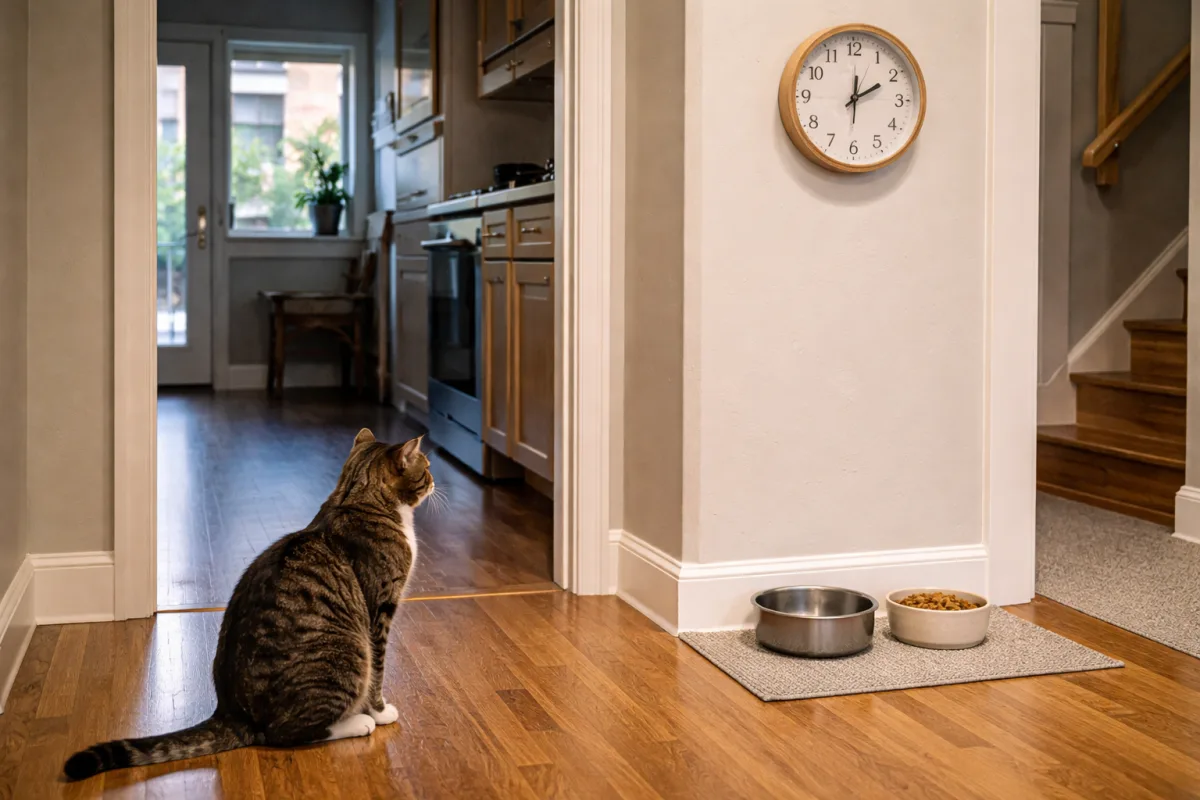
A routine-following cat does not always behave in one dramatic way. Often, the signs are small and repeated. The cat appears at the same time each morning, waits near the food area before meals, or starts grooming after the household becomes quiet in the evening.
Some cats move through the house in a pattern that matches the family’s own habits. They may go to the bedroom when the first alarm sounds, sit by the bathroom door while someone gets ready, or hop onto the couch when the TV turns on. These actions can look intentional because they are tied to repeated events.
Common examples include:
- Waiting near the kitchen before breakfast
- Following a person from room to room at certain times of day
- Asking for attention when the household becomes still
- Napping in the same place after the same daily activity
- Showing up before meals, medication, or bedtime rituals
What makes this pattern noticeable is consistency. The cat is not just affectionate once in a while. The timing matters. When the same behavior happens again and again, it starts to feel like the cat is tracking the day.
Many routine-based behaviors are not signs of fussiness. They are often signs that the cat has learned the rhythm of the home and is responding to it.
Why Cats Build Their Day Around Patterns
Cats are observant animals. They watch quietly, notice repetition, and remember what happens before food, play, rest, or human attention. Over time, they form expectations. A cat that sees breakfast arrive after the alarm will begin to treat the alarm as part of the feeding sequence.
This pattern learning is one of the main reasons daily routine becomes so strong. Cats do not need a full explanation of the day. They only need repeated experience. A few weeks of consistent household behavior can create a lasting schedule in the cat’s mind.
Predictability also helps cats feel safe. When the environment follows familiar rhythms, the cat does not have to spend as much energy figuring out what comes next. That can matter a lot in homes that are active, busy, or noisy at certain times and quiet at others.
Some of the internal reasons behind routine-following include:
1. Memory of recurring events
Cats remember the order of daily events. They often connect sounds, movement, and time of day with specific outcomes such as feeding, play, or rest.
2. Comfort in predictability
When a cat knows what to expect, the day feels more manageable. Familiar routines reduce uncertainty.
3. Social awareness
Many cats adjust to human schedules. They may wait for the person who usually feeds them, or appear when a family member returns home at a regular hour.
4. Self-directed habits
Some routines are not about humans at all. Cats may simply prefer certain sleep, grooming, hunting-style play, or watchful periods at the same time each day.
A cat’s routine is often a mix of learned timing, memory, comfort, and personal preference.
How the Home Environment Shapes the Behavior
Daily routine becomes more noticeable in homes where the schedule is stable. If meals happen around the same time, if the household wakes and sleeps on a set pattern, and if play or lap time often follows certain cues, the cat learns quickly. Repetition teaches.
Indoor cats often show this behavior strongly because the environment changes less than it would outside. Their world has fewer surprises, so they can pay close attention to small details. A door opening, a coffee maker starting, or footsteps in the hall may all become parts of a daily map.
Quiet homes can create especially clear routines. In a calm setting, the cat may choose the same rest spots, the same windows, and the same times for checking in with people. In busy homes, the schedule can still exist, but it may be more flexible and interrupted by noise, guests, children, or irregular movement.
Outdoor access can also affect routine. A cat that spends part of the day outside may follow a looser pattern, with more variation in where it goes and when it returns. Still, even outdoor cats often come back for food, warmth, or companionship at very regular times.
| Household Factor | How It May Affect Routine-Following |
|---|---|
| Fixed feeding times | Makes the cat highly time-aware |
| Quiet home | Patterns become easier to notice |
| Multiple people | The cat may track different human schedules |
| Frequent changes | Routine may be less rigid, but still present |
| Indoor lifestyle | Often increases reliance on household cues |
The same cat may look very different in two homes. In one house, the routine appears precise. In another, it seems scattered. The cat has not changed as much as the environment has.
What the Behavior May Signal About the Cat’s State
Routine-following is usually neutral or positive. It can mean the cat is comfortable, well-adjusted, and alert to the structure of the day. A cat that feels safe enough to settle into a pattern is often showing trust in the environment.
It can also reflect anticipation. Food, play, and attention all create strong expectations. A cat that arrives before mealtime is not necessarily anxious. It may simply know the sequence and want to be ready for it.
In some cases, the strength of the routine tells you something about the cat’s emotional state. A very rigid pattern may suggest the cat relies heavily on predictability. That does not automatically mean there is a problem. It only means the cat prefers a stable rhythm and may react more visibly when it changes.
Watch for the context around the routine, not just the routine itself. A cat that follows a schedule while remaining relaxed, curious, and willing to rest is different from a cat that seems tense, vocal, or unable to settle when the expected event does not happen on time.
Routine becomes more meaningful when you notice the cat’s body language, not just the clock.
Subtle Signals That Often Come With Routine-Following
Body language usually gives away more than the timing alone. A cat that is calmly following the day may move with loose muscles, a normal tail position, and an interested but relaxed face. The cat may pause to observe, then continue on without urgency.
Other signals often appear alongside the behavior:
- Gentle vocalizing near usual meal times
- Slow blinking or soft eye contact during check-ins
- Walking ahead of a person toward a familiar location
- Sitting in the same spot at the same hour
- Rolling, stretching, or grooming after a recurring event
Some cats become more active as a routine moment approaches. Others become quieter and simply wait. Both can be normal. What matters is whether the cat seems composed or unsettled.
Intensity also matters. A cat that casually follows the same daily pattern is different from one that becomes distressed if the schedule shifts by even a little. That stronger reaction can appear as pacing, persistent meowing, or hovering near the food area well before the usual time.
Timing can be informative too. If the routine is strongest at dawn and dusk, it may connect to the cat’s natural activity peaks. If it appears around human arrival or bedtime, it may be more about social attachment and expectation.
Playful, Neutral, and Stress-Related Versions of the Same Behavior
Not every routine looks the same. Some cats are playful about it. They lead the way to a favorite toy at a certain hour or start a daily chase around the hallway when the family comes home. Others are almost invisible in their habits, quietly appearing in the same places with little fuss.
A neutral routine is usually the easiest to recognize. The cat follows the schedule with calm confidence. There is no overreaction, only consistency.
A playful version may include:
- Bringing toys to the same person at the same time
- Inviting interaction before a usual activity
- Running a brief loop through the house and then settling
- Chirping or quick meows that sound expectant, not stressed
A stress-related pattern can look similar at first, but the tone changes. The cat may pace, become restless, or demand attention far more intensely. If a missed routine leads to agitation, the behavior may be less about habit and more about dependence on predictability.
That distinction is important. Routine itself is normal. The emotional tone around it is what changes the meaning.
Why Owners Often Notice the Pattern Most at Certain Times
People tend to notice routine-following most clearly in the morning, around meals, and in the evening. These are the moments when the household itself has a rhythm. The cat learns that rhythm and begins to take part in it.
Morning routines stand out because they often involve waking, feeding, and getting ready for the day. Cats may treat these events as one connected chain. Once one part begins, the rest are expected.
Evening routines are another strong window. People slow down, sit still, and become more available. For many cats, that is the perfect time to seek attention or settle nearby. The behavior can look affectionate, but it may also be a practical response to the change in household energy.
Weekend changes often reveal just how carefully a cat tracks the weekday pattern. If breakfast is delayed by an hour, the cat may still appear at the usual time. If bedtime moves later, the cat may wait, watch, and recheck the room until the pattern resumes.
How Routine Changes Over Time
A kitten may show early signs of routine-following because kittens adapt quickly to repeated events. They learn where food comes from, where they sleep, and which rooms feel safe. Their routines can be short and simple, but they form fast.
Adult cats often become more deliberate. Their habits may stabilize into a pattern that seems more defined than it did in kittenhood. A mature cat may choose the same windows, cushions, and human proximity each day because those choices have worked well for a long time.
Older cats may become even more schedule-oriented. As energy levels change, predictable rest and feeding times can matter more. Familiar routines may help them conserve effort and feel secure.
Changes in life stage can shift the shape of the routine without removing it. A younger cat may be active around the house at several points during the day. An older cat may follow a narrower pattern centered around feeding, warmth, and easy access to favorite people or resting places.
When a cat’s daily pattern changes gradually with age, that is often normal. The routine may become quieter, not disappear.
When the Routine Feels Especially Strong
Some cats are most routine-driven during transitions. Moving to a new home, adding another pet, changing work hours, or altering feeding times can make the pattern more obvious. The cat may lean harder into familiar habits when the rest of the environment feels less predictable.
That does not always mean the cat is struggling. Sometimes it is just a way of staying oriented. The familiar part of the day becomes a reference point when other things have shifted.
Routine can also become stronger in cats that are highly observant or closely bonded to a specific person. If one human is the center of feeding, play, and comfort, the cat may build a schedule around that person’s movement almost completely. The routine becomes social as much as practical.
Long-term stability often keeps the behavior steady. Cats in homes with regular mealtimes, calm transitions, and clear patterns may keep the same daily habits for years. The details can change, but the structure remains recognizable.
What to Notice Instead of Just the Schedule
The time itself matters less than the whole picture. A cat following a daily routine is not simply reading the clock. It is responding to a network of cues: sound, movement, smell, light, human habits, and memory.
When observing the behavior, it helps to ask a few practical questions:
- Does the cat stay relaxed while waiting?
- Is the behavior tied to meals, play, rest, or attention?
- Does the cat adapt if the routine changes slightly?
- Are there other signs of comfort, such as grooming or resting normally?
- Does the pattern appear only in one part of the day or across many?
These details give the routine context. A cat that appears at breakfast time because that is part of the day’s structure is different from a cat that appears anxious whenever the schedule changes. Both are following patterns, but the reasons and feelings behind them are not the same.
Natural Habits Behind a Familiar Day
A cat following a daily routine is usually showing memory, observation, and comfort with repetition. It is a very cat-like response. Cats like knowing what happens next, especially when the environment supports clear patterns.
In a home, that habit can look almost ritualistic. The cat checks the same spots, appears at the same hour, and seems to know exactly when to wait and when to act. But beneath that routine is something simple: the cat has learned how the day works.
That learning can be quiet, steady, and deeply personal. One cat may map the day around a single feeding time. Another may organize it around a person’s arrival, a sunny window, or a few minutes of evening play. The routine is often built from the things the cat finds most reliable.
And once that pattern settles in, the cat often keeps returning to it. Not because the day is forced into shape, but because the shape already feels familiar.