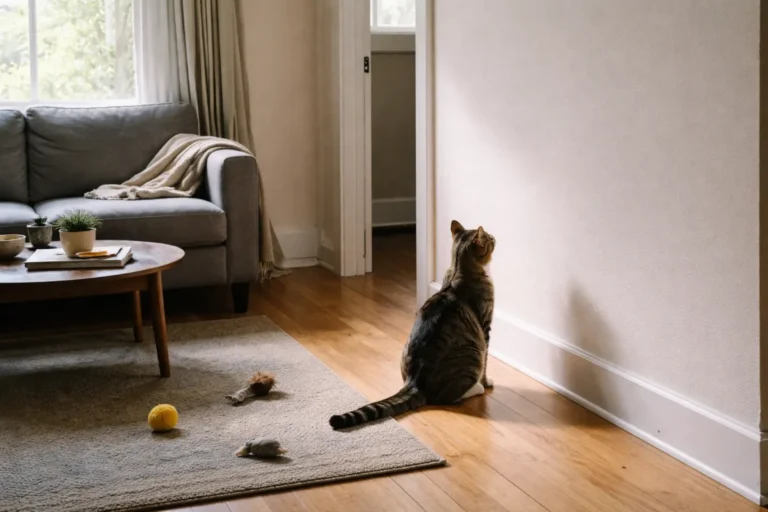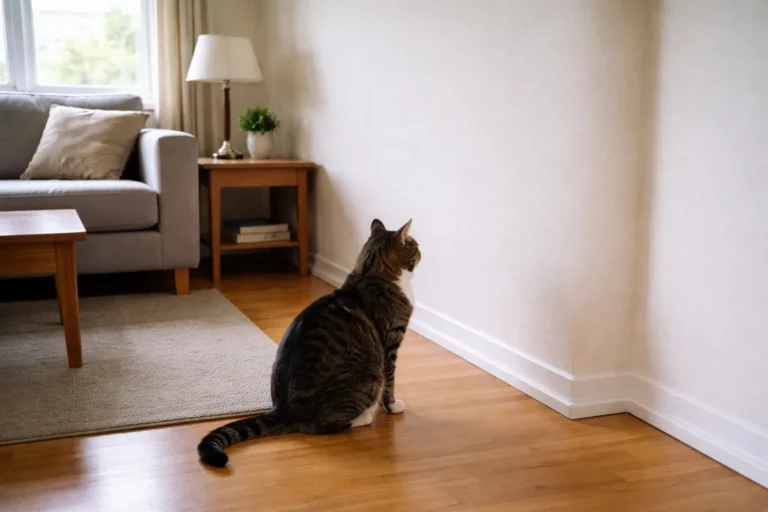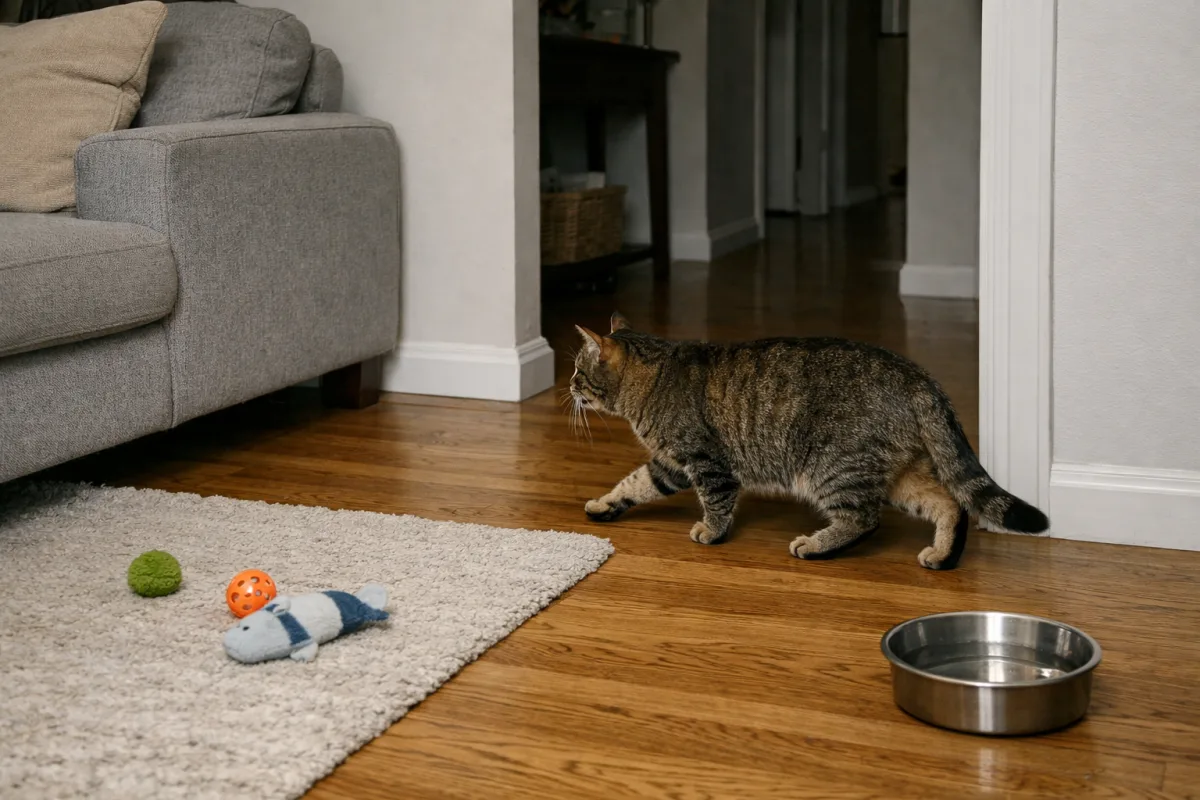
A cat that moves slowly and carefully is not always being dramatic, weak, or “lazy.” Often, that careful pace is a normal part of how cats move through the world. They notice small details, test the ground before they commit, and prefer to keep control of their balance and space.
Sometimes the behavior is easy to miss because it looks subtle. A cat pauses at the edge of a room, lowers its body before crossing a doorway, or places each paw with unusual precision. In a quiet home, these moments can seem almost graceful. In a busier home, they may look like hesitation.
There are many reasons a cat may choose slow, deliberate movement. Some are physical, some are emotional, and some are simply tied to the cat’s instincts. The same behavior can appear in a relaxed cat, a cautious cat, or a cat that is not feeling quite right.
What slow, careful movement looks like in everyday life
Owners usually notice this behavior in ordinary moments, not during anything obvious. A cat may walk along a hallway as if checking every step, or approach a food bowl in a measured way instead of rushing forward. Some cats move slowly when they hear a new sound, see a visitor, or enter a room they do not use often.
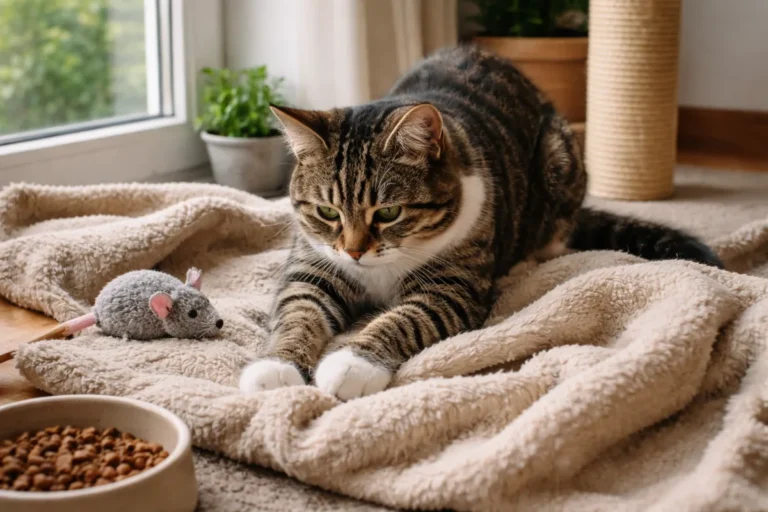
It can also show up in the way a cat climbs, jumps, or settles down. Rather than leaping quickly onto furniture, the cat may crouch, look twice, then climb one surface at a time. Even during play, a careful cat may stalk a toy with slow, deliberate steps before making a short, precise pounce.
That slow pace does not always mean uncertainty. In many cases, it reflects a cat’s habit of gathering information before acting. Cats rely on observation, and careful movement is one of the ways they stay in control of the situation.
Common everyday examples
- Walking slowly into a room with unfamiliar sounds
- Testing a surface before jumping up or down
- Approaching another pet with cautious body posture
- Moving slowly after waking up from a nap
- Tracking a toy with quiet, precise steps
Slow movement is often less about “going too slowly” and more about a cat choosing to move with intention.
Natural instincts behind careful movement
Cats are both predators and prey, and that combination shapes a lot of their behavior. Even a well-fed indoor cat still carries instincts that reward caution. A careful step helps a cat avoid noise, stay balanced, and reduce the chance of startling something nearby.
In nature, moving slowly can be useful for hunting. A cat that creeps forward carefully is less likely to alert prey. That same instinct often appears at home when a cat is watching a bird outside the window, tracking a toy, or sneaking toward another pet’s favorite spot.
There is also a strong self-protective side to this behavior. Cats tend to dislike surprise. A slow approach gives them time to assess people, surfaces, sounds, and distances. It is a way of making the environment feel more predictable.
How instincts shape the pace
- They conserve energy until action is needed
- They reduce the chance of slipping or falling
- They help the cat evaluate threats before moving closer
- They support quiet, controlled hunting behavior
When a cat is simply being cautious
Caution is one of the most common reasons for slow movement. A cat may be naturally reserved, or the environment may feel slightly unsettled. New furniture, visitors, strange smells, loud appliances, or changes in routine can all make a cat move more carefully.
This is especially noticeable in cats that prefer predictable spaces. A cat may walk slowly after a loud door slam, an unfamiliar delivery person, or a rearranged room. The pace is often paired with other small signals, such as a low body posture, large eyes, ears pointed forward or slightly outward, and a pause before each next move.
Careful movement in these moments is not necessarily a problem. It can be a sign that the cat is using normal judgment. The cat is taking time to understand what has changed and whether it is worth approaching.
A cautious cat often looks slow because it is reading the room, not because it is confused.
Physical reasons a cat may move slowly
Sometimes slow movement has a body-based cause. A cat that seems unusually careful may be feeling stiffness, soreness, or weakness. Older cats often slow down because joints are less flexible, and jumping can take more effort than it used to. Even younger cats can move cautiously after a long nap or after a rough landing.
Pain is not always obvious in cats. They may not limp dramatically or cry out. Instead, they may shorten their stride, hesitate before climbing, or move with extra care when getting up. A cat that usually races across the room but suddenly becomes measured and deliberate may be trying to protect an uncomfortable part of the body.
Vision changes can also matter. A cat that cannot see clearly may move more slowly because it is less certain about obstacles, heights, and distances. The same is true for cats that are recovering from illness, feeling weak, or dealing with balance issues. Slower movement helps them stay steady.
Physical changes that can lead to careful movement
- Joint stiffness or arthritis
- Muscle soreness after activity
- Recovery from illness or surgery
- Vision decline
- General fatigue or weakness
| Possible clue | What it may suggest |
|---|---|
| Hesitation before jumping | Discomfort, stiffness, or uncertainty about landing |
| Shorter steps | Protecting sore legs or joints |
| Moving more slowly than usual for days | Possible health change worth watching |
| Careful walking in dim light | Reduced vision or cautious navigation |
Emotional reasons behind the pace
Cats are sensitive to mood shifts, and their movement often reflects that sensitivity. A cat that feels unsure, alert, or mildly stressed may move as if each step needs to be verified first. This can happen when a familiar routine changes or when the cat senses tension in the home.
Some cats slow down when they are being observant rather than relaxed. They may not want to rush into an interaction, especially with a new person, a loud child, or another animal. The slower pace gives them time to decide whether to approach, wait, or leave.
There is a difference between relaxed caution and tense caution. A relaxed cat may move slowly with loose muscles and soft eyes. A tense cat may move just as slowly, but the body will look tighter, the tail may stay low or still, and the cat may be more likely to freeze.
Body language that often travels with careful movement
- Low, controlled posture
- Brief pauses before crossing open spaces
- Tail held still or close to the body
- Ears rotating to track sounds
- Eyes focused on one area or object
Slow movement can mean calm observation or quiet stress. The surrounding body language tells the fuller story.
How the home environment changes the behavior
A cat’s pace often depends on the kind of home it lives in. In a quiet home with steady routines, a cat may move slowly because nothing is pushing it to rush. In a busier household, slow movement may be more noticeable because the cat is navigating people, noise, and movement around it.
Indoor cats often develop a very specific relationship with space. They learn which floorboards creak, which hallway is exposed, where other pets sleep, and when the kitchen becomes active. Careful movement helps them move through those spaces without unnecessary interruption.
Outdoor access can create a different pattern. A cat that spends time outside may become especially deliberate when coming back in after scanning the yard or approaching a doorway. The animal is often shifting between alertness and comfort, and that transition can make the movement appear especially measured.
Environmental factors that make slow movement more likely
- New people or guests in the house
- Loud appliances or construction noise
- Shifts in furniture or room layout
- Living with other pets
- Busy daily routines with frequent movement
How daily routine affects speed and caution
Cats often repeat the same routes at the same times. When a routine is steady, their movement may look smooth and unhurried. When timing changes, even a small one, the cat may become more deliberate. A late meal, a different wake-up pattern, or a missed play session can alter how the cat crosses a room or approaches a person.
This is one reason the behavior can seem inconsistent. A cat may walk quickly to the kitchen in the morning, then move carefully across the same floor in the evening after the house gets louder. The pace is tied to context, not just personality.
Many cats also slow down when transitioning between states. A cat waking from sleep, coming out from under a bed, or shifting from play to rest often uses careful movement to reset its body and reorient itself. That brief slowness is part of the transition.
When slow movement appears during play
Play can make the behavior more interesting, because the cat may be slow one moment and explosive the next. A cat may stalk a toy with extreme care, crouching low and moving almost silently. Then, with a sudden burst, it pounces. That is not hesitation. It is a classic hunting pattern.
Some cats also move slowly during play because they prefer controlled action over wild running. They may enjoy tracking, pawing, and calculated jumps more than sprinting around the room. The careful pace still belongs to play, just a calmer version of it.
If the cat looks slow but seems engaged, with focused eyes, forward-facing ears, and a responsive posture, the behavior is often part of normal play style. If the same slowness comes with stiffness, pulling away, or reluctance to continue, it may be less about play and more about physical comfort.
Playful slow movement often includes
- Low crouching before a pounce
- Quiet stalking of toys
- Sudden bursts of speed after a pause
- Flexible, alert body posture
- Interest that returns repeatedly
When slow movement may signal discomfort
Not every careful cat is a comfortable cat. A sudden change in pace can matter, especially if it lasts longer than a day or two. Cats often disguise discomfort, so a shift toward deliberate movement may be one of the first signs that something is off.
Watch for combinations rather than a single trait. Slow movement along with hiding, reduced appetite, less jumping, unusual vocalizing, or changes in grooming can point to a problem that needs attention. The cat may still eat or interact, but do so more cautiously than usual.
That does not mean every slow step is a warning sign. A cat that moves more slowly after vigorous activity or after waking is still behaving normally. The key difference is consistency, change from baseline, and whether other signs appear alongside the slowness.
If a cat’s pace changes suddenly and stays different, the movement itself is worth noticing, even when the cat still seems “mostly fine.”
Age and personality shape the pattern
Kittens often move in bursts. They can be careful one second and chaotic the next, especially when learning balance and distance. Still, even kittens may pause and test surfaces before jumping. That cautious moment is part of how they build confidence in their bodies.
Adult cats tend to show a more stable version of the same behavior. A confident adult may move slowly only when something is new or interesting. A more reserved adult may move carefully in many situations, especially if it prefers control and quiet observation.
Older cats often become slower because their bodies need more support. That does not always mean they are unwell, but it does mean owners may see more deliberate movement as part of daily life. Many senior cats develop their own rhythm and stick to it.
How life stage influences the behavior
- Kittens: exploratory, unsteady, still learning balance
- Adults: context-based caution, more predictable movement patterns
- Older cats: slower pace, more deliberate jumps, greater care on stairs and furniture
How owners often misread careful movement
One common mistake is assuming slow movement always means laziness. Cats do not move slowly for the same reasons humans might. They are not usually “dragging” themselves through the day without purpose. More often, they are pacing themselves for safety, comfort, or observation.
Another misunderstanding is assuming every slow cat is frightened. Fear can absolutely cause careful movement, but so can curiosity, concentration, physical stiffness, or simple habit. A cat may walk slowly because it is deeply interested in what is happening nearby.
It is also easy to overlook the role of timing. A cat that moves cautiously only at certain times, such as after a nap or in a noisy room, is telling a different story from a cat that has become generally slower across the whole day. That distinction matters.
What to watch for over time
The most useful clue is change. Many cats are naturally measured, but their usual pace stays fairly consistent. When that pattern shifts, it helps to notice where, when, and how often it happens. A cat that is slow only on slippery floors may simply be cautious. A cat that is slow everywhere may be showing something different.
Pay attention to transitions as well. Getting up, climbing onto furniture, walking downstairs, and moving after rest can reveal more than casual walking on flat ground. These moments ask more from the body, so they often expose stiffness or hesitation more clearly.
Keeping track of context makes the behavior easier to understand. A cat that moves slowly during thunderstorms, near strangers, or after vigorous play may be responding normally to that setting. A cat that is gradually slowing down in familiar, calm conditions may deserve a closer look.
Useful questions to ask yourself
- Has the cat always moved this way, or is it new?
- Does the behavior happen in one place or many?
- Is the cat cautious, tense, or simply unhurried?
- Are there signs of pain, stiffness, or reduced interest in movement?
- Does the pace change with noise, routine, or interaction?
The quiet logic of a slow-moving cat
Slow, careful movement is often a cat’s way of staying balanced between curiosity and safety. It can reflect instinct, personality, environment, or physical comfort. Sometimes it is a sign that the cat wants more information before acting. Sometimes it is a practical response to an uncomfortable body or an unsettled room.
In daily life, the behavior makes sense when seen in context. A cat that takes its time across a hallway, checks a surface before jumping, or stalks a toy with patience is not acting randomly. It is choosing a pace that fits the moment.
That measured rhythm is part of what makes cats so distinctive. They do not rush unless they decide to. And when they move slowly and carefully, there is usually a reason tucked into the details of the room, the routine, or the body they are carrying through it.