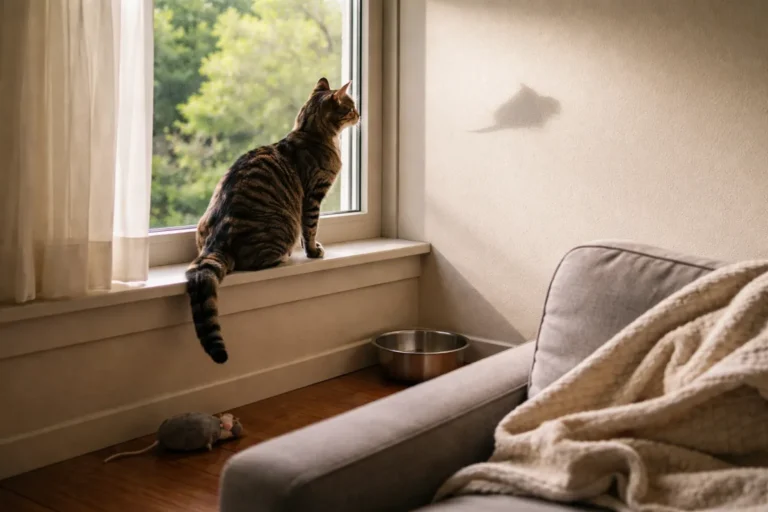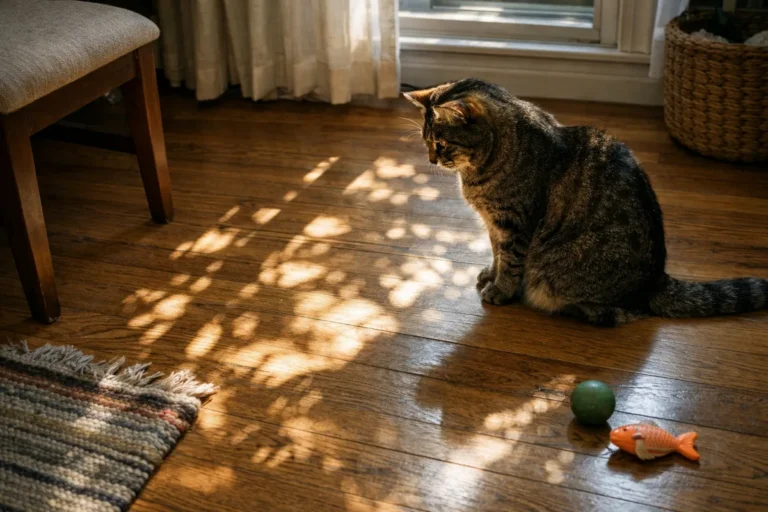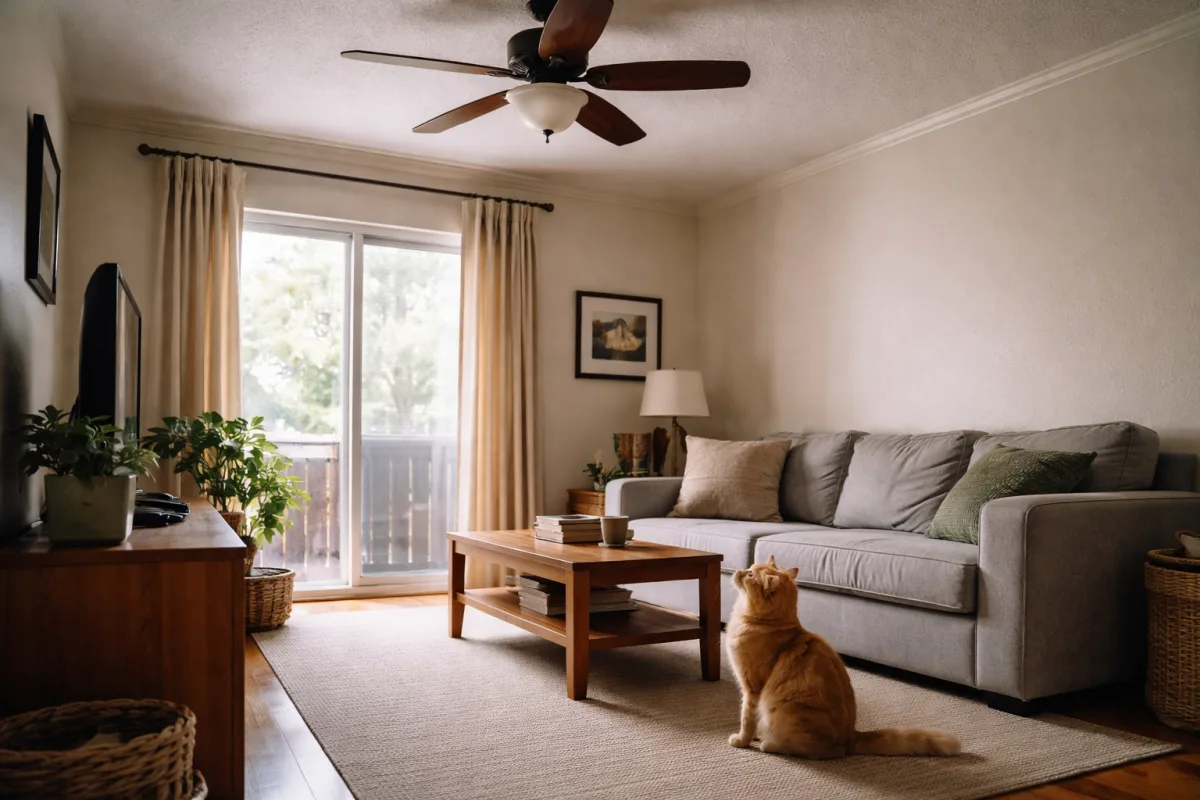
A cat staring at the ceiling can look almost eerie. One moment they are relaxed on the couch, and the next they are fixed on a spot above you as if something important is happening overhead. Many cat owners notice this and wonder whether their pet sees a bug, hears a sound, or is reacting to something more serious.
Most of the time, the behavior is not mysterious at all. Cats are built to notice tiny movements, faint sounds, and small changes in the environment that people usually miss. A ceiling can hold reflections, insects, air currents, and subtle noises inside walls or vents. To a cat, that blank surface may be full of information.
Still, when a cat watches the ceiling often or for long stretches, the behavior can mean different things depending on the setting. Sometimes it is simple curiosity. Sometimes it reflects alertness, playfulness, or mild stress. The details matter, and so does the rest of the cat’s body language.
What Cats May Be Noticing Above Them
A ceiling may seem empty to a person, but a cat processes it differently. Cats track movement quickly and often respond to changes that are too small for human eyes. A shadow moving across a white ceiling, a tiny insect, or a shift in light can hold their attention for a while.
In many homes, ceilings also carry sound. Pipes, vents, loose insulation, and electrical systems can create soft taps, hums, or vibration patterns. Cats hear higher frequencies than humans, so what looks like silent staring may actually be a response to a sound coming from above or inside the walls.
Sometimes the trigger is not directly on the ceiling itself. A cat may be watching the air near the ceiling where dust floats, where sunlight reflects, or where a ceiling fan changes the room’s movement. Their focus can seem fixed on a single point, but the cat may be following a subtle pattern that keeps shifting.
Common things that attract a cat’s attention overhead
- Small insects or flies near ceiling lights
- Light reflections on paint, glass, or fans
- Sounds from vents, pipes, or attic spaces
- Shadows moving from windows or passing objects outside
- Air movement from fans or HVAC systems
- Dust or tiny particles drifting in sunlight
How This Behavior Looks in Everyday Life
Ceiling watching can appear in a few different ways. Some cats stop in the middle of walking and simply freeze. Others sit upright with their ears forward and eyes wide open. A few stare while lying down, barely moving except for a slight ear twitch or slow head turn.
In one home, the cat may stare at a corner seam near the ceiling for several minutes and then walk away as if nothing happened. In another, the cat may leap at a moving shadow or follow a bug with smooth, controlled head movements. The behavior can be short and casual, or it can become intense and repetitive.
Owners often notice that the timing matters. A cat may watch the ceiling more at night, in a quiet room, after meals, or when the home becomes still. That pattern can offer clues about what is drawing their attention. When the environment is calm, tiny changes stand out more clearly.
When a cat’s ceiling watching is brief, relaxed, and followed by normal behavior, it often points to curiosity or a sensory trigger rather than a problem.
Possible Internal Reasons Behind the Behavior
Not every ceiling stare is about something happening in the room. Sometimes the cat’s own internal state shapes the behavior. Cats can become intensely focused when they are alert, under-stimulated, or waiting for something to happen. A quiet ceiling can become the target of that attention.
Predatory instinct is part of the explanation. Cats are hunters by nature, and hunting involves scanning, tracking, and pausing. When a cat watches the ceiling, they may be treating an invisible stimulus as if it were prey or motion worth tracking. This does not always mean they are ready to pounce. It can simply be a hard-wired response to anything that resembles movement.
There is also the possibility of heightened sensitivity. Some cats react strongly to small changes in sound, smell, or vibration. If a cat is already on edge, even minor cues above them can seem important. In that case, the ceiling is not the cause; it is just where the cat’s attention lands.
Internal states that can shape the behavior
- Curiosity about movement or sound
- Predatory focus triggered by tiny stimuli
- Under-stimulation in a quiet indoor setting
- Heightened alertness after a disturbance
- Temporary unease in a new or unfamiliar space
What Body Language Adds to the Picture
The same ceiling stare can mean very different things depending on the cat’s posture. A relaxed cat may watch overhead with soft eyes, loose whiskers, and a tail resting calmly beside them. That usually suggests mild interest. The cat is engaged, but not distressed.
A more intense version looks different. Ears may angle forward sharply. The body may become very still. The pupils may widen, and the tail may flick in short, quick motions. In those moments, the cat is not just looking; they are highly focused and ready to react.
Stress-related staring often comes with other signs. A tense body, repeated scanning of the room, crouching, pacing, hiding, or vocalizing can all mean the cat feels uneasy. The ceiling itself is still not necessarily the issue. The cat is responding to something in the environment, and the stare is one piece of that response.
Body language usually explains more than the gaze alone. A calm cat watching the ceiling is different from a tense cat staring while crouched low and scanning the room.
Why the Home Environment Matters
Indoor life gives cats a predictable environment, but it also concentrates their attention. In the wild, a cat would have many more moving elements to track. In a home, especially a quiet one, even a small sound or motion can stand out dramatically.
A ceiling may become more interesting in certain spaces. Bright rooms with sunlight create shifting reflections. Homes with fans, vents, or older plumbing produce subtle noises. Apartments may transmit sounds from above in ways that cats can hear more easily than people. In all of these cases, the cat may be responding to real stimuli that are easy to overlook.
Household routines also matter. If the cat usually watches the ceiling during specific times, such as late evening or when the house settles down, the behavior may be linked to the rhythm of the home. Quiet periods make fine details easier to detect. Activity, by contrast, can either distract the cat or provide more things to follow overhead.
Environmental factors that often increase ceiling watching
- Ceiling fans or air vents turning on and off
- Sunlight moving across walls and ceilings
- Insects gathering near lights
- Noise from pipes, attics, or neighboring apartments
- Long stretches of quiet indoors
- Recent changes in furniture or room layout
How Playfulness and Alertness Can Look Similar
Playful ceiling watching is usually easy to miss because it may look identical to simple alertness at first. A cat spots something overhead, freezes, and follows it with quick eye movements. If the target moves, the cat may crouch, twitch the tail, and make a short leap or paw swipe. This is a classic playful-hunting pattern.
Alert but neutral behavior looks softer. The cat keeps watching, perhaps with a slight head tilt, but does not tense fully or commit to action. The attention may fade quickly once the stimulus disappears. This version is common and usually harmless.
Defensive or uneasy staring is less common, but it can happen. The cat may fixate on a point above while also keeping the body low, the ears back or sideways, and the muscles tight. Instead of playful energy, the posture suggests caution. That difference is worth noticing because the same upward gaze can belong to very different emotional states.
| Behavior | What it may look like | Possible meaning |
|---|---|---|
| Calm attention | Loose body, soft eyes, brief stare | Curiosity or minor sensory interest |
| Playful focus | Stalking, tail twitching, pouncing | Prey-like movement or play trigger |
| Defensive alertness | Crouching, tension, scanning | Unease or heightened caution |
When the Behavior Becomes More Noticeable
Cats tend to stare at the ceiling more when their surroundings are quiet, predictable, or underactive. A bored cat may pay extra attention to anything moving above them. Likewise, a cat that has not been mentally stimulated for a while may turn normal household details into a source of entertainment.
There are also moments when attention sharpens for reasons unrelated to boredom. After a new sound, a visitor, a rearranged room, or a recent weather change, cats may become more observant. They may spend more time listening and scanning before settling back down.
Age can also influence the behavior. Kittens often react quickly to overhead motion and may treat ceiling watching as a game. Adult cats may do it more selectively, especially when something actually catches their attention. Older cats can still stare upward, but the reason may shift toward hearing changes, environmental sensitivity, or slower responses to movement.
What It May Signal About the Cat’s State
Most ceiling watching is ordinary. It may reveal only that the cat noticed something small and is deciding whether it matters. Still, the pattern can offer useful information about how the cat is feeling in the moment.
A cat that stares briefly and then resumes normal life is usually fine. A cat that repeatedly fixes on the same spot, especially with tension or unusual stillness, may be showing a stronger response to something in the room. That does not automatically mean illness. It may simply mean the cat is hearing a noise or tracking movement that people cannot detect.
When the behavior appears alongside changes in appetite, disorientation, excessive vocalization, or sudden shifts in grooming or sleep, the context becomes more important. The ceiling watching itself is not the only thing to notice. The cat’s overall pattern tells the fuller story.
Repeated staring with no obvious trigger is worth observing more closely when it comes with tension, confusion, or other changes in normal behavior.
How Owners Often Misread It
People often assume a cat must be seeing something supernatural or worrying when it watches the ceiling. That reaction is understandable because the behavior looks unusual. In reality, cats are simply better equipped than humans to notice tiny details in overhead spaces.
Another common misunderstanding is assuming every ceiling stare means a medical issue. That is not true. A cat can be completely healthy and still spend time tracking a fly, a sound, or moving light. The behavior becomes more meaningful when it is persistent, intense, or paired with other signs that something is off.
It is also easy to overlook how normal the behavior can be. Cats inspect their environment constantly. They watch walls, floors, windows, corners, and ceilings because those surfaces reveal movement and change. The habit reflects how a cat gathers information about the home.
When the Behavior May Deserve Closer Attention
Ceiling watching does not usually require action, but certain patterns deserve a closer look. If a cat suddenly begins staring upward far more often than usual, and there is no clear source of insects, reflections, or sounds, it is worth paying attention to the full picture of their behavior.
Extra caution makes sense when the staring is paired with obvious distress. Repeated vocalizing, hiding, loss of balance, unusual head movement, or confusion can suggest the cat is not just curious. In those cases, the ceiling may simply be the place where the cat’s attention gets stuck.
Environmental checks can help before assuming something larger. Look for insects, ceiling fans, vents, loose fixtures, or noises from above. Sometimes the answer is simple. A cat can spend ten minutes staring at a barely visible moth that disappears before a human notices it.
Questions worth considering in the moment
- Is there a visible insect, fan, reflection, or shadow?
- Does the cat look relaxed or tense?
- Has the behavior started suddenly or been present for a long time?
- Are there other changes in sleep, appetite, or movement?
- Does the staring stop once the room becomes quieter?
The Deeper Pattern Behind the Habit
Ceiling watching fits neatly into the way cats interact with their world. They are observant, selective, and highly tuned to small changes. A ceiling is just another surface where those changes become visible or audible. Because cats do not rely on broad, obvious signals the way people often do, they may spend long stretches studying something that seems unimportant to everyone else.
That habit is part of what makes cats seem so attentive. They do not only react to large events. They notice the beginning of motion, the edge of a sound, the faint shift of light, and the difference between stillness and movement. A ceiling can hold all of those things at once.
In a calm home, this behavior often shows a cat doing what cats do best: gathering information. Watching the ceiling is not usually random. It is a small window into how the cat reads the room, tracks change, and decides when to stay still and when to act.
Over time, the pattern often becomes familiar. Some cats always react to the same vent. Others watch the same light reflection each afternoon. Some only look up when the house has gone quiet. Those repeated moments are less about mystery and more about the cat noticing the hidden details that shape daily life around them.