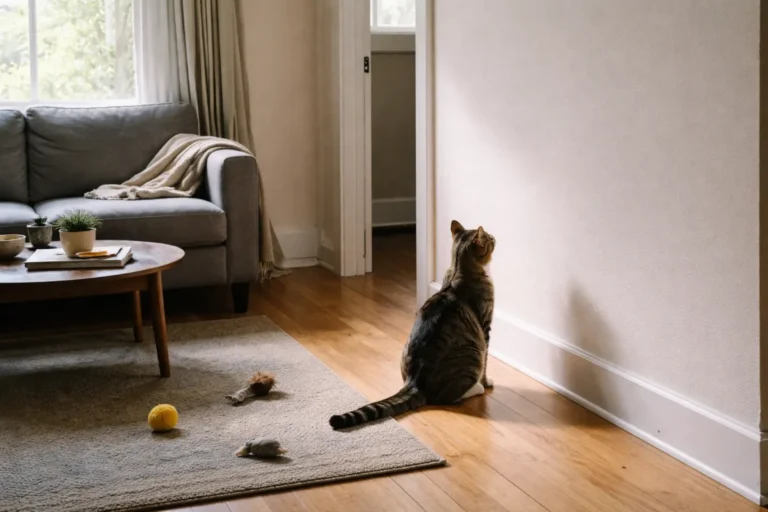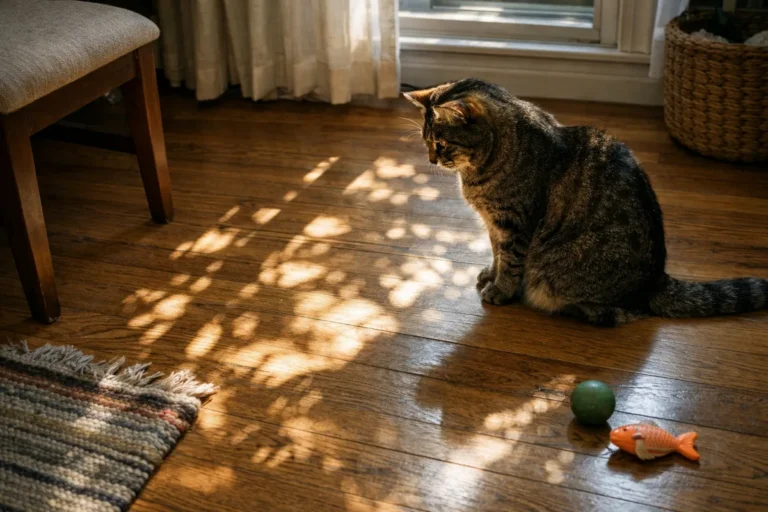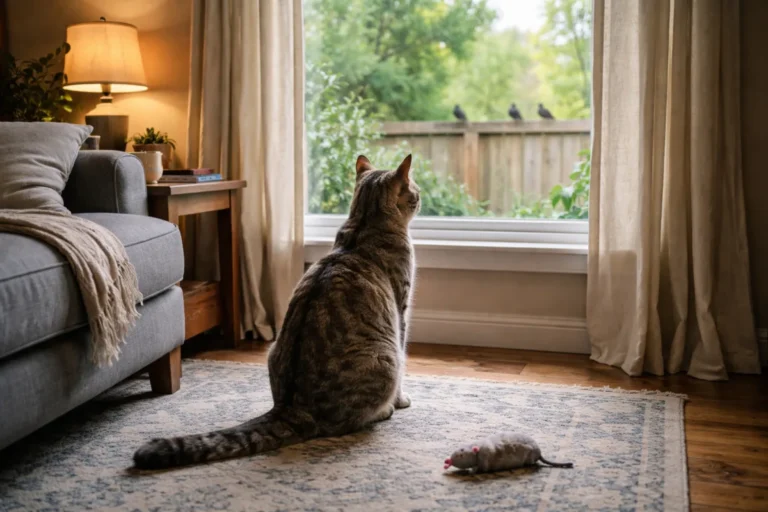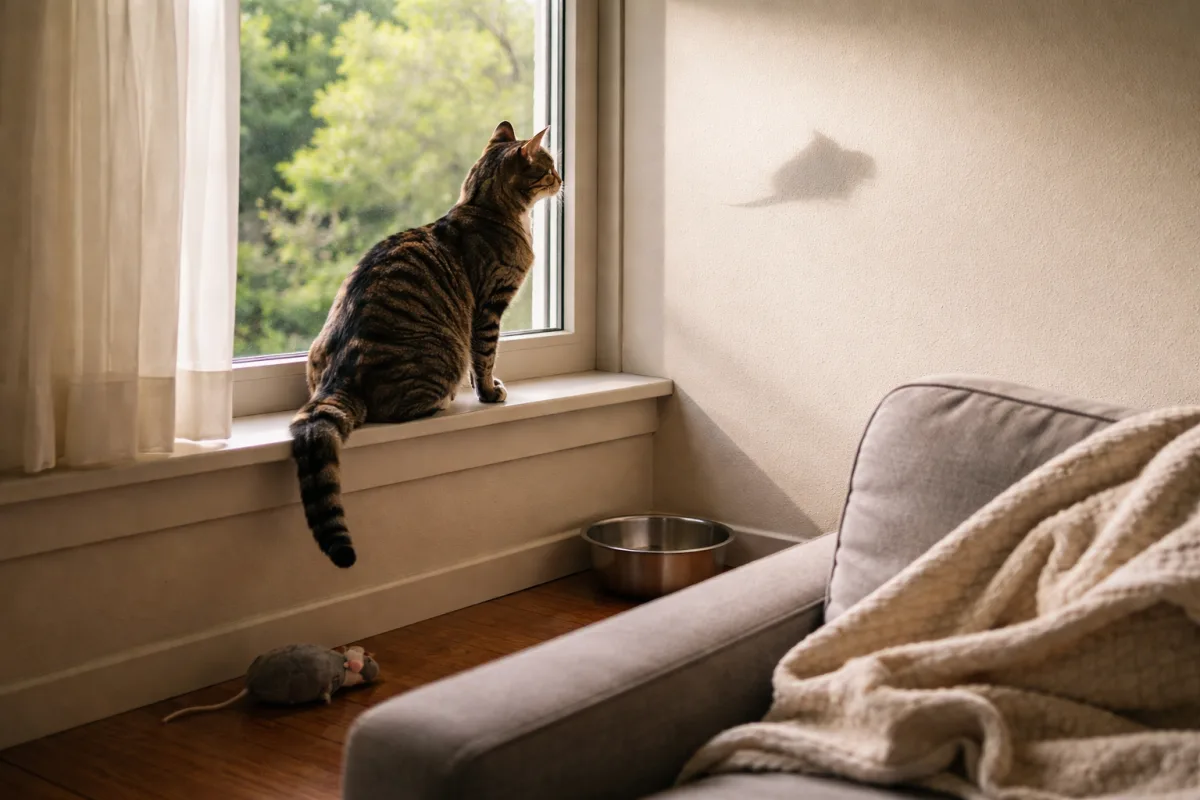
One moment your cat is curled beside you, half asleep and barely blinking. The next, their head snaps toward the hallway, a window, or a tiny spot on the floor, as if something invisible has taken over their attention. It can look sudden, even a little mysterious.
This shift is part of normal cat behavior. Cats do not hold focus in the same steady way people do. Their attention can move quickly from rest to alertness, then back again just as fast. A sound, scent, movement, memory, or internal sensation may be enough to pull them away from whatever they were doing.
That change in focus is not always random. Sometimes it reflects curiosity. Sometimes it comes from instinct. In other moments, it may be linked to stress, boredom, hunger, discomfort, or a small change in the environment that humans barely notice.
Understanding the reasons behind these quick shifts helps you read your cat more accurately. Instead of assuming they are ignoring you, acting strangely, or being difficult, it becomes easier to see the signals behind the pause, stare, turn, or sudden dash toward another corner of the room.
What sudden focus changes look like in everyday life
Cats change focus in many small ways. Some shifts are dramatic. Others are almost too subtle to catch unless you know what to look for. A cat may stare at one point in the room, then turn away and fixate on something new a second later.
Common examples include:
- Stopping mid-play to stare at a sound behind a wall
- Leaving a lap suddenly when they notice movement near a window
- Switching from grooming to alert watching
- Abandoning a toy because a fly, reflection, or scent becomes more interesting
- Looking relaxed, then instantly becoming tense and still
Sometimes the change is external. A cat hears a cabinet door close, a bird outside, or footsteps in another room. Other times the trigger is internal. Their body may feel uncomfortable, their stomach may be empty, or they may be in a light sleep state that makes them easy to interrupt.
Not every sudden shift means there is a problem. Cats are built to notice small changes quickly. Their attention is often distributed across several things at once: sound, smell, movement, and body position. When one signal becomes stronger than the others, their focus moves.
Why cats show this behavior in general
Cats are natural observers. They survive by noticing what changes, what moves, and what might matter next. That is why their attention can seem fragmented to people, while to the cat it feels completely logical.
In the wild, this kind of quick mental switching helps a cat stay safe and efficient. A soft sound in grass may mean prey. A strange odor may signal another animal. A shift in posture may mean it is time to retreat. Domestic cats still carry those instincts, even when they live in quiet homes with full food bowls and soft beds.
Their brains are designed to scan the environment constantly. They may be resting, but they are rarely fully disconnected from what is happening around them. That is why a cat can go from calm to intensely focused in a second.
It also helps to remember that cats are not always focused on the same thing humans would choose. A stain on the floor, a tiny flicker of light, or a sound under furniture may be far more important to them than the conversation happening nearby.
Sudden changes in focus often reflect a cat’s natural alertness, not stubbornness or disinterest.
Internal reasons behind sudden shifts in attention
Not every change in focus comes from the outside world. Cats also shift attention because of what is happening inside their body and mind. These internal causes can be easy to miss, especially when a cat otherwise seems healthy and calm.
1. Curiosity and scanning behavior
Some cats are simply highly observant. They will look at one thing, then another, then another. Their focus moves because they are gathering information. This is especially common in kittens, young adults, and naturally curious cats.
In these cases, the cat may not look anxious. Their ears are forward, their body is loose, and their eyes move from point to point with interest. The attention shift is active, not defensive.
2. Sleep-wake transitions
Cats often appear to “snap out” of one state and into another. When they are drifting between rest and wakefulness, even a minor sound can pull them into alert mode. That can look like a sudden change in focus, but it is often just a normal transition.
This is especially noticeable during light naps. A cat may be soft and still, then instantly raise their head, stare toward a noise, and decide whether to stay put or move away.
3. Hunger, thirst, or routine expectations
Many cats become more attentive when they expect food, treats, or a familiar daily event. They may change focus from a toy to the kitchen, from a window to their person, or from sleep to a fixed stare near the feeding area.
This is not always dramatic. Sometimes the clue is a repeated glance toward the same spot. The cat may be tracking the clock in their own way, using routine cues that humans do not notice.
4. Discomfort or physical irritation
A cat that suddenly changes focus may be reacting to internal discomfort. A tickle, itch, stomach upset, joint pain, or dental discomfort can interrupt attention and make the cat seem distracted.
Look for small signs such as:
- Restlessness without clear cause
- Frequent repositioning
- Overgrooming or sudden licking
- Stiff posture
- Hiding after becoming alert
If the focus change comes with repeated discomfort, vocalizing, reduced appetite, or behavior changes that last, the cause may be physical rather than behavioral.
How environment and context shape the shift
The same cat may act very differently in a quiet bedroom, a busy kitchen, or near a window full of outdoor activity. Environment matters. Cats are highly responsive to context, and their attention shifts are often tied to what is happening around them.
A cat in a calm home may still notice small events: a refrigerator hum, a person opening a drawer, a draft under the door. In a more active home, the number of possible triggers multiplies. People moving through rooms, other pets passing by, and changing sounds can keep a cat’s attention moving all day.
Window access is a major factor. Birds, insects, leaves, passing cars, and neighbors can all pull a cat’s focus away from what they were doing. The movement may be so slight that a person barely sees it, but to the cat it is obvious.
Some cats also change focus when the environment feels too predictable. They may search for stimulation because nothing around them has changed. In these cases, a new box, a different perch, a toy that moves in an unexpected way, or even rearranging a blanket can shift their attention.
A cat’s attention is often shaped by the environment before it is shaped by choice.
What body language says about the reason behind it
Attention shifts become easier to understand when you look at body language. The same head turn can mean very different things depending on the rest of the cat’s posture.
A relaxed cat may change focus with soft eyes, loose shoulders, and a body that remains settled. That often suggests curiosity or casual interest. They noticed something, but they do not feel threatened.
A tense cat is different. The body may freeze. The tail may go still or flick sharply. Ears may rotate forward or flatten. The head may angle toward the new stimulus while the rest of the body looks ready to react. That usually means the cat sees the change as important.
Watch for these combinations:
- Loose body + slow head turn: mild curiosity
- Frozen body + wide eyes: strong alertness
- Tail twitching + repeated glances: growing arousal or irritation
- Ears forward + weight shifting: ready to investigate
- Ears back + retreat: discomfort or caution
The body often tells the story before the behavior becomes obvious. A cat may seem to “suddenly” change focus, but their muscles, ears, and tail may have started responding a moment earlier.
Playful focus versus defensive focus
Not all attention changes carry the same meaning. Some are playful. Some are defensive. The difference matters, because the cat’s next move can change very quickly depending on which state they are in.
Playful shifts
When cats change focus during play, the new object often seems exciting rather than threatening. They may jump from a toy to a crumpled paper ball, from one end of the room to a window view, then back again. The energy is light, exploratory, and flexible.
Playful focus often includes bouncing movements, crouching, and quick but loose body motion. The cat is engaged, but not tense in a fear-based way.
Defensive shifts
A defensive focus shift is more rigid. The cat may stare, freeze, or widen their eyes after noticing something they do not trust. The attention becomes narrow. They are not exploring; they are evaluating risk.
Common triggers include unfamiliar sounds, a strange animal outside, a visitor, or another pet that moved too close too quickly. The cat may stop all other activity and concentrate on the potential threat until they decide what to do next.
That decision may be to retreat, hide, swat, or simply keep watching from a distance.
How owners often misread sudden changes in focus
People sometimes assume that a cat changing focus means they are bored with them, being dramatic, or trying to act out. Usually, it is something much simpler. Cats are highly responsive animals, and their attention is not shaped by social expectations in the way human attention is.
Another common mistake is assuming that a cat who shifts focus quickly is nervous all the time. That is not true either. Fast attention changes are part of normal cat behavior, especially in homes where there is constant sensory input.
Some owners also miss the difference between distraction and alarm. A cat that looks up from grooming because a bird lands outside is not the same as a cat that stops mid-step, freezes, and stares at the door with a stiff body. One is interest. The other may be caution.
It helps to ask a simple question: did the cat become more curious, more tense, or just more awake? The answer often changes how the behavior should be understood.
How daily routine affects attention shifts
Cats are creatures of habit, and routine creates a lot of their attention patterns. When mealtimes, play sessions, and household activity happen at similar times each day, cats learn to expect what comes next.
That expectation can make them seem distractible. A cat may suddenly look toward the kitchen before food is served because they recognize small cues: footsteps, the sound of a bowl, the smell of the food container opening. Their focus shifts because the routine is beginning.
When routines change, focus changes too. A different work schedule, a louder home, new furniture, a guest staying over, or an altered feeding time can make a cat scan more often and shift attention more quickly.
This does not always mean the cat is unhappy. It may mean they are trying to understand a new pattern. Cats like to know what comes next, even when they act independent.
When the behavior becomes more noticeable
Some cats change focus only occasionally. Others do it all the time. The behavior becomes more noticeable during certain moments in the day, especially when the environment offers a lot of cues.
It may increase:
- Near windows at sunrise or sunset
- During feeding preparation
- When the house becomes quiet after activity
- In new spaces or after moving furniture
- When another pet is nearby
- During long periods of boredom
Kittens often show this behavior most strongly. Their attention is still developing, and everything feels new. Adult cats may do it less often, but they usually become more selective rather than less alert.
Senior cats can also shift focus in different ways. Some become slower and less reactive, while others become more sensitive to small noises or changes in the home. Age does not erase the pattern; it changes its shape.
Long-term patterns and what they can suggest
When sudden changes in focus happen once in a while, they are usually just part of normal feline life. When they happen often and in the same situations, the pattern becomes more meaningful. Repeated behavior tells you what your cat notices most, and what keeps pulling their attention away.
A cat that always changes focus near the front door may be highly alert to outside activity. A cat that becomes distracted every evening before dinner may rely heavily on routine. A cat that shifts attention repeatedly while also seeming restless may need more stimulation or may not feel fully comfortable in the environment.
Long-term patterns are best understood through observation. Look at when the behavior happens, what was nearby, how the cat’s body looked, and what they did next. That context matters more than the attention shift alone.
Repeated focus changes become informative when the same trigger, body language, and response show up together over time.
When to pay closer attention
Most sudden focus changes are harmless. Still, a few patterns deserve closer attention because they can suggest stress, discomfort, or a medical issue.
Take note if the behavior is paired with:
- Repeated hiding
- Sudden aggression or defensiveness
- Loss of appetite
- Overgrooming
- Head shaking or pawing at the face
- Confusion or disorientation
- A clear change from the cat’s usual habits
A cat that seems unable to settle, startles often, or changes focus while also showing physical signs of discomfort may need a veterinary check. The key is not the focus change alone, but the full pattern around it.
Even when there is no health concern, an increase in shifting attention can still be useful information. It may tell you the cat needs more calm spaces, more predictable routines, or better opportunities to engage their instincts safely.
What cats may be paying attention to that people miss
One of the hardest parts of living with cats is realizing how much they notice that we do not. Their hearing, smell, and visual sensitivity make tiny changes feel large and important.
A person may walk into a room and hear nothing unusual. The cat may detect a shoe scuff in the hall, the scent of another animal on clothing, a mouse moving behind a wall, or a change in the air from an open window. Any of these can trigger an instant shift in attention.
They may also respond to emotional energy in the home. Cats do not read human feelings the way people do, but they often notice changes in routine, movement, and tone that accompany stress or excitement. That can affect how quickly they change focus and how long they stay fixated.
Even a familiar object can feel new if its position changes. A cardboard box moved across the room, a chair left in a different spot, or a bag placed near their favorite perch can become enough to redirect the cat’s attention.
Quiet observation is often the real answer
The most useful way to understand sudden focus changes is to watch without rushing to label them. A cat who turns toward a sound, then relaxes, is telling a different story from a cat who stiffens and stays locked onto one point. Both deserve attention, but not the same interpretation.
Over time, your cat’s patterns become easier to recognize. You start to notice which noises matter, which spaces feel exciting, which routines bring anticipation, and which signals suggest discomfort. That awareness makes the behavior less puzzling and more readable.
Cats are always taking in information. Their focus shifts because the world around them keeps changing, and because their own bodies and instincts are always part of the equation. What looks sudden from the outside is often a quick response to something they have already noticed long before anyone else did.