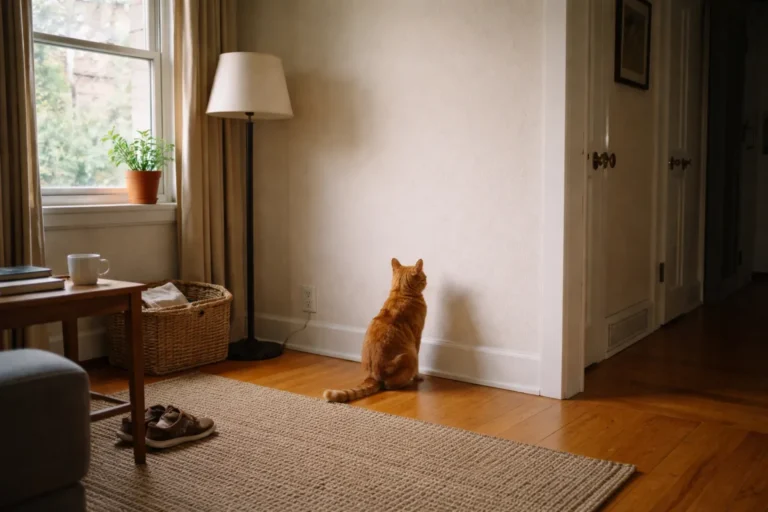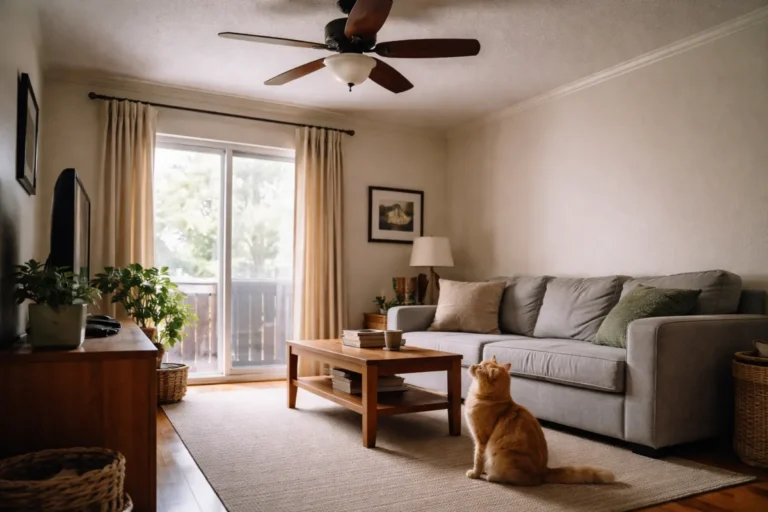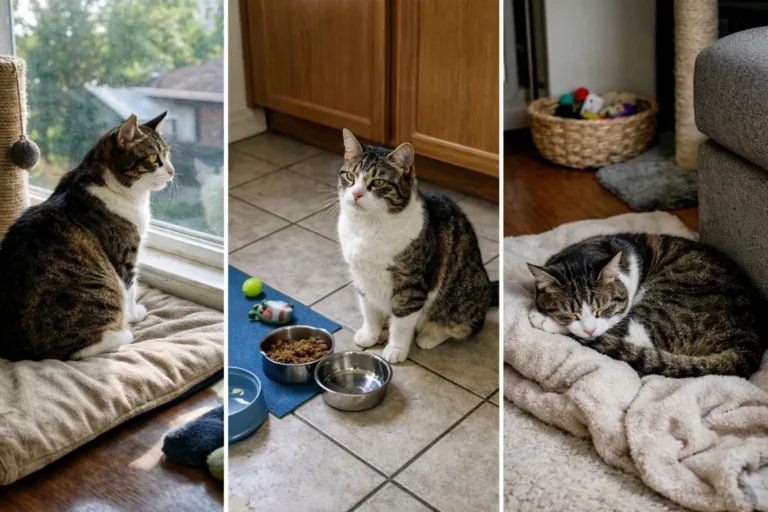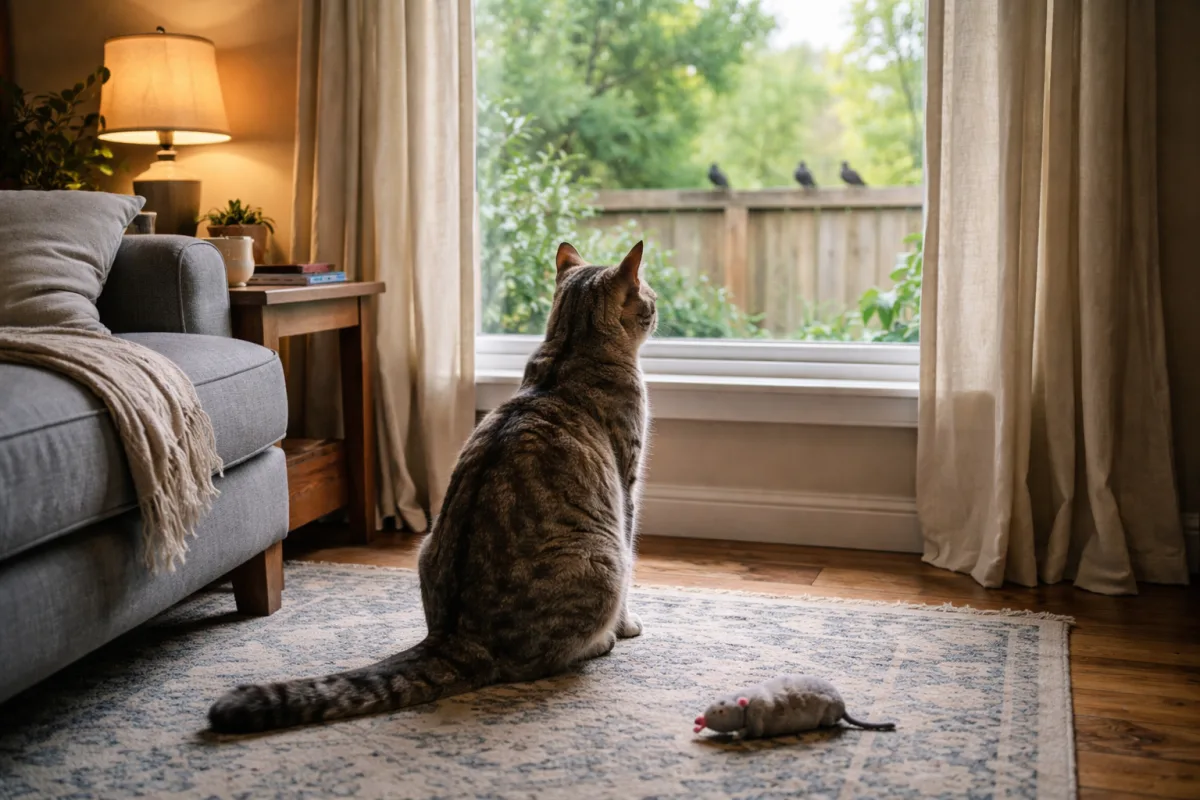
A cat that suddenly freezes and stares can look unsettling, especially when the room is quiet and nothing obvious is happening. One moment your cat is moving around normally, and the next it becomes still, eyes fixed on a wall, a doorway, or some invisible point across the room.
That behavior is often easy to misunderstand. People may assume the cat is seeing something strange, feeling threatened, or acting out of the ordinary. In many cases, though, freezing and staring is a normal feline response to something the cat noticed long before a person did.
Sometimes the reason is simple: a sound, a scent, a movement, or a sudden change in the environment. Other times, the behavior is tied to emotion, attention, or instinct. The meaning changes depending on how the cat is holding its body, how long the stare lasts, and what happens right before and after it.
What the behavior looks like in daily life
A cat freeze-stares in many different ways. Some cats stop walking and hold one paw slightly raised while their eyes stay locked on one spot. Others crouch low, ears forward, whiskers still, as if they are listening with their whole body. A few simply sit and stare with a calm, almost absent expression.
The setting often gives away part of the answer. A cat may stare at a window when birds are outside, at a hallway when footsteps pass, or at a kitchen corner after a crinkling sound. In these moments, the cat is usually processing information faster and more carefully than a human would expect.
Sometimes the stare seems directed at nothing at all. That can happen when a cat is tracking tiny movement, noticing a smell drift through the room, or reacting to something in the environment that is too subtle for people to detect. Cats rely on sharp hearing, strong scent awareness, and quick visual focus, so what looks empty to us may not feel empty to them.
Freezing and staring is often less about “being weird” and more about gathering information before deciding whether to move, hide, investigate, or ignore.
Why cats show this behavior in general
Cats are built to notice changes quickly. In the wild, pausing before moving could help them avoid danger or locate prey. That same instinct still shows up in home life, even though the modern living room is far from the world that shaped feline behavior.
Freezing is a protective pause. It lets a cat assess a situation without announcing itself through movement. Staring helps the cat gather detail from a distance before committing to a choice. This is why the behavior can appear during moments of curiosity, caution, alertness, or mild tension.
It is also a normal part of how cats focus. A dog may rush in to investigate, but many cats prefer to stop, watch, and listen first. They are often deciding whether something is interesting, safe, annoying, or worth ignoring. That decision can happen in seconds, yet to an observer it may look like the cat has been locked in place forever.
Common situations when it appears
1. Unexpected sounds
A thump in another room, a package dropping, or even a faint noise from behind a wall can cause a cat to freeze. Cats often hear higher and quieter sounds than people do, so the trigger may not be obvious. The stare that follows is the cat’s way of checking whether the sound means danger, movement, or nothing important.
2. Movement near windows or doors
Birds, insects, passing people, and neighborhood cats can all trigger a still, focused stare. Outdoor movement is highly stimulating for many indoor cats. Even a small motion at the edge of a window can make a cat stop completely and track the scene with intense concentration.
3. New objects or rearranged furniture
Cats often stare at things that have changed position. A box left in a familiar hallway, a chair moved across the room, or a new appliance can be enough to make a cat pause and assess. The animal is reading whether the change affects safety, access, or routine.
4. Unfamiliar scents
A smell brought in from outside, a visitor, another animal, or a cleaning product can lead to a frozen posture. Smell matters a great deal to cats, and scent changes may trigger careful investigation. The cat may stare while thinking through what the scent means and where it came from.
5. Social tension
Sometimes freezing and staring happens during interactions with another pet or a person. If a cat feels unsure, it may stop moving and hold its gaze. The pause can be a warning, a defensive sign, or a quiet attempt to avoid conflict by staying still.
What the behavior may signal about the cat’s state
The meaning of a cat’s freeze-stare depends heavily on body language. The eyes alone do not tell the full story. A relaxed cat, an alert cat, and a stressed cat may all stare, but they usually do not look the same in the rest of the body.
A calm stare often comes with soft muscles, neutral ears, and a steady but not rigid posture. The cat may be interested, but not tense. This is common when watching birds, following a toy, or observing a person moving around the house.
A cautious stare is often paired with a lowered body, ears that angle slightly to the side, and a tail that stays still. The cat is paying close attention and may be deciding whether to retreat. This version of the behavior is common when something is unfamiliar or hard to predict.
A tense stare can look very different. The body may seem stiff, the pupils may widen, the tail may lash, and the ears may flatten or rotate backward. In that state, the freeze is no longer just observation. It may indicate stress, fear, or frustration.
If the stare is paired with stiffness, hiding, growling, hissing, or sudden startle responses, the cat is likely feeling more than simple curiosity.
Body language clues that change the meaning
-
Soft eyes and loose posture: likely calm attention or interest.
-
Forward ears and still body: alert focus, often on movement or sound.
-
Flattened ears and a tucked body: discomfort, fear, or caution.
-
Tail twitching or lashing: rising irritation, overstimulation, or tension.
-
Wide pupils with a rigid stance: strong arousal, either excitement or stress, depending on context.
How context and environment shape the behavior
The same freeze-stare can mean different things in different homes. A quiet cat in a peaceful room may stare because it heard a faint sound from outside. A cat in a busy household may freeze more often simply because there is more to monitor. Environment matters as much as personality.
Indoor cats often stare more at windows, doorways, and corners because those areas hold the most movement and uncertainty. Outdoor cats may use the behavior while scanning for other animals or listening for distant activity. A cat in a new home may freeze more often than usual because it is still mapping the space and learning which sounds belong to which objects.
Daily routines also influence how often the behavior appears. Cats that know exactly when food arrives, when the house gets quiet, and when people usually come and go may react strongly to any change in that pattern. The unexpected dinner delay, a guest arriving early, or a noisy repair can all trigger a long stare as the cat checks whether its routine has shifted.
Quiet homes vs active homes
In a quiet home, a freeze-stare may stand out because it is easier to notice. In a busier home, the same behavior may happen often and briefly, blending into the day. Cats in active environments may become skilled at scanning and pausing, especially if they live with children, multiple adults, or other pets.
That does not automatically mean the cat is anxious. Some cats simply become careful observers. Others are more easily overstimulated and need a little more space before they settle. The difference usually shows in how quickly they recover once the trigger passes.
How owners often interpret it and what it may actually mean
People often assume a cat is staring at “nothing” when the cat is actually tracking a tiny detail. A dust mote in sunlight, a faint vibration, or a shadow shifting on the wall can hold a cat’s attention completely. What seems mysterious from across the room may be obvious from the cat’s point of view.
Another common assumption is that freezing means fear. That is not always true. Cats also freeze when deeply interested, when stalking prey-like movement, or when concentrating before a jump. The behavior can belong to curiosity just as easily as it can belong to caution.
At the same time, it is worth respecting the possibility that a stare is a stress signal. If the cat has been startled, cornered, or exposed to a new pet or loud noise, the stillness may be part of a defensive state. The cat is not necessarily ready to interact. It may simply be trying to feel safe again.
Difference between playful and defensive freezing
|
Type of freeze |
Common signs |
Likely meaning |
|
Playful |
Forward focus, crouch, tail flick, sudden pounce |
Tracking something interesting or toy-like |
|
Neutral |
Loose body, soft face, steady gaze |
Observing the room or listening |
|
Defensive |
Rigid body, flattened ears, wide pupils, retreating |
Feeling unsure, threatened, or overstimulated |
Playful freezing often leads to movement. The cat may wiggle, pounce, or dart after a toy or insect. Defensive freezing usually does the opposite. The cat remains still because moving feels risky, and the stare is part of staying prepared.
That difference matters when reading a cat’s mood. A playful cat may be intensely focused yet still emotionally relaxed. A defensive cat may look just as fixed, but the rest of the body will be tighter and less fluid.
When the behavior becomes more noticeable
Some cats freeze and stare more during life transitions. Moving to a new house, bringing home another pet, changes in schedule, illness in the household, or seasonal shifts in window activity can all increase the behavior. Cats notice routine changes quickly, and they often respond before they fully settle into a new pattern.
Age can also play a role. Kittens may freeze and stare as they learn how to interpret the world. Adult cats may do it when focused or cautious. Older cats may stare more often for different reasons, including slower processing, reduced hearing, or changes in vision that make them track the environment differently.
If the behavior appears at very specific times, the timing can be revealing. A cat that freezes every evening when a certain appliance runs may be reacting to sound. A cat that stares at one particular doorway may be watching for a person, another pet, or outside activity. Patterns matter.
How to read the timing
-
Before meals: anticipation, routine awareness, or frustration.
-
After a loud noise: alertness or brief alarm.
-
Near windows: prey watching or environmental scanning.
-
During pet-to-pet interactions: uncertainty, tension, or social checking.
-
In a newly changed room: careful assessment of the environment.
When to pay closer attention
Most freeze-stare episodes are ordinary and harmless. Still, certain patterns deserve closer observation. If the behavior becomes frequent, lasts much longer than usual, or appears with obvious distress, it may be worth checking for the cause. Pain, neurological changes, vision issues, and heightened anxiety can sometimes alter a cat’s focus and stillness.
Behavior that suddenly changes after an illness, injury, or major household change should not be ignored. A cat that seems disoriented, unresponsive, or unable to break its stare may need veterinary attention. The key question is not just whether the cat is staring, but whether the cat seems otherwise normal.
Seek professional advice if freezing and staring is new, intense, repetitive, or paired with hiding, vocalizing, aggression, confusion, or other changes in daily behavior.
What this behavior usually means in a calm home
In many homes, a cat that freezes and stares is simply doing what cats do best: watching carefully before acting. The cat may be listening to the house, checking a window, noticing a smell, or paying attention to a subtle shift in routine. This behavior often reflects alertness rather than alarm.
The strongest clue is the whole picture. A relaxed body and steady stare often point to interest. A stiff body and tense stare suggest caution. A sudden freeze after a noise may be simple vigilance, while a prolonged stare with distressed body language can point to stress or discomfort.
Understanding the difference makes the behavior easier to read in everyday life. A cat that pauses and stares is rarely being random. More often, it is making a careful decision in a world full of tiny details that people tend to miss.