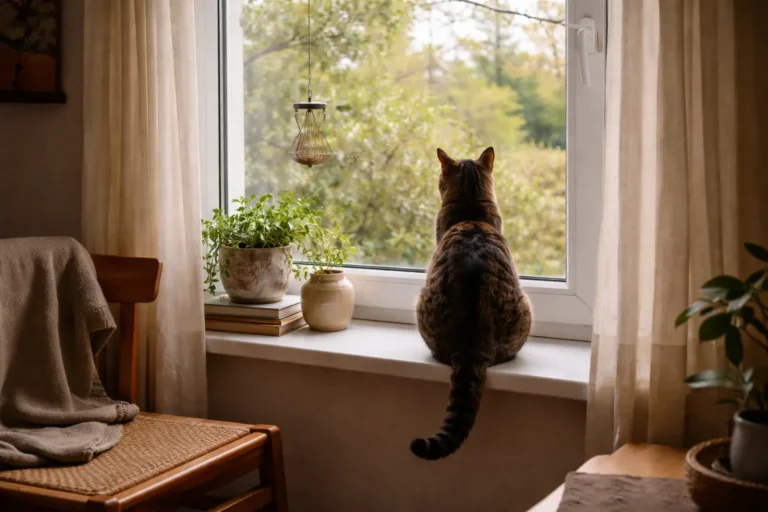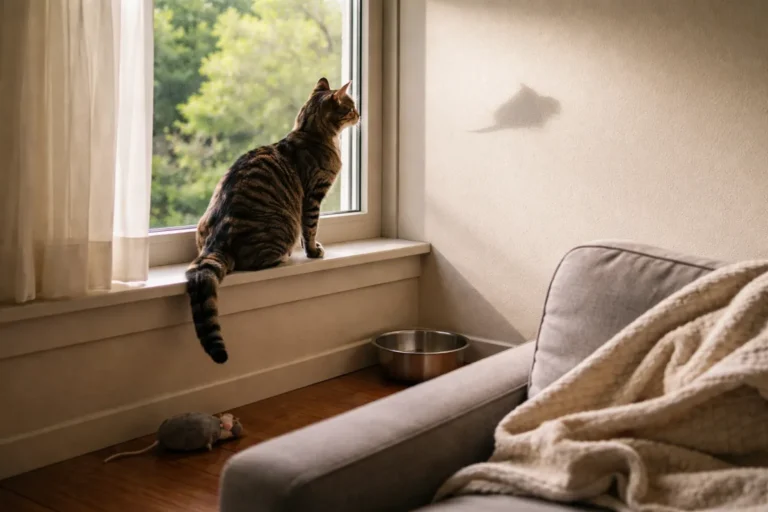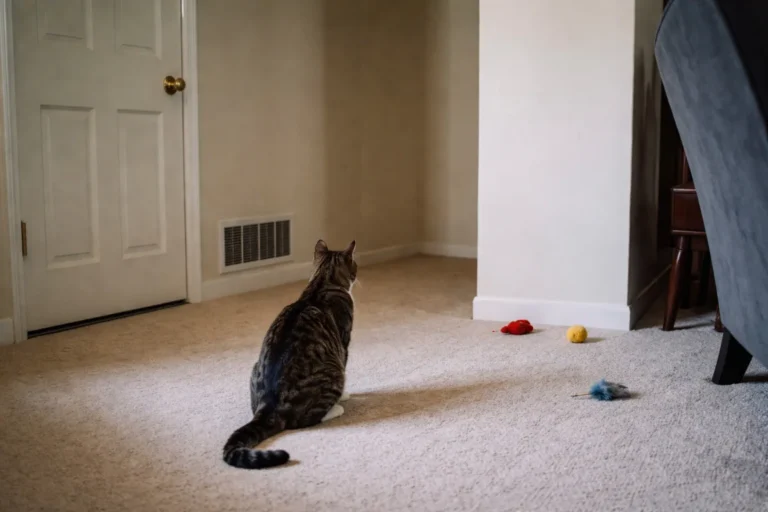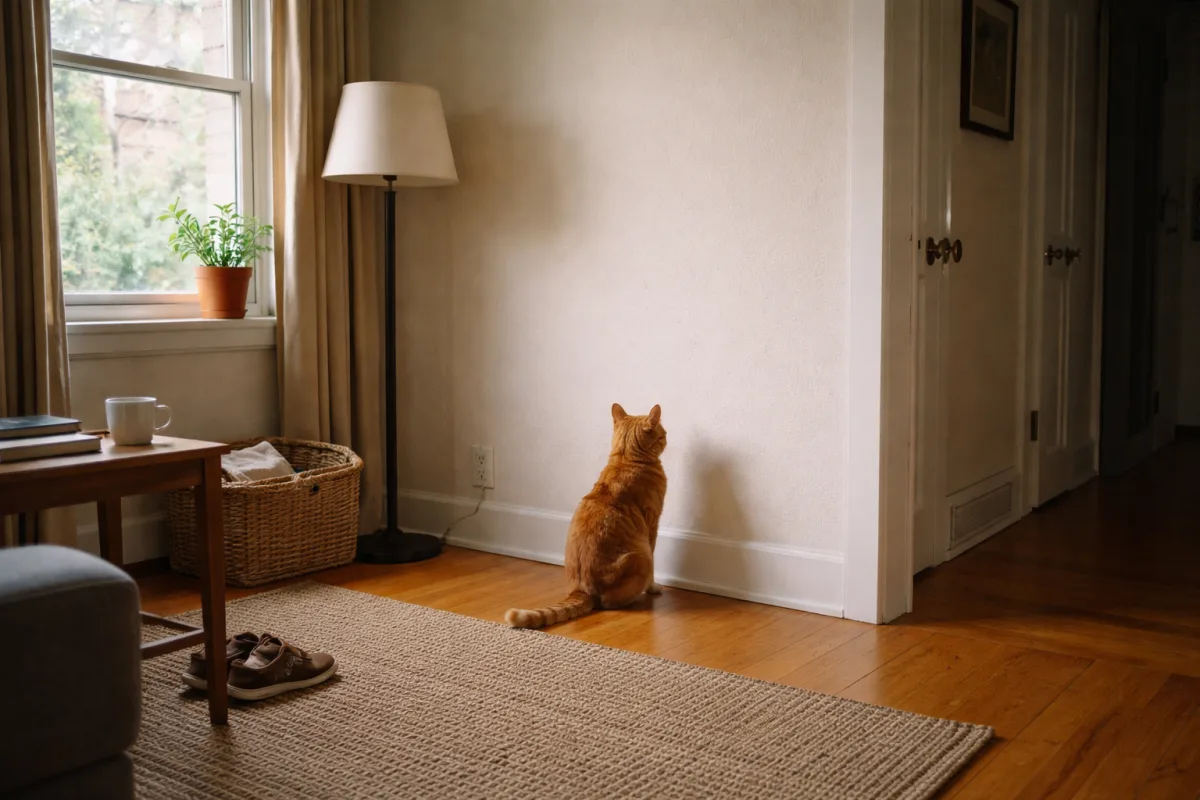
A cat that suddenly freezes, stares at an empty corner, or turns its head toward a space where nothing seems to be happening can look almost eerie. People often assume the cat is noticing a ghost, sensing danger, or reacting to a sound too faint for human ears. Sometimes that may feel true in the moment, but the real explanation is usually more ordinary.
Cats are built to notice movement, sound, scent, and subtle changes in their surroundings. Their attention can shift faster than ours, and what looks like “nothing” to us may still be meaningful to them. A cat reacting to something you can’t see is often a mix of instinct, sensitivity, habit, and the environment around it.
The same behavior can mean very different things depending on posture, timing, and context. A relaxed ear twitch while a cat watches a blank wall is not the same as a rigid body and wide eyes at 2 a.m. Reading the full picture matters more than the dramatic moment itself.
What the behavior can look like in daily life
This behavior shows up in many small, ordinary scenes. A cat may stop mid-step and stare at a hallway, then walk away as if nothing happened. Another cat may suddenly perk up from a nap, eyes fixed on a chair, vent, or ceiling corner.
Some cats only react for a second. Others remain focused for a longer stretch, with their tail still, ears angled forward, and whiskers slightly pushed ahead. A few will pounce, track an invisible target across a room, or follow a sound that people cannot identify.
Owners often notice it most in quiet homes. When the environment is calm, tiny movements or sounds stand out more sharply to cats. A refrigerator hum, a faint click in the walls, or shifting air near a window can be enough to trigger a response.
Common everyday examples
- Staring at a doorway or corner
- Sudden head turns toward a wall, vent, or window
- Pausing while walking, as if listening
- Following something unseen with the eyes
- Jumping or backing away from a small, unclear stimulus
- Watching a spot intently after hearing a faint noise
These moments can look mysterious, but they are usually part of a cat’s normal awareness. Cats investigate with attention first and action second. Often, the reaction itself is the explanation: the cat detected something worth noticing, even if the source was minor or temporary.
Possible internal reasons behind the reaction
The most common reason is simple sensory detection. Cats hear higher frequencies than humans and can catch sounds from insects, plumbing, heating systems, or tiny movements inside walls. They also notice shifts in scent and subtle air currents that people rarely register.
Another reason is instinct. Cats evolved as both hunters and prey, so scanning the environment comes naturally. A pause, stare, or quick turn of the head can be part of a built-in habit of checking for movement before deciding whether to relax, investigate, or retreat.
Curiosity plays a large role too. Some cats are especially alert to anything new or irregular. A shadow changing shape on the floor, a faint rustle behind furniture, or a smell carried in from outside may be enough to pull their attention immediately.
When a cat seems to react to “nothing,” it is often reacting to something too small, too quick, or too subtle for a person to notice.
Stress or overarousal can also sharpen these reactions. A cat that is already tense may scan more often, jump at minor cues, or seem easily startled. In that state, the cat is not necessarily seeing something unusual; it may simply be more on edge than usual.
On the calmer side, some cats are just naturally observant. They spend a lot of time reading the room. These cats notice routine changes, new sounds, and movement in the environment with impressive consistency.
What the cat may be experiencing internally
- Focused attention on a faint sound or smell
- Curiosity about a movement outside human range of notice
- Brief startle response to a small surprise
- Heightened alertness from stress or fatigue
- Play drive triggered by motion or sound
It helps to think of the reaction as information-gathering. The cat is sampling the environment. Sometimes the result is a hunt-like posture, sometimes a cautious retreat, and sometimes no follow-up at all because the stimulus disappeared.
How context changes the meaning
Context matters more than the strange look alone. A cat that glances toward a window in the afternoon may be responding to birds, a passing person, or movement in the yard. The same cat staring at the same area late at night may be responding to shifting reflections, insects near the glass, or outdoor noises carried by cooler air.
Time of day can change the pattern too. Many cats become more active at dusk and dawn, when their hunting instincts are naturally stronger. In those hours, even small stimuli can trigger a noticeable response.
The household environment also influences how often this behavior appears. In a busy home, the cat may be reacting to overlapping noise, footsteps, children, appliances, or other pets. In a very quiet home, tiny background sounds become easier to detect, so the cat’s reactions may seem more dramatic to the people living there.
If the cat only reacts in one spot, the cause is often tied to that location: a draft, a sound source, an outside view, or a surface that changes with light or movement.
Some common environmental triggers are easy to overlook. Air vents can carry smells or make faint noises. Mirrors and glass can reflect light in unpredictable ways. Cracks under doors may let in sounds or scents from another room. Even insects or dust moving near a window can capture a cat’s attention.
Environmental factors worth noticing
- Windows with outdoor movement or reflections
- Heating, cooling, and ventilation noises
- Footsteps or voices in nearby rooms
- Insects, birds, or outdoor animals
- Shifting shadows from weather or passing cars
- Changes in household routine or nearby activity
It is also worth remembering that cats often react to patterns before people do. If something happens in the same place at the same time each day, the cat may anticipate it. That can make the reaction look almost mysterious when it is really a learned response to a routine cue.
Different forms of the behavior
Not every cat reacts in the same way. A calm reaction usually looks like alert attention without tension. The cat’s ears may rotate, the eyes may stay open and focused, and the body remains loose.
A playful reaction has a different feel. The cat may crouch, wiggle its hindquarters, then pounce toward the unseen target. This often happens when a tiny moving stimulus, like a bug or dust particle, catches the cat’s interest.
A defensive reaction tends to look sharper. The cat may flatten its ears, tuck its body, puff its coat slightly, or move away quickly. In these cases, the unseen trigger may have felt threatening, startling, or too intense.
| Type of reaction | Typical body language | Possible meaning |
|---|---|---|
| Calm alertness | Forward ears, steady gaze, relaxed body | Noticing a sound, scent, or movement |
| Playful focus | Crouch, tail twitch, quick pounce | Stimulus connected to hunting or play |
| Defensive startle | Hunched body, retreat, raised fur | Something felt alarming or too sudden |
Intensity is a useful clue. A brief glance usually means the cat registered something and moved on. Repeated staring, sudden jumping, or pacing suggests stronger arousal and deserves closer attention to the setting.
Soft signals and strong signals
Soft signals can be easy to miss. A tiny ear flick, a slight nose lift, or a pause in grooming may be the only visible sign. These smaller reactions often happen when the stimulus is mild or familiar.
Strong signals are more obvious. The cat may stiffen, lock its gaze, rapidly turn its head, or move several steps backward. Sometimes the cat vocalizes, especially if startled or overly stimulated.
Mixed signals happen often. A cat might seem calm but keep looking toward the same place. Or it may act playful for a moment, then suddenly become cautious. That shift usually means the cat is still evaluating what it detected.
Body language gives the best clue. The same stare can mean curiosity, play, caution, or stress depending on the rest of the posture.
Tail position helps, too. A loose tail with a small twitch often points to interest. A puffed tail, tight body, or tail tucked close to the body suggests fear or discomfort. Watching the full body is more useful than focusing on the eyes alone.
How people often interpret it versus what it may actually mean
People sometimes label the behavior as supernatural because the cat seems to stare at empty space with total confidence. That explanation feels dramatic, but cats do not need anything paranormal to produce the effect. Their sensory world is simply richer and more detailed than ours.
Another common mistake is assuming the cat is “seeing things” in a medical sense every time it reacts oddly. Most of the time, the cat is responding normally to a stimulus that humans missed. The challenge is that the stimulus may be tiny, brief, or outside our own sensory range.
That said, repeated or severe episodes can mean more than ordinary alertness. If a cat seems disoriented, distressed, or unable to settle, the behavior may be tied to pain, vision changes, hearing changes, anxiety, or another health issue. The rest of the cat’s behavior matters a great deal.
Signs that the reaction may be more than simple curiosity
- Frequent startles without clear triggers
- New confusion or disorientation
- Unusual vocalizing along with staring
- Sudden changes in appetite, sleep, or litter box habits
- Head tilting, balance issues, or wobbling
- Persistent fear in normal parts of the home
When the reaction is occasional and the cat returns to normal quickly, it usually reflects ordinary sensory attention. When it becomes repetitive or paired with other changes, the bigger picture deserves attention.
How daily routines affect the behavior
Routine shapes how often a cat reacts to hidden stimuli. A cat that lives near a predictable source of sound, such as a heat cycle, plumbing, or outside foot traffic, may learn the pattern and respond before the human even notices the cue. The reaction can look automatic because, in a way, it is.
Changes in routine can also make the behavior more noticeable. A move to a new home, a shift in work schedule, visitors, loud construction, or another pet entering the home can all make a cat more vigilant. The cat may spend more time scanning its surroundings and reacting to subtle events.
Indoor and outdoor experiences shape this behavior differently. Indoor cats often react to in-home noises, reflections, and movement through windows. Outdoor cats may be more accustomed to unusual stimuli, but they can still freeze or stare when something in the environment feels off.
Sleep, hunger, and boredom affect it as well. A cat that has too little stimulation may become highly reactive to tiny environmental changes. A cat that is tired or hungry may also be more easily irritated and less able to ignore small disturbances.
Notice when the behavior happens, not just what it looks like. Timing often reveals the trigger faster than the stare itself.
When the behavior becomes more noticeable
Many owners see this more in older cats, but age is only one factor. As cats get older, they may become more sensitive to routine changes, or their hearing and vision may shift in ways that change how they respond. A sound that once went unnoticed might suddenly become important.
Kittens can show the same pattern in a more playful form. They are often quick to chase, pounce, and react to tiny motions. Their responses may look chaotic because they are still learning what is worth chasing and what is worth ignoring.
Adult cats tend to be more selective. They may watch first, then decide whether to act. Some become almost still when they focus, which can make the reaction look intense even if the trigger is minor.
Older cats may also stare more often if their sensory world feels less predictable. If a senior cat reacts to invisible stimuli more frequently than before, it is sensible to pay attention to the pattern, especially if the cat seems confused or unsettled.
How to think about long-term patterns
A single strange reaction usually means very little on its own. Long-term patterns are more informative. If the cat always reacts near the same wall, window, or vent, an environmental cause is likely. If the reaction appears only when the home is quiet or when certain people arrive, context is probably playing a role.
Consistency can also reveal personality. Some cats are naturally more vigilant. Others are easygoing most of the time and only react when a truly unusual sound or movement appears. Both can be normal.
What changes over time is just as important as what stays the same. A cat that suddenly begins reacting to invisible stimuli in a new way may be telling you that something in the environment, body, or routine has changed. That shift is more meaningful than the behavior itself.
Questions that help reveal the pattern
- Does it happen in the same place every time?
- Is the cat calm, playful, or tense?
- Does it happen at a certain time of day?
- Are there nearby sounds, scents, or moving shadows?
- Has the cat’s sleep, appetite, or mood changed?
These questions turn a strange moment into useful information. Often the answer is not dramatic. It may be a vent, a neighbor’s cat outside, a bug near the ceiling, or simply a cat being a cat.
What the behavior may signal about the cat’s state
At its simplest, the behavior says the cat is alert. The cat noticed something, and the nervous system responded. That alone does not mean trouble.
It may also signal interest. Some cats are drawn to invisible movement because it activates hunting instincts. Others react because they are checking whether the environment is safe and stable.
In some cases, the behavior reflects discomfort. If the cat seems tense, avoids the area afterward, or reacts repeatedly to the same unseen cue, the cat may be uneasy rather than merely curious.
The most useful question is not “What is the cat seeing?” but “How does the cat seem while reacting?”
That shift in focus helps separate ordinary alertness from possible stress. A cat that reacts, looks, then moves on is usually just responding to the environment. A cat that stays wound up, startles easily, or cannot settle may need a closer look at the situation around it.
A calm way to read the moment
Most of the time, a cat reacting to something you cannot see is responding to a real but subtle cue. The cue may be sound, scent, movement, habit, or a brief change in the room that disappeared before you noticed it. Cats live much closer to those details than people do.
The reaction becomes easier to understand when you watch the whole picture: body posture, time, location, and repetition. One cat may be hunting a bug that slipped behind a cabinet. Another may be reacting to plumbing inside the wall. A third may simply be more on guard than usual.
That is why the behavior is best read as information, not mystery. The cat is not performing for effect. It is responding to its world, and the shape of that response tells you whether the moment is playful, cautious, or worth a second look.